Artwork
Summer Night's Dream
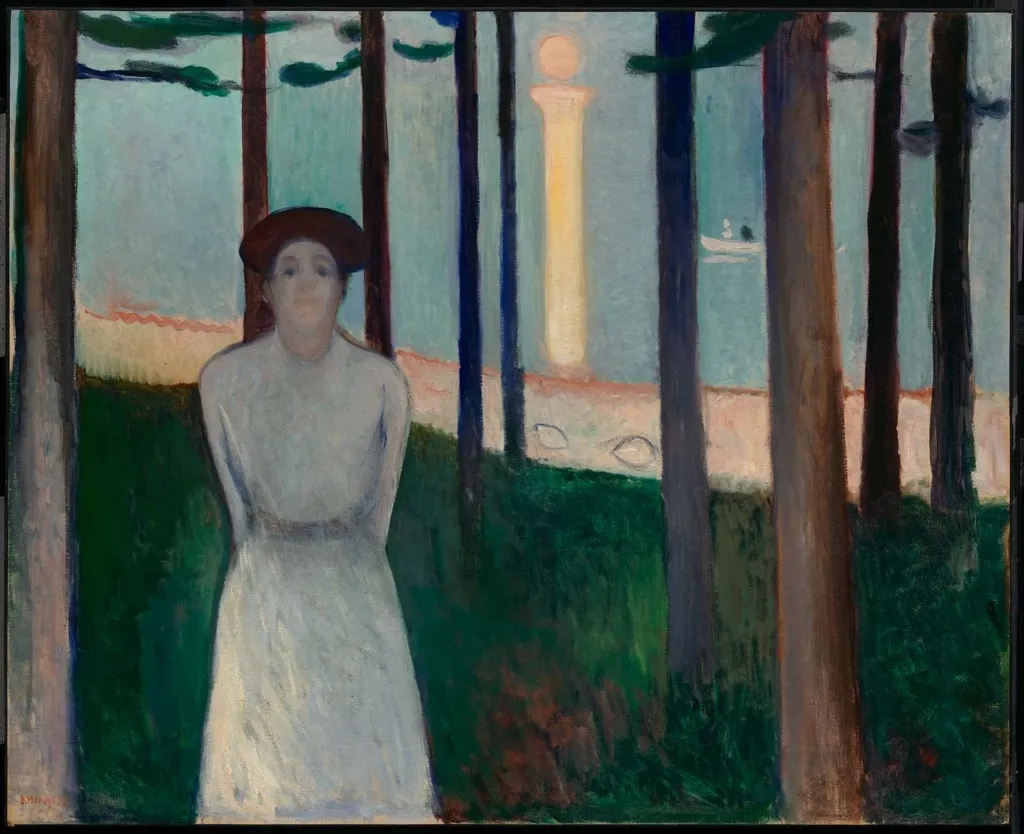
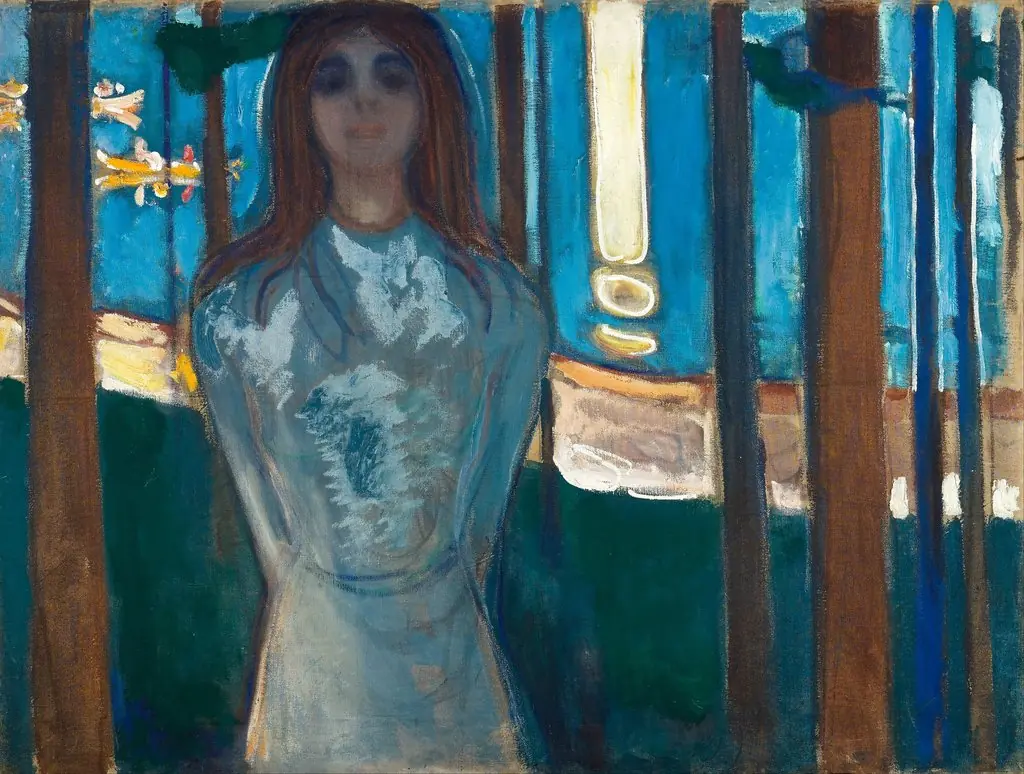
Summer Night's Dream is an oil painting by the Post-Impressionist artist Edvard Munch. It dates from 1897 and is held in the collection of the Museum of Fine Arts Boston.
About this work
Overview
The painting reflects Munch’s interest in inner states, though here the mood is subdued rather than agitated, offering a rare moment of calm in his oeuvre.
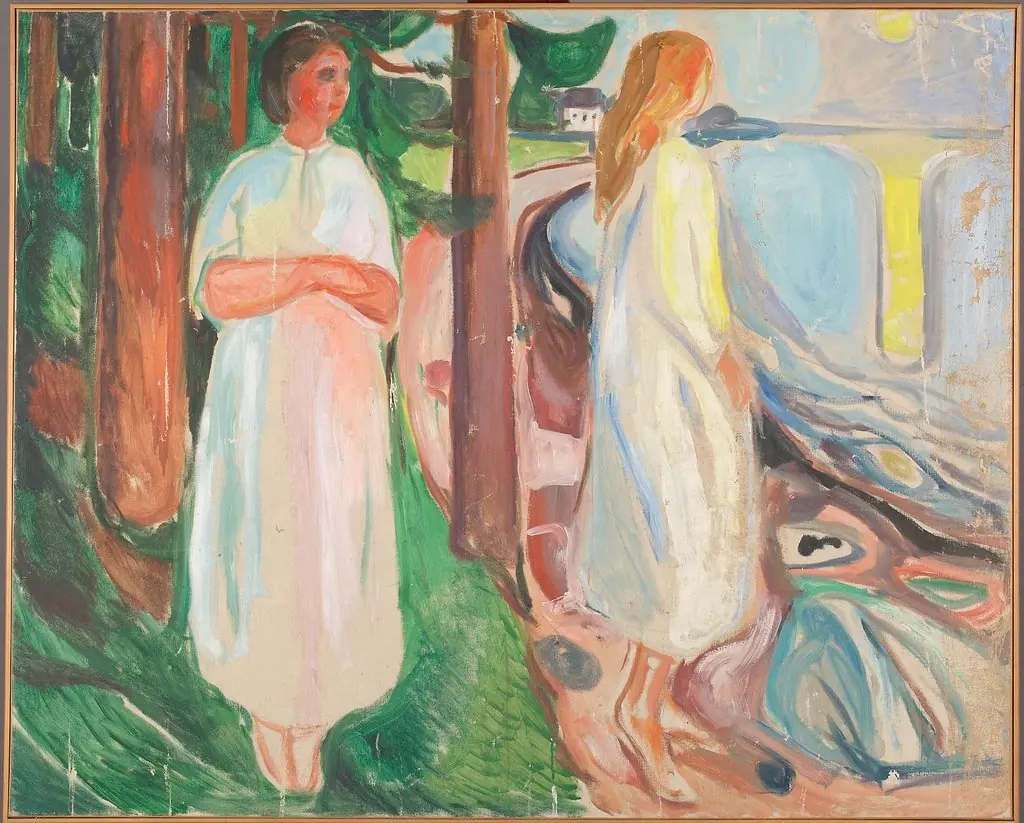
Created in 1897, Summer Night’s Dream is an oil painting by Norwegian artist Edvard Munch. Unlike his more famous depictions of psychological distress, this work presents a quiet, introspective scene. It captures a solitary woman in a forest at twilight, surrounded by stillness.
The painting reflects Munch’s interest in inner states, though here the mood is subdued rather than agitated, offering a rare moment of calm in his oeuvre.
Subject & Meaning
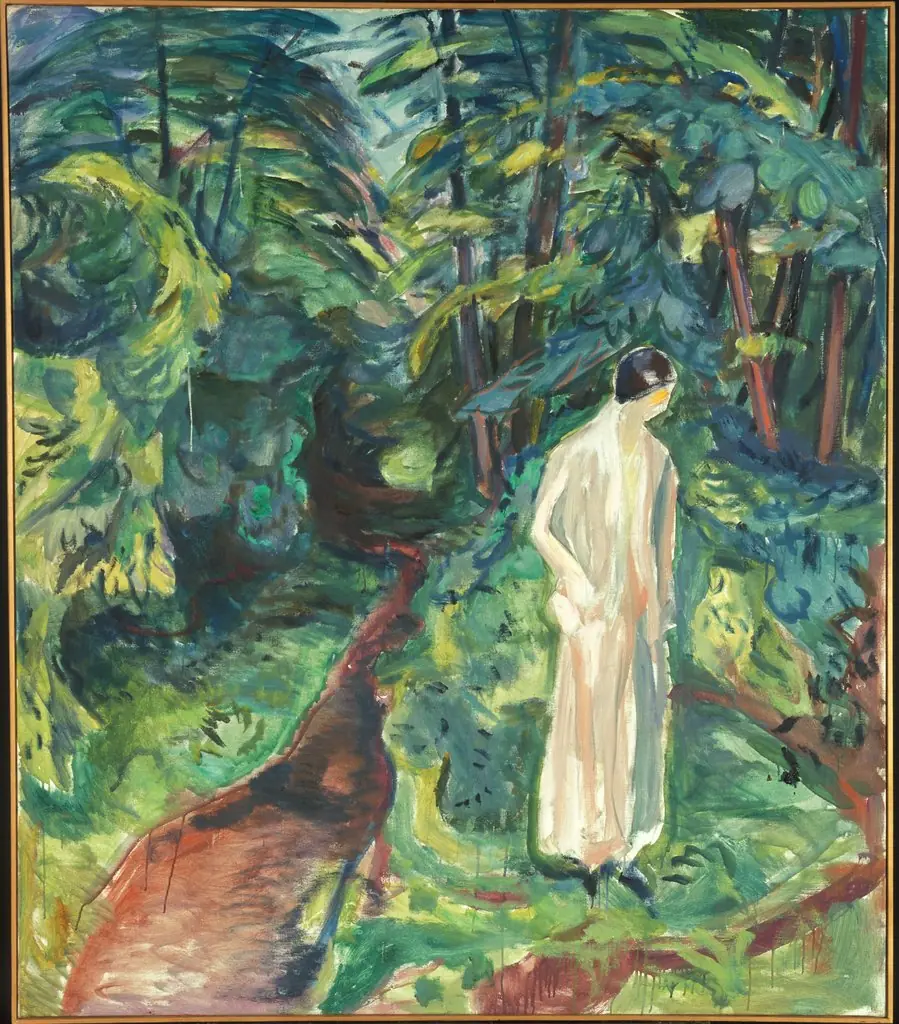
The central figure is a woman in a white dress, standing motionless in a wooded clearing. Her gaze is directed outward, neither fearful nor joyful, but absorbed in private thought. The absence of narrative action or overt symbolism invites interpretation as a meditation on solitude or introspection.
The serene setting contrasts with Munch’s typical themes, suggesting a fleeting pause in emotional turmoil, perhaps a moment of respite from inner conflict.
Technique & Style
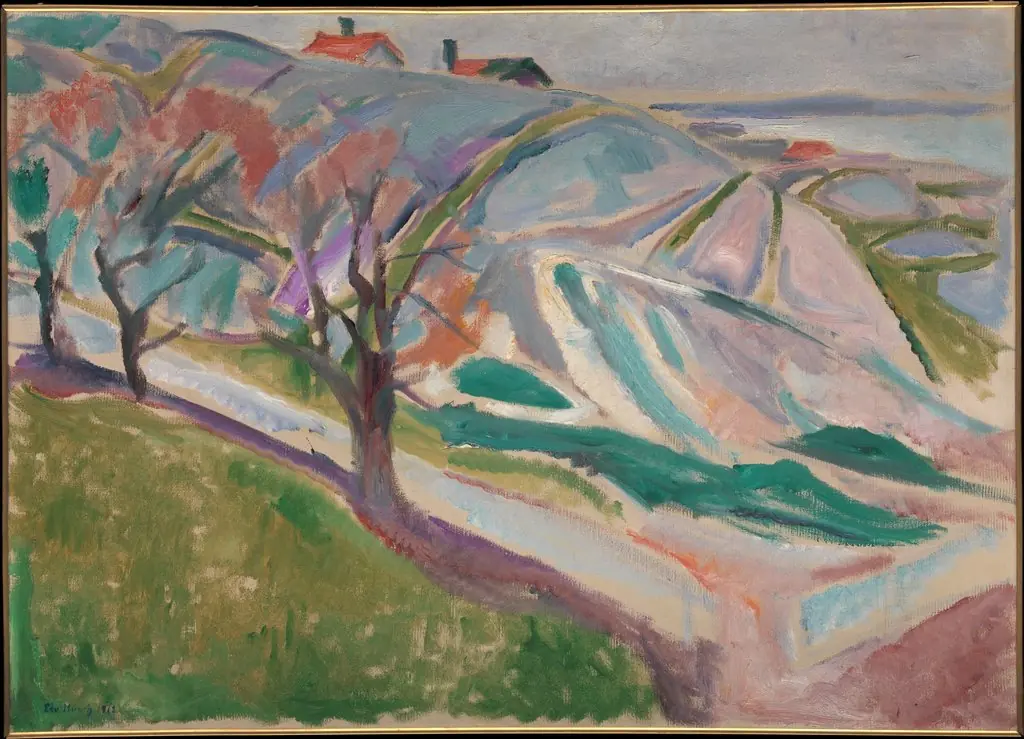
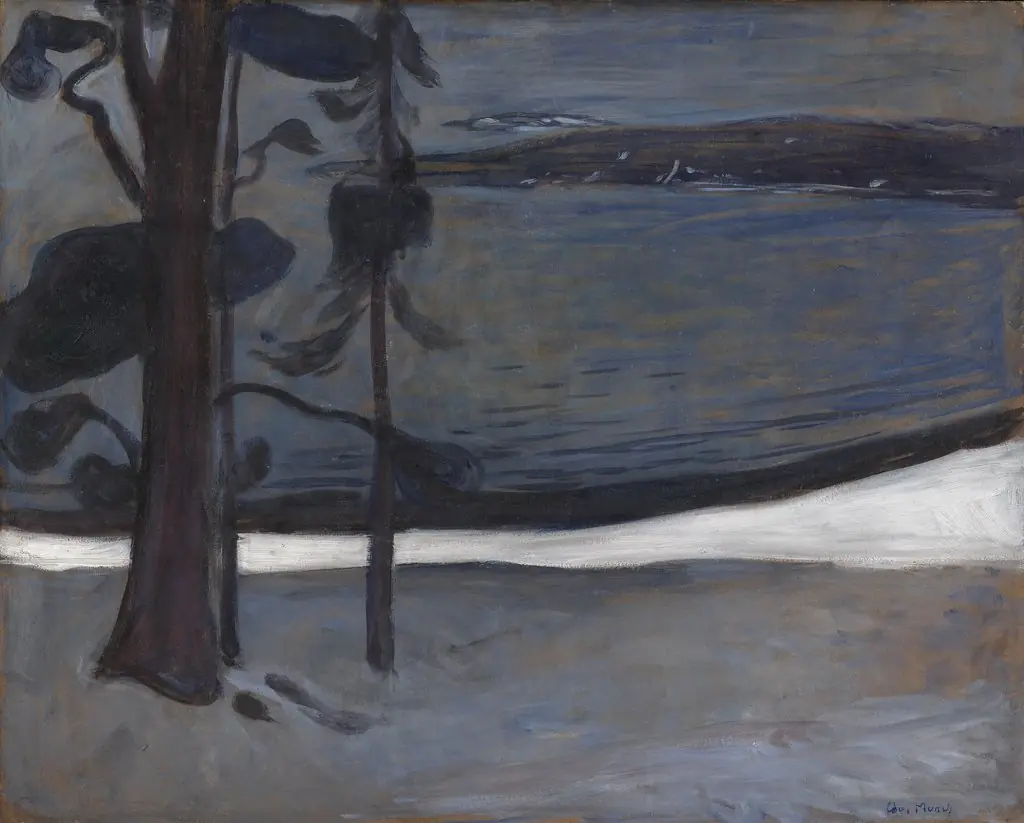
Munch employed loose, expressive brushwork to render the forest and sky, blending soft gradients of blue and green with darker, vertical trunks that frame the figure. The woman’s form is rendered with minimal detail, emphasizing her stillness against the textured backdrop. The composition avoids sharp contrasts or dramatic lighting, favoring a muted palette and flattened space that aligns with post-impressionist tendencies toward emotional resonance over naturalism.
History & Provenance
The painting entered the collection of the Museum of Fine Arts, Boston, in the early 20th century, likely through acquisition from a European dealer or collector familiar with Munch’s work. Its presence in Boston reflects the growing interest in Scandinavian art among American institutions during that period. No significant alterations or documented restorations are known, and it has remained in the museum’s care since acquisition.
Context
Painted during a period when Munch was exploring themes of memory and solitude, Summer Night’s Dream emerged alongside other works that moved beyond overt anxiety toward quieter psychological landscapes. Though rooted in his personal experiences with loss and mental instability, this piece aligns with broader European trends in Symbolism and post-impressionism, where nature served as a mirror for internal states rather than a literal setting.
Legacy
While less frequently exhibited than Munch’s more dramatic works, Summer Night’s Dream remains a significant example of his capacity to convey emotional nuance through restraint. It demonstrates how his visual language could evoke introspection without overt symbolism, influencing later artists interested in mood and atmosphere. The painting continues to be studied for its subtle balance between presence and absence, silence and meaning.
Artist & collection
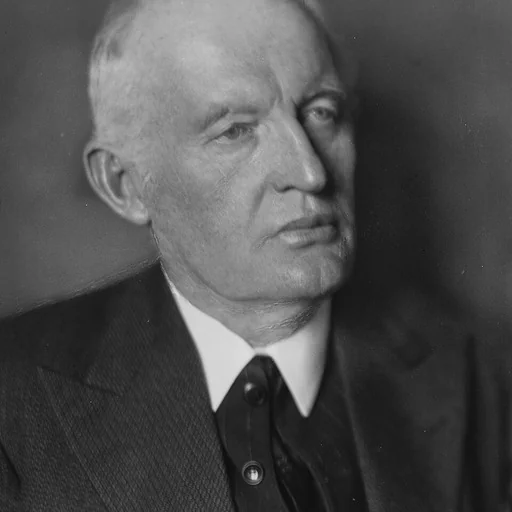
Artist
Edvard Munch ( MUUNK; Norwegian:; 12 December 1863 – 23 January 1944) was a Norwegian painter.