Artwork
Peaceable Kingdom
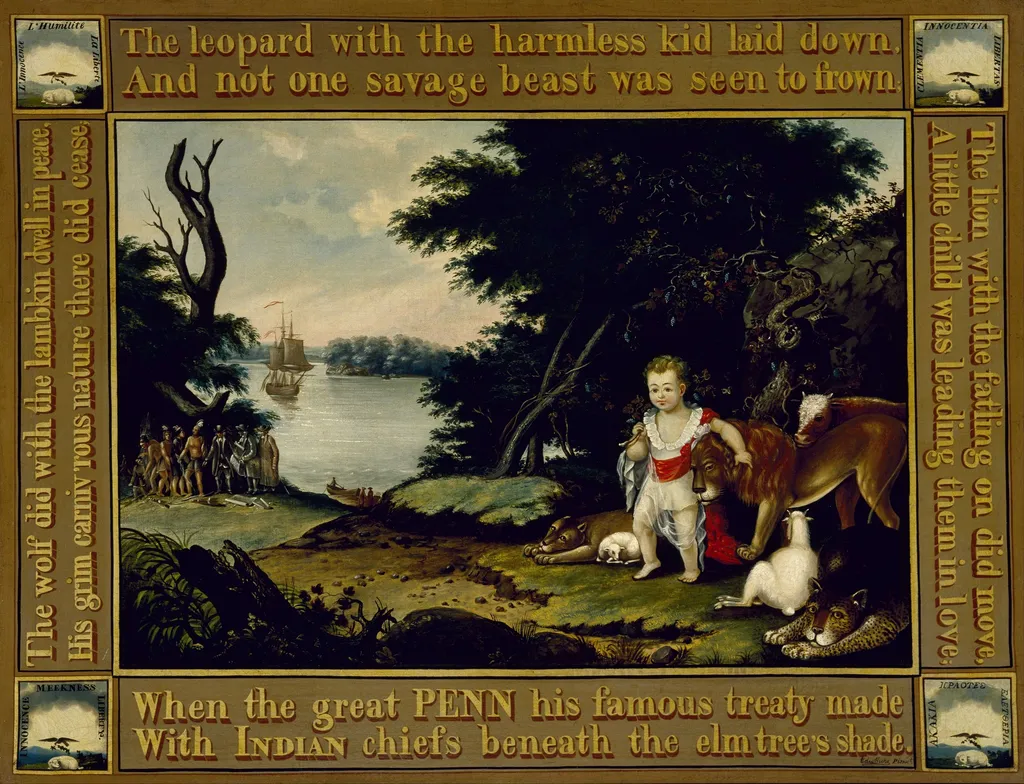
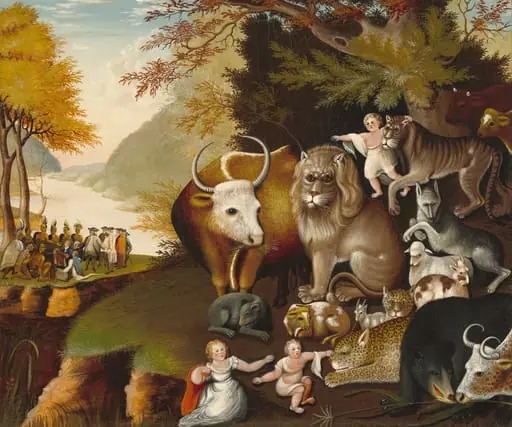
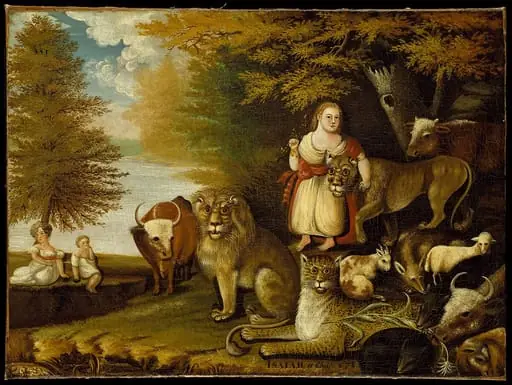
Peaceable Kingdom is an oil painting by the American Folk Art artist Edward Hicks. It dates from 1826 and is held in the collection of the Museum of Fine Arts, Houston.
About this work
Overview
Hicks, a Quaker minister and self-taught painter, returned to this subject repeatedly, each version reflecting his spiritual convictions and desire for harmony.
Edward Hicks painted Peaceable Kingdom in 1826 using oil on canvas. The work is part of a series of similar compositions he produced over several decades. It resides in the collection of the Museum of Fine Arts, Houston, where it is displayed as a key example of American folk art.
Hicks, a Quaker minister and self-taught painter, returned to this subject repeatedly, each version reflecting his spiritual convictions and desire for harmony.
Subject & Meaning
The painting illustrates a biblical vision from Isaiah, where predators and prey coexist peacefully under the watch of a child. The central figure, dressed in red and white, symbolizes innocence and divine order. Surrounding animals, lion, lamb, leopard, are rendered without aggression, embodying a utopian ideal.
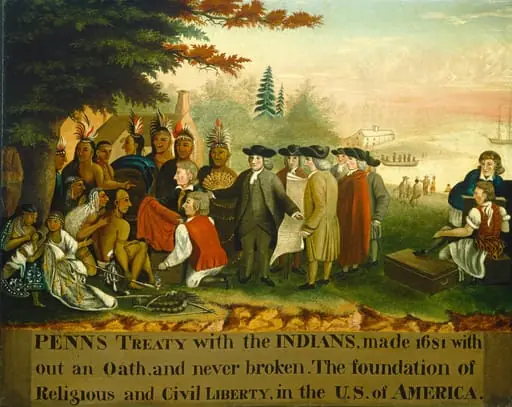
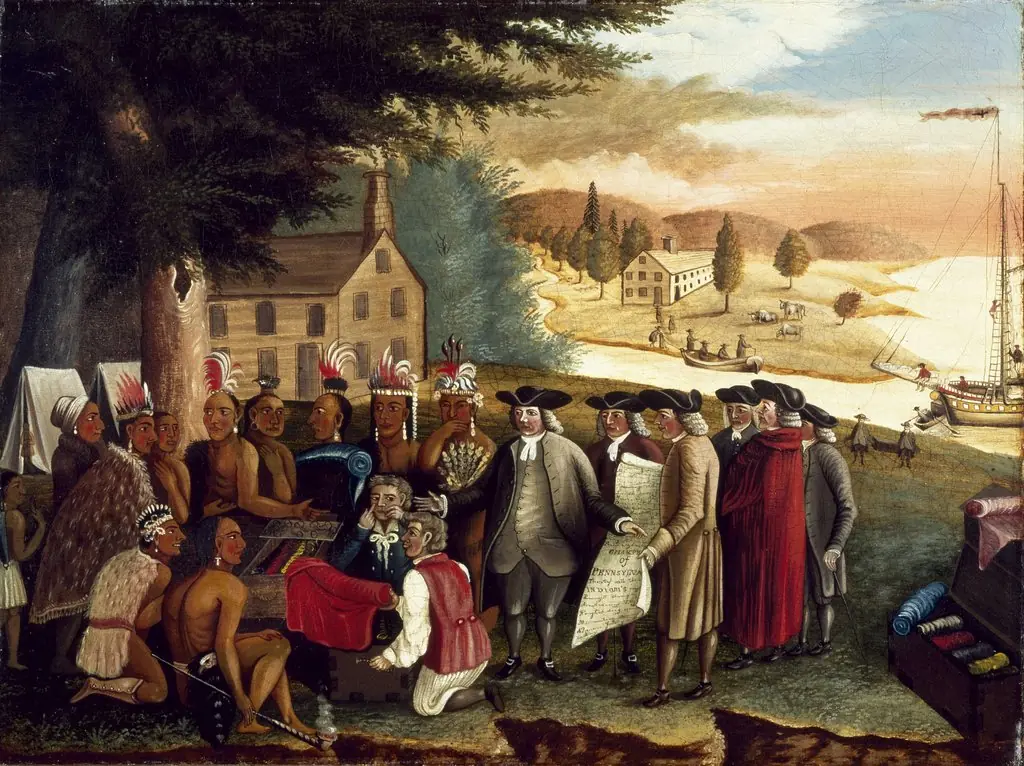
In the distance, a ship carries William Penn and Native Americans, referencing Quaker ideals of peaceful negotiation and mutual respect.
Technique & Style
Hicks employed a flat, decorative approach typical of folk art, with minimal perspective and simplified forms. His brushwork is deliberate but unrefined, emphasizing pattern over realism. Earthy greens, browns, and muted blues dominate the palette, grounding the scene in a quiet naturalism.
The figures and animals are arranged in a shallow, stage-like space, reinforcing the painting’s symbolic rather than narrative intent.
History & Provenance
Hicks created over sixty versions of Peaceable Kingdom between 1820 and 1849, often commissioned by fellow Quakers. The version held by the Museum of Fine Arts, Houston, dates to 1826 and is among the earliest. It passed through private Quaker collections before entering the museum’s holdings in the 20th century. Its survival reflects the enduring value placed on Hicks’s work within his religious community.
Context
Hicks painted during a time of social upheaval in early 19th-century America, including tensions over slavery and westward expansion. As a Quaker, he sought to express his faith through art, using biblical imagery to advocate for nonviolence and unity. His paintings served as visual sermons, blending scripture with contemporary moral concerns, offering a quiet counterpoint to the era’s growing nationalism and conflict.
Legacy
Hicks’s Peaceable Kingdom series influenced later American artists interested in spiritual symbolism and vernacular expression. Though dismissed by academic circles in his time, his work gained renewed attention in the 20th century as folk art was reevaluated. Today, the paintings are studied for their fusion of religious devotion, social commentary, and naive aesthetic, offering insight into the moral imagination of early American communities.
Own this work as a print
Artist & collection

Artist
Edward Hicks spent his life caught between two worlds. A Quaker preacher by Sunday and a painter by weekdays, he painted signs and carriages to support his family while quietly building a body of peaceful, crowded…