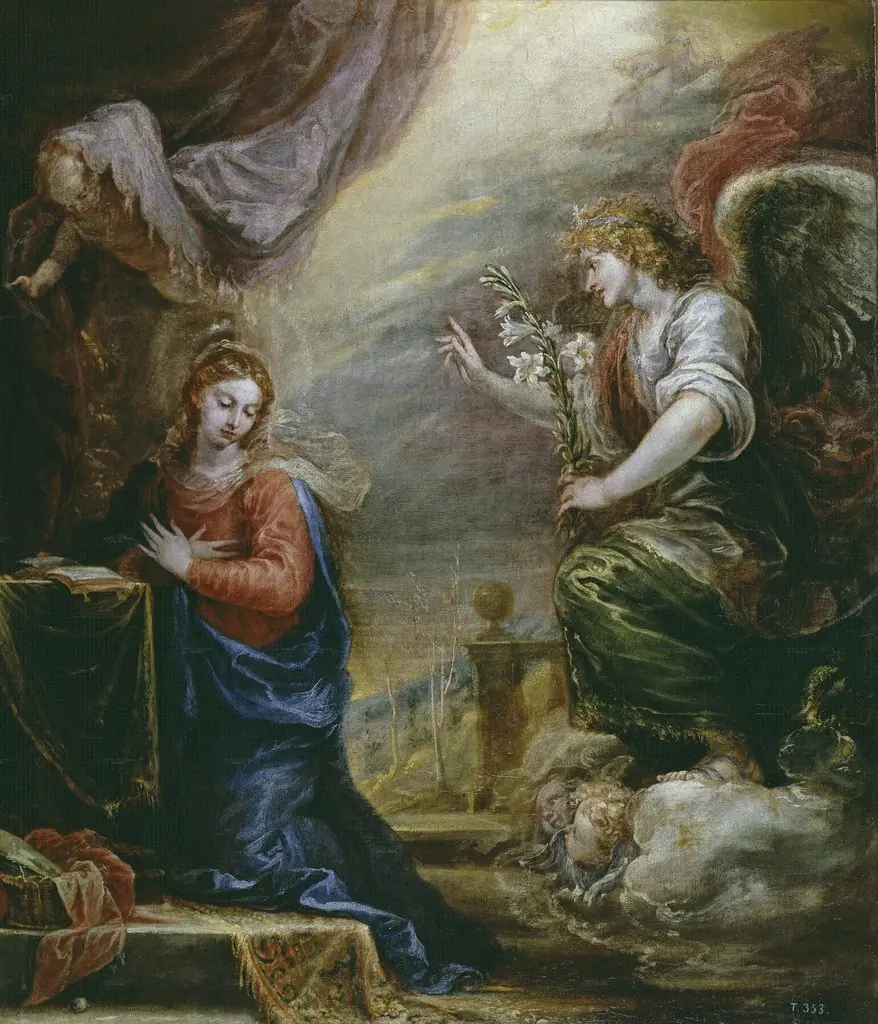
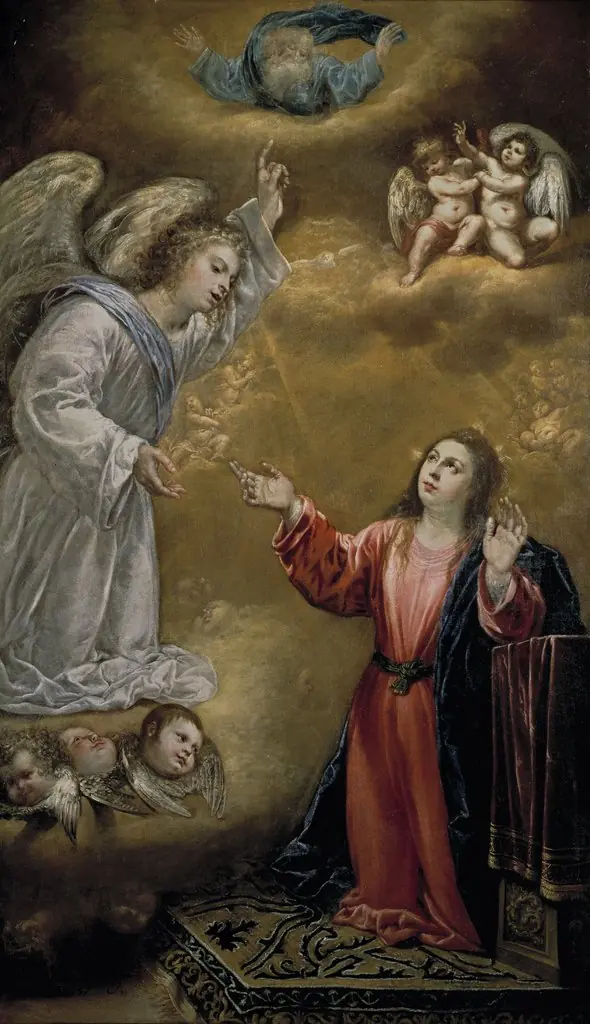
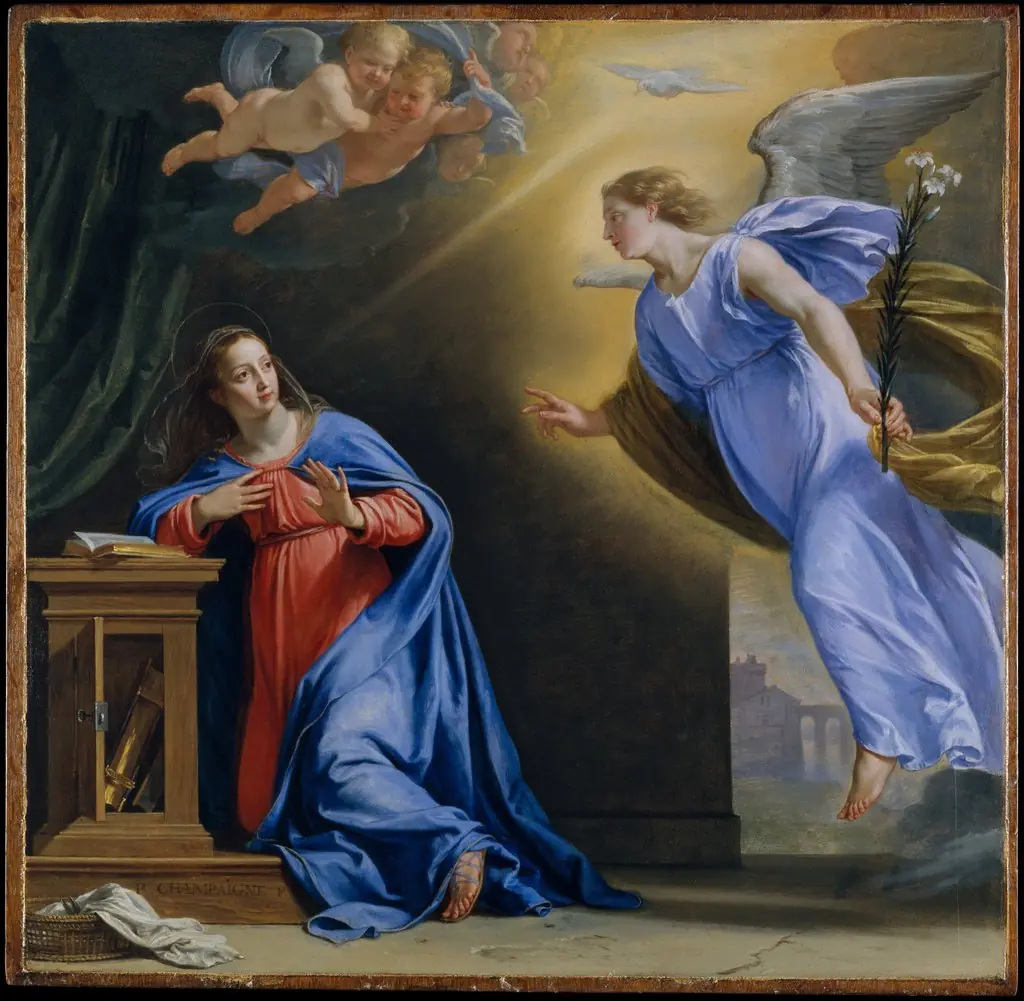
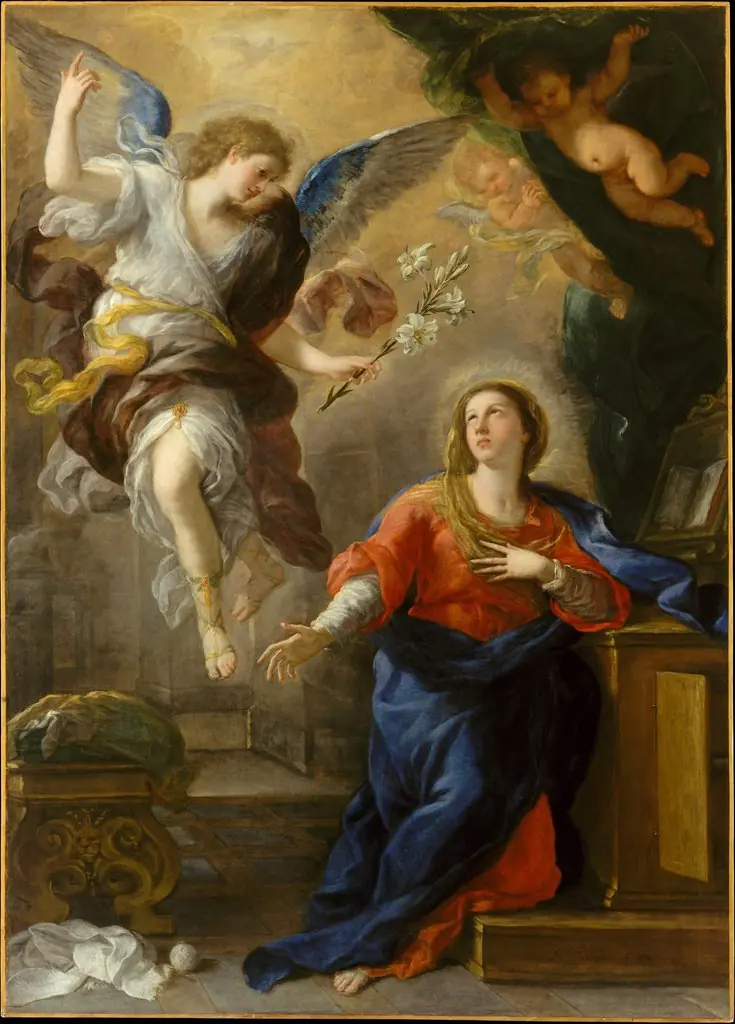
Artwork
The Annunciation
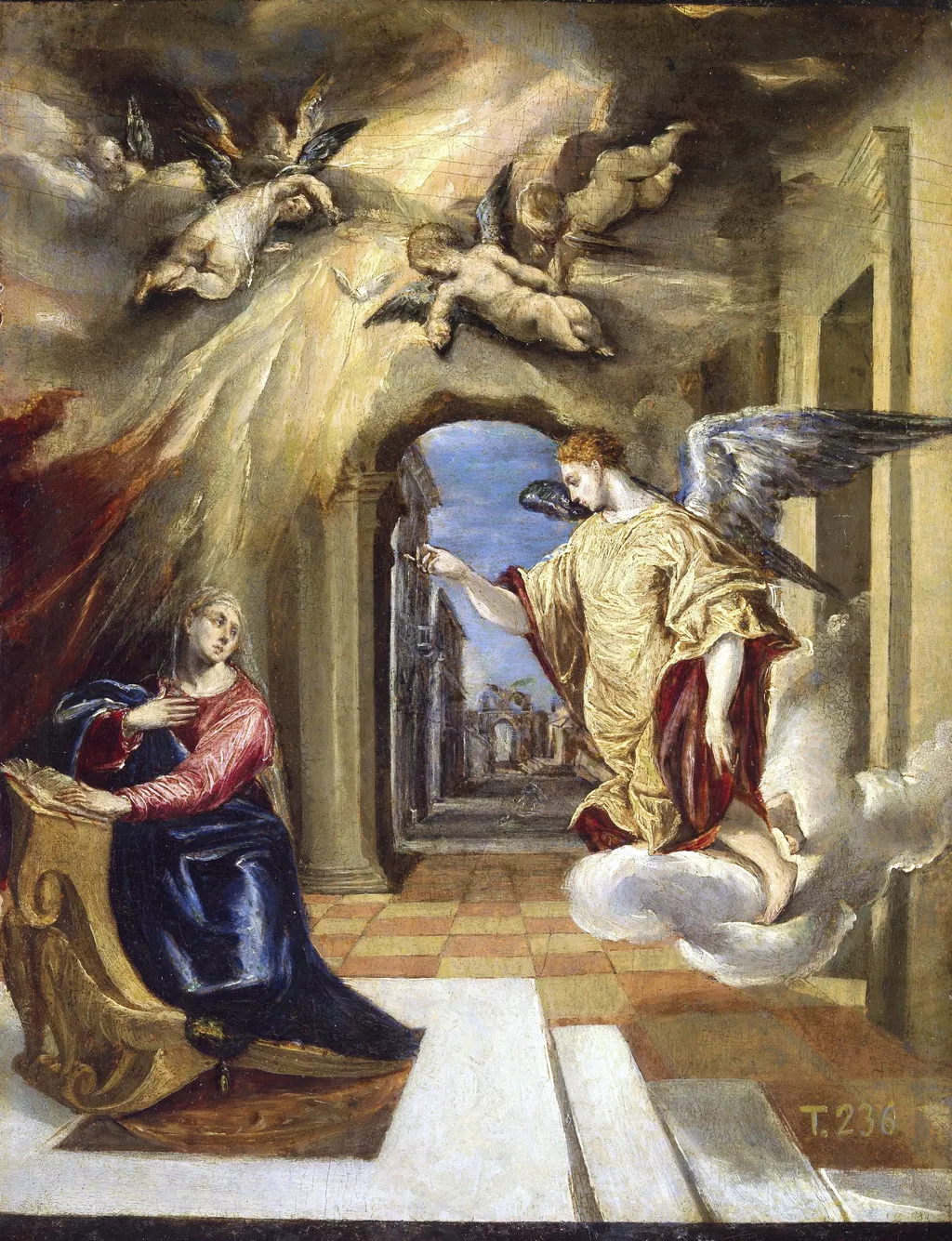
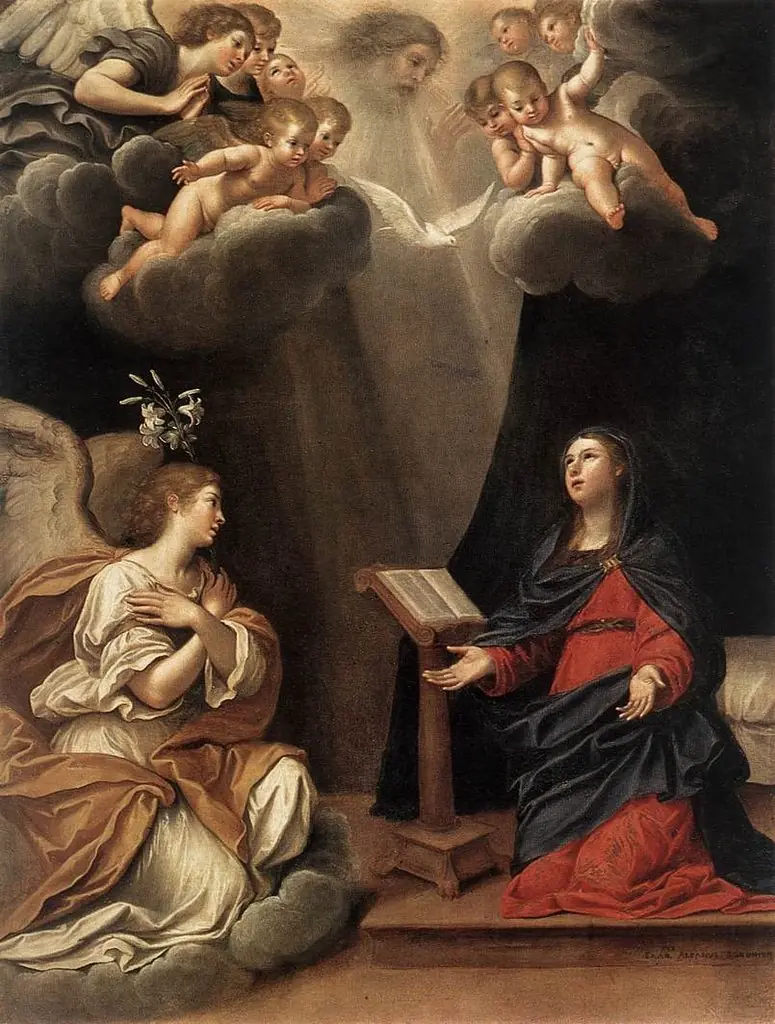
The Annunciation is an oil painting by the Mannerist artist El Greco. It dates from 1570 and is held in the collection of the Museo del Prado.
About this work
Subject & Meaning
The composition uses a diagonal arrangement and a central axis to organize the figures, with angels positioned in varied angles to heighten dynamism.
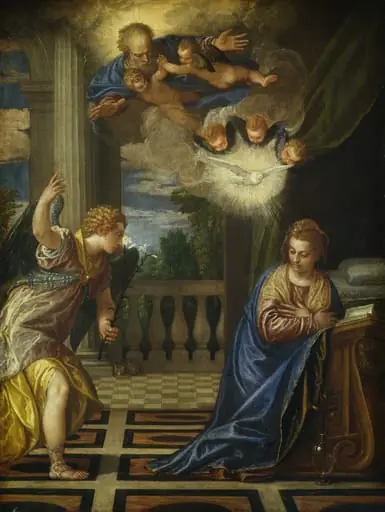
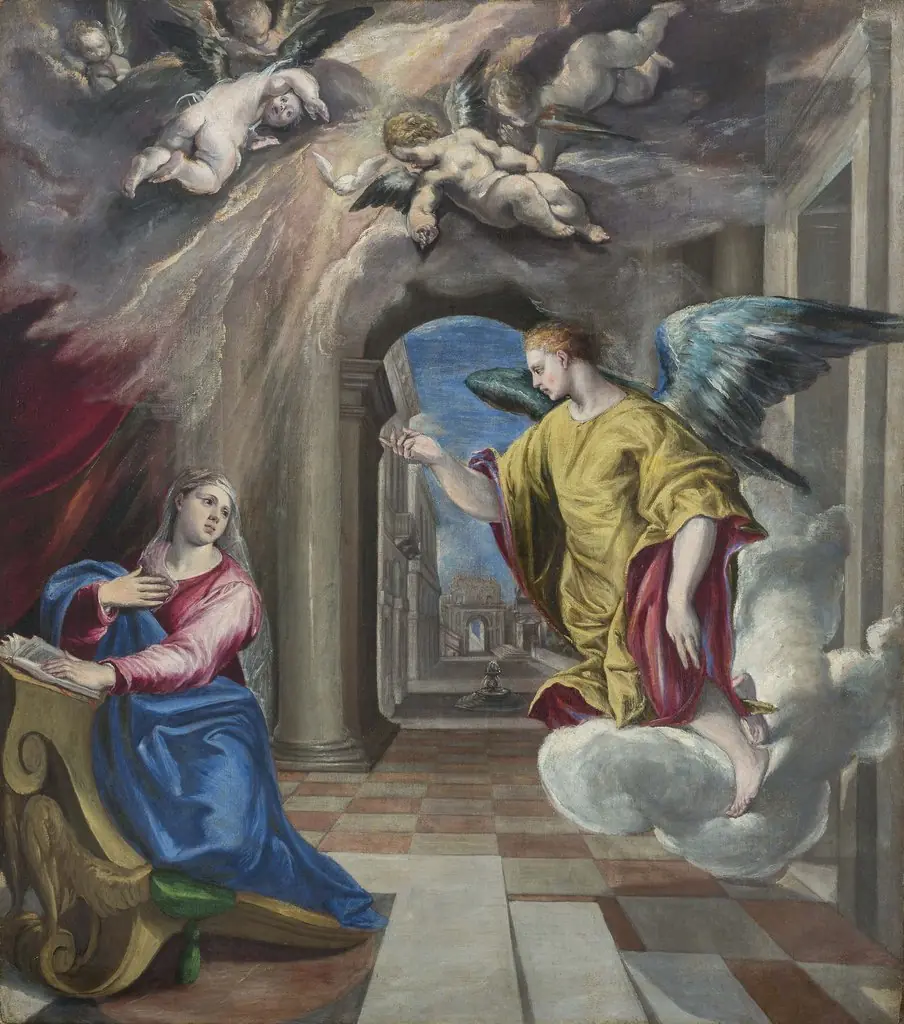
The painting shows the moment when the Archangel Gabriel announces to the Virgin Mary that she will bear the Son of God. In this scene Gabriel is depicted with a yellow robe and red lining, while Mary wears a pink tunic and a blue mantle, standing before a classical architectural setting that reflects Venetian influences from Titian and Tintoretto. The composition uses a diagonal arrangement and a central axis to organize the figures, with angels positioned in varied angles to heighten dynamism. Symbolically, the work conveys the theological theme of the Incarnation, emphasizing the divine announcement and Mary's acceptance, a subject repeatedly explored by El Greco across three Italian versions derived from the Modena Triptych. The artwork is housed in the Museo del Prado, Madrid, and was acquired in 1872 after passing through private ownership in 1868.
Technique & Style
The Annunciation is executed in oil paint on a wooden panel measuring approximately 26.7 × 20 cm, a small format that has led scholars to consider it a highly finished modello or compositional sketch related to the Modena Triptych and the later Catalan version. The Museo del Prado catalogues the work as oil on panel, though Harold Wethey described the technique as tempera on panel, reflecting a scholarly disagreement over the binding medium.
Stylistically, the painting belongs to El Greco's Venetian period and is associated with Mannerism. The figuration of the Virgin shows the influence of Titian, while the architectural setting and overall composition reflect Tintoretto, particularly in the classical interior and tiled floor that establish perspective. A monumental Vitruvian-inspired architecture rises in the background, and the exchange of glances between Mary and Gabriel is reinforced by a strong diagonal axis organizing the composition. Above, a glory break with angels shown in foreshortening adds dynamism, while the work still retains the classical canon of Byzantine art.
History & Provenance
The Annunciation was painted by El Greco during his Venetian period, with dating estimates ranging from circa 1570 to 1570-1575 depending on the scholar. According to José Álvarez Lopera, the composition derives from an engraving by Jacopo Caraglio, and the work is considered a highly finished sketch linked to the Modena Triptych. The documented ownership chain begins with Doña Concepción Parody. The painting was purchased from her in 1868 for the Museo de la Trinidad, and it was transferred to the Museo del Prado in 1872, where it remains today.
Context
Scholars identify this early work as a hinge between El Greco’s Cretan training and his Venetian assimilation, aligning it with the Mannerist currents of mid-16th-century Italy. According to José Álvarez Lopera, the composition derives from an engraving by Jacopo Caraglio, evidencing the artist’s engagement with reproductive prints circulating in Venice.
The painting is situated within El Greco’s Italian period, where Titian’s figuration and Tintoretto’s architectural dynamism inform Mary’s pose and the room’s perspectival construction. Its status as a refined sketch or compositional study for the Modena Triptych is debated, though Álvarez Lopera and Italian scholarship both emphasize its technical finish and Venetian formal language. Subsequent art-historical writing, including Harold Wethey’s catalogue raisonné and Tiziana Frati’s study, classifies it as a transitional piece bridging Byzantine canon with Venetian spatial invention.
Own this work as a print
Artist & collection
Artist
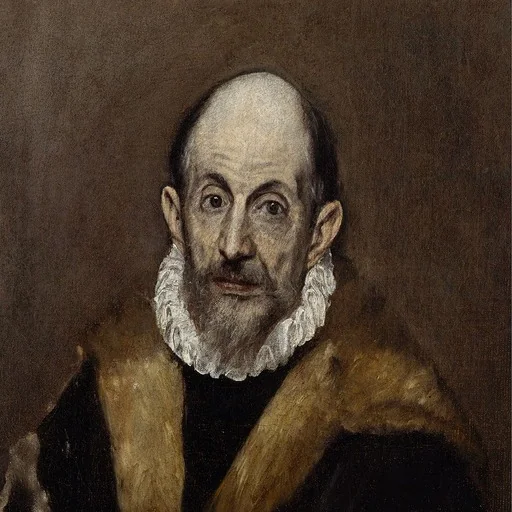
Doménikos Theotokópoulos was born in 1541 in Candia (modern Heraklion), the capital of Venetian-ruled Crete, where he was trained in the post-Byzantine tradition of icon painting.