Artwork
Palm Tree
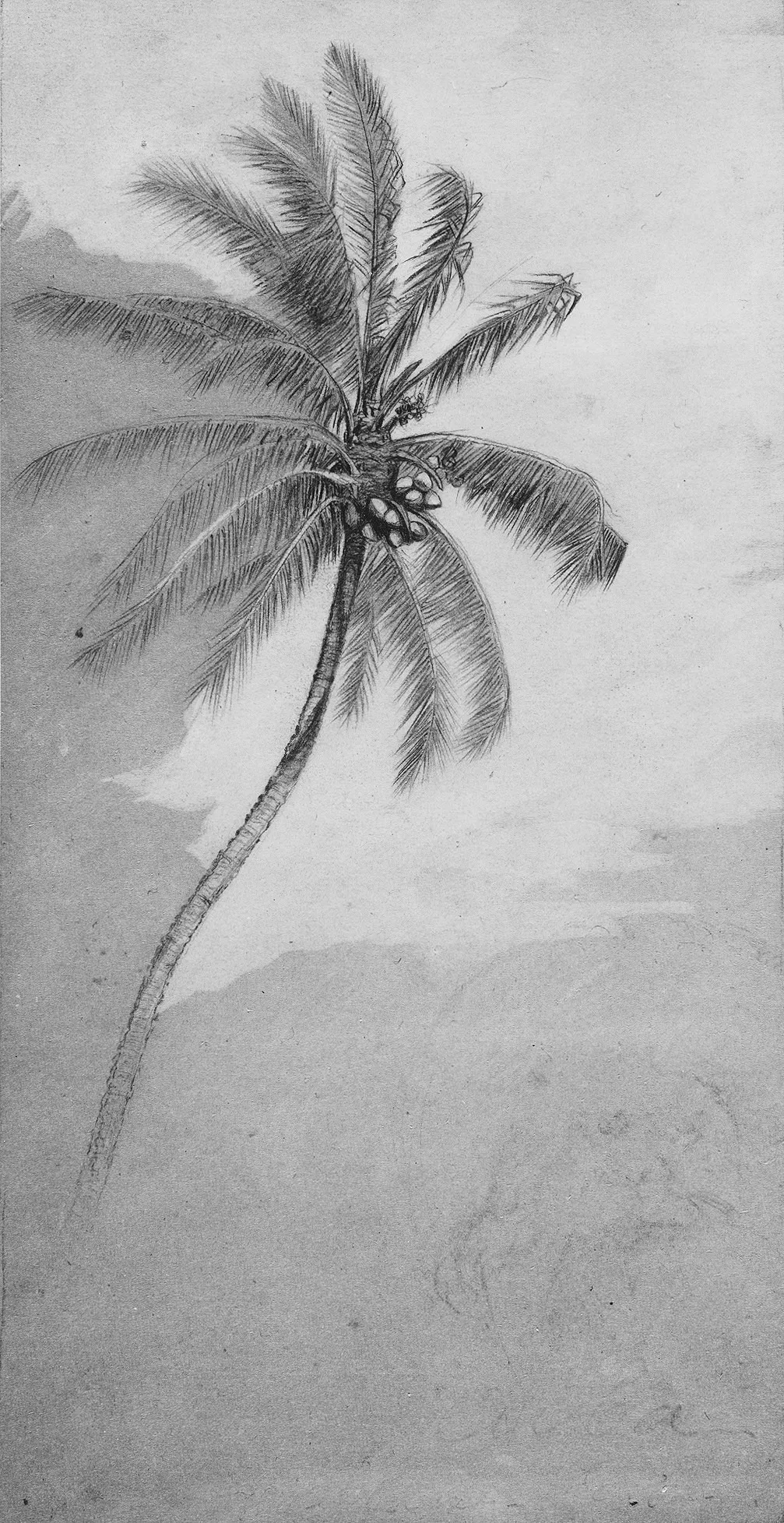
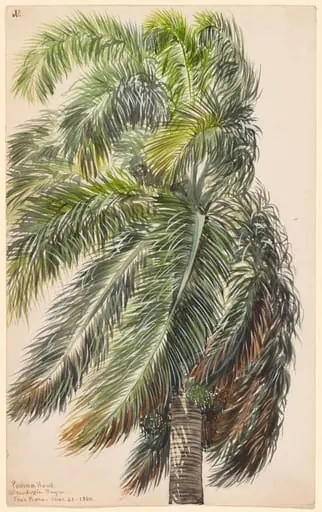
Palm Tree is an unspecified painting by the American Impressionist artist Elihu Vedder. It dates from 1890 and is held in the collection of the Metropolitan Museum of Art.
About this work
Subject & Meaning
The work focuses entirely on this botanical subject, stripping away extraneous landscape details to emphasize the form and presence of the plant itself.
Elihu Vedder's 1879 painting, titled Palm Tree, presents a singular, isolated depiction of a palm tree. The work focuses entirely on this botanical subject, stripping away extraneous landscape details to emphasize the form and presence of the plant itself. By isolating the tree against a neutral background, the composition directs the viewer's attention to the specific characteristics of the palm, treating it as a distinct entity rather than part of a broader narrative scene.
The painting stands as a study of the tree's natural structure, capturing its verticality and organic shape within a compact format.
History & Provenance
The painting titled Palm Tree was created by Elihu Vedder in 1879. This work, classified as a painting, depicts a tree and was completed at the start of that year. The piece is currently held in the collection of the Metropolitan Museum of Art.
Specific details regarding the original commission, the chain of ownership prior to its museum acquisition, or the precise circumstances of its creation are not provided in the available records.
The painting is held by the Metropolitan Museum of Art, New York, where it is accessioned as part of the museum’s holdings.
It was included in the exhibition “The Metropolitan Museum of Art Guide” published in 2012, which lists the work among highlights of the collection.
Overview
Elihu Vedder’s 1890 oil painting Palm Tree presents a solitary palm set against an almost empty horizon. The composition isolates the slender trunk and its fan‑like fronds, allowing the viewer’s eye to follow the graceful upward sweep of the foliage. The work is part of the Metropolitan Museum of Art’s collection and exemplifies Vedder’s interest in atmospheric, lightly rendered subjects during the late nineteenth‑century American Impressionist period.
Technique & Style
Vedder employs loose, sketch‑like brushwork to suggest movement in the fronds, while the trunk remains rendered in darker, more defined strokes. This contrast creates a sense of lightness in the foliage against a solid, grounded base, reflecting the artist’s blend of Symbolist sensibility with the softer tonalities associated with American Impressionism.
Context
At the time of its execution, American artists were increasingly engaging with European Impressionist techniques while retaining a distinct narrative focus. Vedder, known for his Symbolist illustrations, applied these influences to a straightforward, almost study‑like subject, bridging decorative illustration and fine‑art painting in a transitional artistic climate.
Artist & collection
Artist
Elihu Vedder (26 February 1836 – 29 January 1923) was an American symbolist painter, book illustrator and poet from New York City.

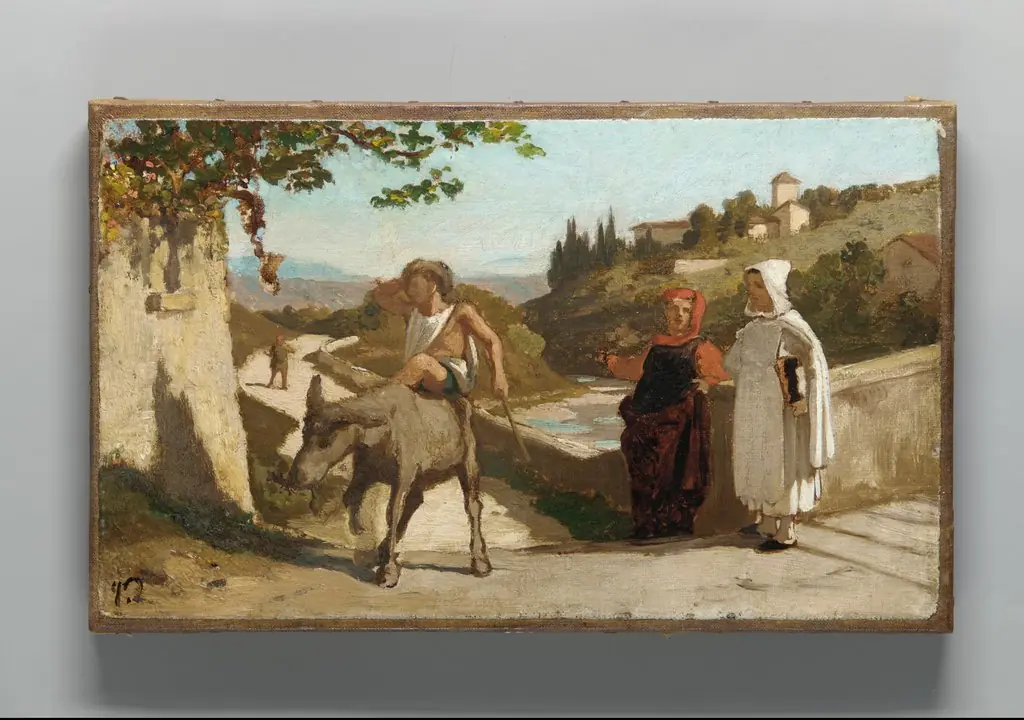 The Fable of the Miller, His Son, and the Donkey
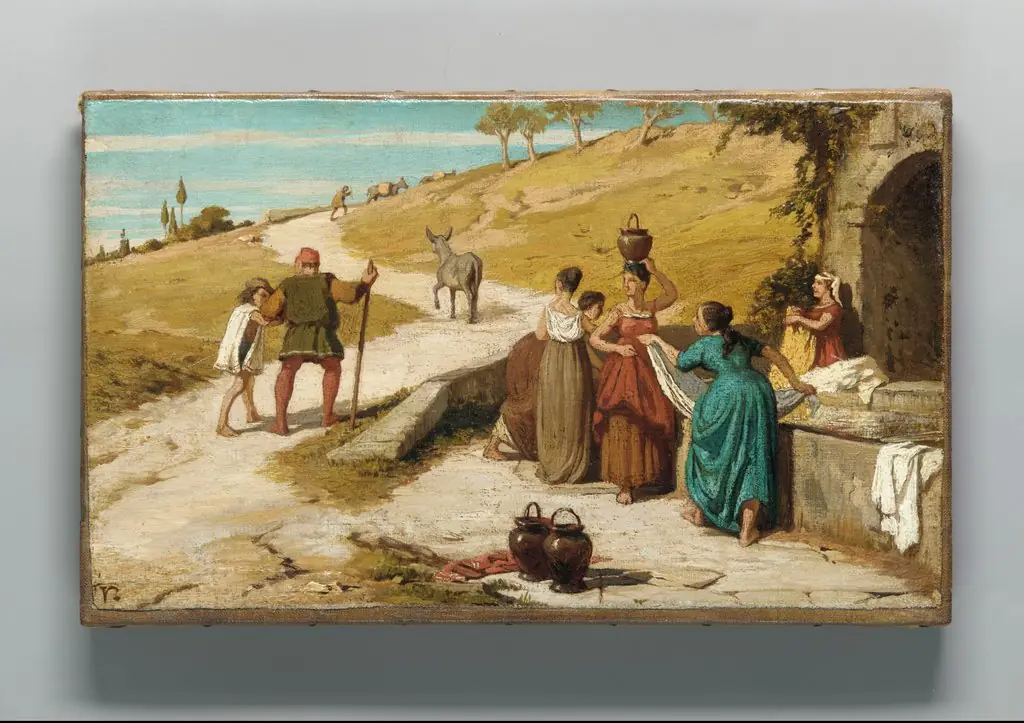 The Fable of the Miller, His Son, and the Donkey
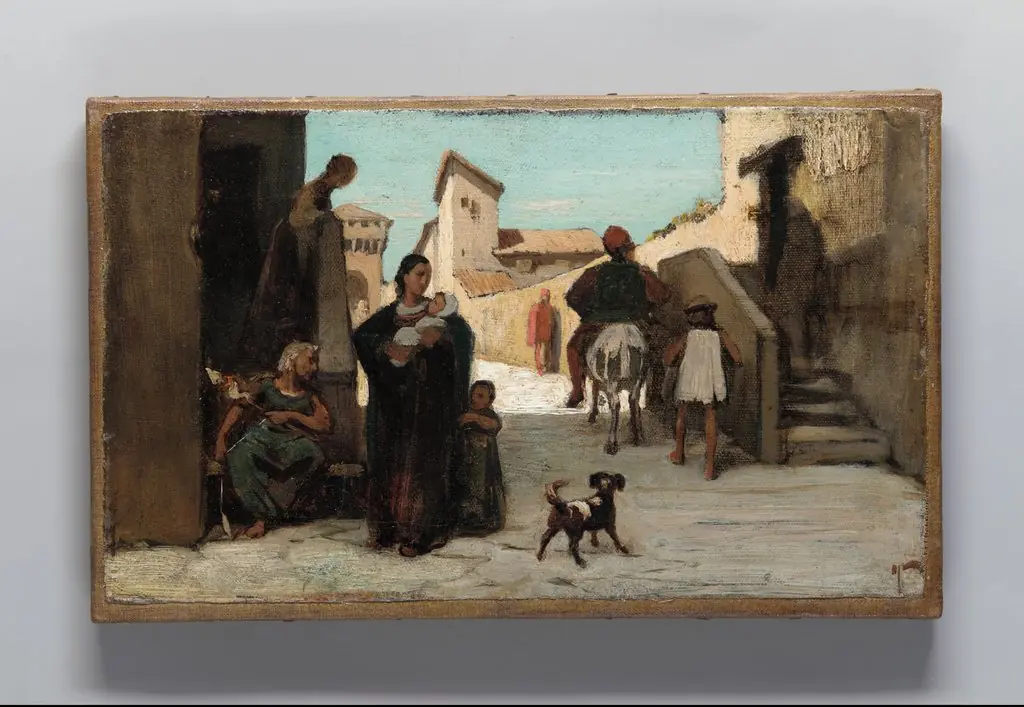 The Fable of the Miller, His Son, and the Donkey
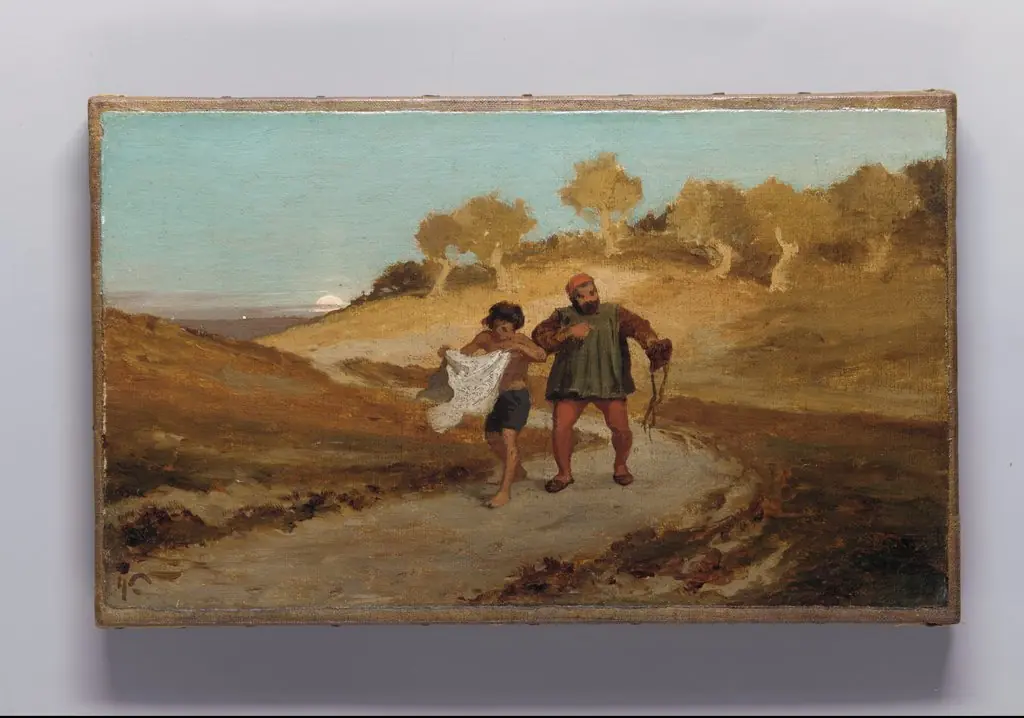 The Fable of the Miller, His Son, and the Donkey
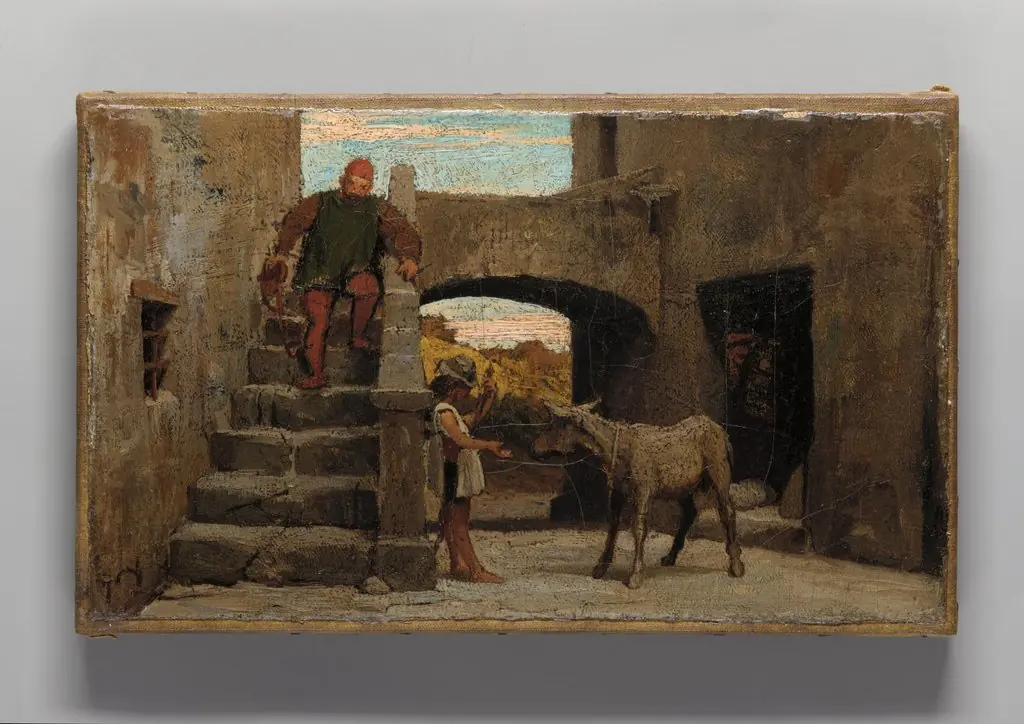 The Fable of the Miller, His Son, and the Donkey
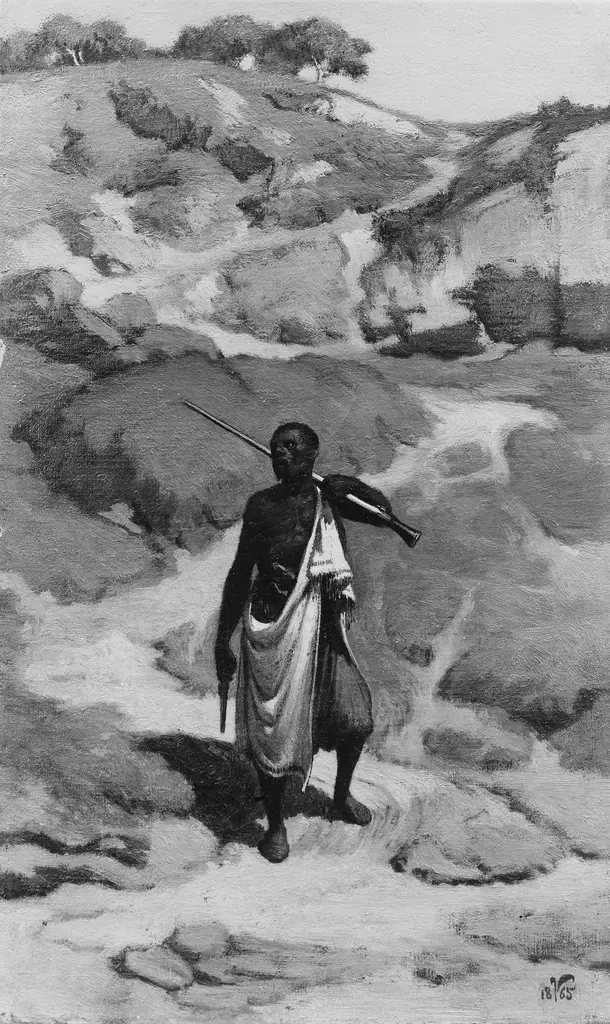 The African Sentinel
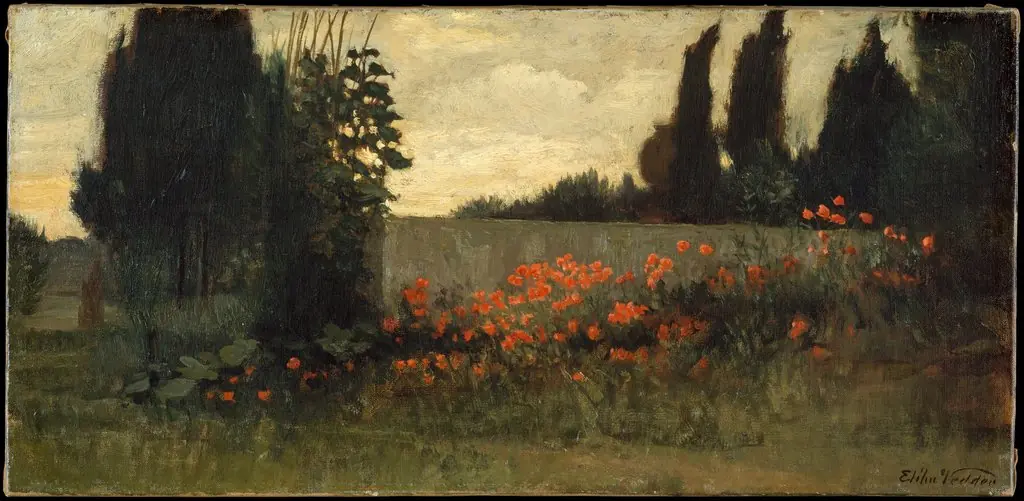 Cypress and Poppies
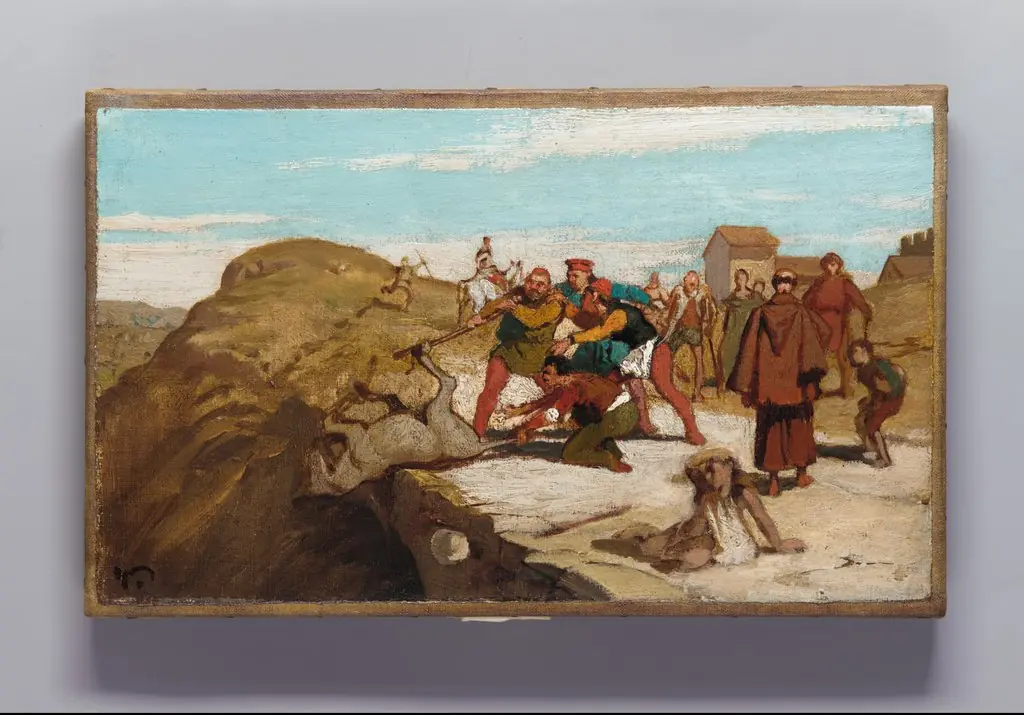 The Fable of the Miller, His Son, and the Donkey
 Palma Real
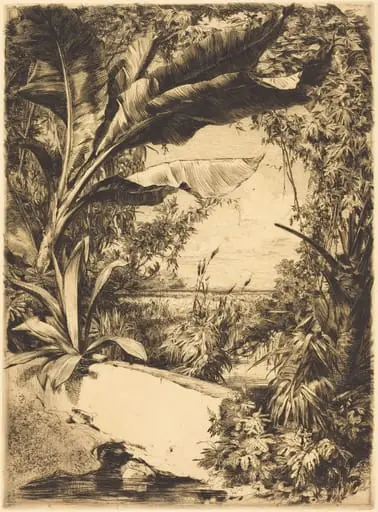 Plantes de Serre (Greenhouse or Aquatic Plants)
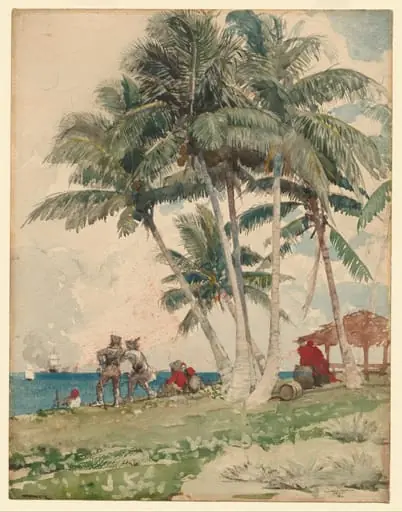 The Buccaneers
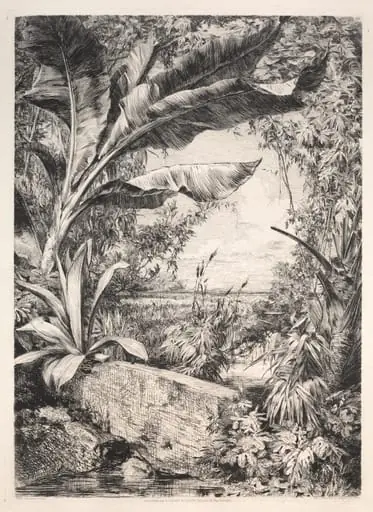 Plants of the Greenhouse
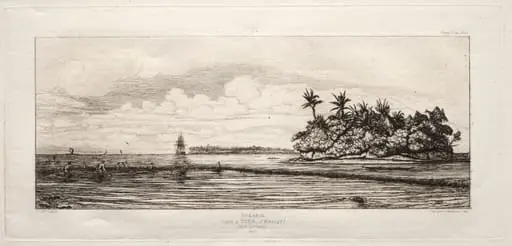 Oceanie
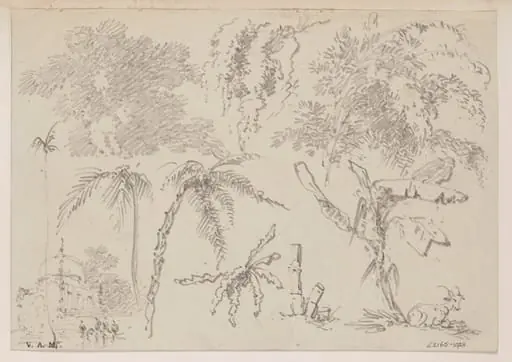 Studies of palms and other foliage, with a domed tomb and a goat
 River Scene with bridge
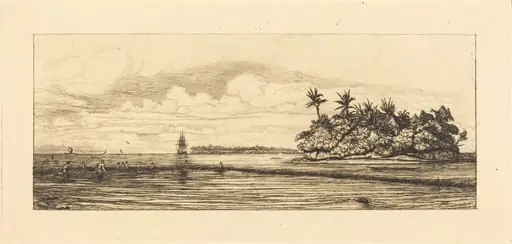 Océanie, ilots à Uvea (Wallis); Peche aux palmes, 1845 (Oceania: Fishing, Near Islands with Palms in the Uea or Wallis Group)
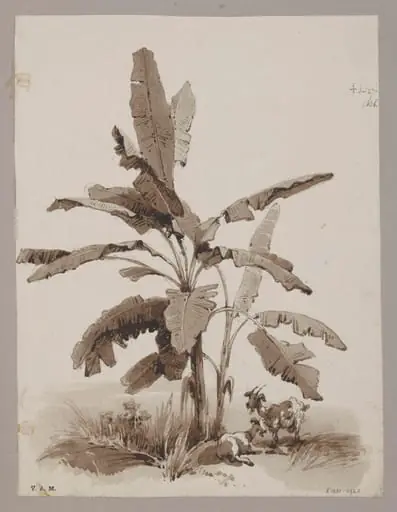 Plantain tree