Artwork
Queen Olga of Greece
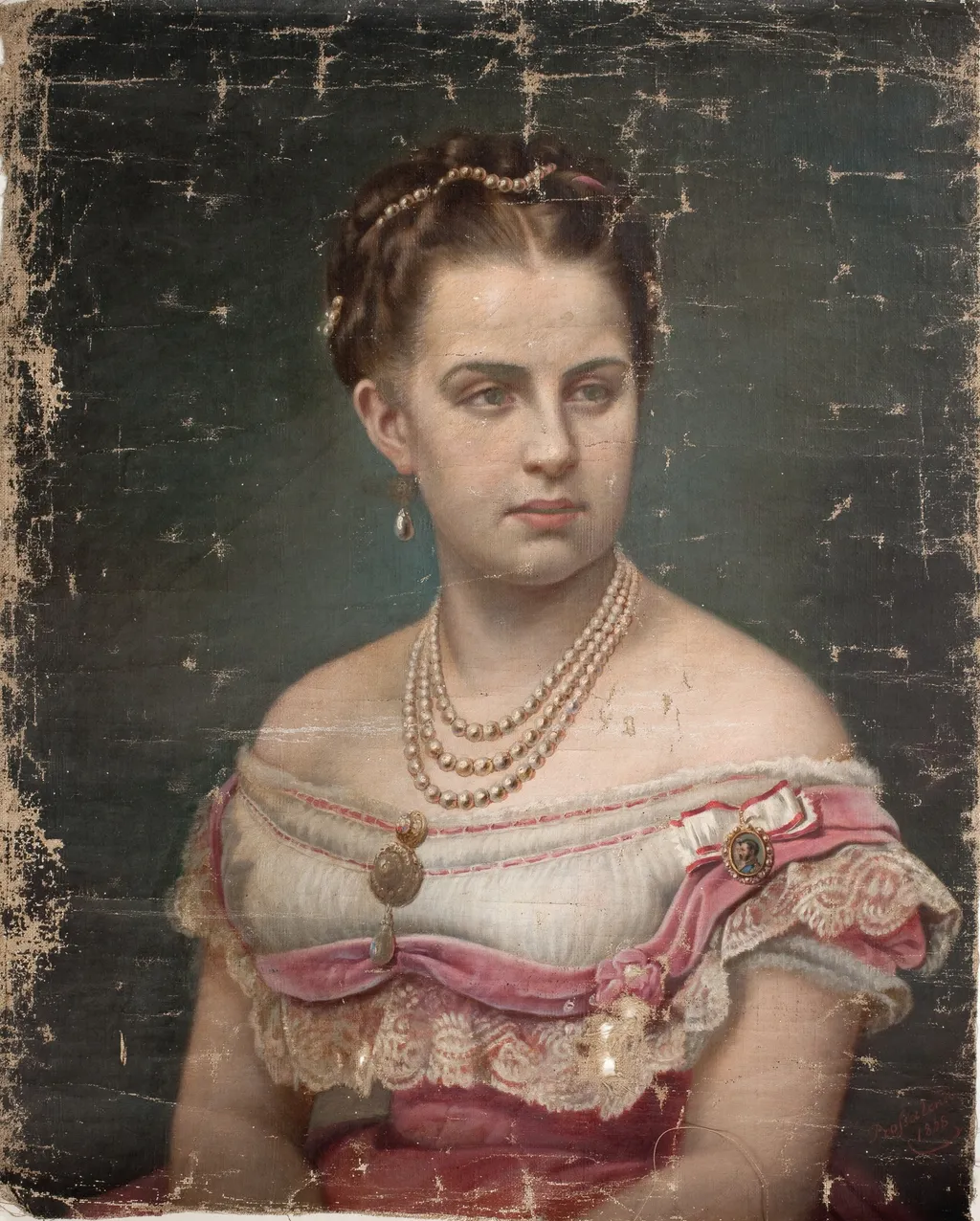
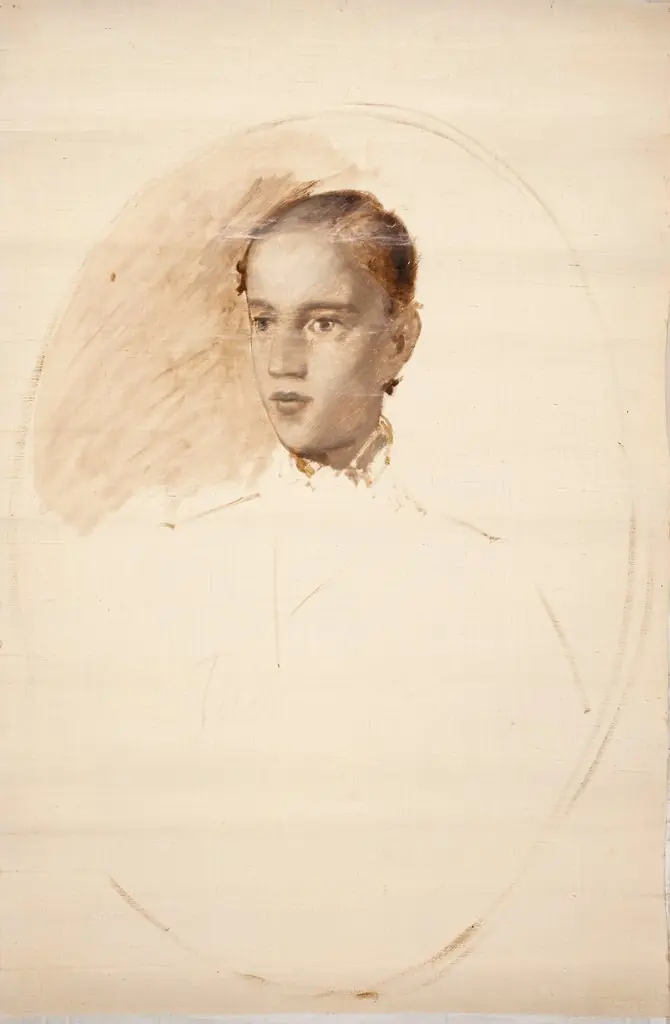
Queen Olga of Greece is an oil painting by the Realist artist Elisabeth Baumann. It dates from 1868 and is held in the collection of the Statens Museum for Kunst.
About this work
Subject & Meaning
The composition focuses entirely on the identity of Olga Constantinovna, establishing her status through the conventions of royal portraiture.
The work is a formal portrait depicting Olga Constantinovna of Russia, who later became Queen Olga of Greece. Painted in 1868 by Elisabeth Baumann, the piece presents the subject as the central and sole main figure. As a portrait genre work, its primary function is to capture the likeness and presence of the royal individual rather than to convey complex narrative symbolism or allegorical meaning.
The composition focuses entirely on the identity of Olga Constantinovna, establishing her status through the conventions of royal portraiture.
Technique & Style
The portrait was executed in oil paint on canvas and remains in its original support structure, showing a well-preserved surface with fine brushwork that defines the sitter’s features and period attire. The composition balances realistic rendering of facial expression with a restrained palette, emphasizing the formal dignity of Queen Olga of Greece.
History & Provenance
The portrait of Queen Olga of Greece was produced in 1868 by Elisabeth Baumann, working in oil on canvas. The painting depicts Olga Constantinovna of Russia and is classified as a portrait. It is held in the collection of the Statens Museum for Kunst, where it remains part of the institution's holdings.
No information is available in the provided sources regarding the circumstances of the commission, the prior ownership chain, or any transfers of the work prior to its acquisition by the museum.
The portrait of Queen Olga of Greece by Elisabeth Baumann is held in the collection of the Statens Museum for Kunst. The work, created in 1868, depicts Olga Constantinovna of Russia and is executed in oil paint on canvas. While the specific inventory or accession number is not provided in the available records, the painting's presence is confirmed within the museum's holdings in Copenhagen. No exhibition history is documented in the provided sources.
Context
Elisabeth Baumann painted Queen Olga of Greece in 1868, a portrait that entered the Statens Museum for Kunst collection and remains on display there. The work portrays Olga Constantinovna of Russia, reflecting 19th-century European fascination with royal subjects from the Greek court. Contemporary scholarship situates the painting within Baumann's early career in Rome, highlighting her role in bridging German Romantic portraiture with emerging Nordic academic traditions. Its presence in a Copenhagen institution underscores the transnational circulation of royal imagery during the period.
The painting's dimensions of 665 cm by 530 cm establish it as a large-scale formal portrait, consistent with elite patronage conventions of the era.
Legacy
The painting has been displayed at Statens Museum for Kunst and is recognized as a significant portrait of Queen Olga of Greece by Elisabeth Baumann, influencing later interpretations of 19th-century royal portraiture. Its presence in a major Danish national collection underscores its historical and artistic relevance.
Overview
Elisabeth Jerichau‑Baumann, a 19th‑century Polish‑Danish painter, executed an oil on canvas portrait of Queen Olga of Greece in 1868. Rendered in a realist manner, the work presents the Russian‑born queen, Olga Constantinovna, who married King George I of Greece. The painting resides in the collection of Denmark’s Statens Museum for Kunst.
Own this work as a print
Artist & collection
Artist
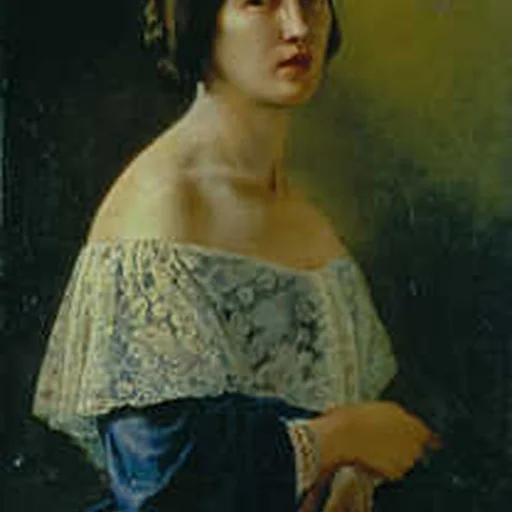
Anna Maria Elisabeth Lisinska Jerichau-Baumann (21 November 1819 – 11 July 1881) was a Polish-Danish painter. She was married to the sculptor Jens Adolf Jerichau.

 Guy Little Theatrical Photograph
 Purificación Fontán, marquesa del Pazo de la Merced
 Elisa Tapia y Parrella
 Josefa Coello de Portugal
 Maria Amalia of Saxony, Queen of Spain
 Guy Little Theatrical Photograph
 Portretul doamnei Ana Th. Aman
 Portretul doamnei Ana Th. Aman
 H Beard Print Collection
 Untitled
 Portret de femeie
- Queen Olga of Greece