Artwork
Last Words of the Emperor Marcus Aurelius
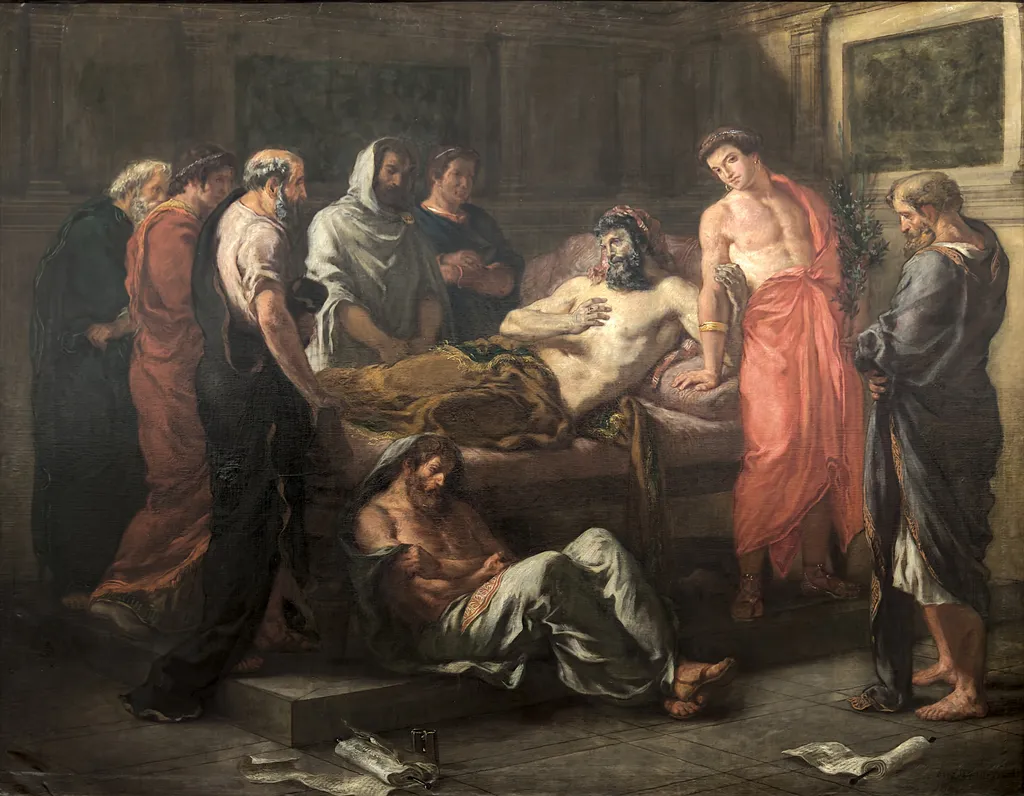
Last Words of the Emperor Marcus Aurelius is an oil painting by the French Romanticist artist Eugène Delacroix. It dates from 1844 and is held in the collection of the Museum of Fine Arts of Lyon.
About this work
Technique & Style
Executed in oil on canvas, this large-scale history painting measures 348 by 260 cm.
Executed in oil on canvas, this large-scale history painting measures 348 by 260 cm. The work was begun in May 1843 with foundational glazes and underdrawing applied by Louis de Planet under Delacroix's direction, before the master resumed and completed the piece between January and autumn 1844. Stylistically, the composition marks an austere turn toward neoclassical traditions, utilizing dramatic chiaroscuro to contrast the shadowed, grieving stoic philosophers with the illuminated figure of Commodus. Delacroix employs vibrant, vibrating colors, specifically juxtaposing the violent red of Commodus's robe against green laurel elements, a technique reflecting his post-1832 North African influences.
The brushwork avoids rigid contours, instead using visible strokes and arabesques to construct figures through masses and drapery folds, creating a sense of movement and tragic intensity.
History & Provenance
The painting was conceived by Delacroix as early as 1824 and begun in May 1843, with his student Louis de Planet laying in the sketch and foundational glazes under Delacroix’s direction. Delacroix resumed work in January 1844 and completed the canvas in the autumn of that year, dating the finished work to 1844. It was first shown at the Paris Salon of 1845.
After remaining in Delacroix’s possession, the French state acquired it on 19 May 1858 for 4 000 francs and transferred it to Lyon in 1860, where it has since been housed in the Musée des Beaux-Arts de Lyon. Several versions exist, the Lyon canvas being the largest, while a smaller easel‑sized variant (the “Santa Barbara” version) also survives.
The primary version of Last Words of the Emperor Marcus Aurelius is held in the collection of the Museum of Fine Arts of Lyon. The French state acquired the painting on May 19, 1858, for 4,000 francs before transferring it to the city of Lyon in 1860. While multiple versions exist, including a smaller variant, the large canvas residing in Lyon measures 348 cm by 260 cm. The work was first publicly exhibited at the Paris Salon of 1845, where it appeared in the official catalog with a descriptive commentary on the scene.
Contemporary reviews from this exhibition noted the painting's somber tones and received mixed critical responses, though some critics praised its sublime quality.
Context
Exhibited at the Paris Salon of 1845, the painting marked a stylistic shift for Eugène Delacroix toward austere subject matter and an increased attachment to classical traditions, drawing inspiration from Nicolas Poussin and Jacques-Louis David. Contemporary reception was divided; while the official catalog criticized the depiction of the emperor as prematurely decomposed and lacking nobility, Charles Baudelaire praised the work as sublime and incomprehended. Scholars interpret the composition as a meditation on the fragility of civilization, contrasting the stoic virtue of Marcus Aurelius with the hedonistic impulse represented by his son Commodus.
This thematic focus on the end of virtuous eras aligns with Delacroix's broader skepticism regarding infinite social progress, a view he articulated in his personal journals during the 1840s.
Legacy
Critical reception at the Salon of 1845 was sharply divided; while Charles Baudelaire praised the work as “a beautiful, enormous, sublime and misunderstood painting,” most reviewers faulted its somber palette and the perceived lack of nobility in some figures, noting the emperor’s cadaverous greenish-yellow tones and the awkward drapery. By contrast, the painting’s later placement in the Musée des Beaux-Arts de Lyon (acquired by the state in 1858) secured its status as a canonical Romantic history canvas. Its austere meditation on Stoic virtue and dynastic decline influenced later generations of French painters who revisited themes of heroic mortality and political transition in the decades after 1850.
Overview
Eugène Delacroix's 1844 oil painting, Last Words of the Emperor Marcus Aurelius, depicts the Roman emperor's final moments. This work illustrates Delacroix's turn towards more restrained historical themes and reflects his growing engagement with classical antiquity. The most recognized version of this composition is housed in the Musée des Beaux-Arts de Lyon, which also holds a preparatory sketch. The painting made its public debut at the Paris Salon in 1845.
Subject & Meaning
The painting captures the Roman emperor Marcus Aurelius on his deathbed, in the act of entrusting his son, Commodus, to his assembled councilors and officers. This scene underscores a pivotal moment of transition and responsibility within the Roman Empire, highlighting themes of succession and duty. Delacroix chose a subject that emphasizes solemnity and the weight of imperial legacy.
Own this work as a print
Artist & collection
Artist
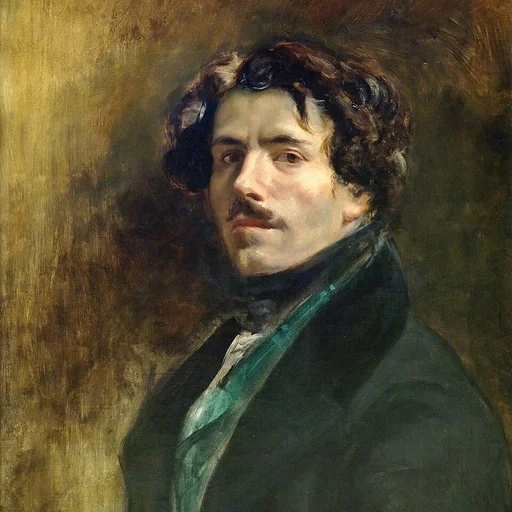
Ferdinand Victor Eugène Delacroix ( DEL-ə-krwah, -KRWAH; French:; 26 April 1798 – 13 August 1863) was a French Romantic artist who was regarded as the leader of the French Romantic school.

- Jacob blesses the sons of Joseph
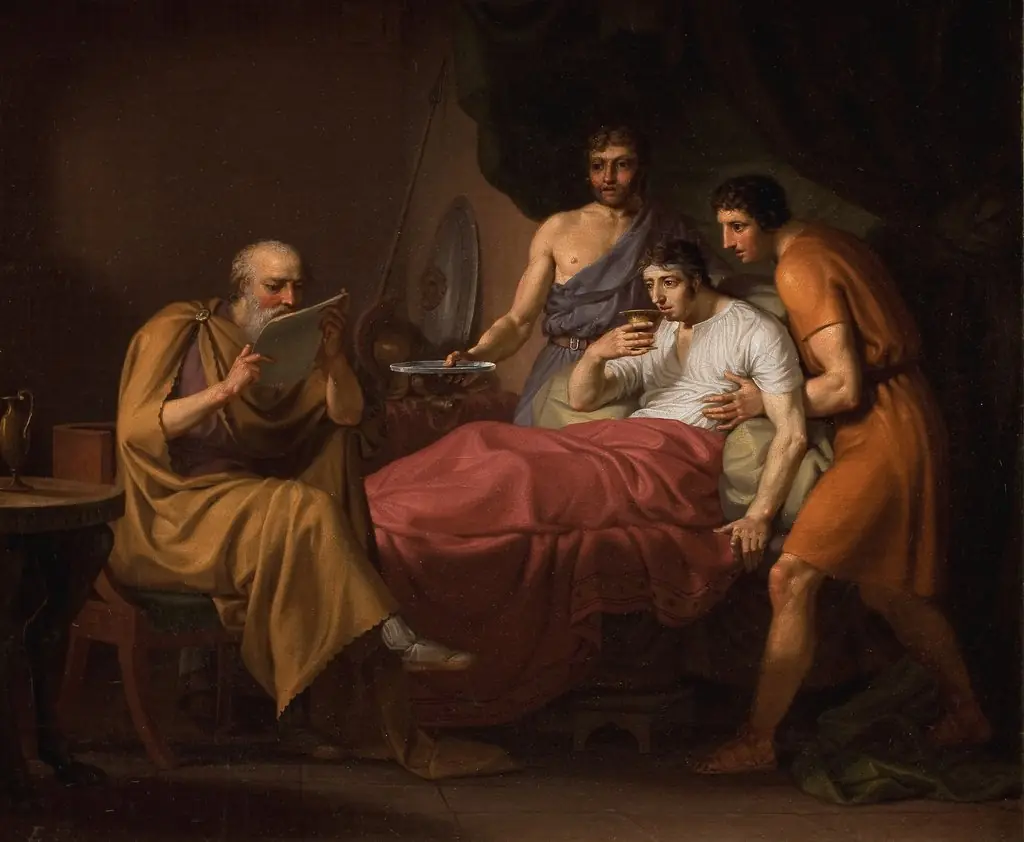 Alexander den Store på sygelejet
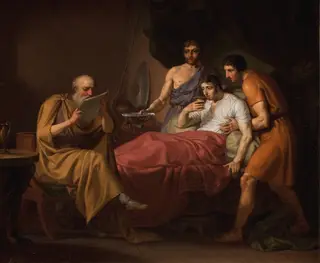 Alexander the Great on his Sickbed
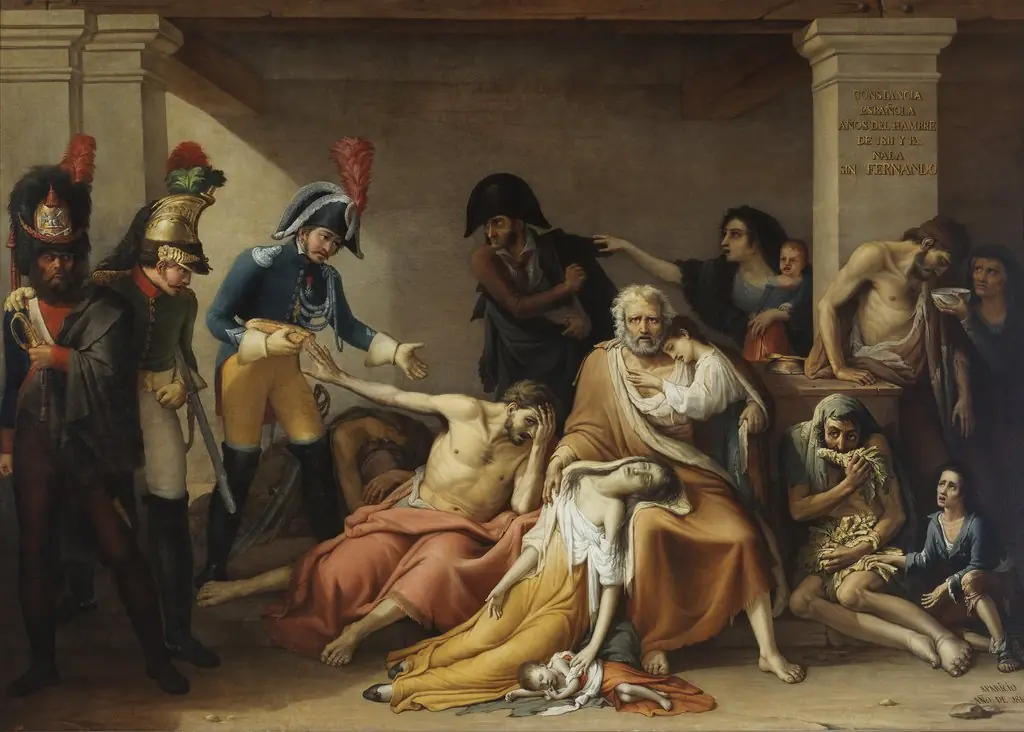 El año del hambre de Madrid
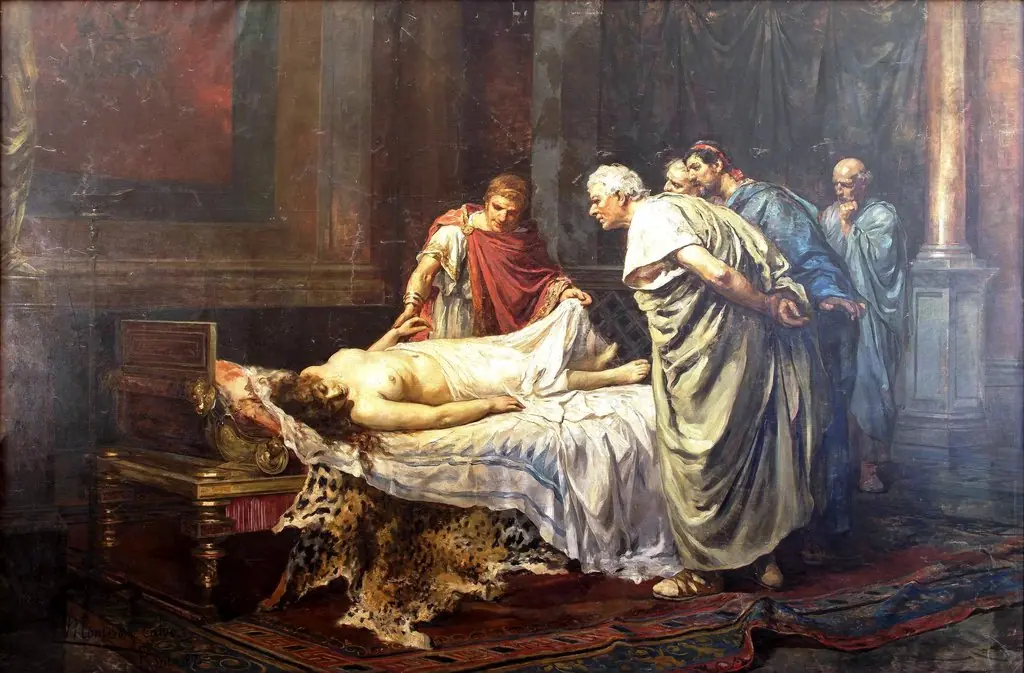 Nero before the corpse of his mother, Agrippina the Younger
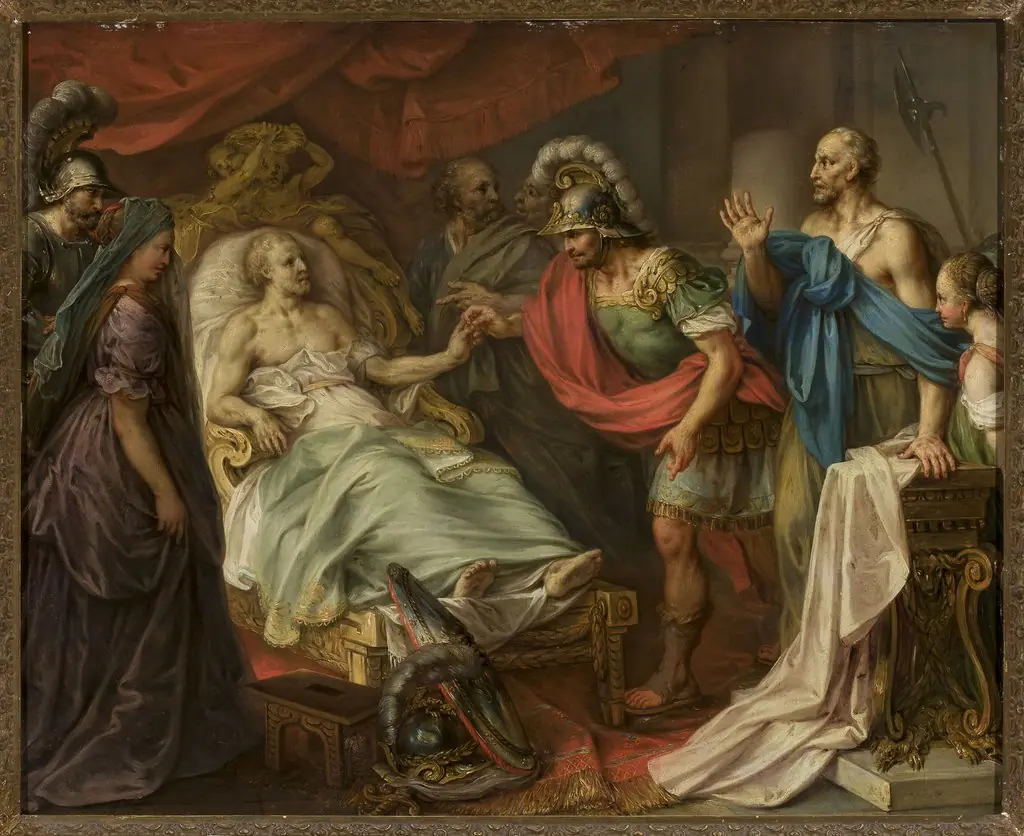 Death of Belisarius
 Jacob Blesses Ephraim and Manasseh
 Tod des Cato von Uttica
 Sócrates reprendiendo a Alcibíades en casa de una cortesana
 De dood van Phocio
 Pylades and Orestes Brought as Victims before Iphigenia
 Scipios Mäßigung