Artwork
Musical Instruments
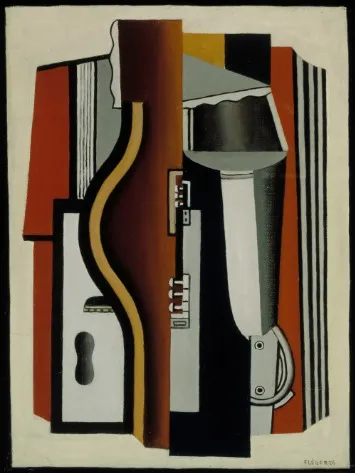
Musical Instruments is an oil painting by the Cubism Synthetic artist Fernand Léger. It dates from 1926 and is held in the collection of the Finnish National Gallery.
About this work
Overview
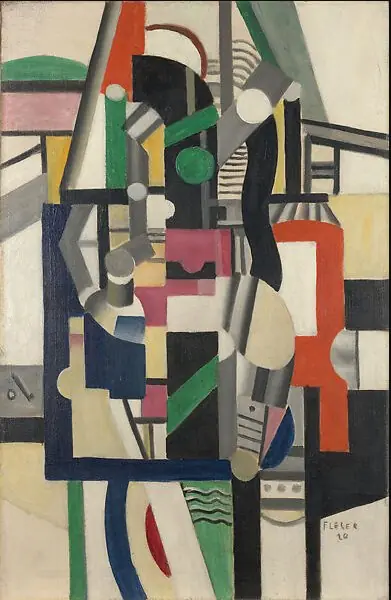
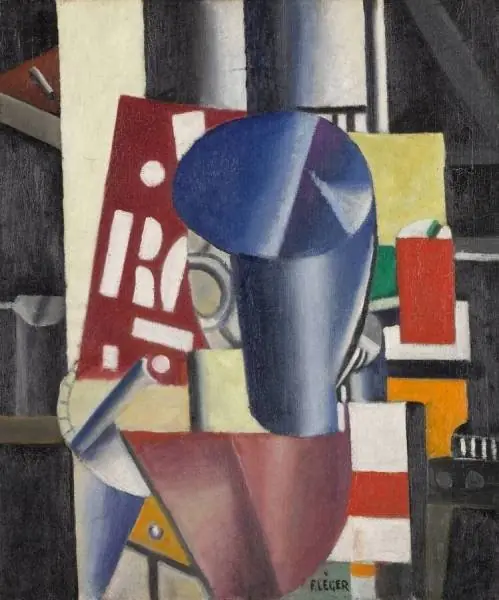
Painted in 1926, Musical Instruments is an oil on canvas still life by Fernand Léger. It belongs to the collection of the Ateneum Art Museum in Helsinki. The work presents a group of musical objects arranged in a dynamic, overlapping composition. Léger’s approach blends mechanical precision with rhythmic abstraction, transforming everyday items into structured, almost architectural forms.
Subject & Meaning
Léger’s focus on mechanical forms reflects an interest in modernity, where human-made objects carry the rhythm of industrial life.
The painting includes a guitar, flute, and trumpet, rendered not as realistic objects but as simplified, geometric shapes. These instruments suggest sound and motion without depicting them literally. Their arrangement implies a silent orchestra, frozen mid-performance.
Léger’s focus on mechanical forms reflects an interest in modernity, where human-made objects carry the rhythm of industrial life.
Technique & Style
Léger employs bold, clean outlines and flat planes of color to define each instrument. Cool hues, blues, greens, and grays, contrast with the warm, ochre background, enhancing spatial depth. Forms are fractured and layered, creating a sense of overlapping surfaces.
The brushwork is deliberate and controlled, avoiding texture in favor of sharp, graphic clarity characteristic of his mechanical aesthetic.
History & Provenance
Completed in 1926, the painting entered the Ateneum’s collection through Finnish art patronage in the early 20th century. It was acquired during a period when Scandinavian institutions were actively collecting modern French art. Its presence in Helsinki reflects broader European interest in Cubist-derived styles after World War I, particularly those emphasizing structure and industrial themes.
Context
Léger created this work amid the rise of modernist movements that sought to reconcile art with the machine age. Influenced by Cubism and early industrial design, he moved away from naturalism toward simplified forms. Musical Instruments aligns with his broader exploration of how everyday objects could embody the energy and rhythm of contemporary urban life, detached from traditional symbolism.
Legacy
The painting exemplifies Léger’s distinctive synthesis of abstraction and accessibility. It influenced later generations of artists interested in the intersection of art and industrial aesthetics. While not widely exhibited outside Nordic collections, its clarity of form and color continue to serve as a reference point in studies of interwar modernism and the representation of sound through visual means.
Artist & collection
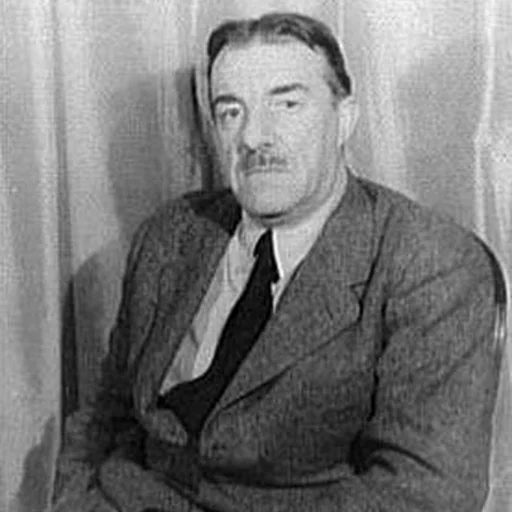
Artist
Joseph Fernand Henri Léger was a French painter, sculptor, and filmmaker. In his early works he created a personal form of cubism which he gradually modified into a more figurative, populist style. His boldly simplified…