Artwork
Adoration of Camaldoli
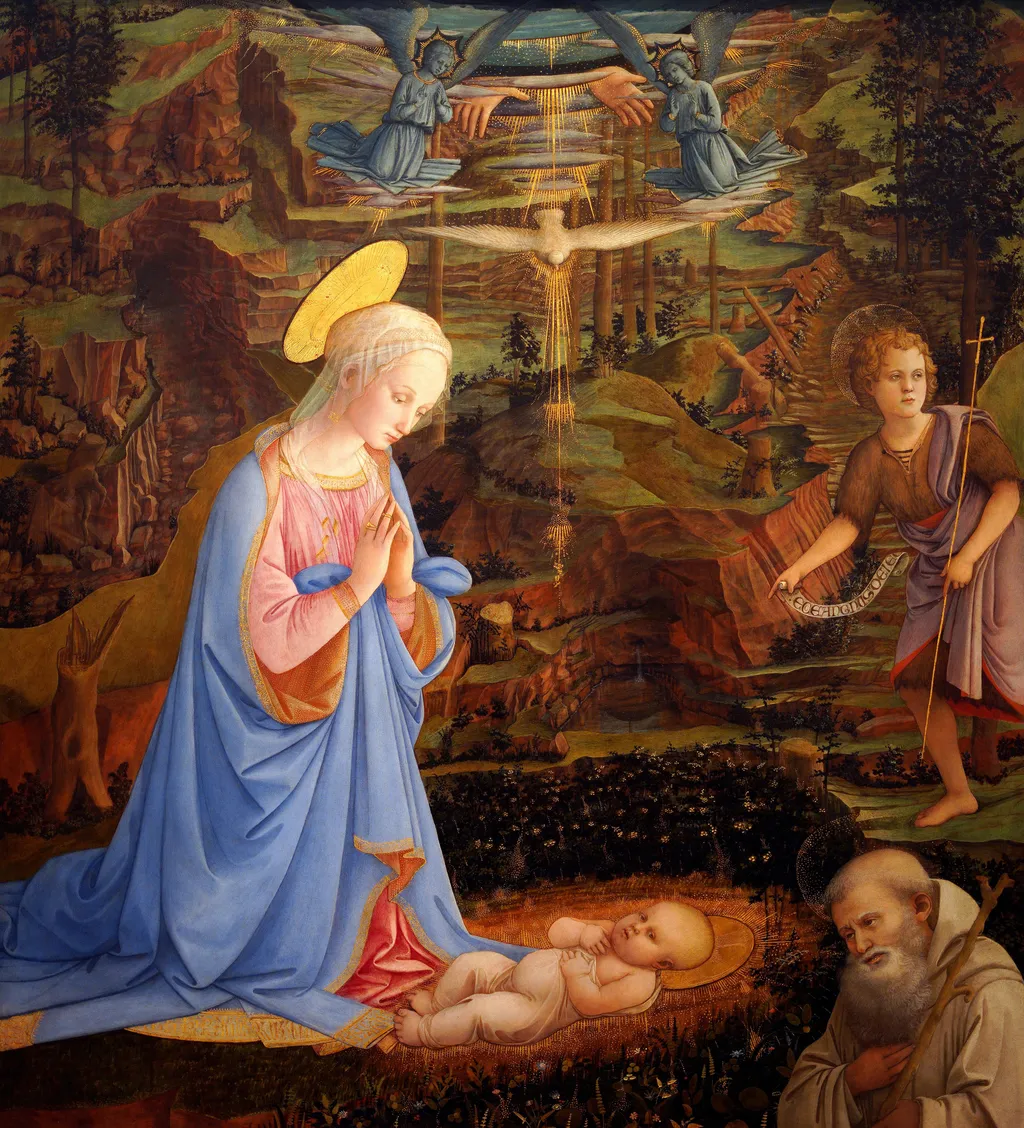
Adoration of Camaldoli is a tempera painting by the Early Renaissance artist Filippo Lippi. It dates from 1463 and is held in the collection of the Uffizi Gallery.
About this work
Subject & Meaning
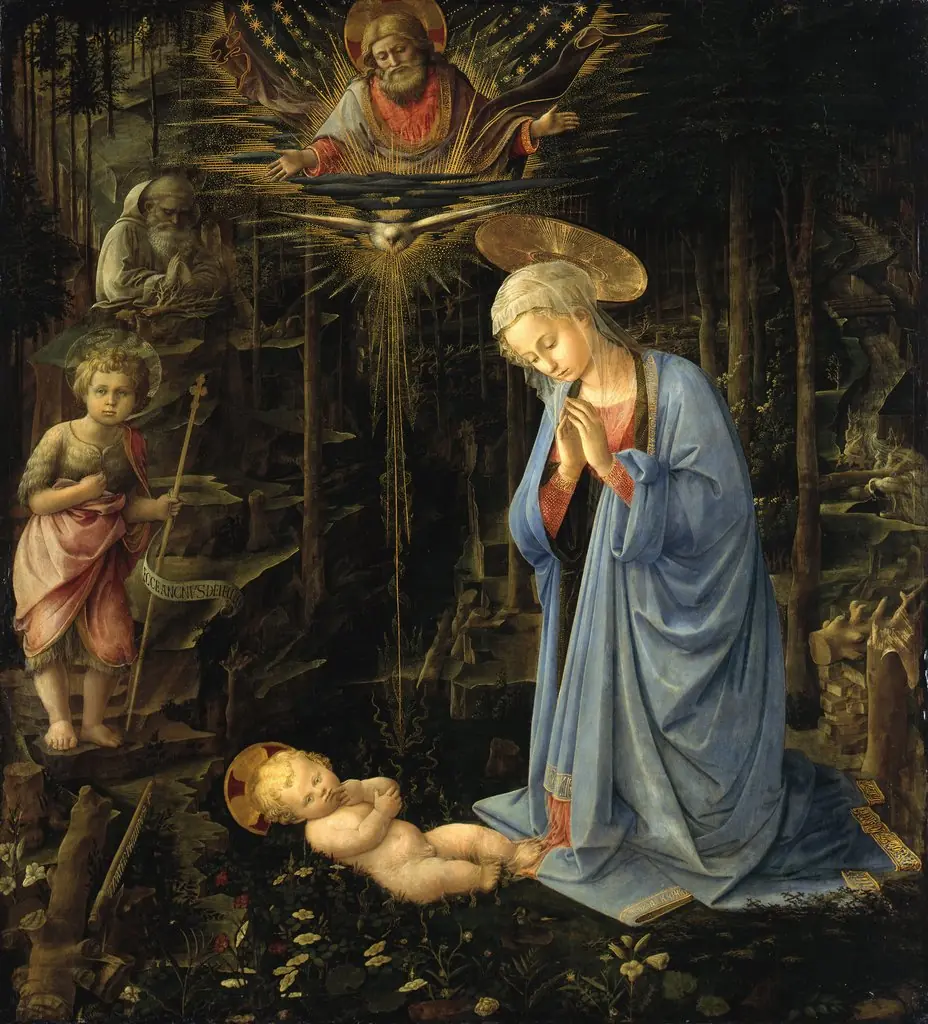
The painting depicts the Nativity of Jesus, with the Christ Child lying on the grass at the center of the composition, adored in prayer by the Virgin Mary.
The painting depicts the Nativity of Jesus, with the Christ Child lying on the grass at the center of the composition, adored in prayer by the Virgin Mary. The scene unfolds as a unified representation of the Christian dogma of the Trinity: the Holy Spirit descends as a white dove emitting rays of golden light, while the large open hands of God appear at the top of the painting, flanked by two kneeling angels.
On the right side stand two saints. The adolescent John the Baptist is shown with his characteristic worn tunic and a slender wooden pastoral staff. Beside him appears an elderly monk identified as Saint Romuald, founder of the Camaldoli Hermitage, the monastic destination for which the work was commissioned by Lucrezia Tornabuoni for a cell rebuilt by her husband Piero in 1463. The presence of Romuald directly links the iconography to the Camaldolese order that was to receive the painting.
Technique & Style
The Adoration of Camaldoli is executed in tempera on a wooden panel, measuring 140 × 130 cm. The medium produces a matte, finely detailed surface characteristic of early Renaissance panel painting.
The composition unfolds against a flat yet richly detailed natural backdrop. The Virgin Mary kneels in prayer at the left, attending the Christ Child who lies on the grass at the center. Above, the Holy Spirit descends as a white dove emitting golden rays of light, sent forth by the open hands of God the Father positioned at the top of the panel; two kneeling angels appear beside these divine hands. The entire arrangement serves as a visual exposition of the Trinity.
On the right stand two saints: the youthful John the Baptist, identifiable by his worn tunic and simple wooden staff, and the elderly Romuald, founder of the Camaldoli hermitage. Scholarly debate has centered on stylistic references to Beato Angelico, initially read as signs of Lippi's early manner but later reassessed as evidence of his mature phase.
History & Provenance
The Adoration of Camaldoli was commissioned by Lucrezia Tornabuoni for a cell in the Camaldoli Monastery, which her husband Piero il Gottoso had rebuilt in 1463. The work is dated 1463 and painted in tempera on panel, measuring 140 cm by 130 cm. The painting depicts the Nativity of Jesus with the Virgin Mary, the Christ Child, the young Saint John the Baptist, and Saint Romuald, founder of the Camaldoli Hermitage.
It entered the Uffizi Gallery in 1919. The attribution to Filippo Lippi was first proposed by Pudelko, who initially considered it an early work due to stylistic echoes of Beato Angelico, but later scholarship by Bernard Berenson reassessed it as a mature phase painting. A restoration was carried out in 2007 by Daniele Rossi.
Since 1919 the painting has been held by the Galleria degli Uffizi in Florence, where it remains in the collection; it is recorded with the dimensions 140 cm × 130 cm.
The work was first exhibited publicly after its attribution to Filippo Lippi and has been included in the Uffizi’s holdings since its acquisition. A major restoration was undertaken in 2007 by Daniele Rossi.
Context
Scholarly debate regarding the *Adoration of Camaldoli* centers on its chronological placement within Filippo Lippi's career. Pudelko initially attributed the work to the artist's early period, citing stylistic references to Beato Angelico. However, Bernard Berenson later challenged this view, arguing that these same influences indicated a more mature phase, thereby reversing the traditional dating of the piece. The painting is historically significant for its commission by Lucrezia Tornabuoni for the Camaldoli Monastery, a project linked to her husband Piero il Gottoso's 1463 rebuilding efforts. The inclusion of Saint Romuald, founder of the Camaldoli Hermitage, alongside the young John the Baptist, anchors the work within its specific religious and institutional context. Since 1919, the panel has resided in the Uffizi Gallery, where it underwent restoration in 2007 by Daniele Rossi.
Own this work as a print
Artist & collection
Artist
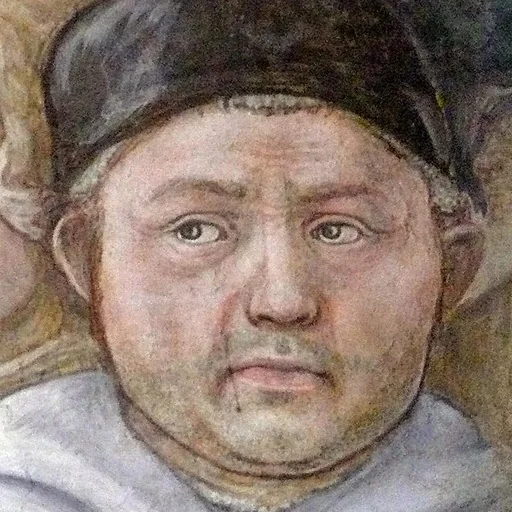
Filippo Lippi (c. 1406 – 8 October 1469), also known as Lippo Lippi, was an Italian Renaissance painter of the Quattrocento (fifteenth century) and a Carmelite priest. He was an early Renaissance master of a painting…

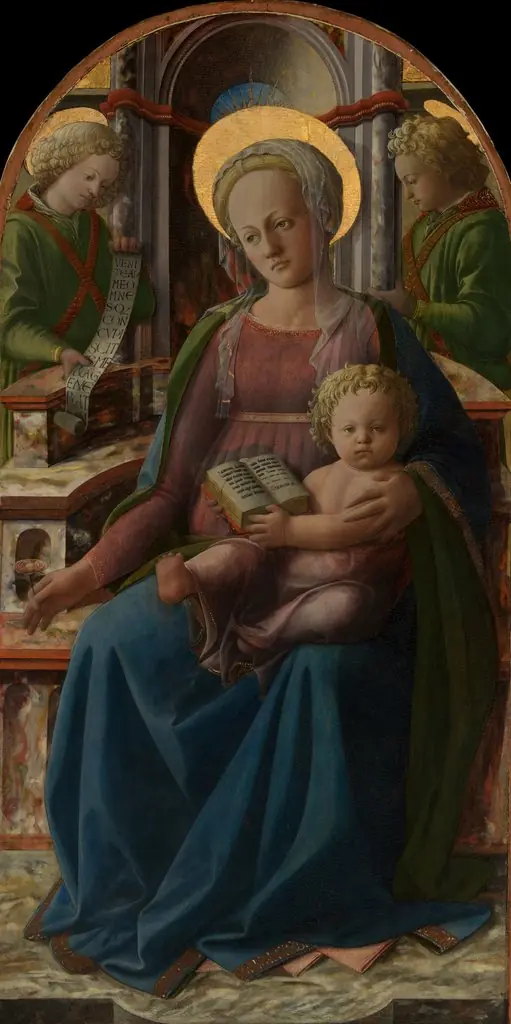 Madonna and Child Enthroned with Two Angels
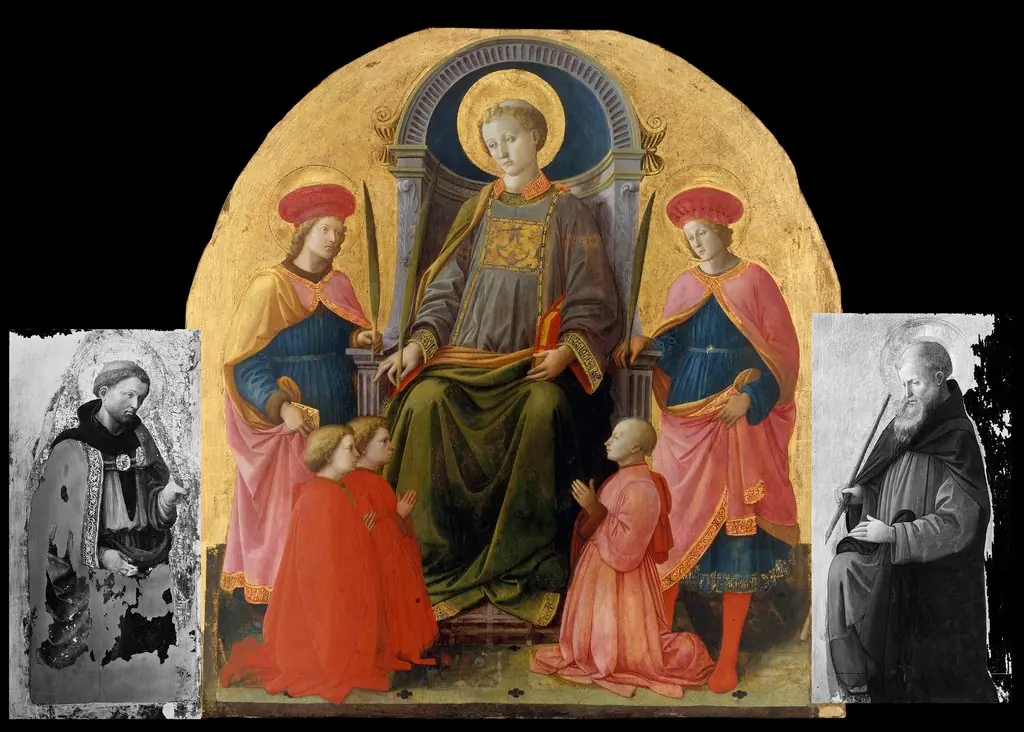 Saint Lawrence Enthroned with Saints and Donors
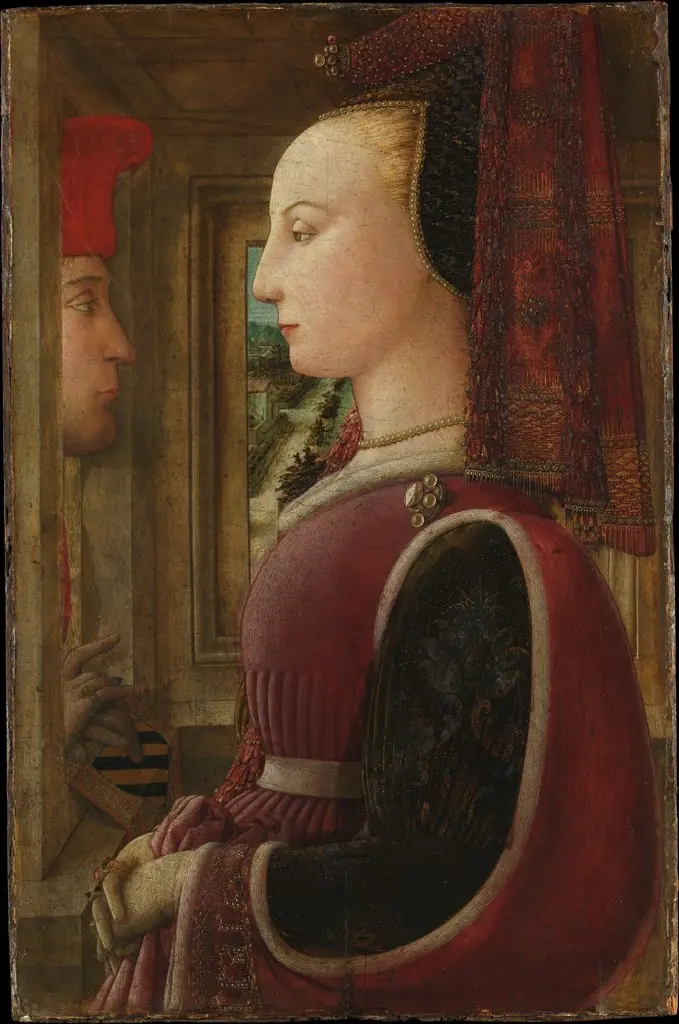 Portrait of a Woman with a Man at a Casement
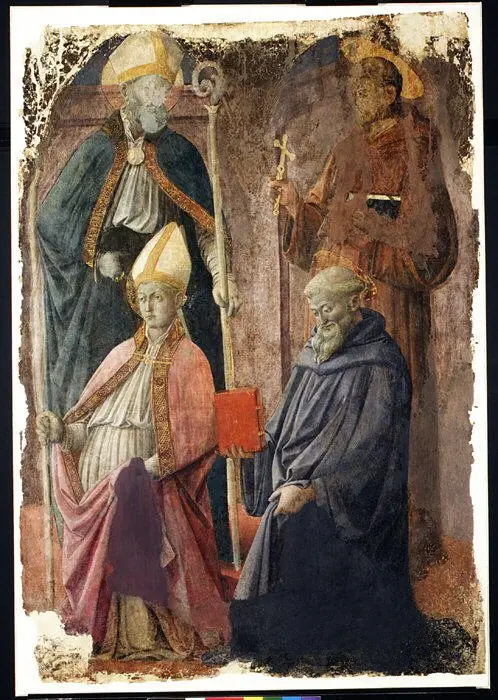 Saints Augustine and Francis, a Bishop Saint, and Saint Benedict
 Madonna and Child with Angels and Saints
 Adoration in the Forest
 Madonna and Child
 Adoration of the Child with SS. Joseph, Jerome, Hilarion, Magdalena and angels