Artwork
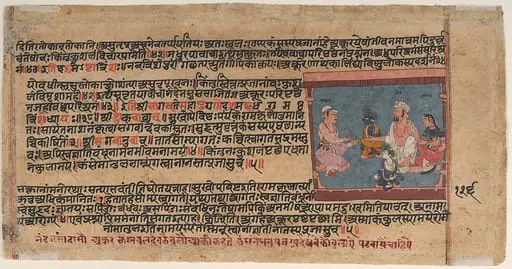
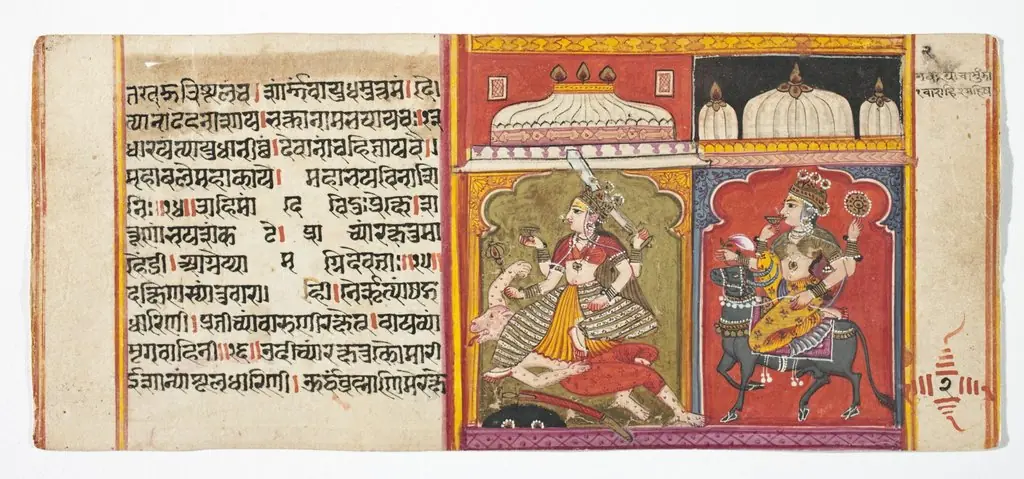
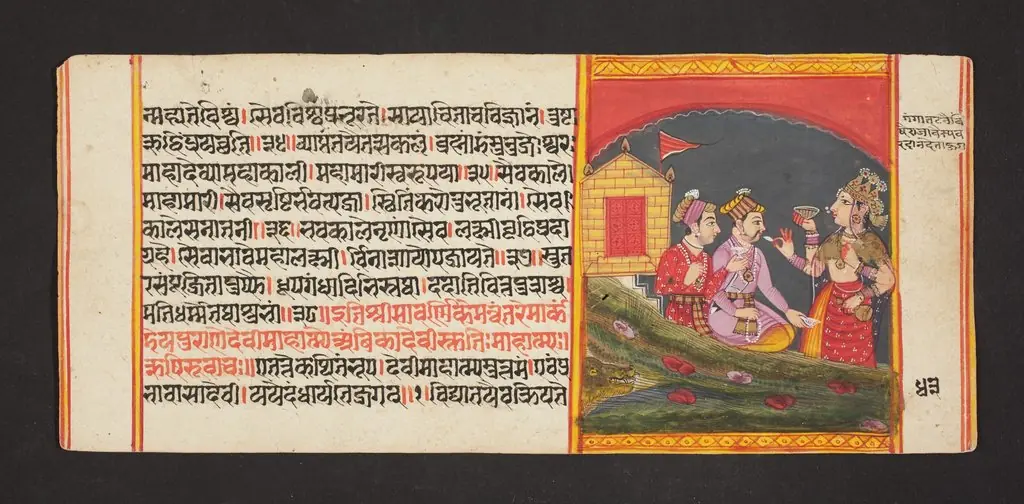
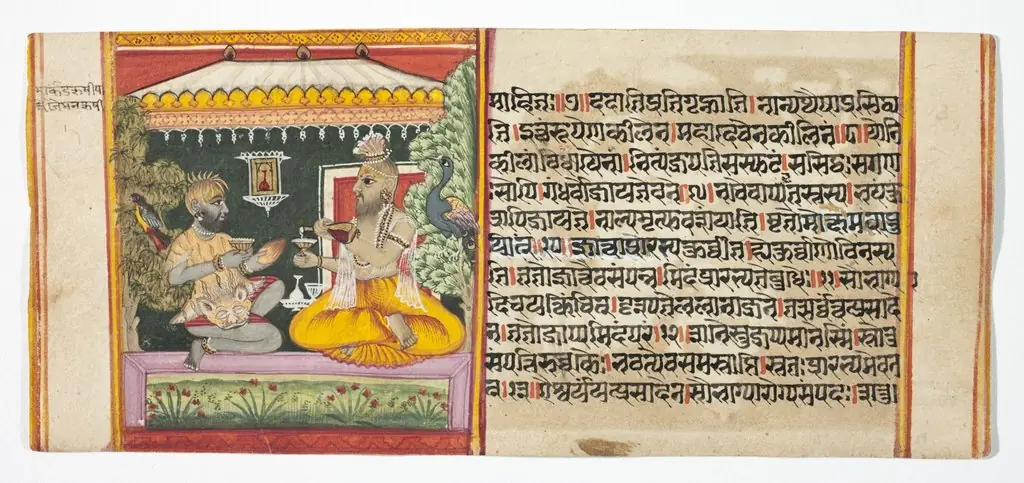
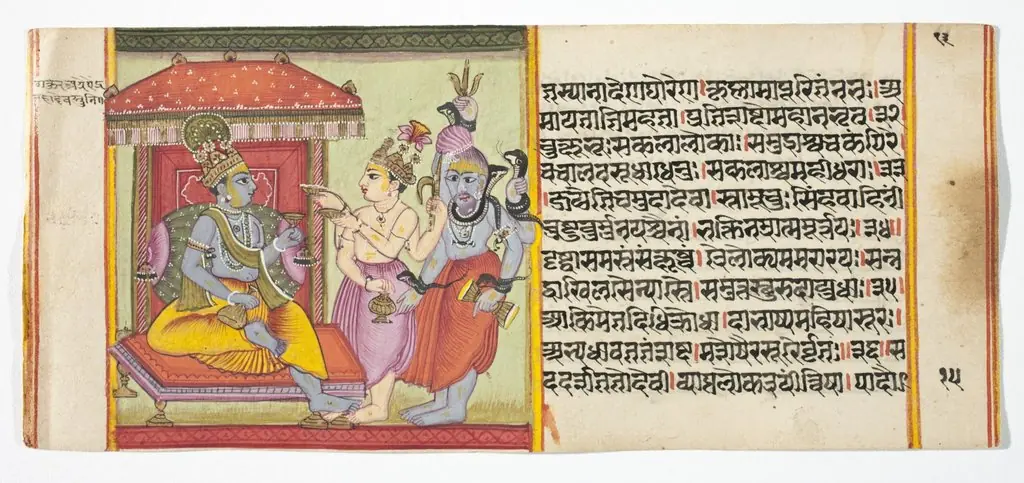
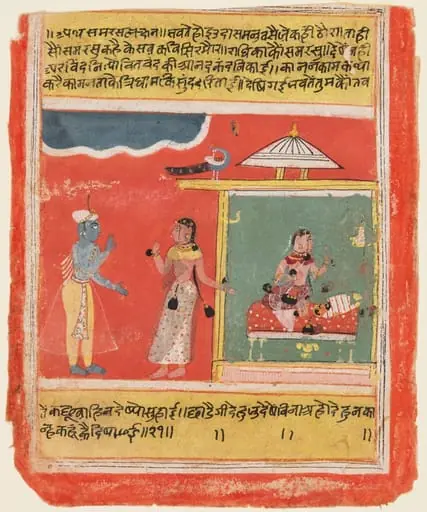
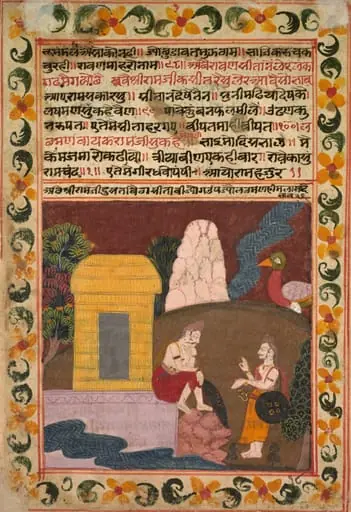
Folio 18 from a Chandana Malayagiri Varta (Story of King Chandana and Queen Malayagiri) of Karamachand: Ravana battles the great vulture Jatayu and defeats him by throwing stones in his mouth (recto); Jatayu approaches Rama and Lakshmana who are wondering where Sita could be (verso)
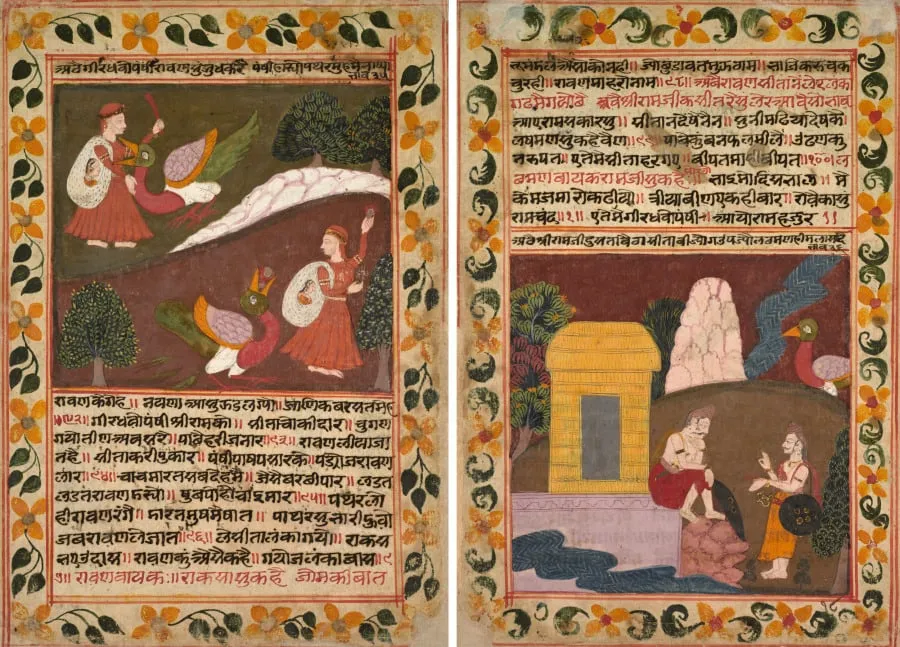
Folio 18 from a Chandana Malayagiri Varta (Story of King Chandana and Queen Malayagiri) of Karamachand: Ravana battles the great vulture Jatayu and defeats him by throwing stones in his mouth (recto); Jatayu approaches Rama and Lakshmana who are wondering where Sita could be (verso) is an unspecified painting by the Baroque artist Unknown. It dates from 1744 and is held in the collection of the Cleveland Museum of Art. Folio 18 is a double‑page illustration from a 1744 manuscript produced in the Kishangarh court.
- Accession no.
- 1968.108
- Credit line
- James Parmelee and Cornelia Blakemore Warner Funds
About this work
You see two scenes side by side: a demon hurling stones into a giant bird’s mouth, and the same wounded bird later talking to two princes in a forest.
You see two scenes side by side: a demon hurling stones into a giant bird’s mouth, and the same wounded bird later talking to two princes in a forest.
The pages come from a handwritten book made in 1744 for a small royal court in Kishangarh. Each picture is packed with bright colors and tiny patterns, like a comic strip for a king.
If you like these bold, storybook images, look up the subject rajput kingdom of kishangarh.
Overview
Folio 18 is a double‑page illustration from a 1744 manuscript produced in the Kishangarh court. The recto shows the demon Ravana hurling stones into the beak of the giant bird Jatayu, while the verso depicts the wounded Jatayu speaking with Rama and Lakshmana as they search for Sita. The two scenes are rendered in vivid pigments and intricate decorative motifs, functioning as a narrative sequence within the text.
Subject & Meaning
The images dramatize a episode from the Ramayana in which Ravana defeats the heroic vulture Jatayu, who had attempted to rescue Sita. After being mortally wounded, Jatayu informs the princes of Sita’s abduction, linking the battle to the larger quest that drives the epic’s plot.
Technique & Style
Executed in miniature painting style, the folio employs bright mineral and vegetable pigments on paper, with fine line work and dense ornamental borders. The composition is tightly packed, each figure outlined in black and filled with patterned surfaces, reflecting the courtly aesthetic of Kishangarh’s 18th‑century visual culture.
History & Provenance
The manuscript was commissioned in Samvat 1802 (1744–45) for five patrons, Rikhaji, Karamchandji, Mahataji, Shri Jagamalaji, and his son Motichandji, by the monk‑scribe Udayasagar of the Bijai (Vijay) Gacch, a Shvetambara Jain lineage. The folio now resides in a dispersed collection, known from a photograph supplied by Arun Bharany in New Delhi.
Context
The narrative derives from a popular retelling of the Sita episode by Bhadrasena (c. 1620) and its later expansion by poet Karamacand in 1629–30. Such illustrated manuscripts served both devotional and courtly entertainment functions, presenting epic stories in a format accessible to royal patrons.
Artist & collection