Artwork
Saint Bonaventure and Saint Thomas Aquinas in Front of the Crucifix
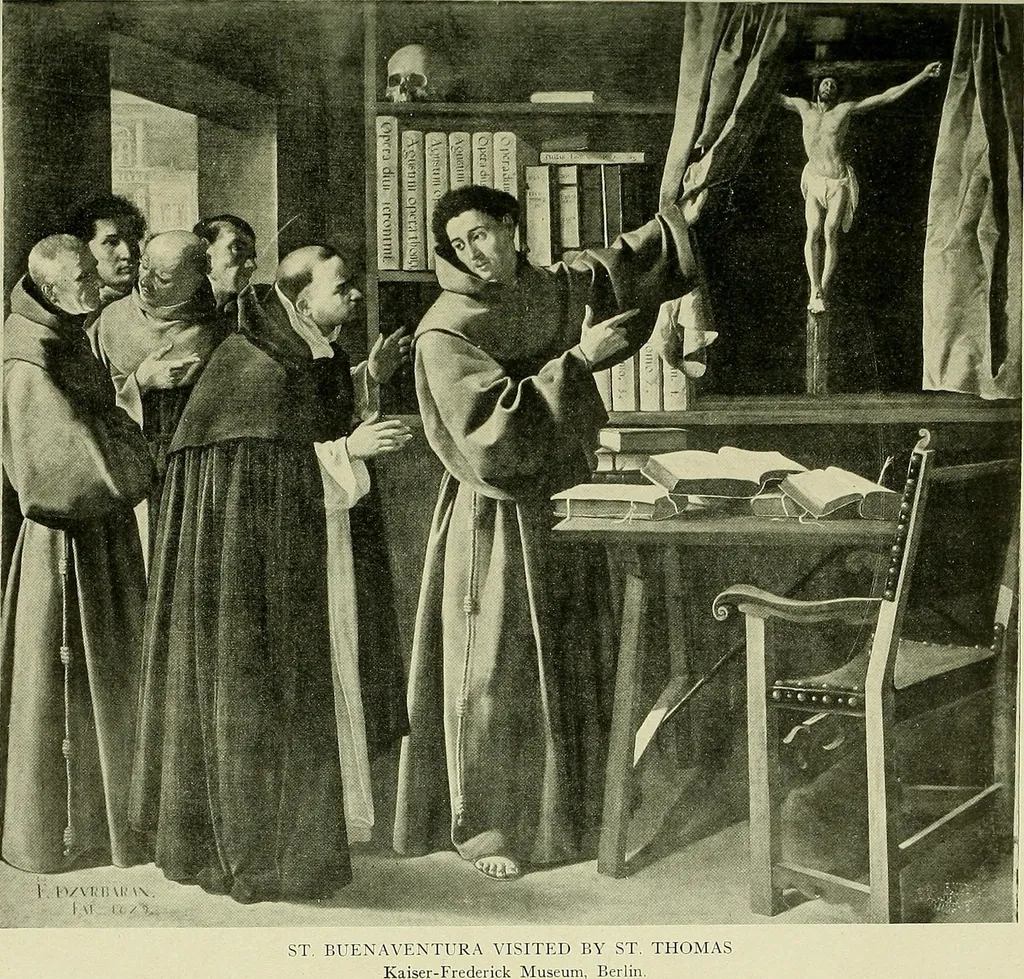
Saint Bonaventure and Saint Thomas Aquinas in Front of the Crucifix is an oil painting by the Early Baroque Italian artist Francisco de Zurbarán. It dates from 1629 and is held in the collection of the Bode Museum.
About this work
Subject & Meaning
Bonaventure’s gesture and Thomas’s surprised posture underscore the encounter’s significance as an affirmation of mystical insight over scholastic method.
The painting depicts the moment when Saint Bonaventure reveals a crucifix to Saint Thomas Aquinas during the latter’s visit to the former, conveying the idea that divine revelation through the crucifix supersedes scholarly learning. Zurbarán’s composition situates the crucifix between two tall, sparsely stocked bookcases, visually implying that the image of the crucified Christ replaces the absent books as the true source of theological knowledge. The open books on the table in front of the figures further reinforce this iconographic reading by linking intellectual labor to the contemplation of the crucifix.
Bonaventure’s gesture and Thomas’s surprised posture underscore the encounter’s significance as an affirmation of mystical insight over scholastic method.
Technique & Style
Executed in 1629, this work was an oil painting on canvas measuring 226 cm in height and 256 cm in width. The composition featured a horizontal format, distinct from the other paintings in its original series, likely to accommodate a wider architectural space. Stylistically, the piece is regarded as Zurbarán's most comprehensive study of an interior space, incorporating elements reminiscent of still-life arrangements.
The artist employed a diagonal composition of light and shadow to structure the scene, a technique noted for achieving high expressive force. The painting included a signed and dated inscription near the lower left corner. Unfortunately, the work was destroyed or lost in 1945 following the fire at the Friedrichshain flak tower in Berlin.
History & Provenance
Francisco de Zurbarán painted this work in 1629 as part of a four-canvas series depicting the life of Saint Bonaventure for the church of the College of San Buenaventura in Seville. The commission stemmed from a donation received by the college in 1626, with Zurbarán responsible for scenes from the saint's maturity and death. The painting was signed and dated by the artist near the lower left corner.
During the Napoleonic looting of Seville, French Marshal Soult stole the canvas along with the rest of the college library and artworks. It subsequently entered the collection of the Kaiser Friedrich Museum (now the Bode Museum) in Berlin. In May 1945, the work was moved to the Flakturm Friedrichshain for protection but vanished during the tower's fire and subsequent looting. While presumed destroyed, its ultimate fate remains unconfirmed due to the chaos surrounding the event.
The painting was formerly in the collection of the Kaiser Friedrich Museum in Berlin, today the Bode Museum (Gemäldegalerie), where it was recorded before its loss. According to historical accounts, the work was taken to the Flakturm Friedrichshain for safekeeping during World War II and was destroyed in the fire of May 1945, after which it no longer exists in the museum’s holdings. No inventory number or postwar exhibition record is documented in the available sources.
Context
Painted in 1629 as one of four canvases by Francisco de Zurbarán for the church of the Colegio de San Buenaventura in Seville, the work formed part of an eight-painting cycle on the life of Saint Bonaventure, commissioned after a 1626 donation. Zurbarán contributed the four scenes depicting the saint's maturity and death, while Francisco de Herrera the Elder painted the four panels covering his childhood and youth. The composition was regarded as Zurbarán's most complete study of an interior space, integrating elements that could function as a still life, and it was singled out alongside the Prayer of Saint Bonaventure for the Election of the New Pope as the most accomplished works of his contribution to the series.
Critics have noted that the other two Zurbarán panels of the cycle, Saint Bonaventure at the Council of Lyon and the Display of the Body of Saint Bonaventure, rely on more conventional and rigid formulas. The painting's landscape format, wider than its companion canvases, was dictated by its placement over a broader arch at the church's small transept.
Legacy
The painting was historically recognized as Francisco de Zurbarán's most comprehensive study of an interior space, distinguished by its ability to integrate elements typically found in still-life compositions. Within the original eight-painting cycle depicting the life of Saint Bonaventure for the Colegio de San Buenaventura in Seville, this work stood out alongside the "Prayer of Saint Bonaventure" for its superior compositional use of light and shadow. Critics noted that the other two surviving works by Zurbarán in the series displayed greater rigidity and conventionality, highlighting the exceptional expressive force achieved in this specific piece.
The artwork's legacy is now defined by its disappearance during the final months of World War II. It was lost in May 1945 during the destruction of the Flakturm Friedrichshain in Berlin, where it had been stored for protection, leaving its physical existence presumed destroyed despite lingering uncertainties regarding the chaotic events of the war's end.
Overview
Francisco de Zurbarán’s 1629 oil painting, Saint Bonaventure and Saint Thomas Aquinas in Front of the Crucifix, presents a solemn interior scene centered on a crucifix. The work is part of the collection of the Gemäldegalerie in Berlin and measures the interaction of two eminent medieval theologians with a symbolic backdrop of books and mortality.
Own this work as a print
Artist & collection
Artist
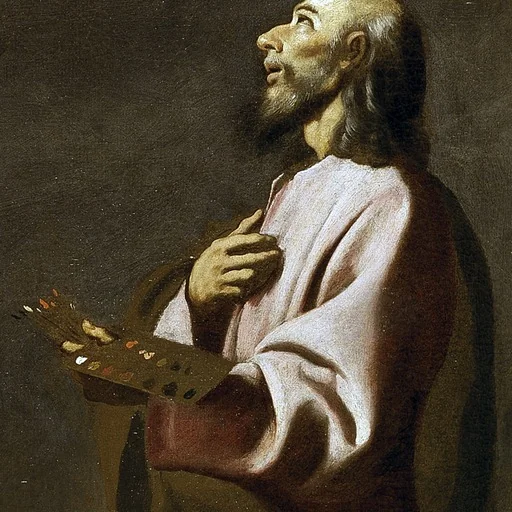
Francisco de Zurbarán was a Spanish Baroque painter. He is known primarily for his religious paintings depicting monks, nuns, and martyrs, and for his still-lifes. Zurbarán gained the nickname "Spanish Caravaggio",…

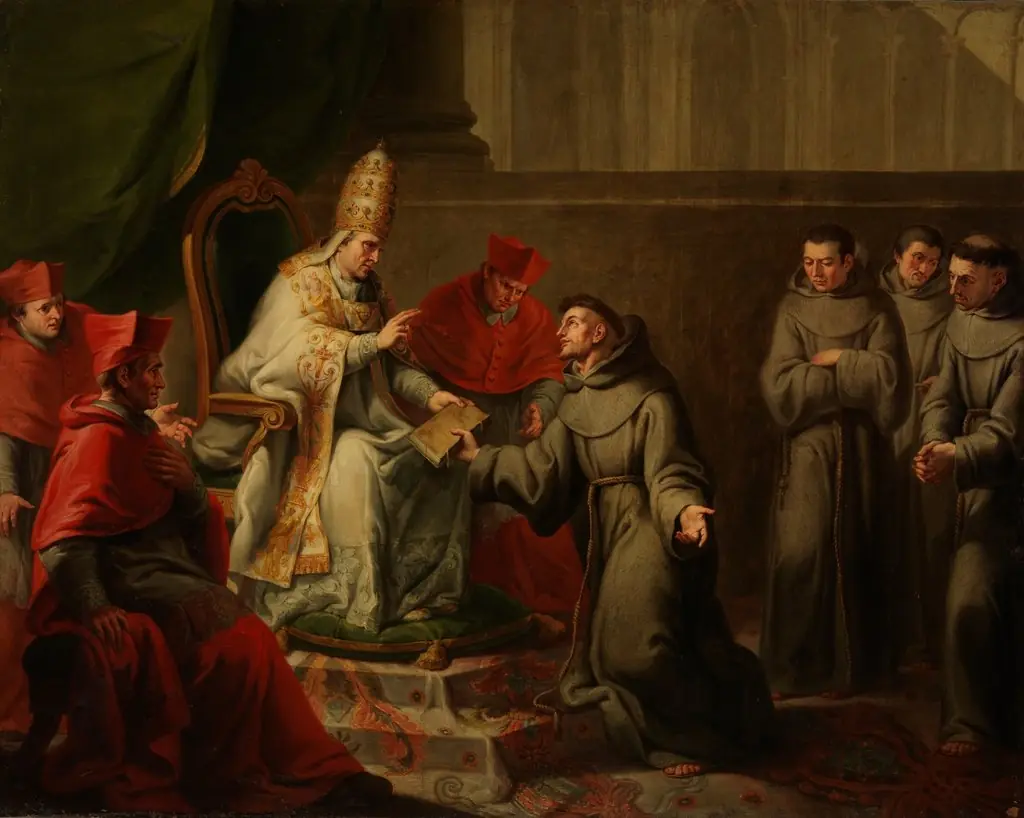 Aprobación de la regla franciscana por el papa Inocencio III
 The Story of Saint Didacus of Alcalà
 Interior with an Organist and a Procession
 Saint Anthony of Padua
 The Miracle of the Cloud
 San Benito bendiciendo a San Mauro
 Miracle of the Roses
 Praying Monk
 Santo António com o Menino Jesus
 Apparition of Saint Francis in Arles