Artwork
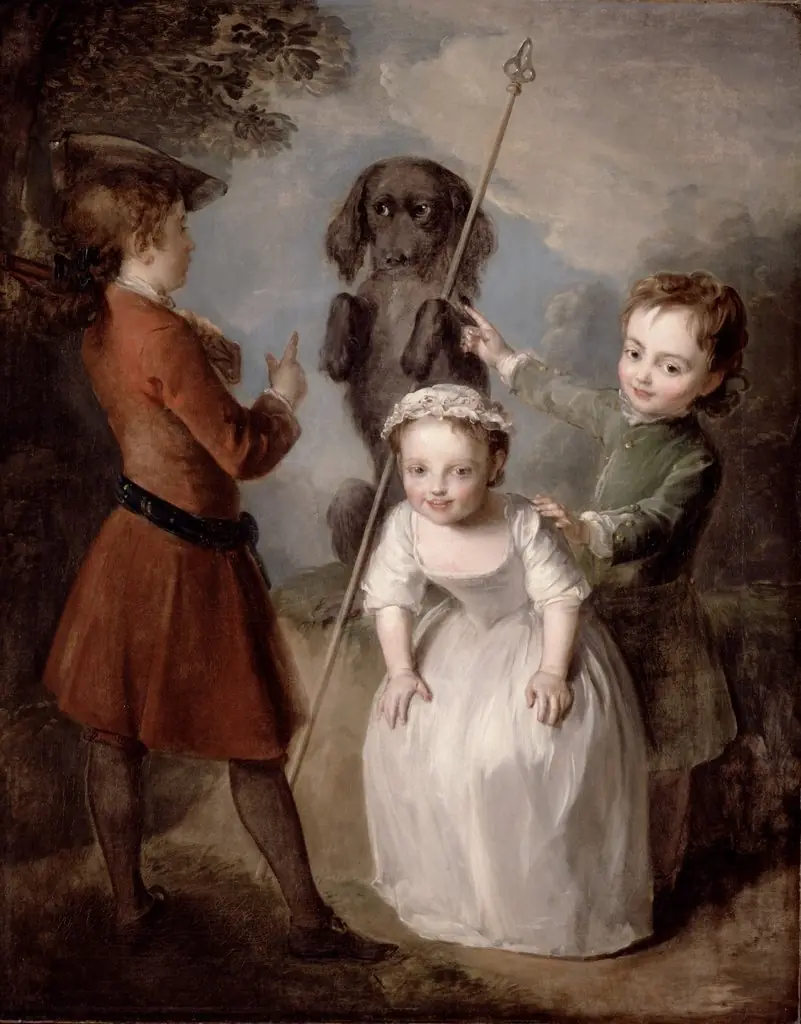
Boys playing soldiers
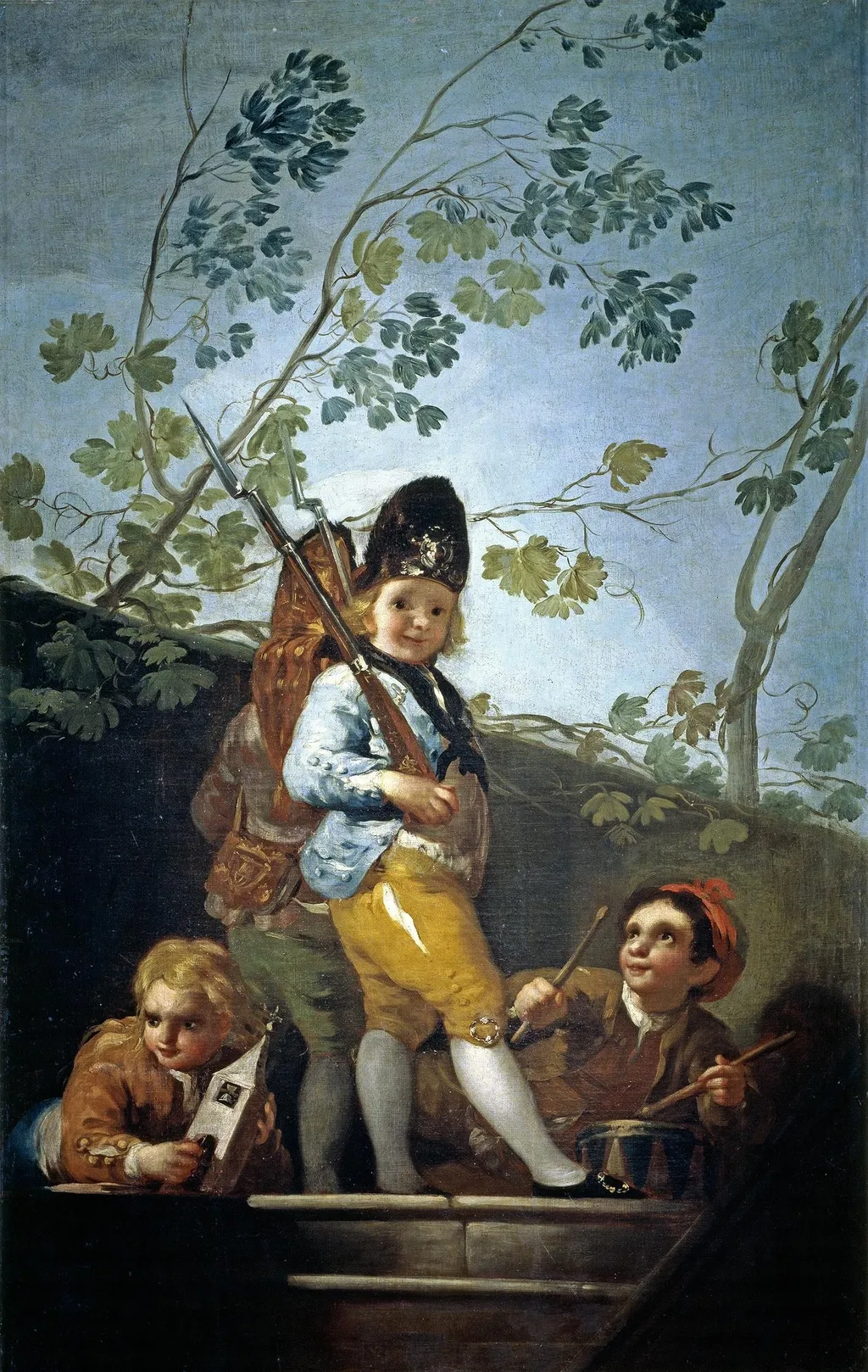
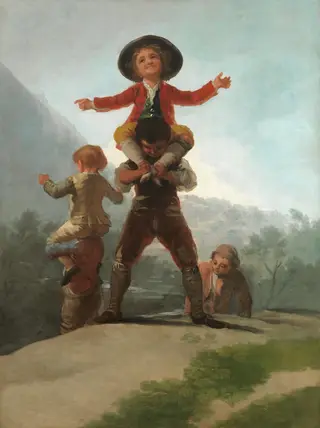
Boys playing soldiers is an oil painting by the Rococo painting artist Francisco de Goya. It dates from 1790 and is held in the collection of the Museo del Prado.
About this work
Subject & Meaning
A cheerful young soldier in the foreground gazes directly at the viewer and is considered one of Goya's notable achievements in capturing childhood expression.
The painting depicts four boys engaged in mock military play, with two standing figures shouldering rifles, a third beating a drum, and a fourth holding a miniature bell tower. The composition is described as simultaneously martial, comical, and childlike, with the boys positioned atop a rise that amplifies their presence through a low viewpoint. A cheerful young soldier in the foreground gazes directly at the viewer and is considered one of Goya's notable achievements in capturing childhood expression.
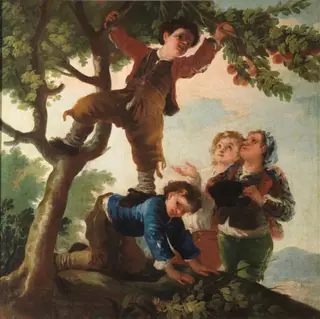
The work reflects Goya's recurring interest in portraying children from varied social milieus, including majos and aristocrats. Its yellowish and bluish palette lends a buoyant mood echoed in the boys' faces, while the loose brushwork and lighting have been characterized as anticipating impressionism. The tapestry cartoon was intended for the antechamber of the Princes of Asturias at the Royal Palace of El Pardo, likely hung above a door alongside other child-themed cartoons such as Niños del carretón, Muchachos cogiendo fruta, and Niños inflando una vejiga.
Technique & Style
Created between 1778 and 1779, *Boys playing soldiers* is an oil painting on canvas executed as a tapestry cartoon. The work measures 146 cm in height and 94 cm in width. Its composition employs a low perspective that elevates the figures standing on a rise, creating a martial yet playful atmosphere. The brushwork and illumination are noted for rendering the scene a precursor to Impressionism, utilizing a cheerful palette of yellowish and bluish tones that echo the expressions of the children depicted. The piece originally caused difficulties for tapestry makers, who were required to alter the composition to align with the prevailing aesthetic tastes of the period before its execution.
History & Provenance
The work titled Boys playing soldiers was created by Francisco Goya in 1778-79 as a cartoon for a tapestry intended for the bedroom of the Princes of Asturias in the Royal Palace of El Pardo. It was delivered to the Royal Tapestry Factory on 6 January 1779 and later entered the Museo del Prado after being discovered in 1869 and acquired in 1870. The painting is an oil on canvas measuring 146 cm by 94 cm and is classified as a genre scene within Goya’s tapestry cartoon series, which also includes works such as El Cacharrero. The composition depicts two boys carrying rifles, one playing a drum, and another holding a miniature bell tower, arranged on a rise to enhance depth. Its yellowish and bluish palette contributes to a cheerful atmosphere, and its brushwork and lighting have been noted as precursors to Impressionism. The work was originally possibly hung as a door header, consistent with other tapestry cartoons of infant subjects in the royal chambers. The work is held by the Museo del Prado in Madrid. Its inventory/accession number is not specified in the provided sources. It was exhibited in the Museo del Prado as part of the display in room 92, and was first cited in the museum's 1876 catalogue. The painting was delivered to the Royal Tapestry Factory on 6 January 1779 and was later acquired by the Prado in 1870. A preparatory sketch is held in the Yanduri Collection in Seville.
Context
Conceived for the bedroom of the Princes of Asturias at the Royal Palace of El Pardo, this tapestry cartoon belongs to a series dedicated to childhood themes intended for the future Charles IV and his wife. The work was delivered to the royal tapestry factory in January 1779 but was subsequently considered lost until its rediscovery in the Royal Palace basement by Gregorio Cruzada Villaamil in 1869. It entered the Museo del Prado collection in 1870 and appeared in the museum's catalogue for the first time in 1876.
Scholars regard the cheerful soldier depicted in the foreground as a major artistic achievement of Goya's early career. The painting's specific brushwork and illumination are frequently cited as precursors to Impressionism. Historically, the composition presented technical challenges for weavers, who were forced to alter the design to align with prevailing aesthetic tastes of the late eighteenth century.
Legacy
Boys playing soldiers, painted by Francisco Goya in 1778, became part of a decorative program for the bedroom of the infant heir apparent at the Royal Palace of El Pardo. The work was later installed in the Museo del Prado after its rediscovery in 1869 and formal accession in 1870, and it entered the museum’s catalogue in 1876. Contemporary assessments note its martial yet childish tone, the youthful soldier in the foreground, and its role as a precursor to impressionist treatment of light and brushwork. The painting’s yellow‑blue palette and its adaptation by tapestry workshops reflect both the tastes of the period and technical adjustments made to fit the intended over‑door format.
The composition has influenced later interpretations of childhood in Goya’s oeuvre and is frequently cited in studies of his genre scenes and social commentary.
Own this work as a print
Artist & collection
Artist
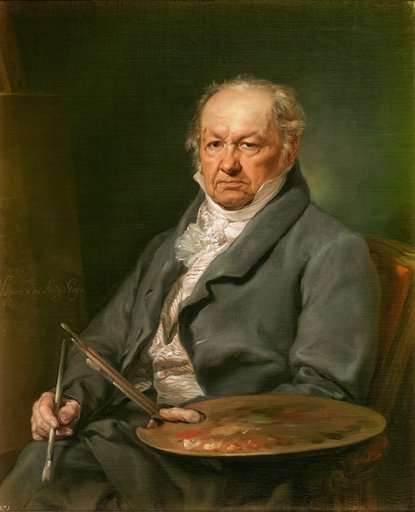
Francisco José de Goya y Lucientes was a Spanish romantic painter and printmaker.