Artwork
The Annunciation
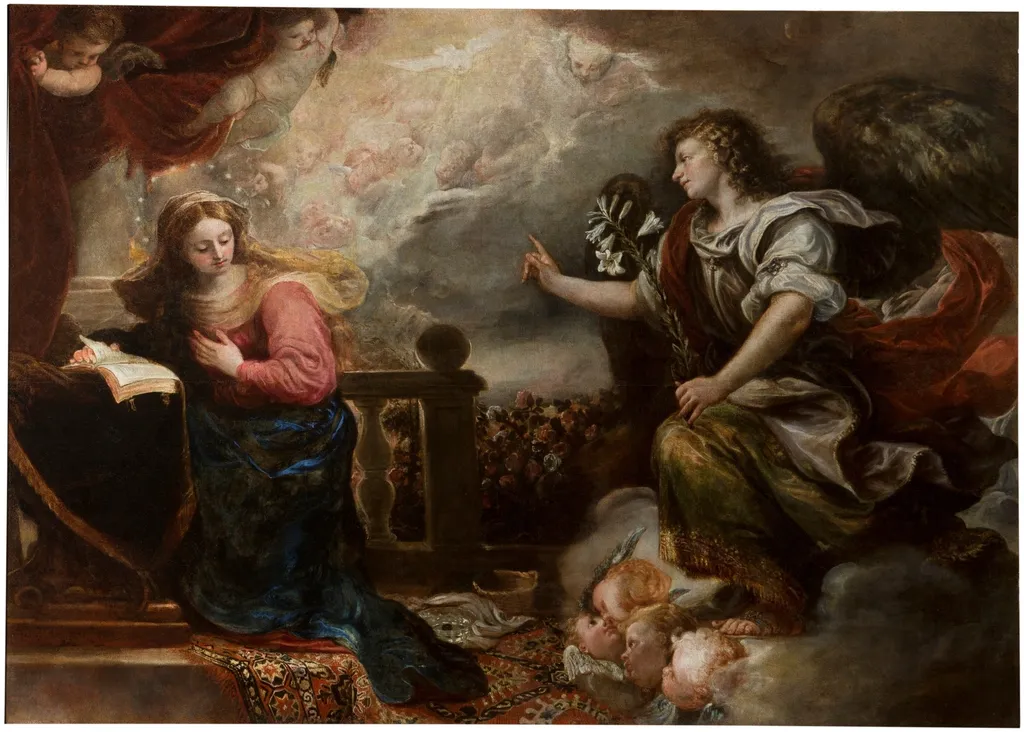
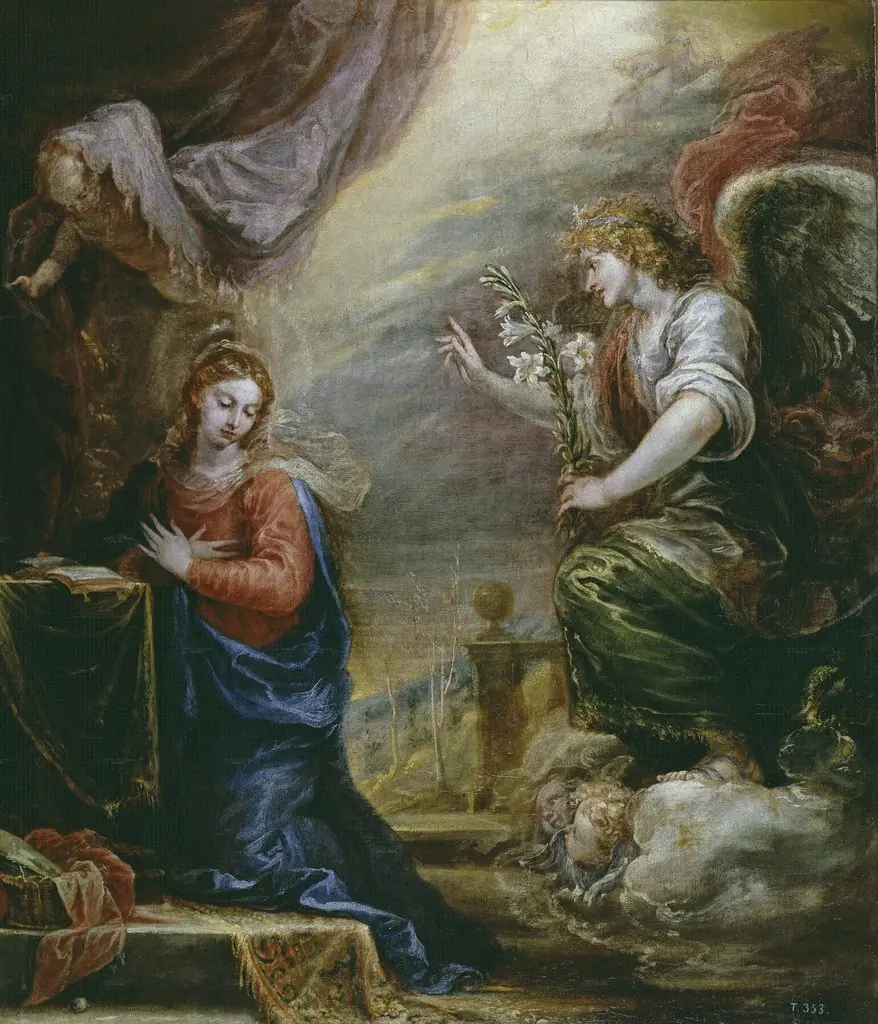
The Annunciation is an oil painting by the Early Baroque Italian artist Francisco Rizi. It dates from 1663 and is held in the collection of the Museo del Prado.
About this work
Subject & Meaning
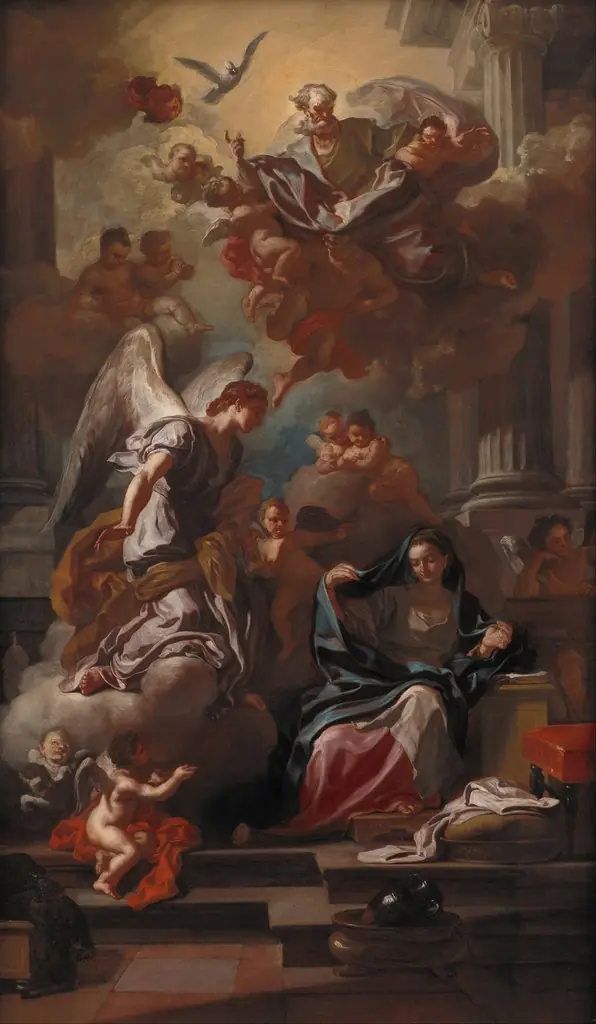
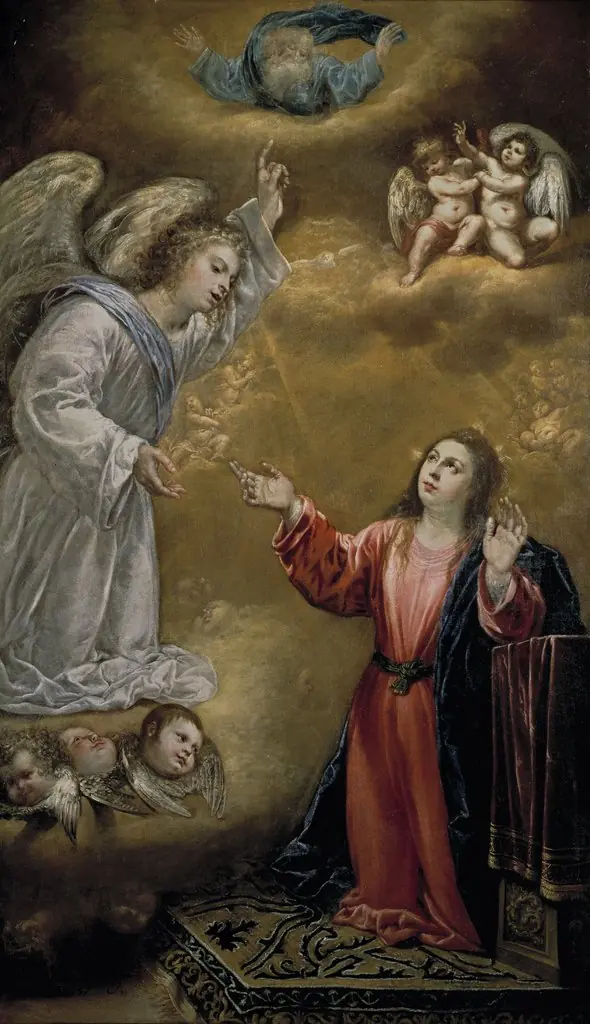
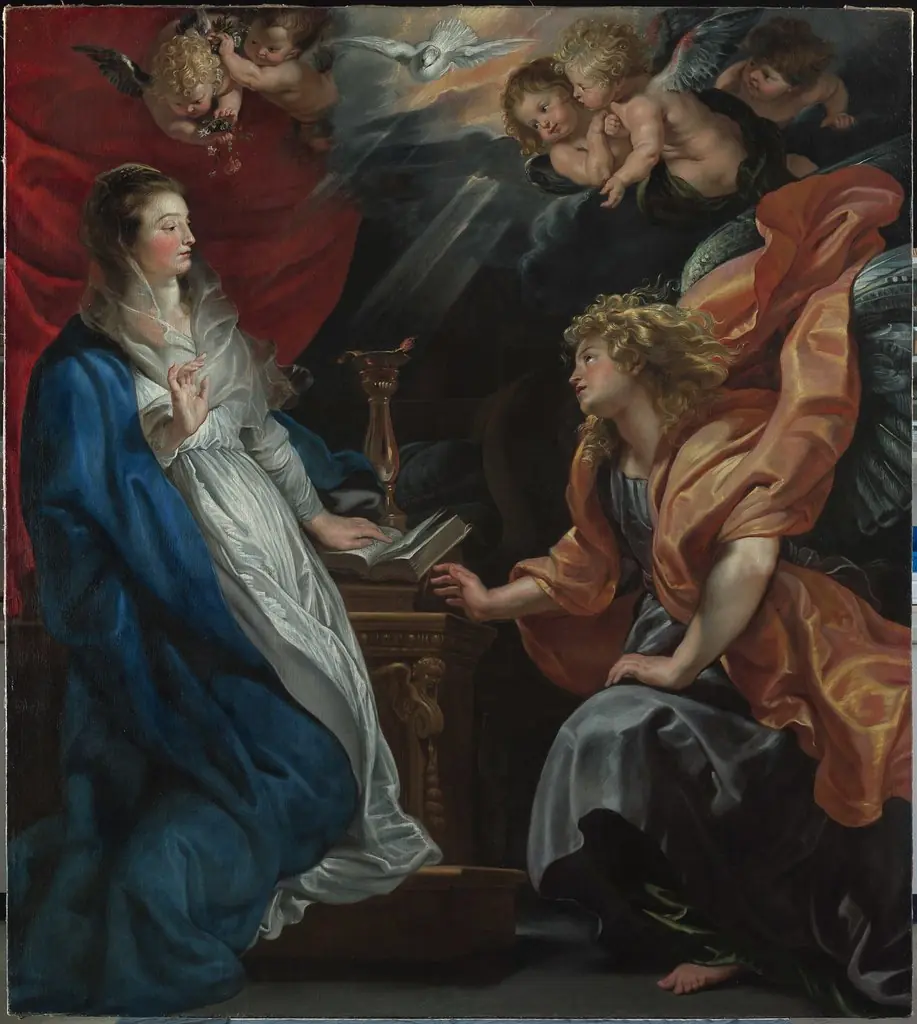
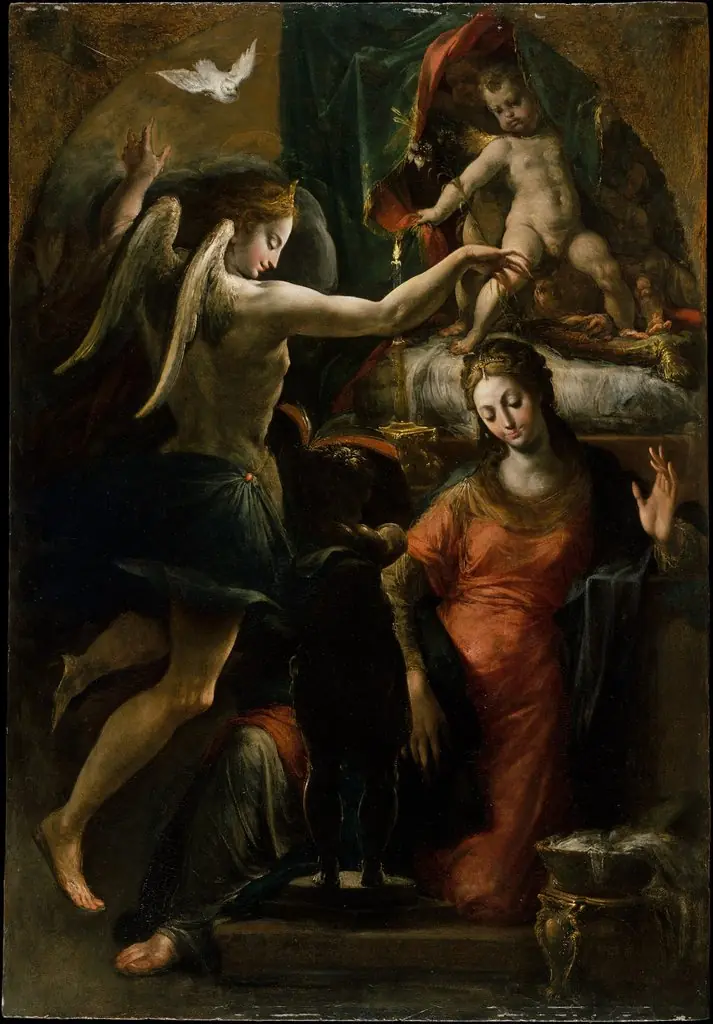
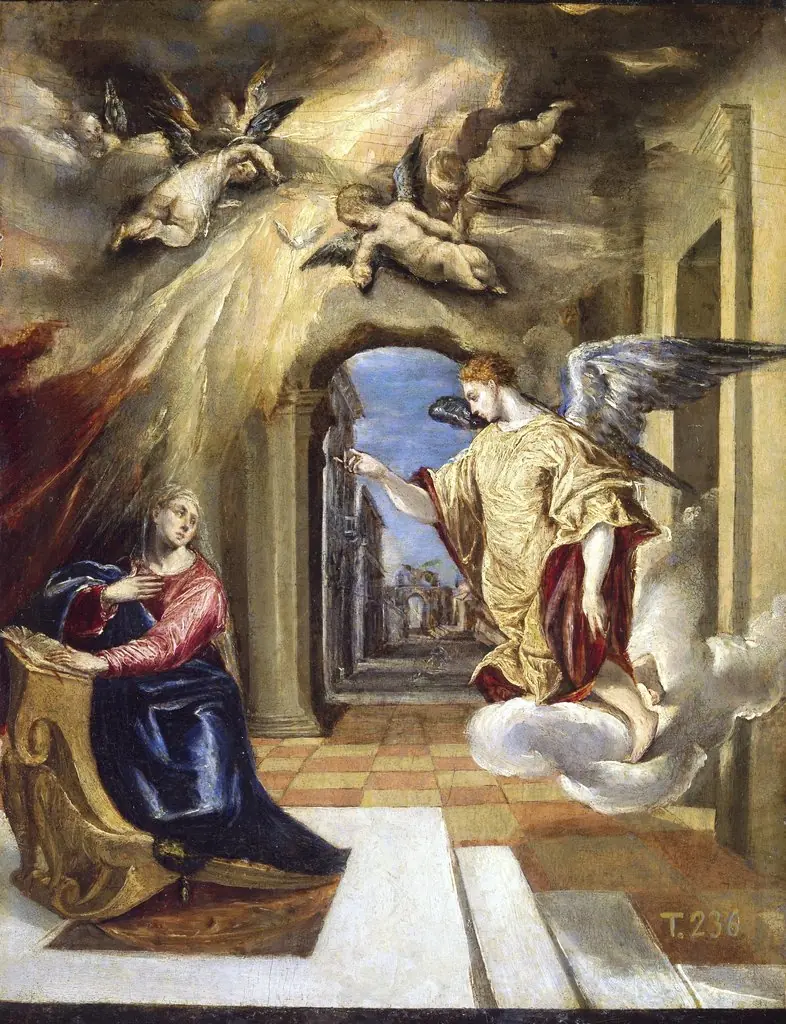
The painting depicts the moment of the Annunciation, when the angel Gabriel announces to the Virgin Mary that she will conceive a child.
The painting depicts the moment of the Annunciation, when the angel Gabriel announces to the Virgin Mary that she will conceive a child. It shows Mary seated, receiving the divine message, with Gabriel positioned nearby, his hand outstretched in proclamation. The composition emphasizes the sacred moment through traditional iconographic elements, including Mary's modest posture and Gabriel's gestures, reinforcing the theological significance of the event within Christian narrative.
Technique & Style
The painting is executed in oil on canvas, depicting the Annunciation scene with figures rendered in a religious composition. The work measures 205 cm in height by 282 cm in width and was created in 1663 using oil paint as the medium.
History & Provenance
The work titled The Annunciation was painted by Francisco Rizi in 1663 as an oil on canvas measuring 205 cm by 282 cm. It was created as a religious composition depicting the Annunciation and entered the collection of the Museo del Prado, where it remains on display. The painting is also held by the Museo de la Trinidad and was previously associated with the University of Barcelona. Its inception date is recorded as 1663, and it is classified within the religious art genre.
The painting is held at the University of Barcelona, according to its current location record. Its provenance is linked to the Museo del Prado (inventory reference P005319) and to the Museo de la Trinidad, indicating that the work passed through those Spanish national collections before reaching its present institutional home. No exhibition history is documented in the available sources.
Legacy
Francisco Rizi’s The Annunciation (1663) has been cited as an influential example of 17th‑century Spanish religious painting, particularly within the Baroque tradition. Its compositional treatment of the angelic encounter informed later interpretations of Marian subjects, as noted in scholarly discussions of Spanish devotional art. The work’s presence in major museum collections, including the Museo del Prado and the Museo de la Trinidad, has reinforced its reputation as a key piece for studying ecclesiastical painting of the period.
Overview
Francisco Rizi’s oil on canvas, dated 1663, presents a quiet interior scene of the Annunciation. The work is part of the collection of the Museo del Prado, where it remains on public display as an example of mid‑seventeenth‑century Spanish religious painting.
Own this work as a print
Artist & collection