Artwork
Breton Girls Dancing, Pont-Aven
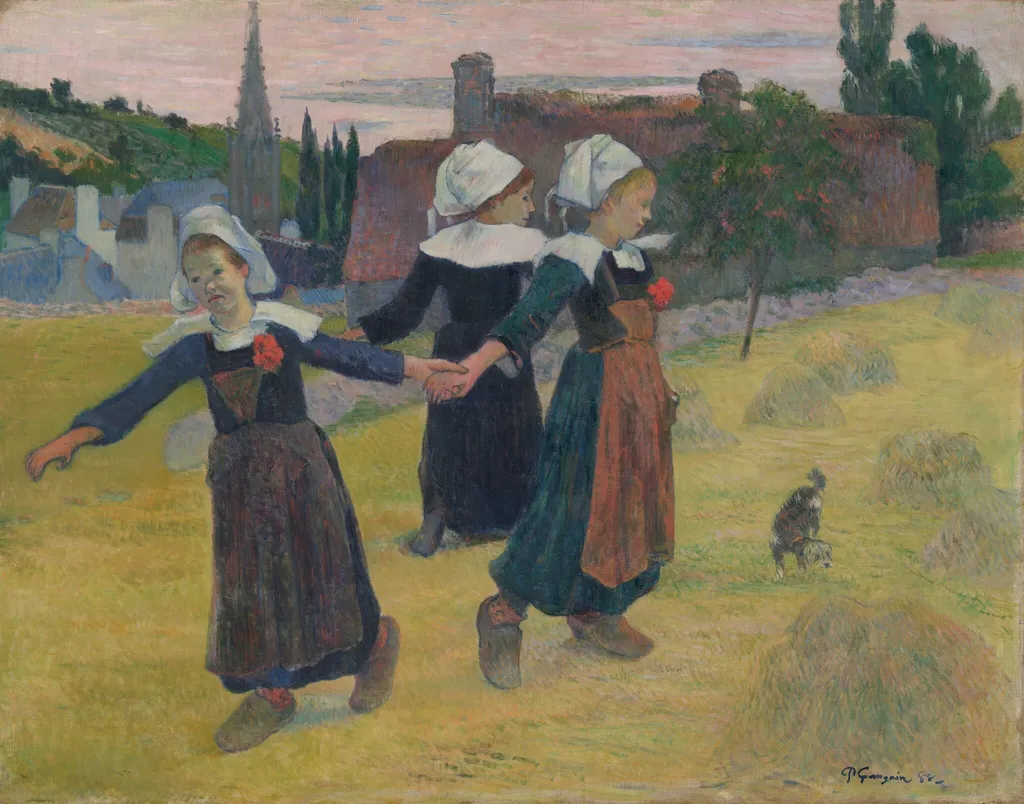
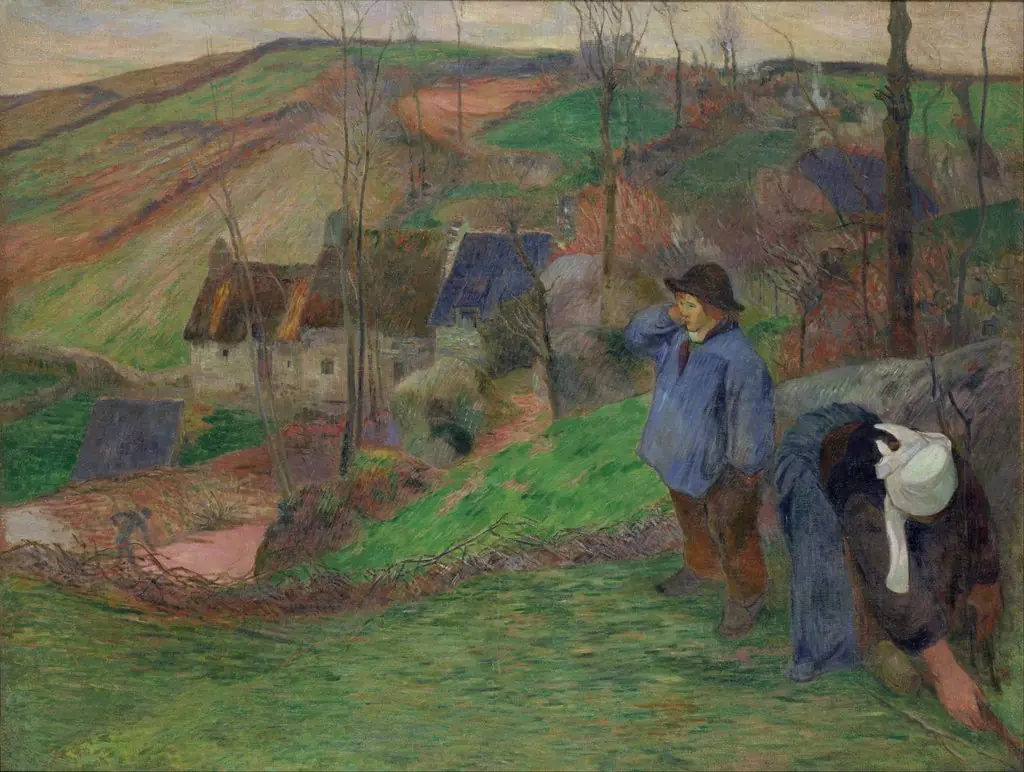
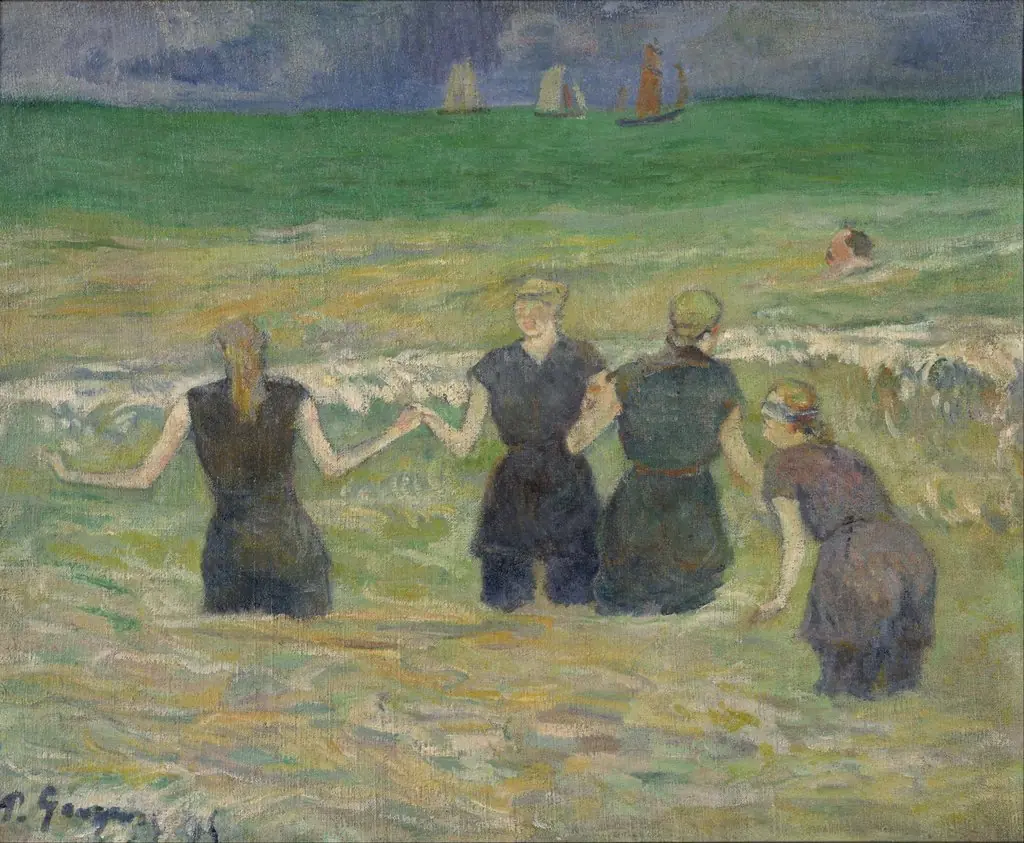
Breton Girls Dancing, Pont-Aven is an oil painting by the Impressionist artist Paul Gauguin. It dates from 1888 and is held in the collection of the National Gallery of Art.
- Inscription
- Inscribed:lower right: P. Gauguin 88-
About this work
Technique & Style
The painting is held in the collection of the National Gallery of Art, Washington, D.
Executed in oil on canvas, Breton Girls Dancing, Pont-Aven measures 73 by 92.7 centimetres and is classified as a genre painting. The work belongs to Paul Gauguin's Pont-Aven period of 1888, when he was developing the cloisonnist and synthetist visual language that would define his mature style. It was acquired from the artist in November 1888, during his Brittany sojourn.
The painting is held in the collection of the National Gallery of Art, Washington, D.C., having entered the institution as a gift from Paul Mellon in 1983.
History & Provenance
Paul Gauguin painted Breton Girls Dancing, Pont-Aven in 1888. The work was acquired from the artist in November 1888 by Boussod, Valadon et Cie. of Paris and New York, which sold it on 16 September 1889 to Montandon. By 1922 the painting had entered the collection of Ambroise Vollard in Paris, appearing in his inventory of 1 January 1922 and lent to exhibitions in Paris and New York in 1936.
It may subsequently have passed through Etienne Bignou of Paris. By 1956 the work was in the collection of William A. Cargill of Carruth, Scotland. Following Cargill's death, his estate sold the painting at Sotheby's, London, on 11 June 1963 (lot 29), where it was purchased by Acciarri for Hector Brame of Paris, acting for Paul Mellon of Upperville, Virginia. Mellon gifted the painting to the National Gallery of Art in 1983.
Overview
Paul Gauguin's 1888 oil on canvas, Breton Girls Dancing, Pont-Aven, captures a lively genre scene from rural Brittany. This painting exemplifies his early engagement with local customs and traditional life in the village of Pont-Aven, where he spent significant time. It showcases his departure from purely naturalistic representation, hinting at the stylistic innovations that would define his Post-Impressionist period.
Subject & Meaning
The painting portrays a group of young women engaged in a traditional dance, depicted in their distinctive Breton attire. Their relaxed, unposed demeanor was a notable departure from conventional academic portraiture. Gauguin sought to convey the authentic spirit of rural life and local customs, reflecting his fascination with the perceived simplicity and unspoiled nature of the region's inhabitants.
Context
Gauguin's sojourns in Pont-Aven, Brittany, were pivotal for his artistic development. Immersing himself in the local culture and observing daily life provided him with rich subject matter. The distinct traditions and perceived authenticity of the Breton people deeply influenced his aesthetic choices, leading him to explore a more expressive and less conventional artistic language than was prevalent at the time.
Own this work as a print
Artist & collection
Artist
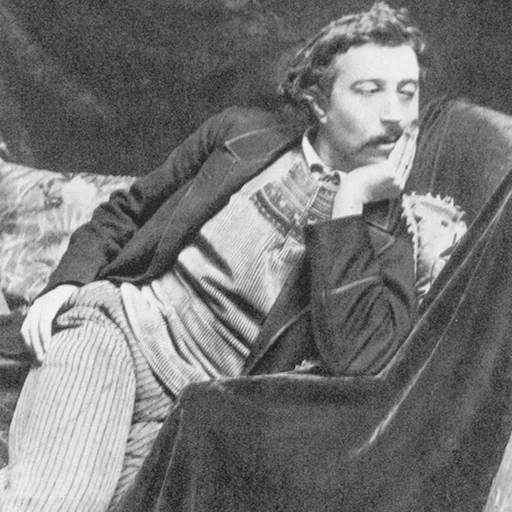
Eugène Henri Paul Gauguin (; French:; 7 June 1848 – 8 May 1903) was a French painter, sculptor, printmaker, ceramist, and writer, whose work has been primarily associated with the Post-Impressionist and Symbolist movements.