Artwork
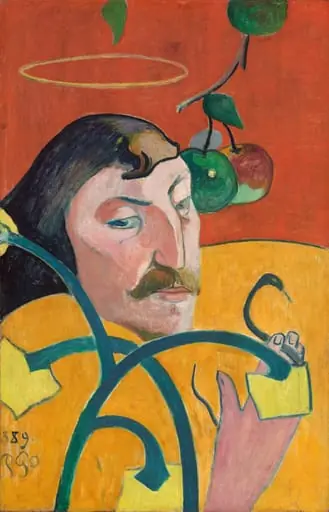
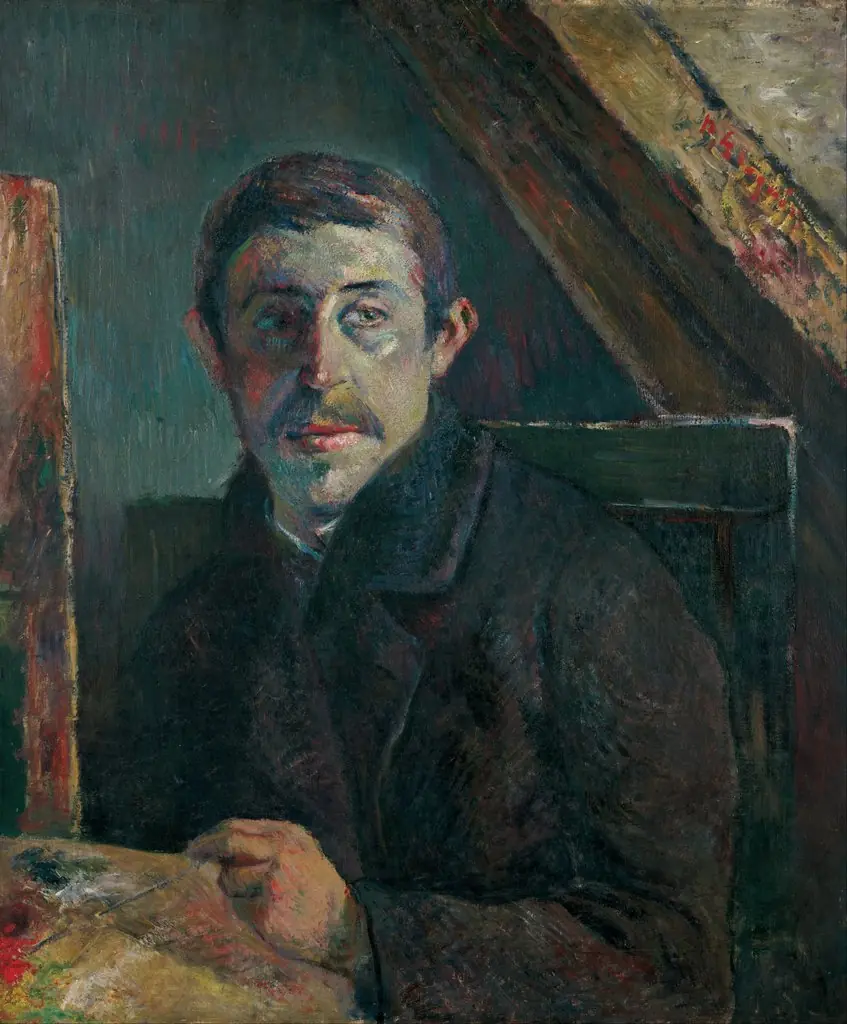
Self-Portrait Dedicated to Carrière
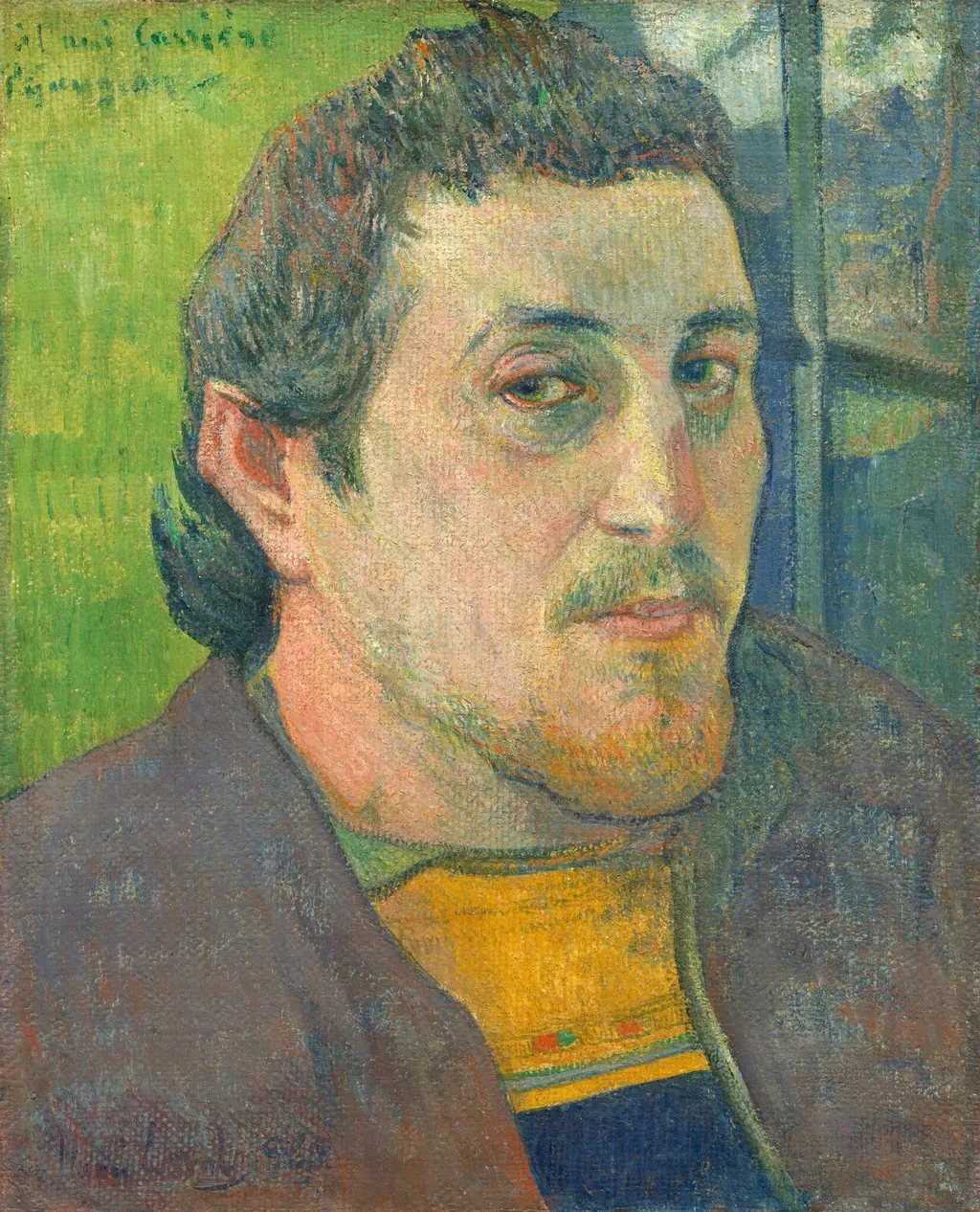
Self-Portrait Dedicated to Carrière is an oil painting by the Impressionist artist Paul Gauguin. It dates from 1888 and is held in the collection of the National Gallery of Art.
- Inscription
- Inscribed:upper left: a l'ami Carriere / PGauguin; lower left: [a] l'ami Laval PGo (illegible)
About this work
History & Provenance
held the painting by 1931, lending it to multiple exhibitions through 1947, though Mary Huttleston Rogers of New York owned it briefly around 1946.
Paul Gauguin created this oil on canvas in 1888 and gifted it to the painter Eugène Carrière. By 1906, Gustave Fayet acquired the work in Igny, France. It subsequently passed by inheritance to his wife, Mme. d'Andoque de Sériège, in Paris.
The art dealership Wildenstein & Co. held the painting by 1931, lending it to multiple exhibitions through 1947, though Mary Huttleston Rogers of New York owned it briefly around 1946. Wildenstein & Co. regained possession in 1947. By 1956, Mr. and Mrs. John Hay Whitney owned the piece, lending it to an exhibition that year.
Wildenstein sold it in 1958 to Paul Mellon of Upperville, Virginia, who ultimately gifted it to the National Gallery of Art in 1985. Exhibition activity documented in the provenance includes loans by Wildenstein in 1931, 1935, 1936, 1938, and 1947, a loan by Mrs. Rogers in 1946, and a loan by the Whitneys in 1956.
Context
Self-Portrait Dedicated to Carrière, executed in oil on canvas in 1888, entered the National Gallery of Art collection after a documented chain of ownership that includes Eugène Carrière, Gustave Fayet, the Whitneys, and Paul Mellon. Its exhibition history from 1931 through 1956, recorded by Wildenstein and listed in Malingue's 1948 catalogue, reflects sustained scholarly and curatorial attention. As a self-portrait, the work is studied as part of Gauguin's late portraiture, situating it within the artist's broader exploration of identity and his relationships with contemporary figures.
Overview
Paul Gauguin painted Self-Portrait Dedicated to Carrière in 1888, an oil-on-canvas work that exemplifies his Post-Impressionist style. This painting depicts the artist himself, a French painter born in 1848, and showcases his distinctive approach. It represents a departure from the Impressionist focus on light and realism, instead highlighting his innovative use of color and Synthetist techniques, which contributed to his significant recognition after his lifetime.
Subject & Meaning
In this self-portrait, Gauguin presents himself directly to the viewer, his gaze steady and expression serious. He is depicted wearing a hat and a coat, conveying a sense of introspection or resolve. As a key figure in Post-Impressionism and Symbolism, Gauguin often explored personal identity and emotional states in his work.
This painting serves as a visual declaration of his artistic persona and his evolving stylistic principles, reflecting his dedication to his unique vision.
Technique & Style
Executed in 1888, this oil painting exemplifies Gauguin's Post-Impressionist style, moving away from the Impressionists' emphasis on capturing fleeting light and realistic detail. Instead, Gauguin employed bold colors and simplified forms, a hallmark of his Synthetist approach, to evoke a sense of calm and depth. This method was central to his contributions to Symbolism, where emotional and symbolic content took precedence over direct representation, shaping a distinctive visual language.
Legacy
Although Gauguin's innovative contributions to Post-Impressionism and Symbolism were not widely appreciated during his lifetime, his artistic legacy grew substantially after his death. His pioneering use of color, simplified forms, and emphasis on symbolic meaning profoundly impacted the trajectory of modern art. This self-portrait stands as an early testament to the unique vision that would later secure his place as a significant figure in art history, influencing countless artists.
Own this work as a print
Artist & collection
Artist
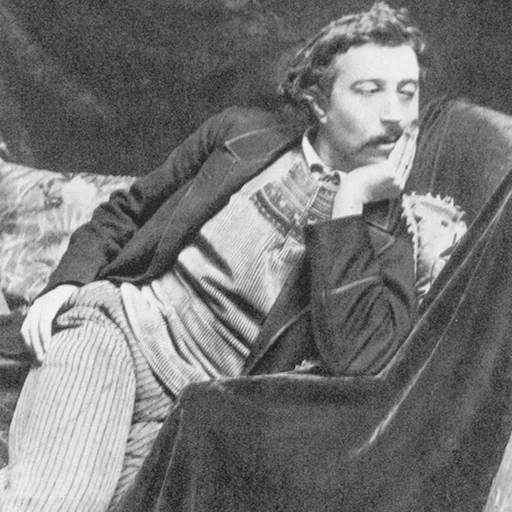
Eugène Henri Paul Gauguin (; French:; 7 June 1848 – 8 May 1903) was a French painter, sculptor, printmaker, ceramist, and writer, whose work has been primarily associated with the Post-Impressionist and Symbolist movements.

- Autoportret cu lulea
 Portrait of the Artist. Lamplight
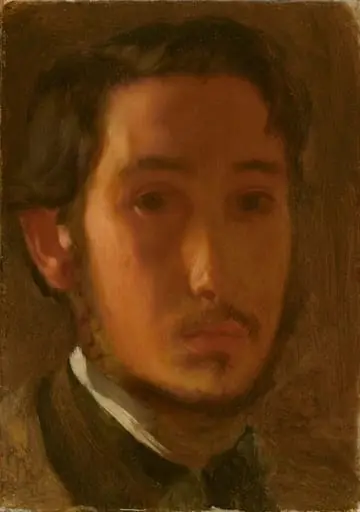 Self-Portrait with White Collar
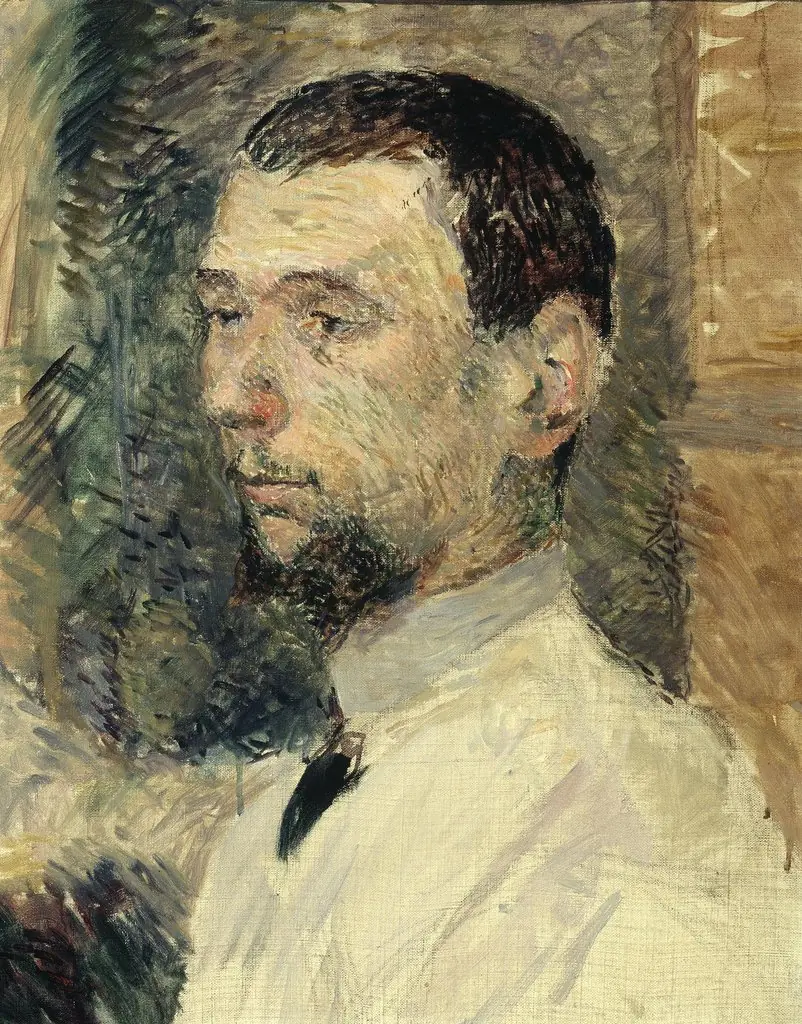 François Gauzi
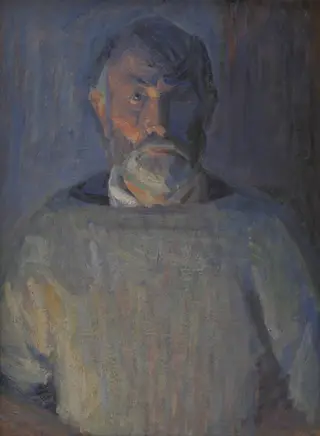 Portrait of the Artist. Lamplight
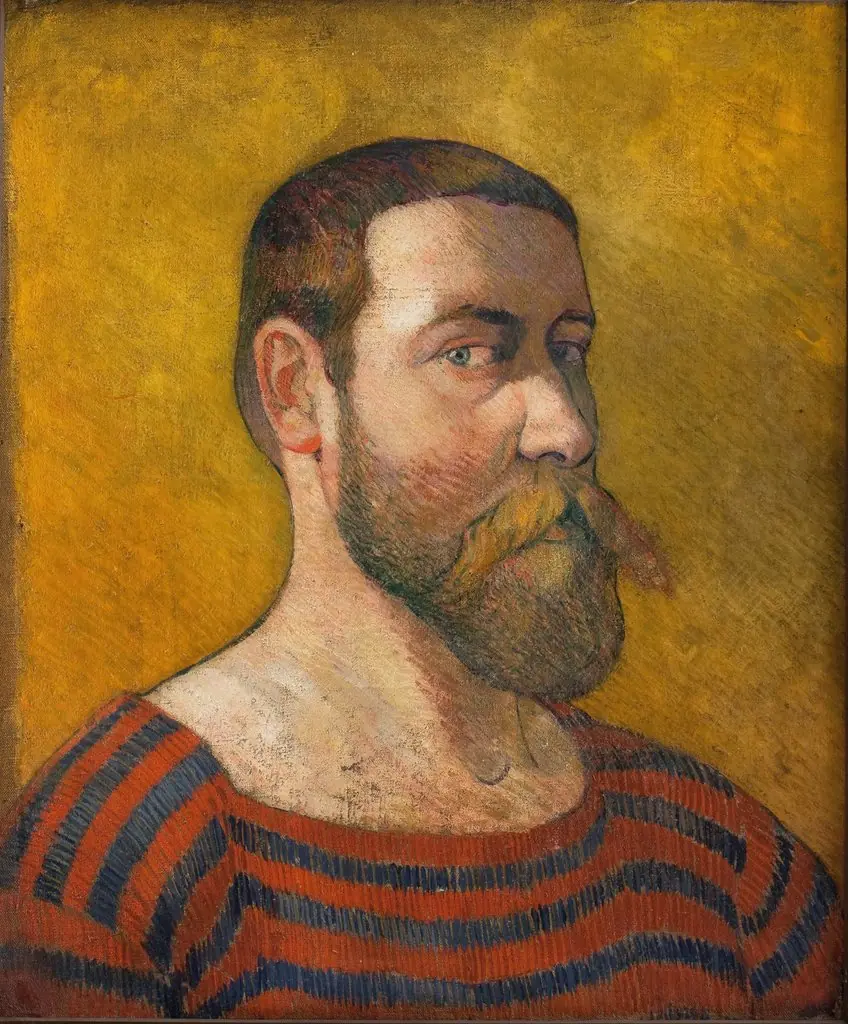 Self-portrait
 Self-Portrait
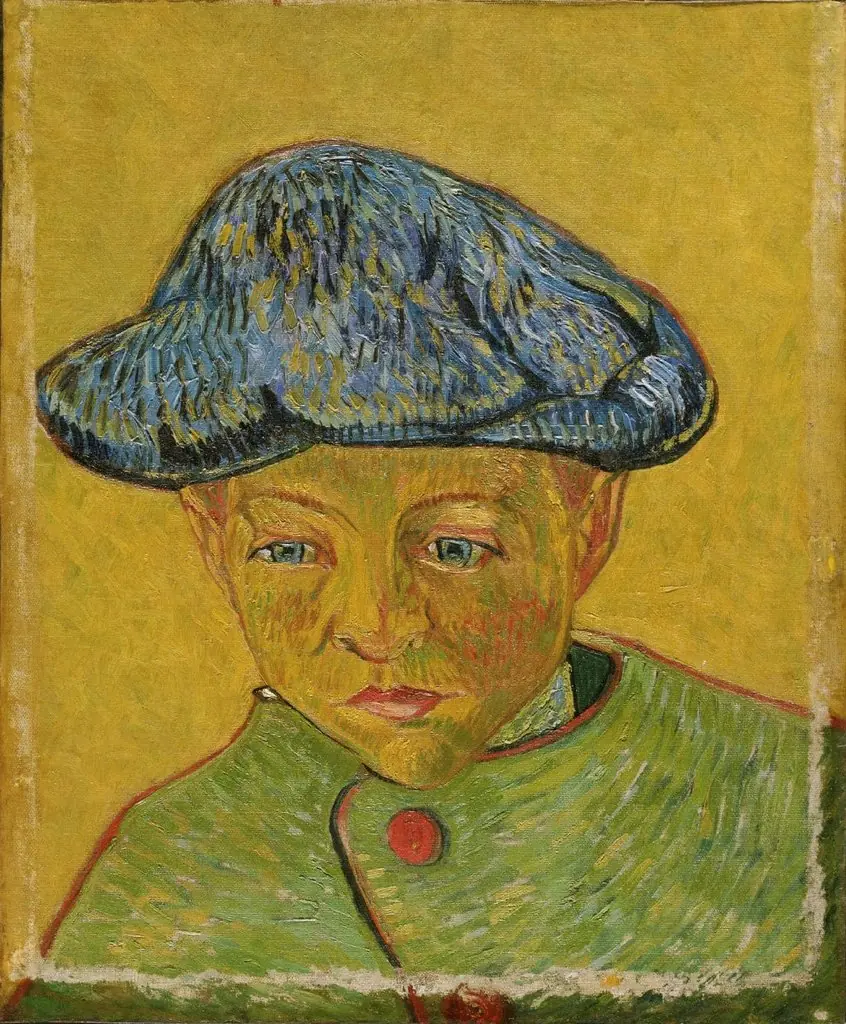 Portrait of Camille Roulin
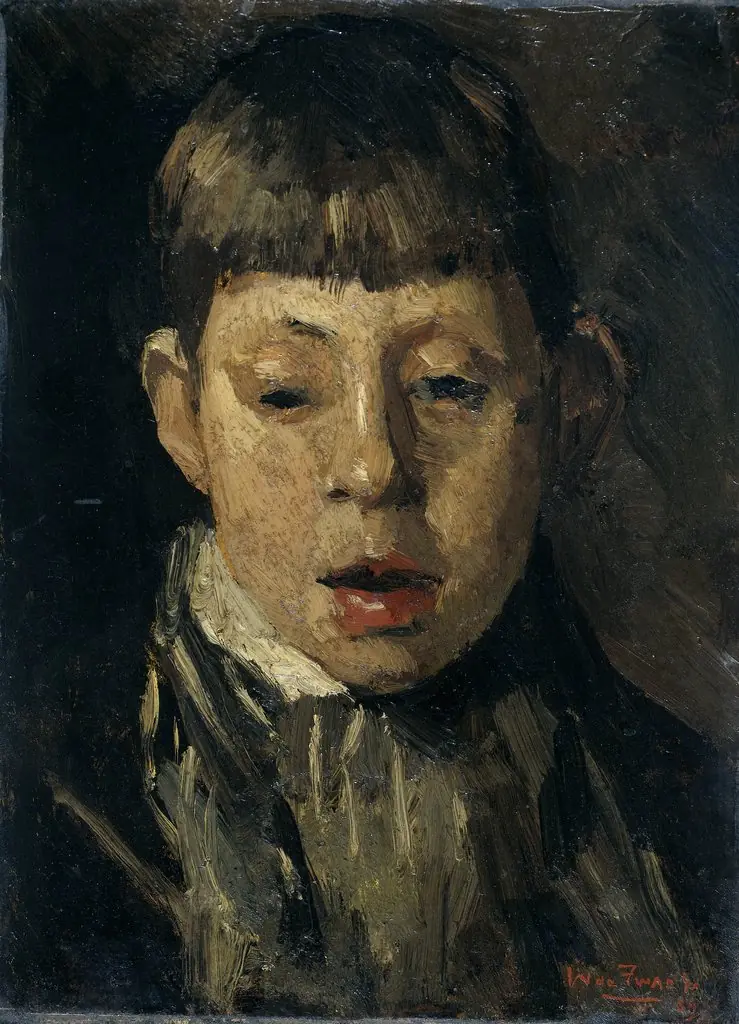 Jongenskop
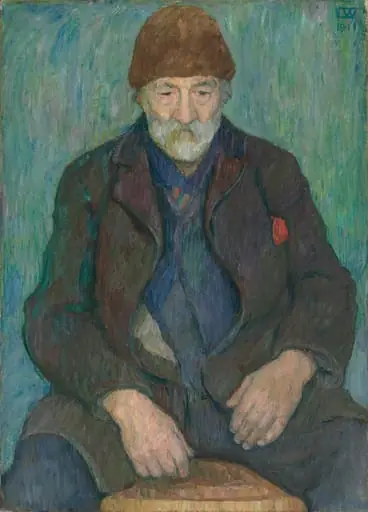 Vanha mies karvalakki päässä
 Portretul pictorului Ștefan Popescu
 Αυτοπροσωπογραφία του Κωνσταντίνου (Ντίκου) Βυζάντιου