Artwork
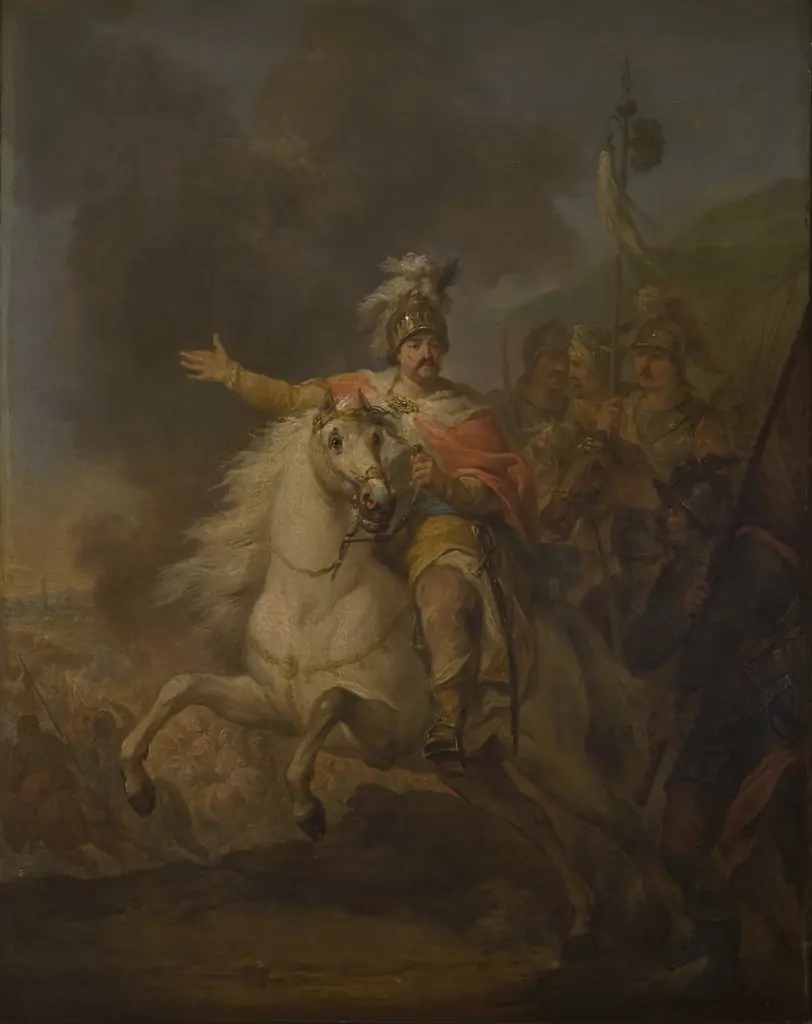
Equestrian portrait of John III Sobieski.
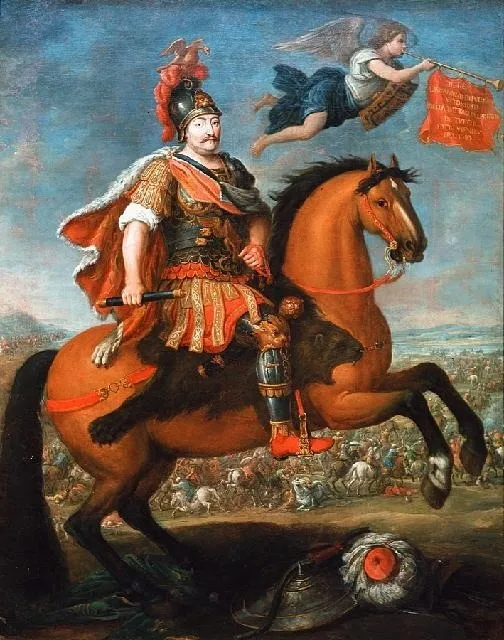
Equestrian portrait of John III Sobieski. is an oil painting by the Barbizon school artist Georg Philipp Rugendas the Elder. It dates from 1696 and is held in the collection of the National Museum in Kraków.
About this work
Overview
Though Rugendas was primarily known for battlefield scenes, this work blends portraiture with dramatic narrative, emphasizing the monarch’s martial presence.
Painted in 1696 by German artist Georg Philipp Rugendas the Elder, this oil portrait captures Polish king John III Sobieski on horseback. Though Rugendas was primarily known for battlefield scenes, this work blends portraiture with dramatic narrative, emphasizing the monarch’s martial presence. The painting resides in the National Museum in Kraków, where it serves as a key example of late 17th-century dynastic imagery in Central Europe.
Subject & Meaning
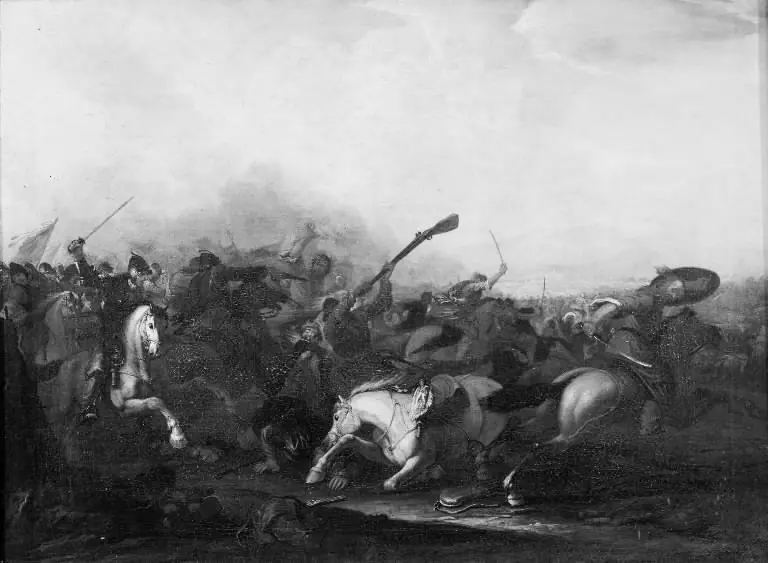
John III Sobieski is depicted as a victorious commander, mounted on a rearing horse amid the chaos of battle. His ornate armor, feathered helmet, and flowing red cape signify royal authority and military distinction. Above him, a cherub holds a banner, subtly invoking divine favor.
The scene references his leadership at the Battle of Vienna in 1683, reinforcing his legacy as a defender of Christendom against Ottoman forces.
Technique & Style
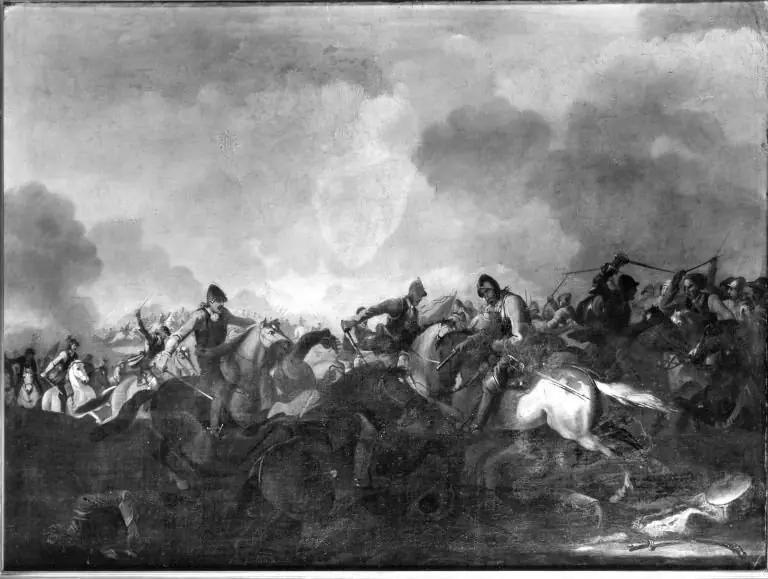
Rugendas employed dynamic composition and fluid brushwork to convey motion and tension. The horse’s lifted forelegs and swirling drapery create vertical energy, while the background battle is rendered with loose, suggestive strokes. Light falls sharply on the king’s figure, isolating him from the tumult around him.
The inclusion of a celestial figure adds symbolic weight, blending realism with allegorical convention common in baroque portraiture.
History & Provenance
Commissioned shortly after Sobieski’s death, the painting was likely intended to honor his military achievements. It entered the collection of the National Museum in Kraków in the 19th century, following the dispersal of aristocratic Polish holdings. Its survival through political upheavals underscores its cultural significance as a symbol of Polish sovereignty and martial tradition.
Context
In the late 17th century, European rulers frequently commissioned equestrian portraits to assert power and legitimacy. Sobieski’s victory at Vienna elevated him to near-mythic status across Catholic Europe. Rugendas, though German, worked within this pan-European tradition, adapting his battle-painting expertise to glorify a foreign monarch whose fame extended beyond Poland’s borders.
Legacy
The portrait remains one of the most recognizable depictions of Sobieski, influencing later representations of Polish kingship. While not as widely studied as other baroque portraits, it preserves a visual record of how military leadership was mythologized in art. Its continued display in Kraków affirms its role in shaping national historical memory.
Artist & collection
Artist
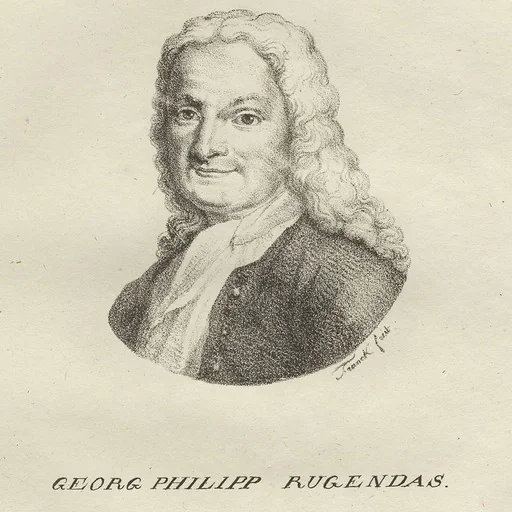
Georg Philipp Rugendas the Elder
Georg Philipp Rugendas (27 November 1666 – 1742) was a battle and military genre painter and engraver born in the Free Imperial City of Augsburg in what is now Bavaria, Germany.