Artwork
Martyrdom of Saint Sebastian
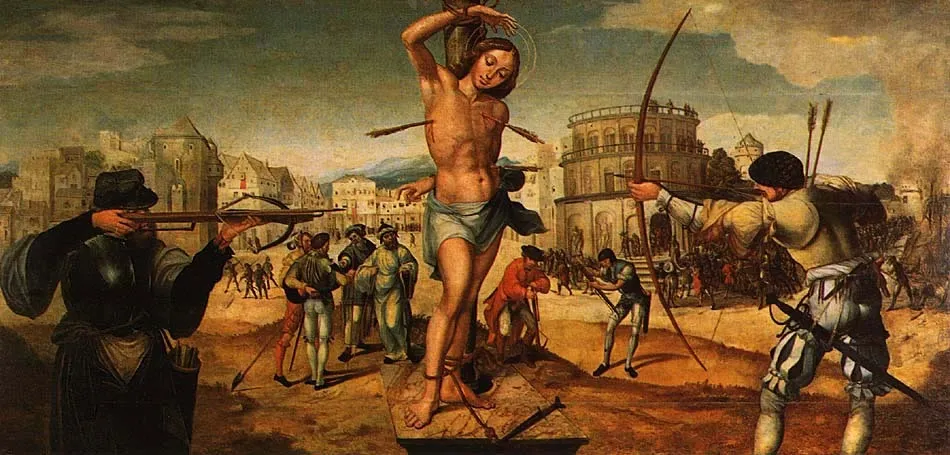
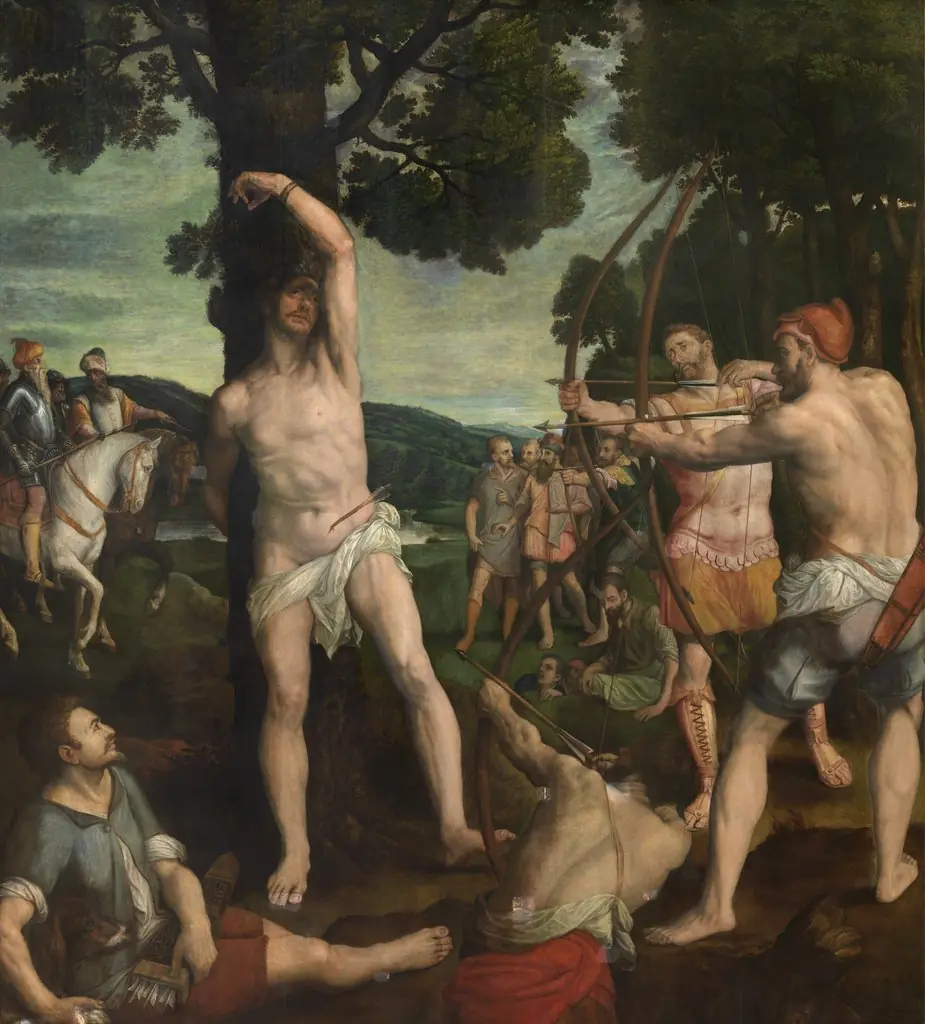
Martyrdom of Saint Sebastian is an unspecified painting by the Mannerist artist Gregório Lopes. It dates from 1537 and is held in the collection of the National Museum of Ancient Art.
About this work
Overview
The composition centers on Sebastian, depicted shirtless and bound by ropes to a stone pillar or platform, with his arms raised above his head.
Gregório Lopes's 'Martyrdom of Saint Sebastian,' executed in 1537, portrays the execution of the early Christian martyr. The composition centers on Sebastian, depicted shirtless and bound by ropes to a stone pillar or platform, with his arms raised above his head. He is flanked by two archers dressed in contemporary 16th-century attire who aim their bows directly at his torso.
Lopes, a leading figure of the Portuguese Renaissance and court painter to King John III, treats the subject with a focus on narrative clarity and human anatomy rather than the idealized classical forms often seen in Italian contemporaries. The work reflects the artist's mature style, characterized by a sober palette and a direct, unembellished approach to religious storytelling that aligns with the Counter-Reformation emphasis on the physical reality of martyrdom. Created during a period of significant religious art production in Portugal, this panel demonstrates Lopes's ability to synthesize local artistic traditions with Renaissance compositional principles.
The painting serves as a testament to the artist's role in defining the visual culture of the Portuguese court in the mid-16th century.
Subject & Meaning
The painting captures the moment before Saint Sebastian’s execution, emphasizing his spiritual composure amid physical peril. His tranquil facial expression contrasts sharply with the tension of his outstretched limbs and the threatening presence of the bowmen, suggesting a meditation on faith, endurance, and the acceptance of suffering.
Technique & Style
Lopes employs a balanced chiaroscuro to model the saint’s muscular form against a muted background, allowing the figure to dominate the visual field. The detailed rendering of contemporary 16th‑century clothing on the archers and the architectural elements in the distance reflect a blend of devotional narrative with a realistic, almost documentary, approach to setting.
History & Provenance
Since its creation in the early Renaissance period, the painting has remained in Portugal, eventually entering the holdings of the National Museum of Ancient Art in Lisbon. Its attribution to Gregório Lopes has been consistently affirmed by scholarly research, confirming its place within the artist’s oeuvre of religious commissions.
Artist & collection