Artwork
Samson and Delilah
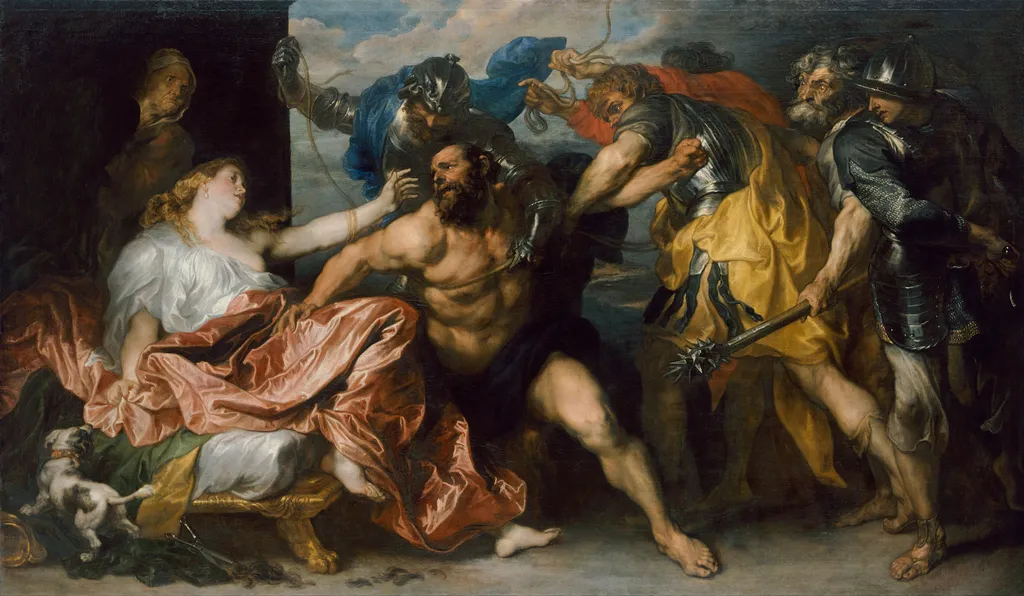
Samson and Delilah is an oil painting by the Baroque artist Anthony van Dyck. It dates from 1630 and is held in the collection of the Kunsthistorisches Museum.
About this work
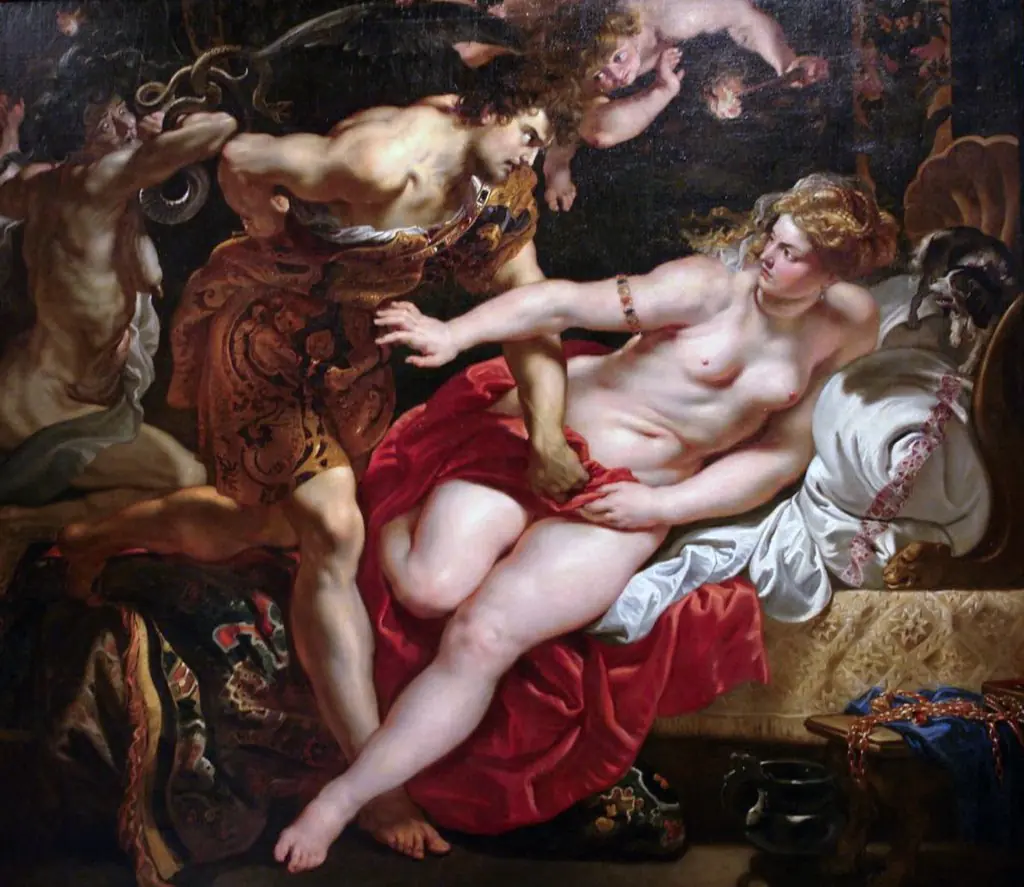
This shows Samson and Delilah by Anthony van Dyck. It’s an oil painting from around 1630. The scene is biblical but painted in a style close to Rubens, who did his own version earlier.
Here’s the twist: Delilah looks shocked at herself. She seems to regret what she’s done to Samson. Her face shows guilt, not just cunning. That’s different from how Rubens showed her.
Look up Anthony van Dyck next.
Subject & Meaning
The work demonstrates the influence of both Peter Paul Rubens and Titian, particularly in its composition and use of saturated color.
The painting depicts the biblical story of Samson and Delilah, focusing on the moment of seduction and betrayal. In this version, Delilah is shown with an expression of regret, a departure from Rubens' portrayal of her as a ruthless temptress, reflecting van Dyck's more sentimentalist interpretation. The work demonstrates the influence of both Peter Paul Rubens and Titian, particularly in its composition and use of saturated color.
The scene captures the narrative from the Book of Judges, emphasizing Dalila's role in discovering Samson's secret strength through her cunning, leading to his capture.
Technique & Style
The 1630 painting is executed in oil on canvas, the support typical for van Dyck's mature works. The composition displays the dramatic lighting and rich coloration characteristic of the Baroque style, with a restrained palette that reflects the influence of Titian during van Dyck's Italian period. The brushwork renders the textures of hair and fabric with fine detail, while the figures of Samson and Delilah are positioned to emphasize the tension between strength and vulnerability.
The handling of the subject shows van Dyck's departure from Rubens' more overtly sensual treatment, presenting Delilah in a contemplative pose that suggests regret, a nuance highlighted in contemporary descriptions.
History & Provenance
The work titled Samson and Delilah was created by Anthony van Dyck in 1630 as an oil paint painting. It was commissioned as a religious artwork and belongs to the Baroque movement. The painting measures 1460 cm in height and 2540 cm in width.
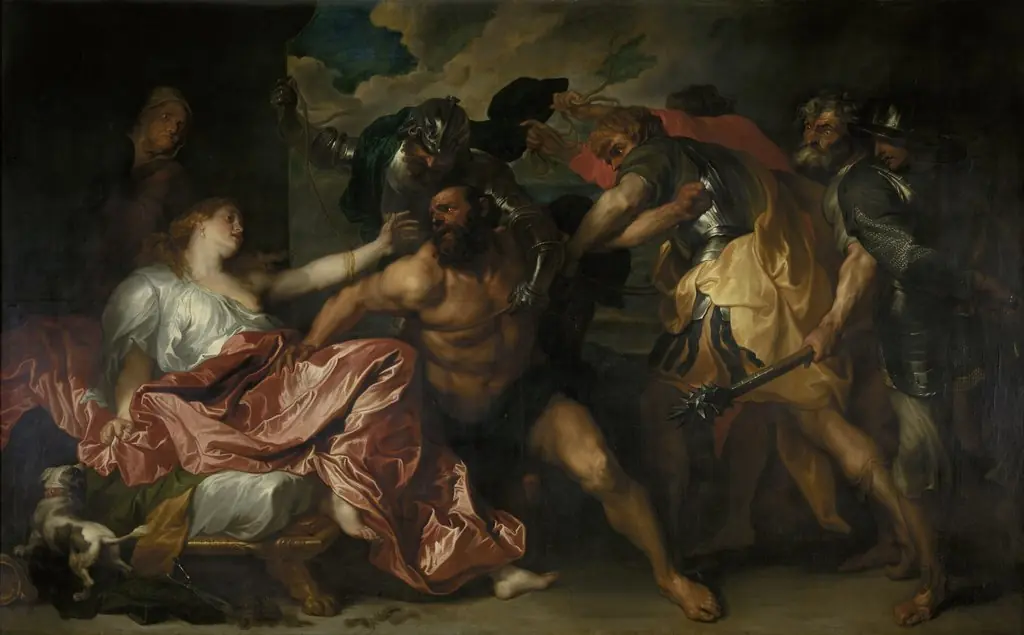
It has been part of the Kunsthistorisches Museum collection in Vienna since its inception, with the work being painted during van Dyck's stay in Italy and influenced by Titian and Peter Paul Rubens. A second version of the subject was completed in 1620 and is held by the Dulwich Picture Gallery in London. Both versions depict the biblical story of Samson and Delilah, with the 1630 version showing Delilah in a state of regret rather than treachery.
Context
Created in 1630, Anthony van Dyck's Samson and Delilah is a Baroque religious painting currently held by the Kunsthistorisches Museum in Vienna. The work exemplifies the artist's enduring stylistic debt to his former master, Peter Paul Rubens, while simultaneously revealing the impact of Titian's color palette acquired during van Dyck's Italian sojourn. Art historical analysis distinguishes this version from both Rubens's treatment of the subject and van Dyck's own 1620 iteration.
Unlike Rubens's depiction of an unscrupulous temptress, van Dyck portrays Delilah as visibly appalled and regretful regarding her betrayal, introducing a sentimental tone to the biblical narrative. This psychological nuance highlights the artist's capacity to reinterpret traditional iconography through a distinct emotional lens, marking the painting as a significant example of his mastery in rendering historical and scriptural subjects with dramatic lighting and saturated hues.
Overview
Anthony van Dyck’s oil painting titled Samson and Delilah dates to around 1630. Executed in the Baroque idiom, the work portrays the biblical episode in which Delilah cuts the hair of the Israelite hero, rendering him vulnerable. The canvas is part of the collection of the Kunsthistorisches Museum in Vienna.
Artist & collection
Artist
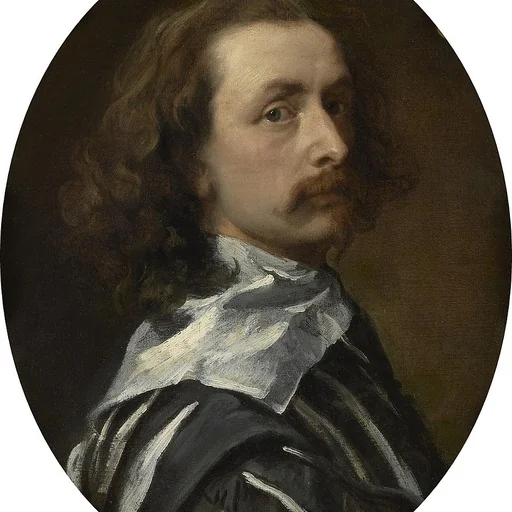
Sir Anthony van Dyck (; Dutch: Antoon van Dijck; 22 March 1599 – 9 December 1641) was a Flemish Baroque artist, who became the leading court painter in England after success in the Spanish Netherlands and Italy.