Artwork
The Penitent Magdalen
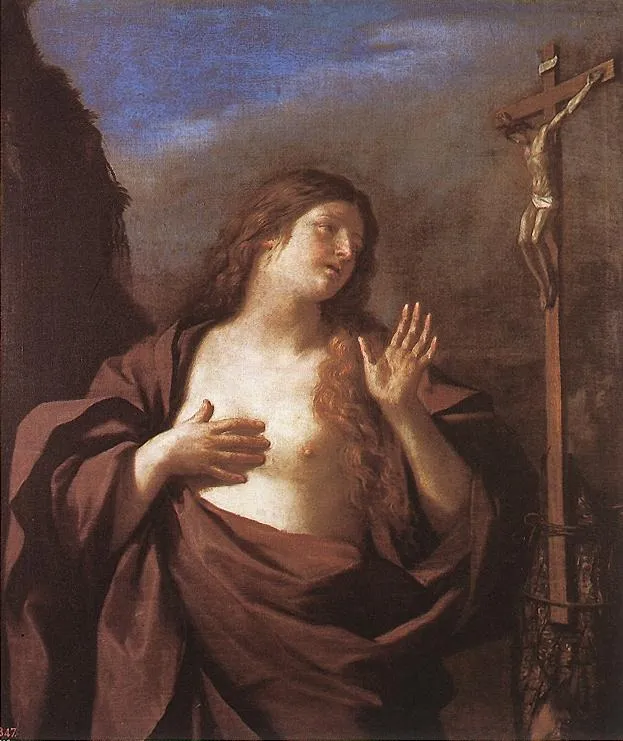
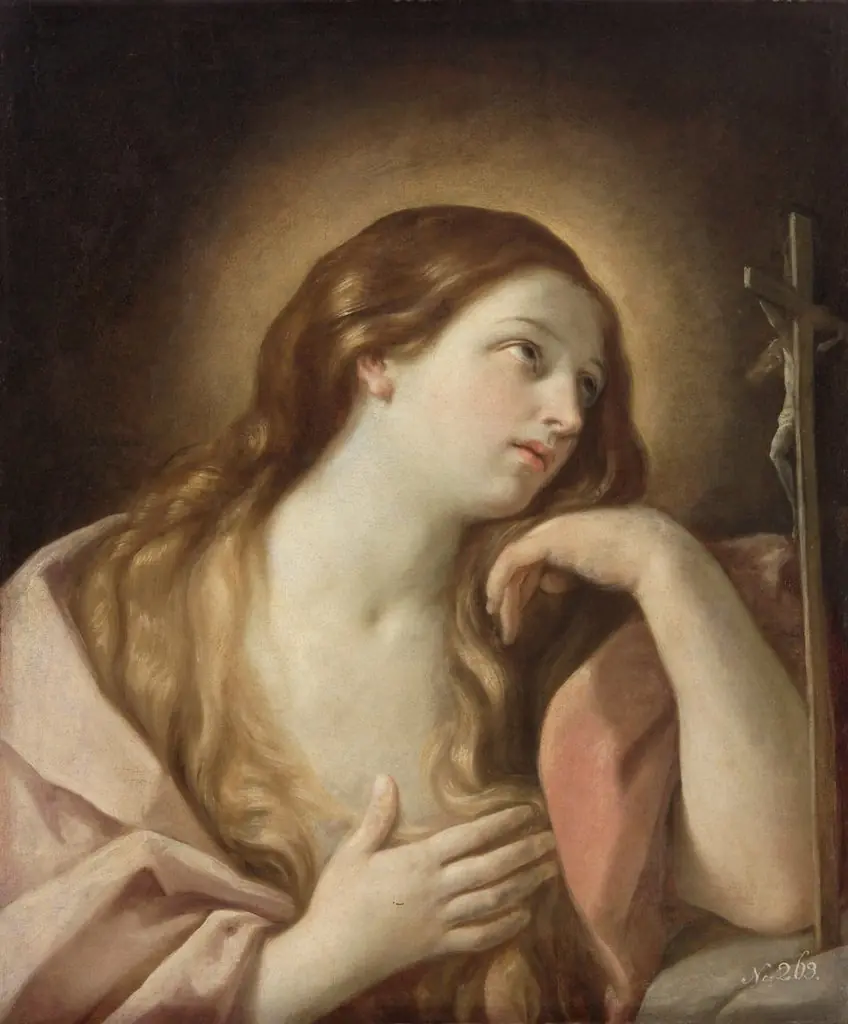
The Penitent Magdalen is an oil painting by the Early Baroque Italian artist Guercino. It dates from 1645 and is held in the collection of the Museo del Prado. Created in 1645, this oil on canvas portrays a solitary figure of Mary Magdalene in a moment of devotion.
About this work
Subject & Meaning
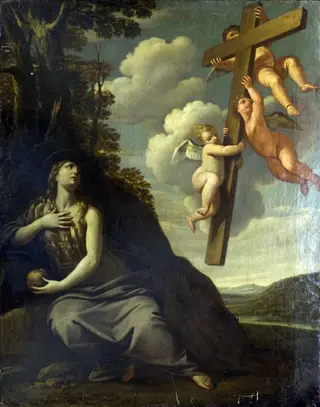
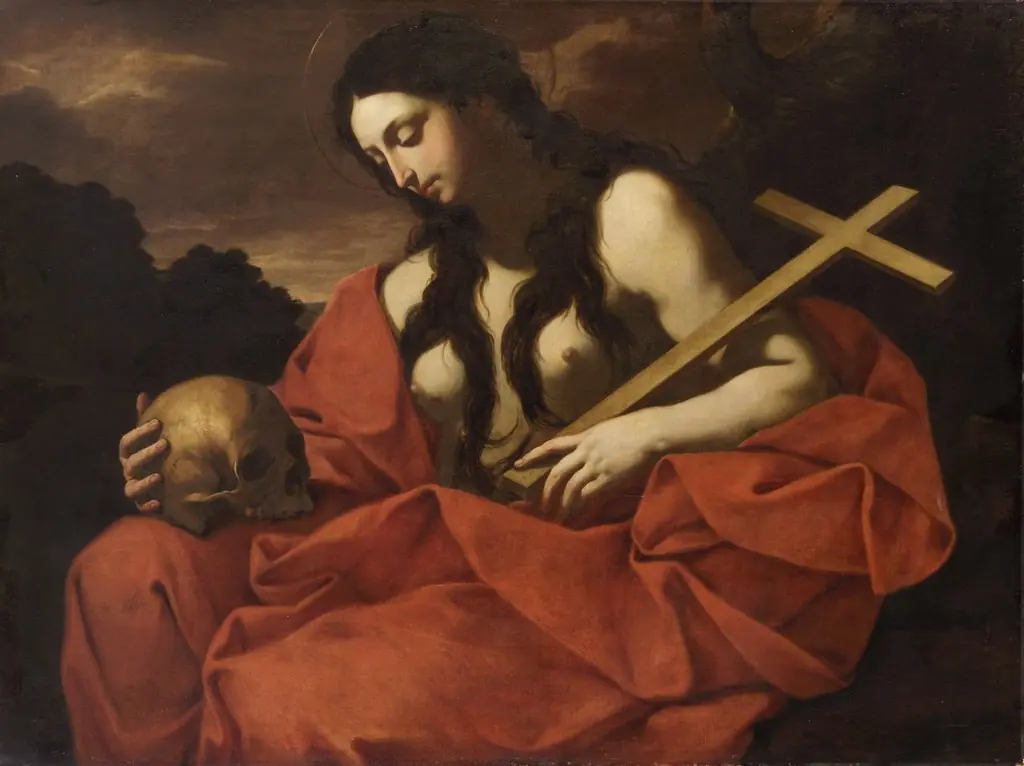
The painting depicts Mary Magdalene in a state of penitence, identified as the main subject of the work. This religious scene includes a crucifix, which serves as a central visual element alongside the figure of Magdalene. The composition functions as an example of religious art, focusing on the theme of repentance and spiritual reflection associated with the saint.
Technique & Style
Guercino employs a restrained yet expressive handling, using fluid brushwork to define the Magdalen’s draped garments and the soft modeling of her features.
The painting is executed in oil on canvas, measuring 119.8 cm in height and 101.2 cm in width. Guercino employs a restrained yet expressive handling, using fluid brushwork to define the Magdalen’s draped garments and the soft modeling of her features. The composition emphasizes diagonal movement, guiding the viewer’s eye from the crucifix in her hands upward to her upward gaze, while subdued chiaroscuro heightens the spiritual mood.
The subdued palette, dominated by earthy tones and gentle contrasts, underscores the contemplative mood of the scene, aligning with mid-seventeenth-century religious conventions.
History & Provenance
The Penitent Magdalen is an oil painting on canvas created in 1645 by the Italian Baroque artist Guercino. It measures 119.8 cm in height and 101.2 cm in width. The work entered the Spanish royal collection following its acquisition by Ferdinand VII, later passing to Charles III, then to his wife Elisabeth Farnese, and finally to Philip V, all monarchs of Spain.
The painting remains in the Museo del Prado, where it is displayed in the Royal Palace of La Granja de San Ildefonso and the Royal Palace of Aranjuez.
Context
The painting's critical reception is anchored in its 1645 creation for religious contexts within Guercino's oeuvre. Scholarship situates it within the artist's broader Baroque practice, emphasizing its devotional intensity and compositional mastery as exemplified by its depiction of Mary Magdalene in penitence. Its inclusion in royal Spanish collections, including those of Philip V and Ferdinand VII, reflects its esteemed status across European art historical narratives.
The work's placement in institutions like the Museo del Prado underscores its enduring significance within the canon of religious art.
Overview
Created in 1645, this oil on canvas portrays a solitary figure of Mary Magdalene in a moment of devotion. The composition centers on the penitent saint, whose raised arm and clasped hand convey a quiet intensity. A crucifix, illuminated from above, stands behind her, while a dark, undefined background heightens the focus on the figure.
Artist & collection
Artist
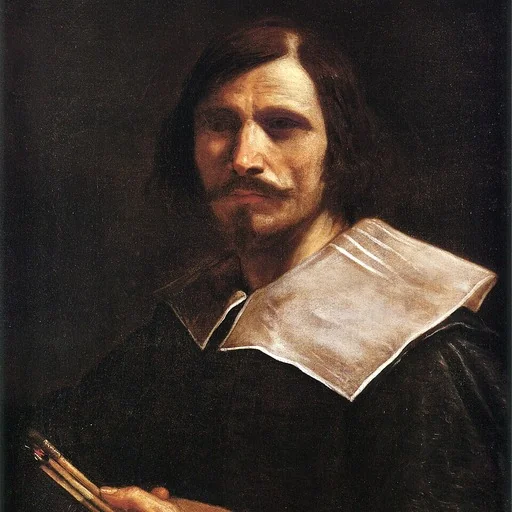
Giovanni Francesco Barbieri (8 February 1591 – 22 December 1666), better known as (il) Guercino (Italian pronunciation: ), was an Italian Baroque painter and draftsman from Cento in the Emilia region, who was active in Rome and Bologna.