Artwork
The Source of the Loue
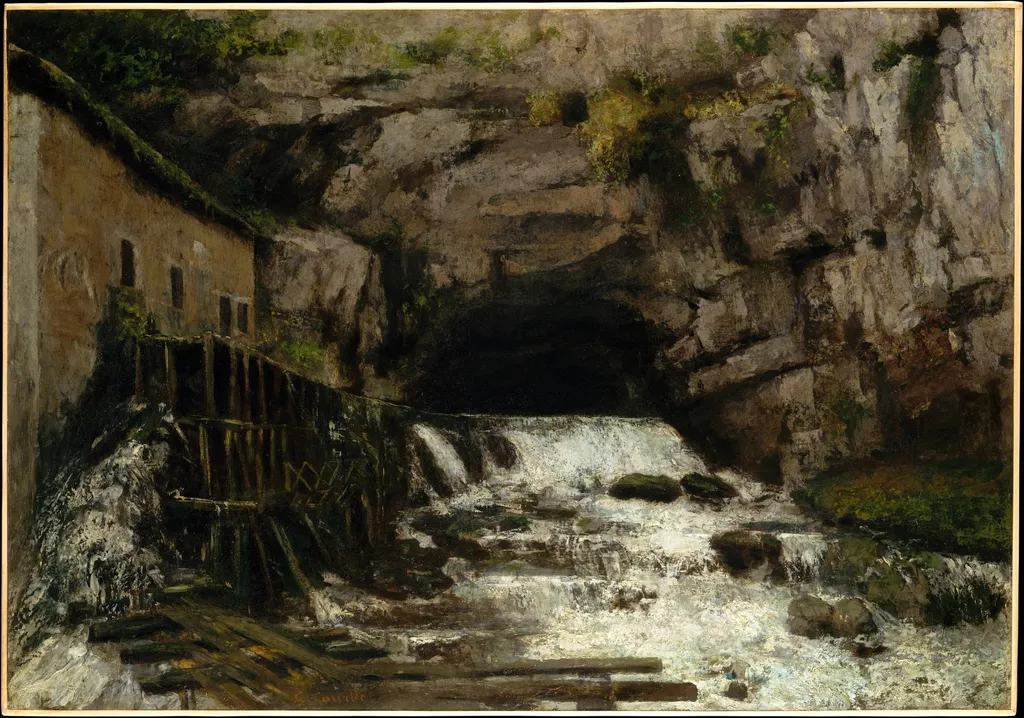
The Source of the Loue is an oil painting by the Realist artist Gustave Courbet. It dates from 1864 and is held in the collection of the Metropolitan Museum of Art.
About this work
Subject & Meaning
The series, produced between 1863 and 1864, also highlights his technique of applying pigment with a palette knife to capture the textures of stone and water.
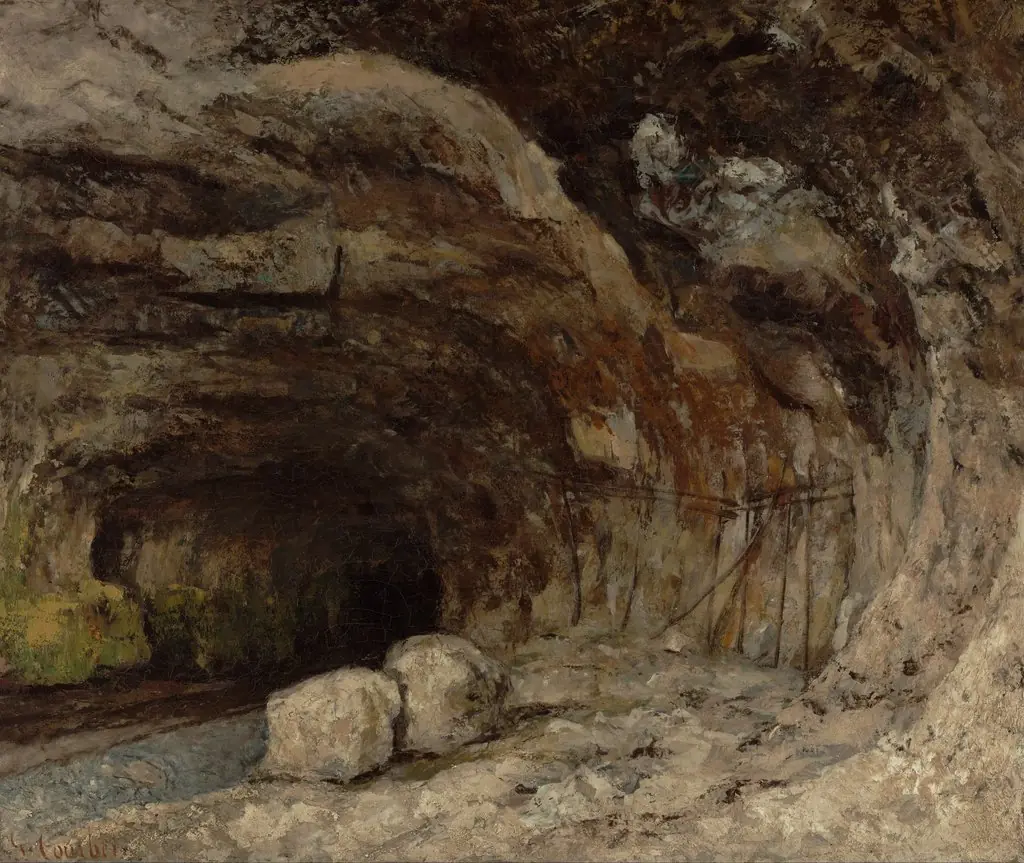
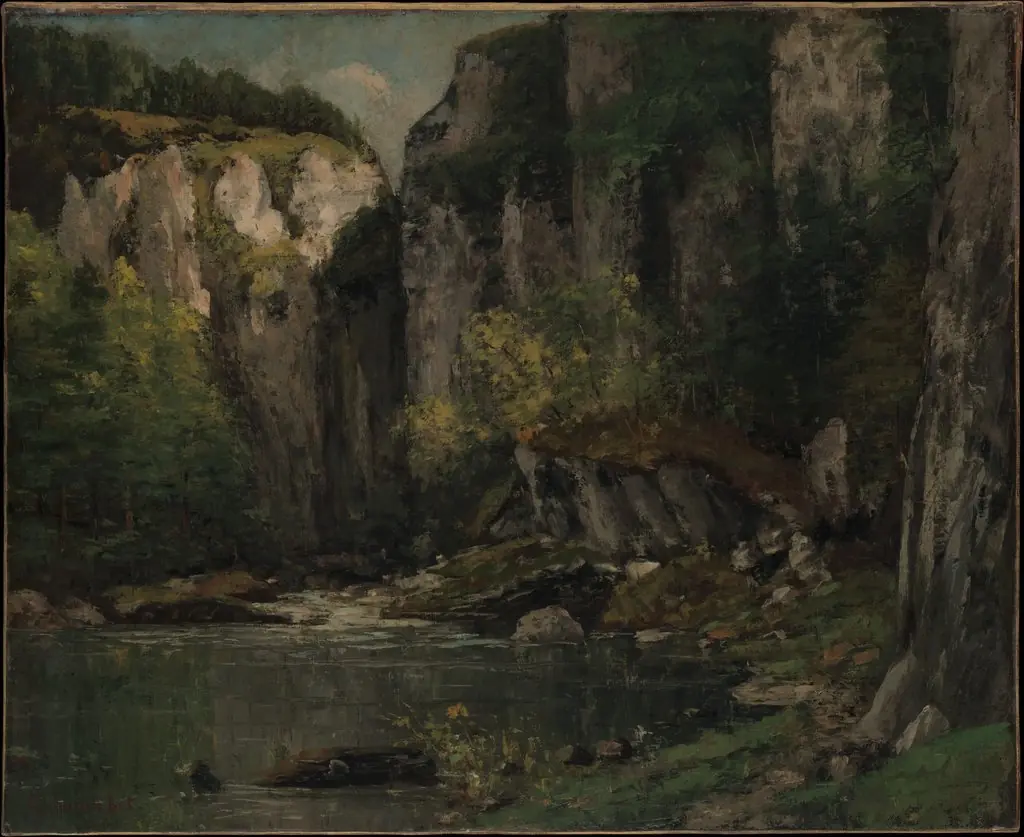
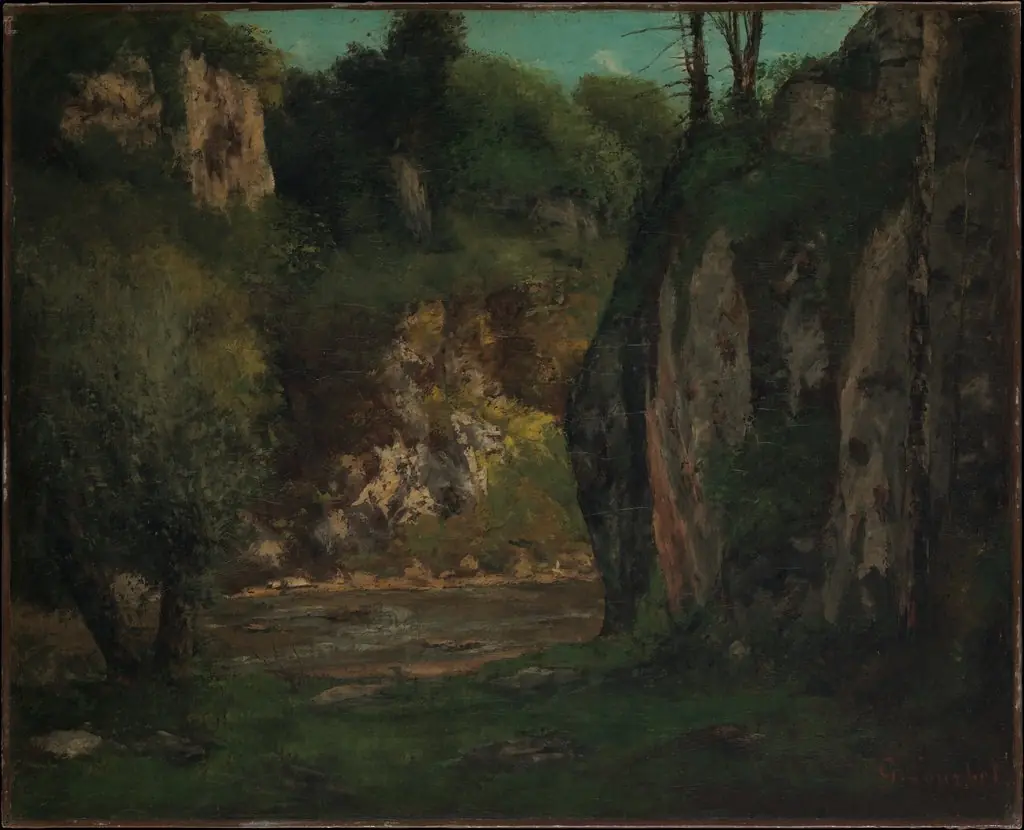
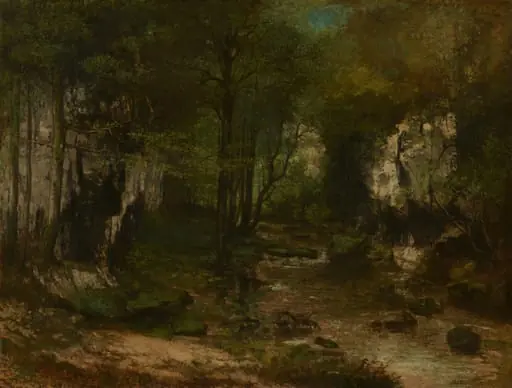
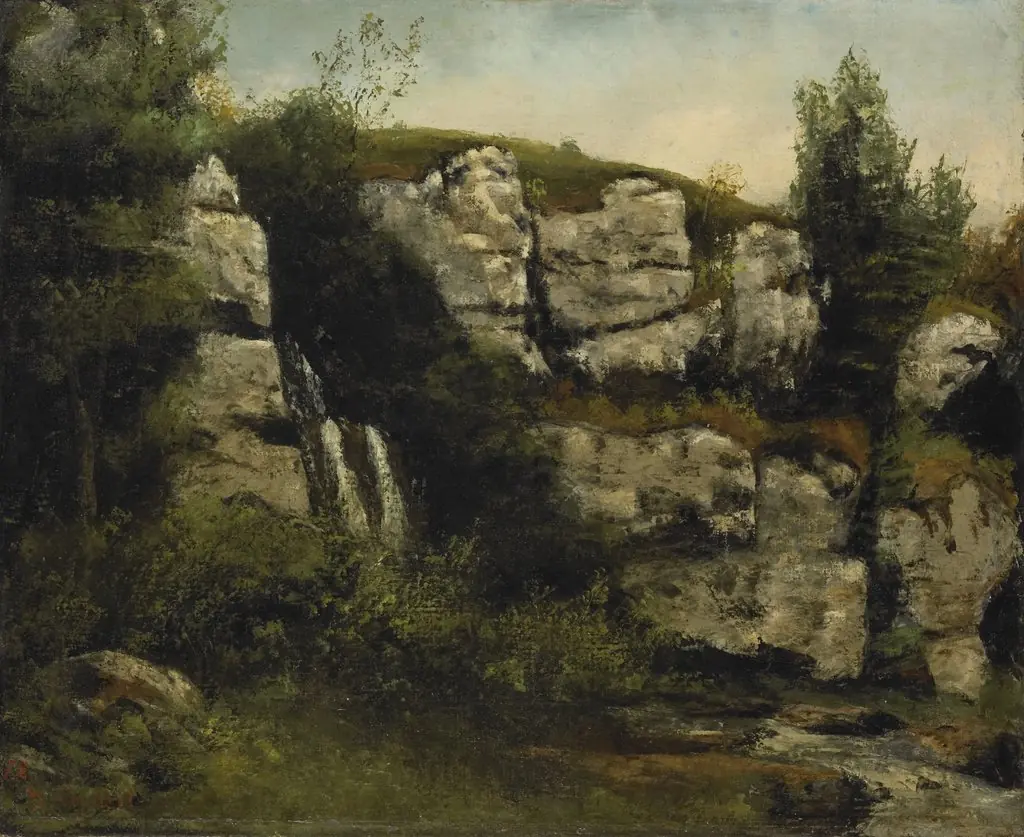
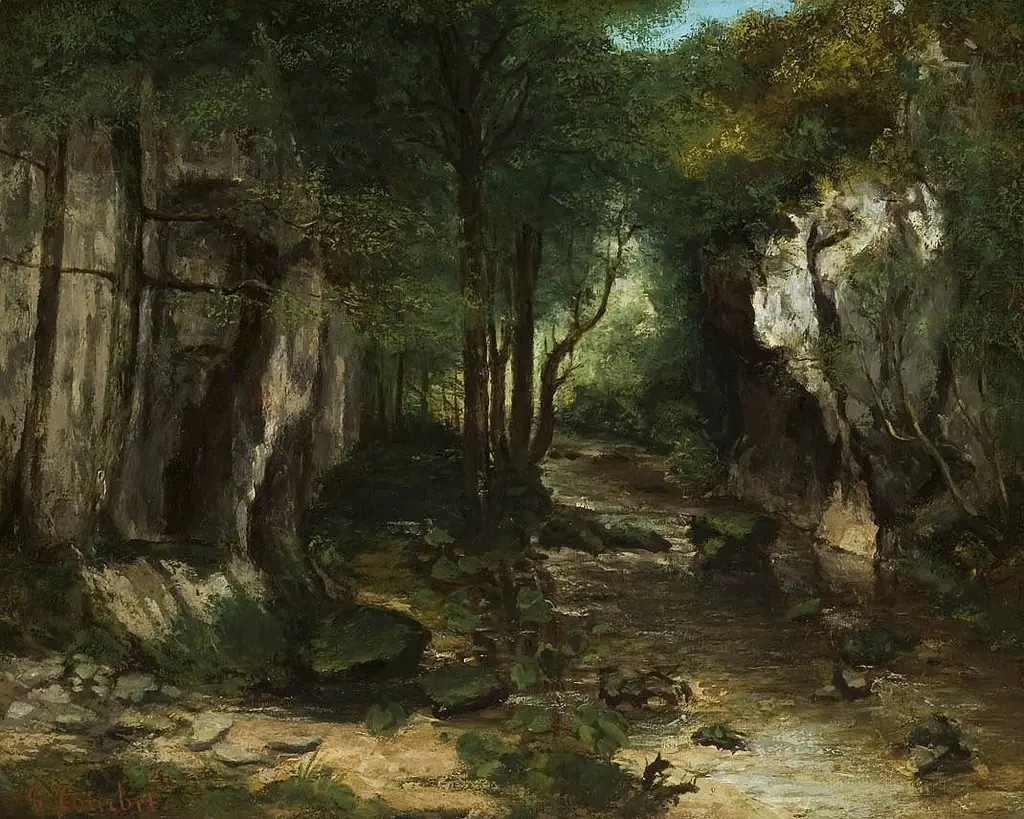
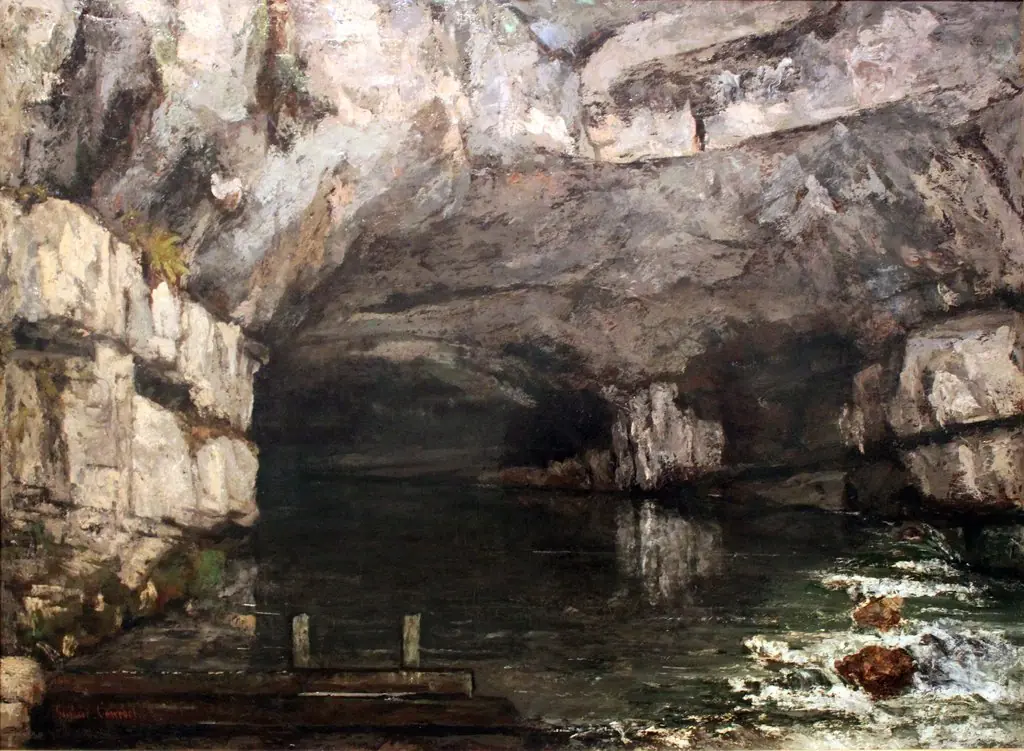
The Source of the Loue depicts the river Loue in eastern France, near Ornans, Courbet's hometown. The paintings portray rocky crags and grottos with the river flowing beneath them, a landscape motif aligned with Courbet's earlier Realist works. Through this subject, Courbet rendered an unidealized vision of the natural environment of his native region, consistent with his naturalist and Realist tendencies.
The series, produced between 1863 and 1864, also highlights his technique of applying pigment with a palette knife to capture the textures of stone and water.
At the time of their creation, the paintings were not widely accepted in the art community because Realism was then considered a fringe artistic movement, making the works a quiet assertion of Courbet's commitment to depicting the local landscape on its own terms.
Technique & Style
The Source of the Loue is an oil‑on‑canvas landscape painted in 1864. The work measures 99.7 × 142.2 cm and was executed with a palette knife, a technique Courbet used to create textured, naturalistic effects. Its subject is the Loue River near Ornans, depicted with rocky crags and grottos that embody Realist geological realism.
The four paintings in the series were initially poorly received, as Realism was then a fringe movement. Today the series is split among the Walters Art Museum, Kunsthaus Zürich, Kunsthalle Hamburg, and the Metropolitan Museum of Art, which holds one example formerly owned by Louisine Havemeyer.
History & Provenance
The Source of the Loue was painted by Gustave Courbet in 1864 as part of a series of four closely related works depicting the river Loue near his hometown of Ornans in eastern France. Courbet executed the series between 1863 and 1864, employing a palette knife to apply pigment in a manner consistent with his Realist practice. One version, measuring 99.7 cm × 142.2 cm, is held in the Metropolitan Museum of Art, having previously belonged to Louisine Havemeyer.
The other three paintings from the series are located in the Walters Art Museum, the Kunsthaus Zürich, and the Kunsthalle Hamburg.
Context
Executed between 1863 and 1864, this series of four landscapes depicts the river Loue near Gustave Courbet's hometown of Ornans. The works exemplify the artist's Realist proclivities, utilizing a palette knife to render rocky crags and grottos with thick pigment. Upon their creation, these paintings faced significant resistance within the art community, as Realism was then considered a fringe movement rather than an accepted style.
Scholarship identifies these works as a continuation of Courbet's earlier engagement with the local terrain, reinforcing his commitment to naturalist observation. Today, the series is dispersed across major institutions, including the Metropolitan Museum of Art, the Walters Art Museum, the Kunsthaus Zürich, and the Kunsthalle Hamburg, marking their eventual integration into the canonical history of 19th-century French painting.
Overview
The Source of the Loue, painted by Gustave Courbet in 1864, is a landscape depicting the emergence of the Loue River in the Jura Mountains of eastern France. The composition centers on a dark, cavernous grotto from which the water flows into a rocky foreground, surrounded by dense vegetation and towering limestone cliffs. Executed in oil paint, the work demonstrates Courbet's commitment to Realism through its unidealized treatment of nature and his characteristic heavy impasto technique, which gives the rock formations and water a tangible, physical presence.
Created during the height of the artist's career, this painting reflects his deep connection to the Franche-Comté region and his ongoing exploration of the sublime power of the natural world. Unlike the dramatic, mythological landscapes of the Romantic tradition, Courbet presents the source as a raw, geological fact, emphasizing the material reality of the earth. The work stands as a significant example of his mature style, where the artist acts not as an interpreter of nature but as a direct witness to its forms and textures, reinforcing his role as a leading figure in 19th-century French Realism.
Own this work as a print
Artist & collection
Artist
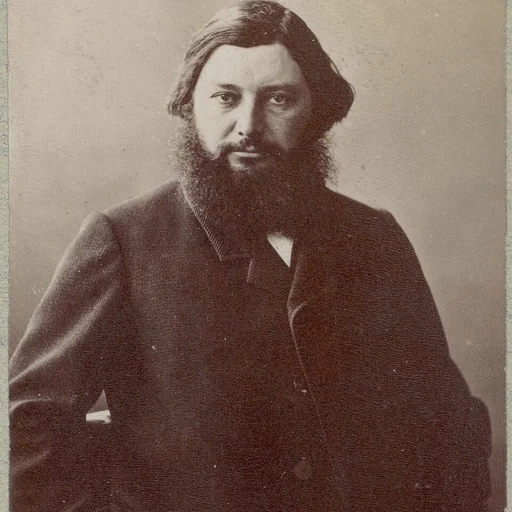
Jean Désiré Gustave Courbet (UK: KOOR-bay; US: koor-BAY; French:; 10 June 1819 – 31 December 1877) was a French painter who led the Realism movement in 19th-century French painting.