Artwork
The Haywain Triptych
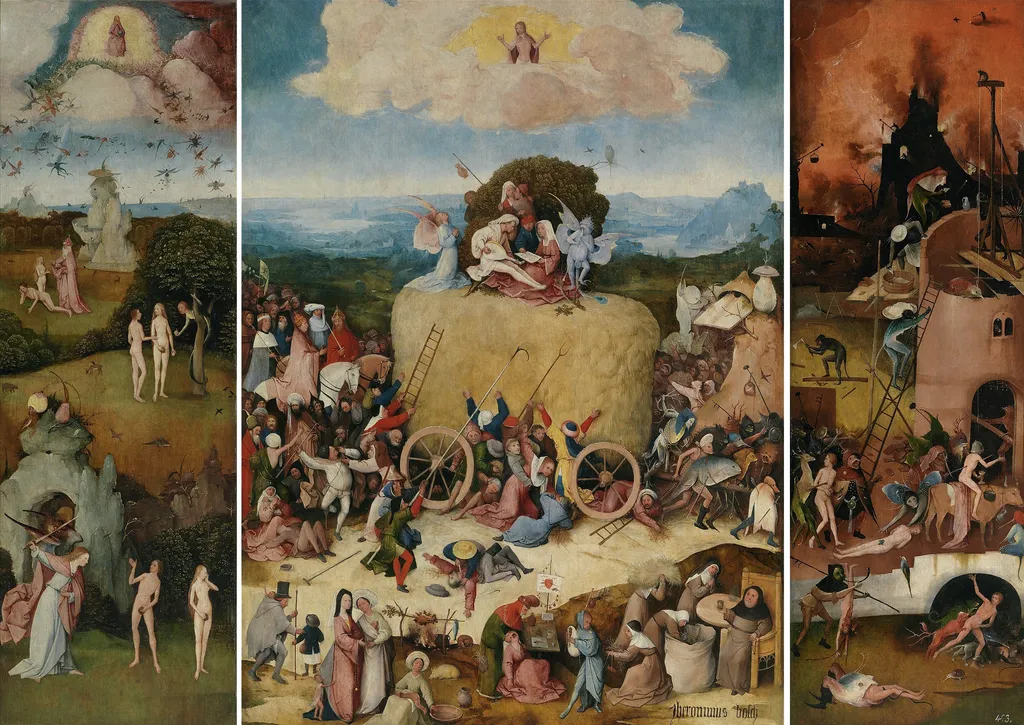
The Haywain Triptych is an oil painting by the Northern Renaissance artist Hieronymus Bosch. It dates from 1510 and is held in the collection of the Museo del Prado.
About this work
The central panel is signed by the artist and measures 135 cm by 200 cm, while each wing is 147 cm by 66 cm.
The Haywain Triptych is a panel painting by Hieronymus Bosch, made with oil paint around 1510. It is a three‑part work, so you’ll see a central image flanked by two wings.
Research on the wood shows a date close to 1516. The central panel is signed by the artist and measures 135 cm by 200 cm, while each wing is 147 cm by 66 cm. The outside shutters repeat a full‑color version of Bosch’s The Wayfarer.
You can see the whole piece at the Museo del Prado.
Subject & Meaning
The Haywain Triptych depicts a moral allegory centered on human sin and divine judgment. The central panel shows a hay wagon surrounded by figures engaged in worldly vices, symbolizing the fleeting nature of earthly wealth and ambition, as reflected in contemporary proverbs equating life to a hay wagon from which all take what they can. Above, Christ observes humanity, while infernal beings drag the wagon toward Hell, emphasizing the inevitability of divine judgment.
The left panel illustrates scenes from Genesis, including the Creation of Eve, the Fall, and the Expulsion from Eden, contrasting innocence with the corruption of the central panel. The exterior shutters depict a weary traveler resisting a dog, symbolizing perseverance against temptation, with motifs like a gallows and dancing figures underscoring themes of sin and mortality. Bosch’s limited palette of azurite, lead-tin yellow, vermilion, and ochres supports the work’s symbolic narrative.
Technique & Style
The Haywain Triptych is an oil painting executed on wood panel, a support consistent with Early Netherlandish practice. The central panel measures 135 × 200 cm and the wings 147 × 66 cm. Investigation by the Bosch Research and Conservation Project established that Bosch's palette was relatively restricted, drawing on azurite, lead-tin yellow, vermilion and ochres. The exterior shutters depart from the period convention of grisaille, being painted in full color to depict The Wayfarer as a unified scene.
Stylistically, the work belongs to Early Netherlandish painting, with a composition built around the large yellow hay wagon that anchors the central panel and directs the viewer's eye toward the right-hand Hell scene. The narrative unfolds in stacked scenes on the left panel, the Fall of the Rebel Angels, the Creation of Eve, the Temptation, and the Expulsion, while the central panel's procession bends back into the middle ground on the left and continues in a straight line on the right, producing a kinetic pull toward damnation. Technical and compositional differences between the wings and the central panel have led some scholars to suggest involvement of assistants.
The Prado panel was dendrochronologically dated to around 1516, though reinterpretation of the dendrochronology has pushed the earliest possible date to 1509. Borchert, after in-depth examination, attributed the work to Bosch himself, while noting that the paint surface is unusually pastose in places and the contours sketchier than in autograph works, possibly reflecting workshop orientation toward Bosch's manner.
History & Provenance
The Haywain Triptych is generally dated to the period around 1515–1520, with dendrochronological analysis of the Prado version suggesting a panel creation date of approximately 1516 or later, potentially placing its execution in the final years of Hieronymus Bosch's life. While some earlier scholarship proposed a date near 1490, stylistic evidence and the artist's signature point to a later origin. The work may have been commissioned by the collector Diego de Guevara, whose son Felipe sold the painting to King Philip II of Spain in 1570.
It was subsequently transported to the Royal Monastery of San Lorenzo de El Escorial in 1574. By the late 18th century, the triptych had been separated; the central panel was acquired by Queen Isabella II in 1848 and moved to Aranjuez, while the wings were held at the Escorial and the Prado. The three panels were finally reunited in the Museo del Prado in 1914.
The Haywain Triptych is held in the collection of the Museo del Prado in Madrid, Spain. The work's history involves a period of separation; after being acquired by King Philip II of Spain in 1570 and shipped to El Escorial, the panels were later divided. The central panel was purchased by Queen Isabella II in 1848 for Aranjuez, while the wings were dispersed to El Escorial and the Prado.
The three components were officially reunited at the Prado in 1914, following a partial recomposition for an exhibition in Bruges in 1907. A nearly identical version of the triptych remains located at the Royal Site of San Lorenzo de El Escorial.
Context
The Haywain Triptych has drawn sustained scholarly attention for its complex iconography and material history. Recent technical studies confirm Bosch's limited pigment palette, employing azurite, lead-tin yellow, vermilion, and ochres, while dendrochronological analysis anchors the central panel's creation to approximately 1516, with panel preparation beginning no earlier than 1509. The work's reception history reflects evolving interpretations: early 20th-century scholarship, such as that by Max Friedländer, debated the relative authenticity of its two versions, but contemporary consensus, informed by pigment analysis and stylistic comparison with Bosch's other triptychs like The Garden of Earthly Delights, recognizes the Prado version as the likely original.
Critically, the triptych's narrative, depicting humanity's moral descent from Eden through the central 'Haywain' scene of worldly folly to damnation, has been positioned as a culmination of Bosch's theological vision, distinct from his earlier works in its intensified focus on institutionalized sin and the mechanistic drag of infernal forces toward Hell. This placement within Early Netherlandish painting's trajectory has cemented its status as a pivotal artifact for understanding the transition from devotional art to allegorical critique of human behavior, as documented in museum records and conservation reports.
Overview
The Haywain Triptych, an oil‑on‑panel work by the Early Netherlandish artist Hieronymus Bosch, is displayed in Madrid’s Museo del Prado. Executed circa 1510‑1516, the three‑panel composition consists of a central scene measuring 135 × 200 cm, flanked by two wings each 147 × 66 cm. When closed, the outer shutters present a fully coloured rendition of Bosch’s earlier piece, The Wayfarer.
Own this work as a print
Artist & collection
Artist
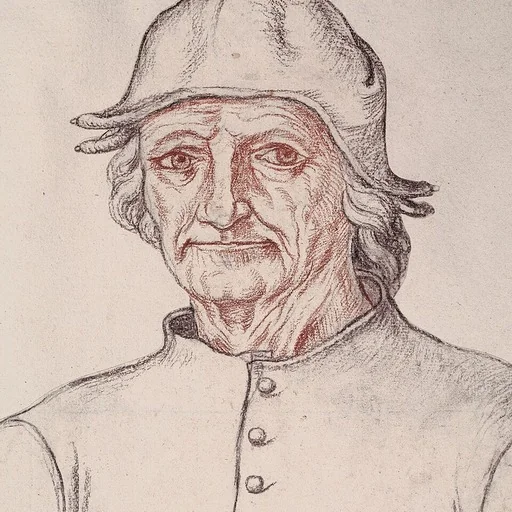
Hieronymus Bosch (; Dutch:; born Jheronimus van Aken; c. 1450 – 9 August 1516) was a Dutch painter from Brabant. He is one of the most notable representatives of the Early Netherlandish painting school. His work,…

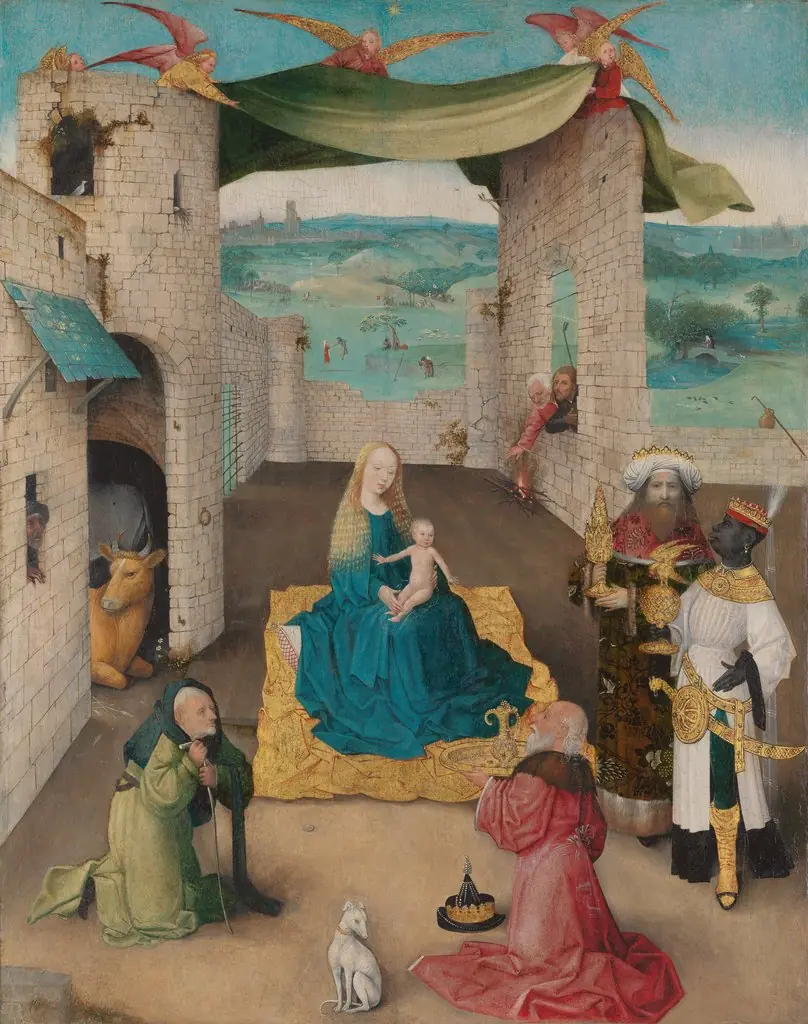
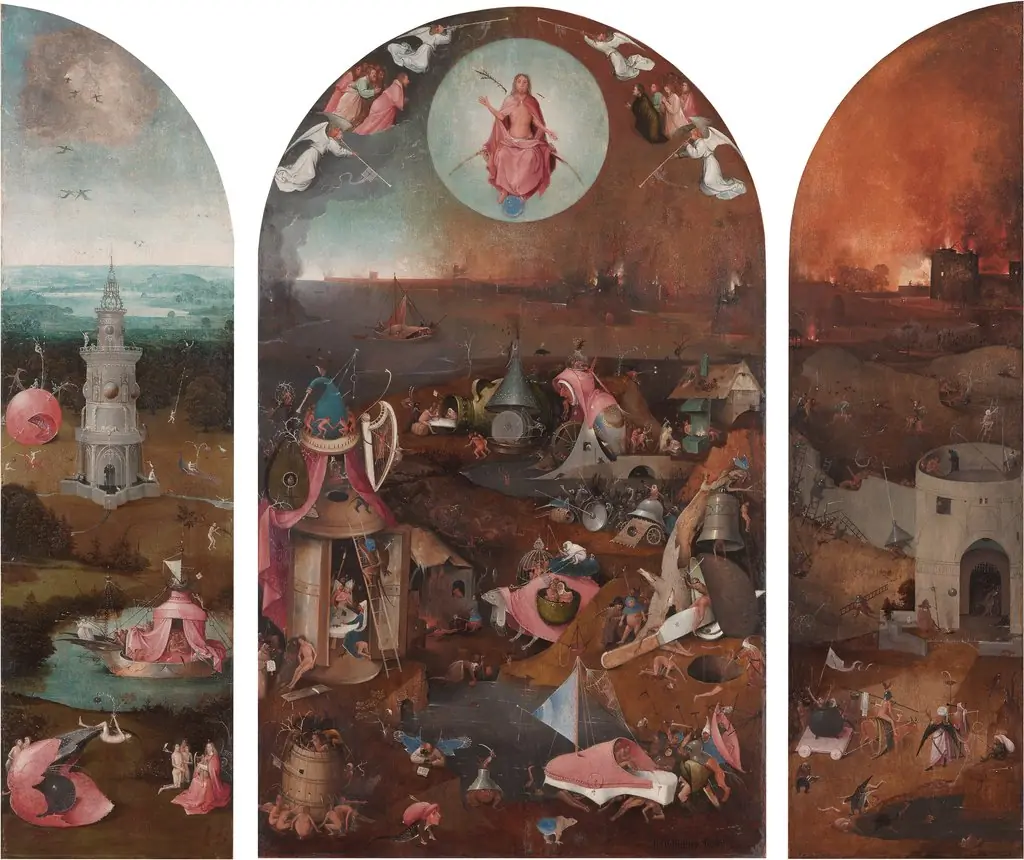
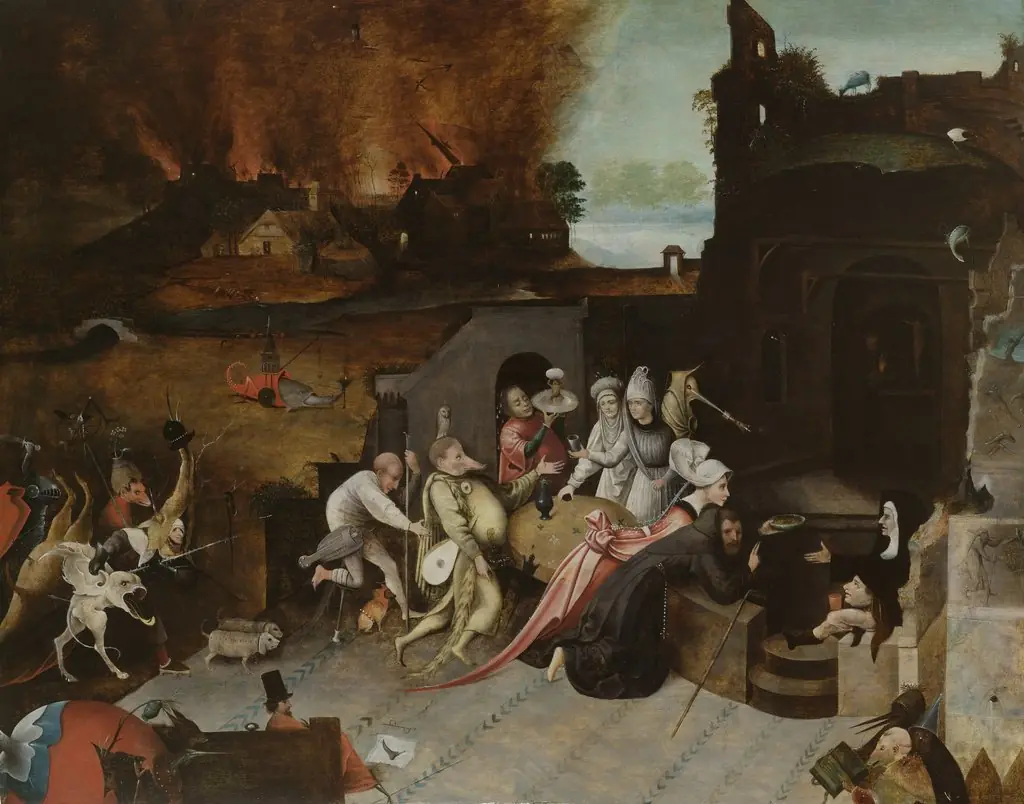
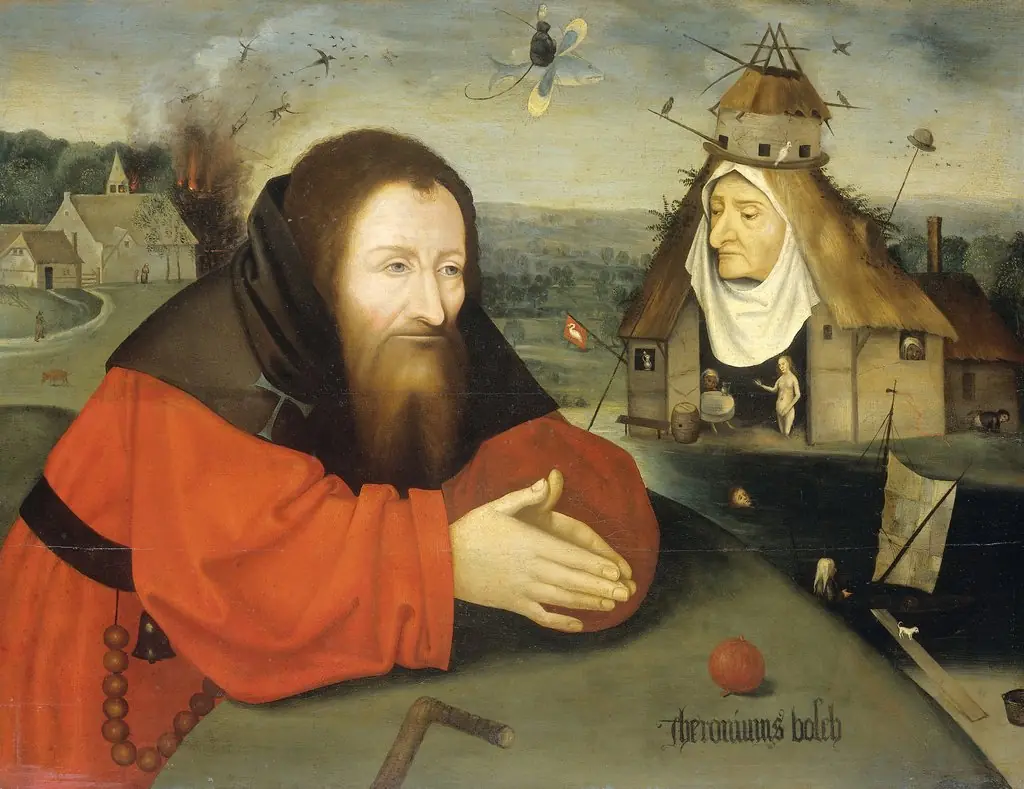
- The Last Judgement
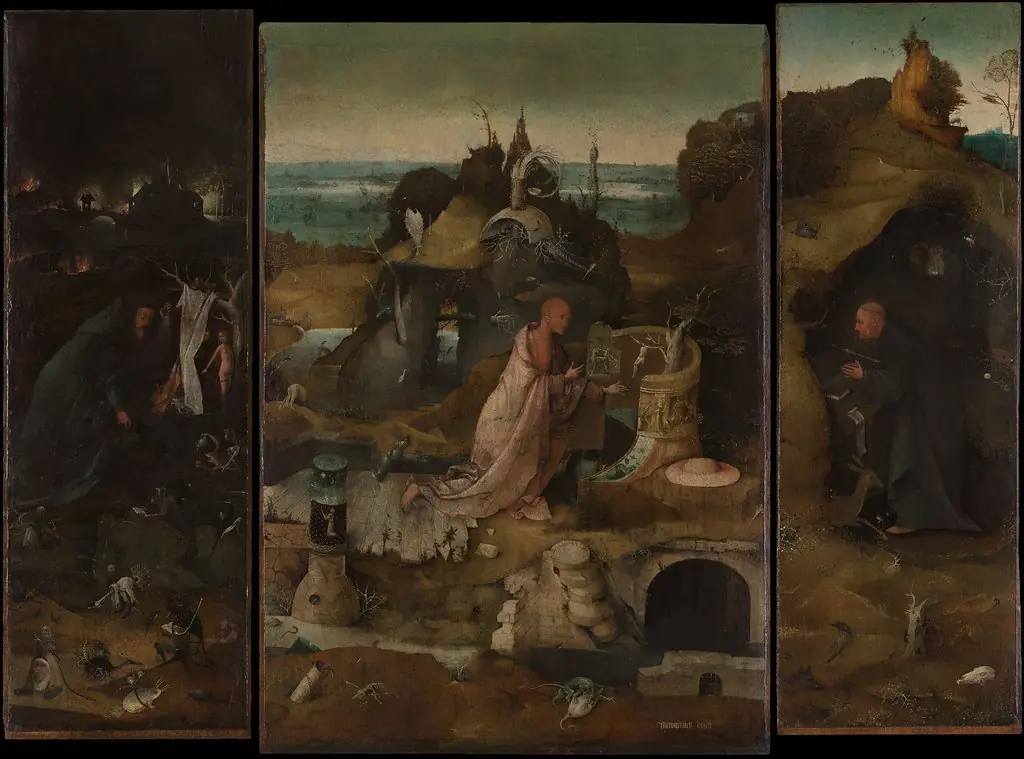 The Hermit Saint
 The Garden of Paradise
 The Garden of Eden
 Temptation of St. Athony
 The Procession to Calvary
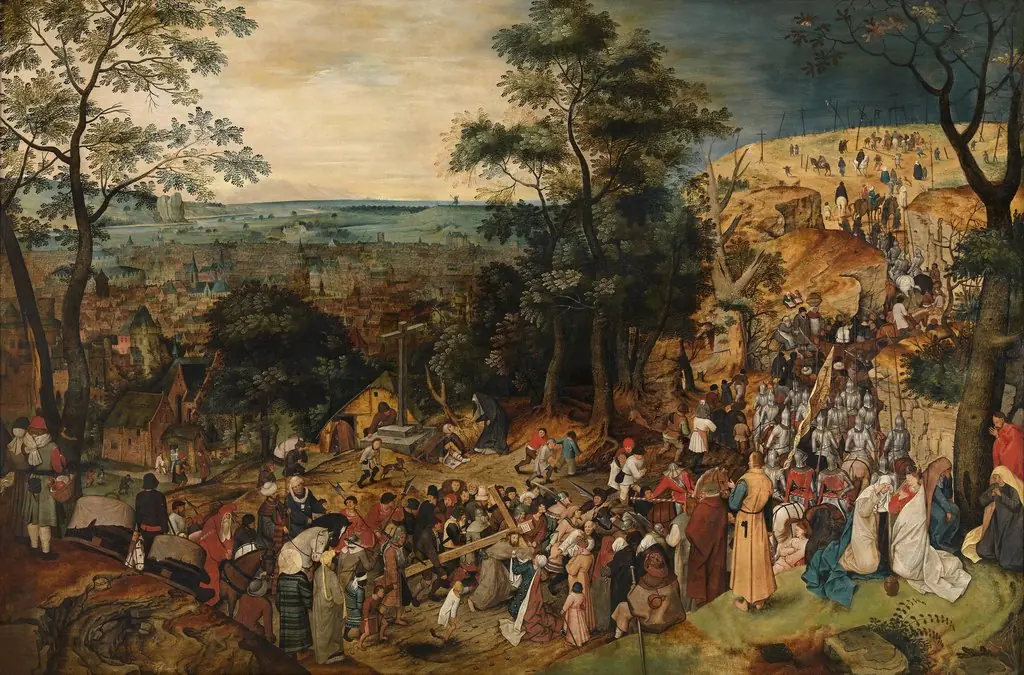 The Bearing of the Cross
![The Raising of the Cross [center, left, and right panels], by Master of the Starck Triptych](https://artifactworldgallery.com/img/master-of-the-starck-triptych--the-raising-of-the-cross-center-left-and-right-panels--5f0053e23b45aff7-w320.webp) The Raising of the Cross [center, left, and right panels]
The Raising of the Cross [center, left, and right panels] Before Christ's Crucifixion (Christ in Misery)
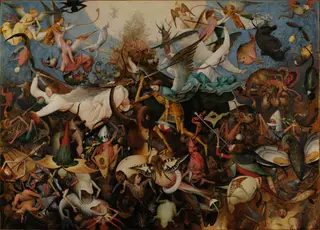 The Fall of the Rebel Angels
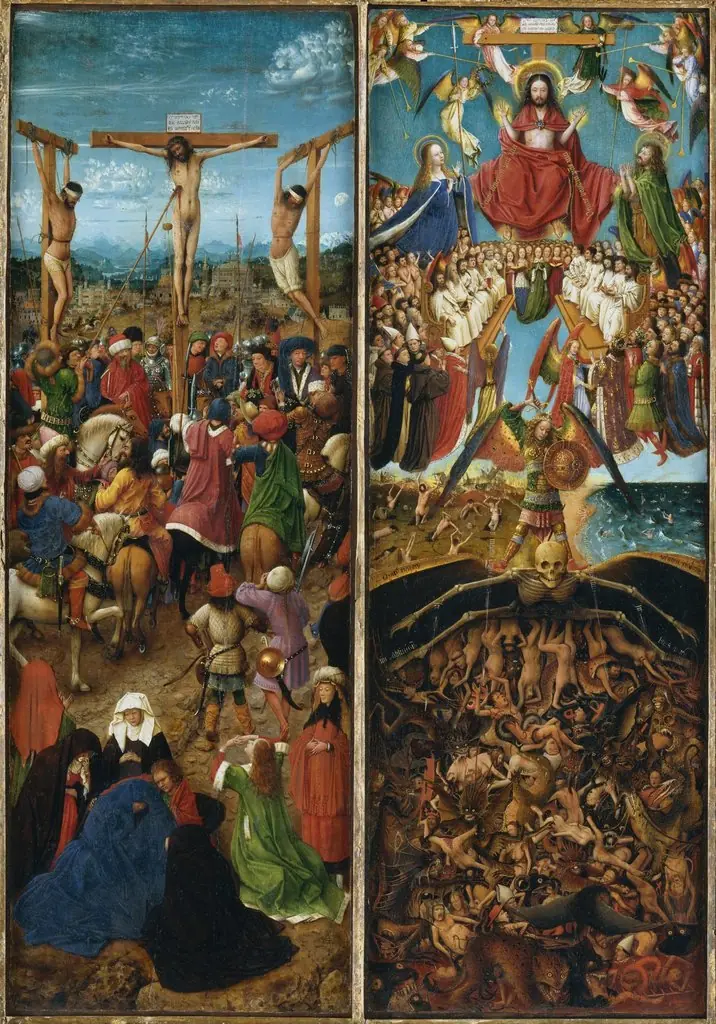 Crucifixion and Last Judgement diptych