Artwork
Four Scenes from the Legends of Judas and Pilate
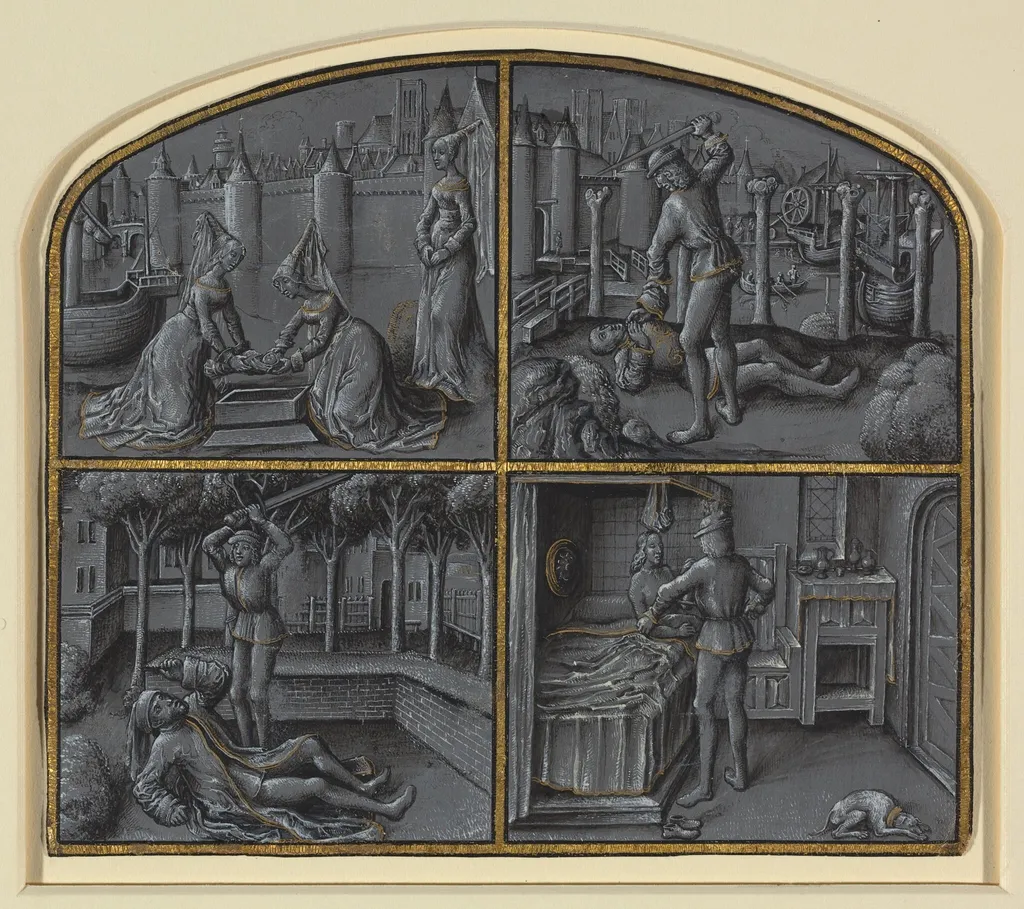
Four Scenes from the Legends of Judas and Pilate is an ink drawing by the Impressionist artist Georges Hurtrel. It dates from 1870 and is held in the collection of the National Gallery of Art.
About this work
Overview
Four Scenes from the Legends of Judas and Pilate, created by Georges Hurtrel in 1870, is a drawing composed of four distinct scenes rendered in pen and black ink, black wash, white highlights, and gold accents on a gray prepared paper (grisaille) background.
Subject & Meaning
The four scenes depict various narrative moments, including a domestic scene with a woman and child, a violent confrontation on a bridge, a duel with a fallen figure, and an intimate indoor scene with a couple and a dog. While the specific legends of Judas and Pilate are not immediately clear from the scenes, they collectively suggest themes of domesticity, conflict, and possibly redemption or judgment.
Technique & Style
The overall dark, shadowy style, enhanced by cross-hatching, gives the drawing a sculptural, carved appearance.
Hurtrel employed a range of techniques, including pen and ink drawing, black wash for shading, and strategic white highlights to create depth and contrast on the gray grisaille paper. The use of gold accents to frame each scene adds a sense of luxury and separation between the narratives. The overall dark, shadowy style, enhanced by cross-hatching, gives the drawing a sculptural, carved appearance.
History & Provenance
Created in 1870 by Georges Hurtrel, the provenance and exhibition history of 'Four Scenes from the Legends of Judas and Pilate' are not detailed in the provided information, suggesting a focus on the artwork's intrinsic qualities over its historical trajectory.
Context
The work reflects late 19th-century artistic interests in detailed, expressive drawing techniques and the exploration of religious or mythological themes through nuanced, rather than overtly dramatic, visual storytelling.
Legacy
The legacy of 'Four Scenes from the Legends of Judas and Pilate' is not explicitly outlined in the provided details, implying that its significance may lie more in its technical achievement and thematic exploration than in widely recognized influence on subsequent art movements or widespread public recognition.
Own this work as a print
Artist & collection

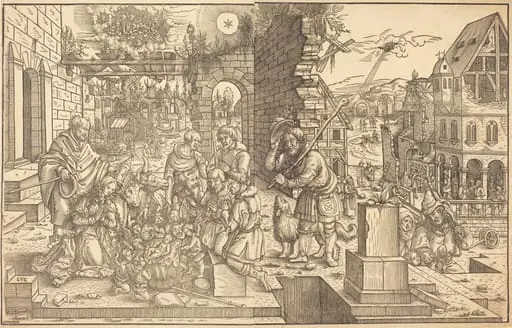 The Adoration of the Shepherds
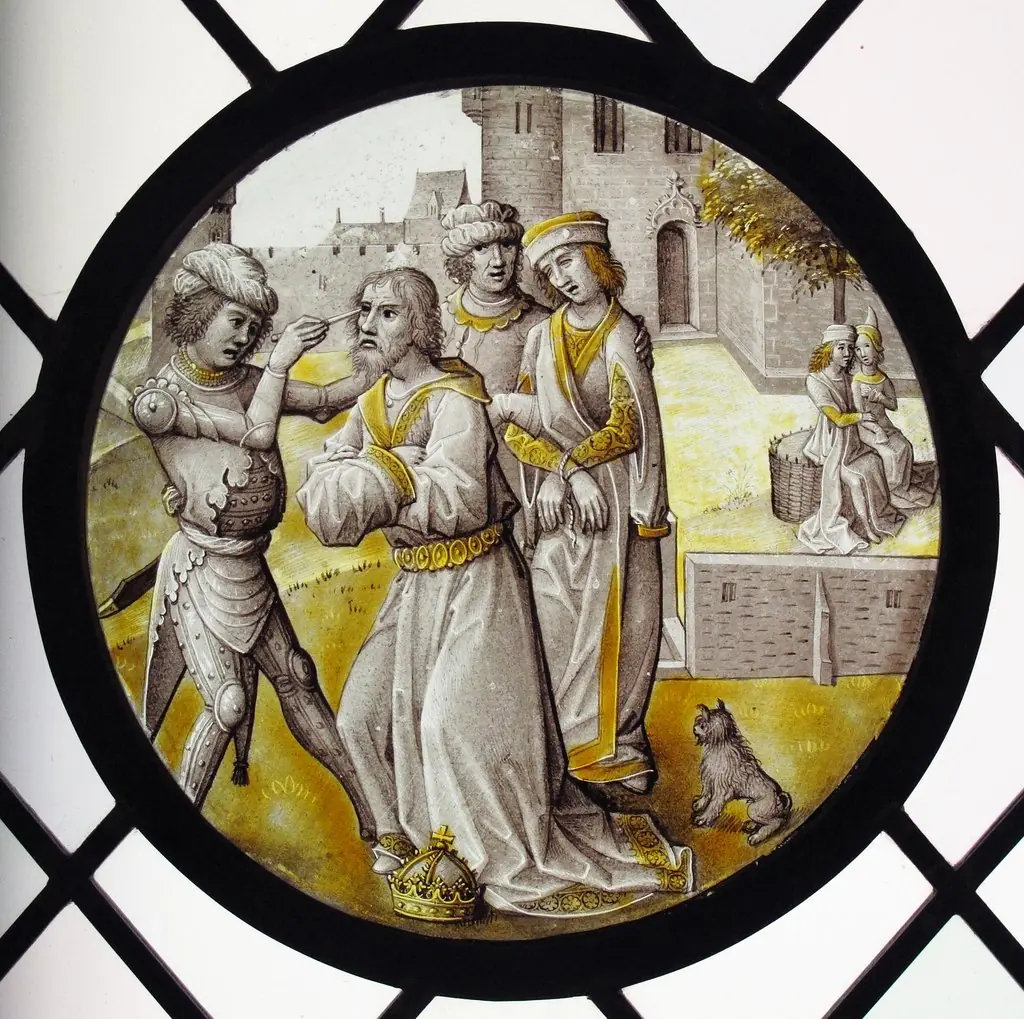 Roundel with the Blinding of Zaleucus of Locria
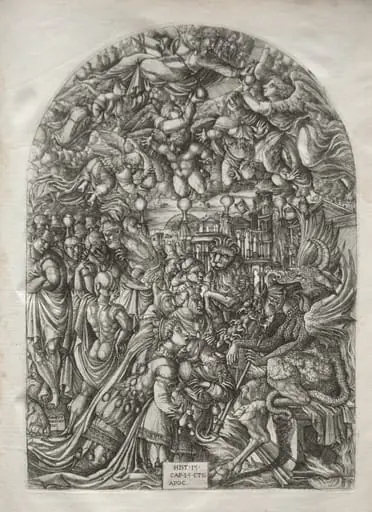 The Apocalypse: The Woman Clothed with the Sun
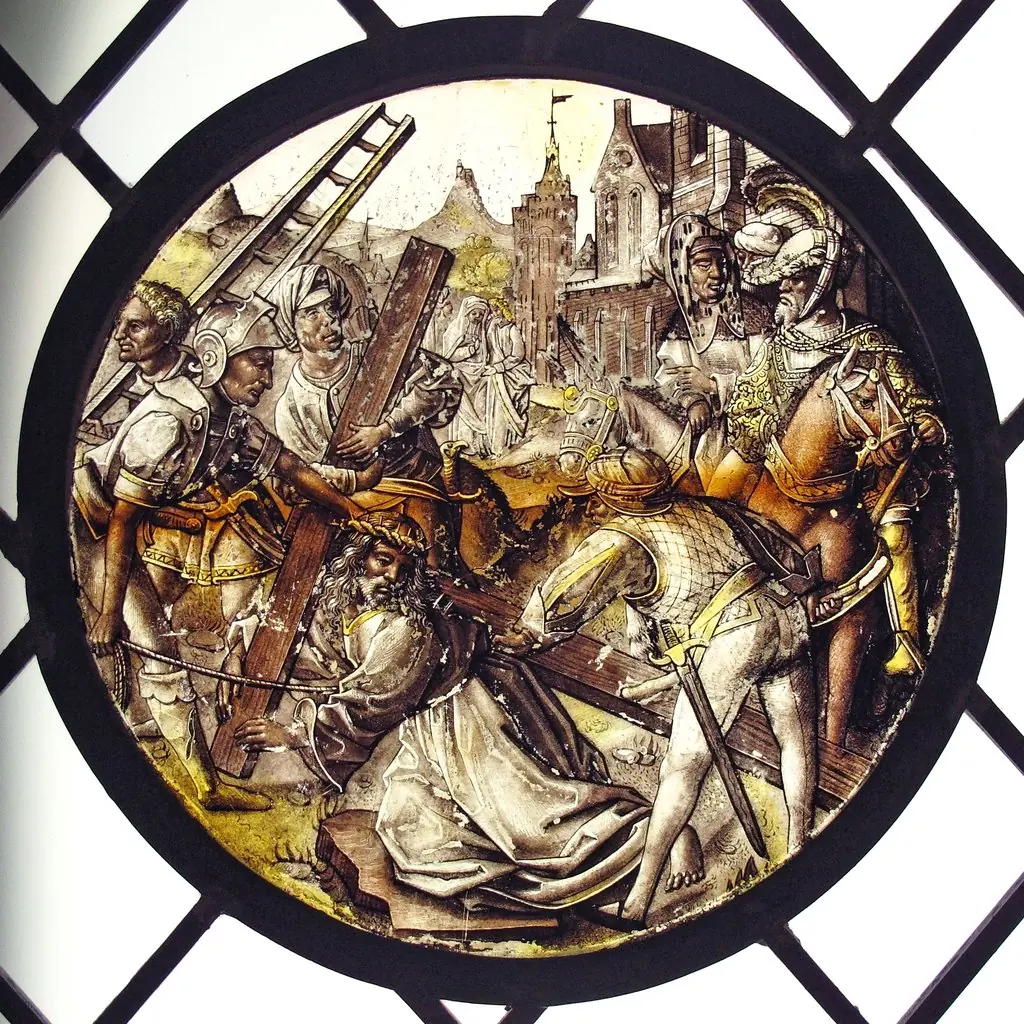 Roundel with Christ Bearing the Cross
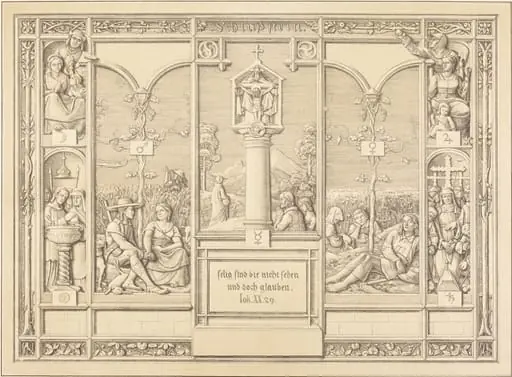 Tailpiece: Selig sind die nicht sehen und doch glauben (Blessed are those who do not
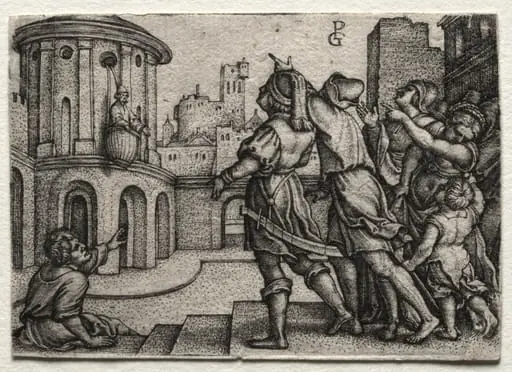 Virgil hanging in a Basket
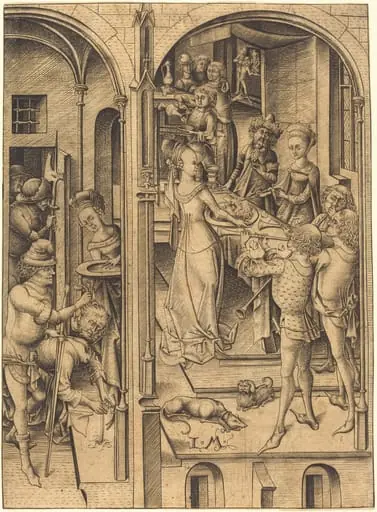 Beheading of Saint John the Baptist
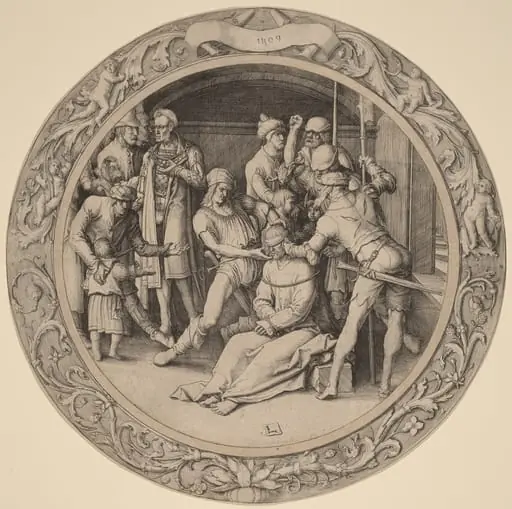 The Scoffing of Christ
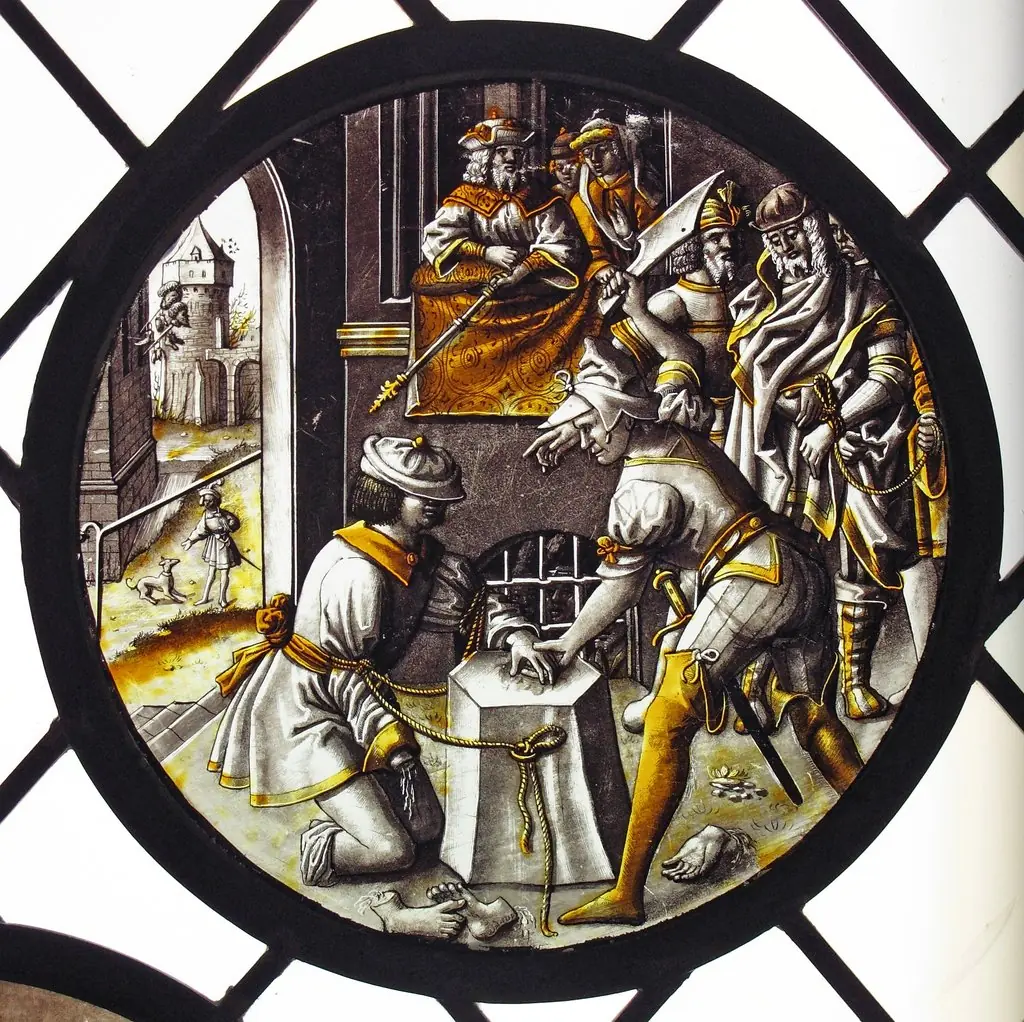 Roundel with Martyrdom of Saint Jacobus Intercisus
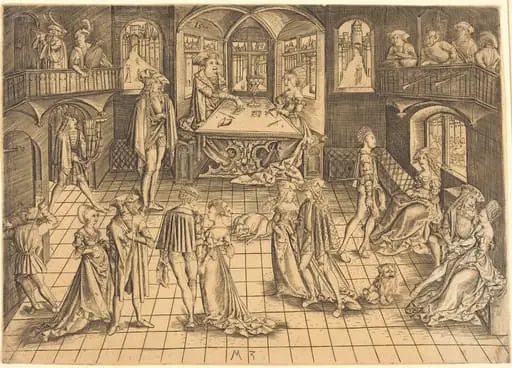 The Ball