Artwork
池大雅筆 「独座敬亭山」図|Landscape and Couplet of Chinese Verse
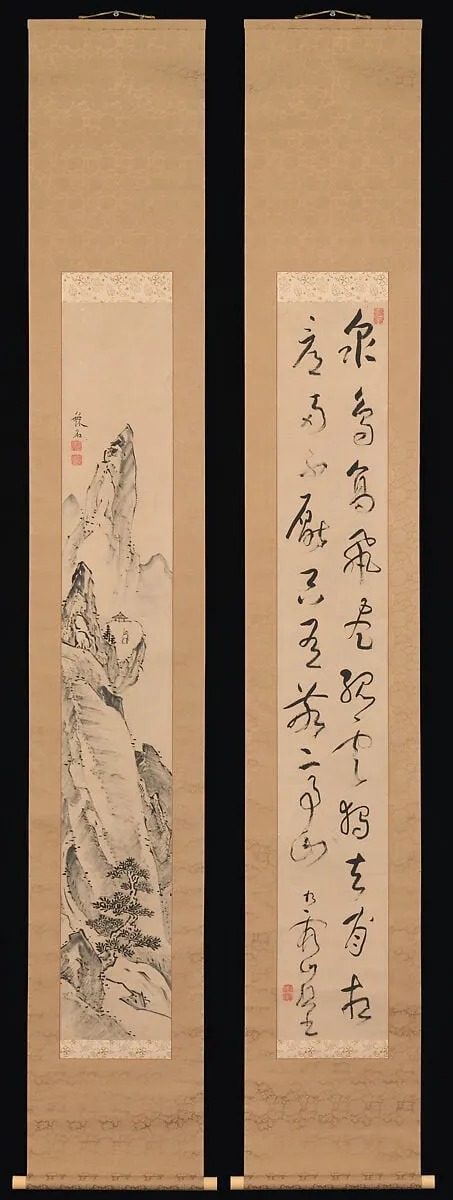
池大雅筆 「独座敬亭山」図|Landscape and Couplet of Chinese Verse is an ink painting by the Nihonga artist Ike Taiga. It is held in the collection of the Metropolitan Museum of Art.
About this work
Subject & Meaning
Created in 1783 by Ike Taiga, the painting presents a solitary mountain scene that aligns with the title's reference to Jingting Mountain.
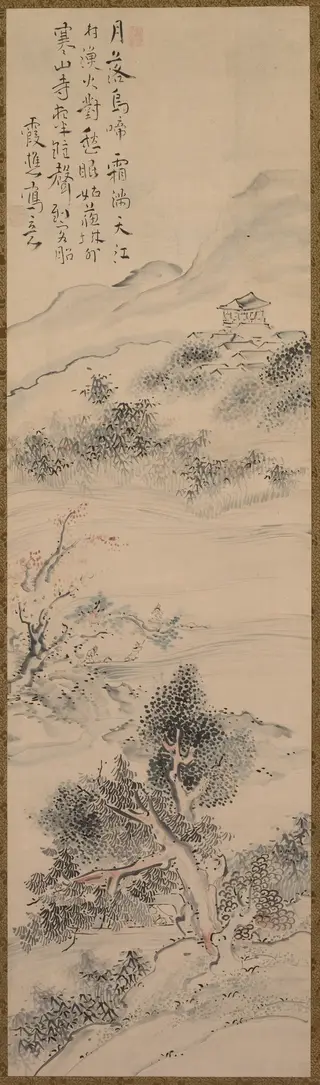
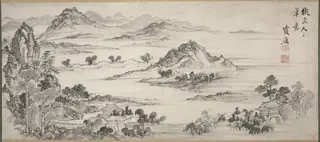
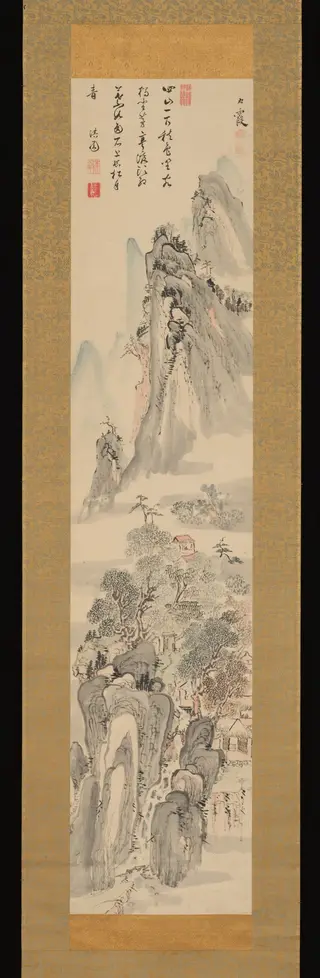
The work depicts a mountain landscape, executed in ink on paper as a pair of hanging scrolls. Created in 1783 by Ike Taiga, the painting presents a solitary mountain scene that aligns with the title's reference to Jingting Mountain. As a landscape genre piece, the composition focuses on the natural form of the mountain, reflecting the artist's engagement with Chinese poetic and pictorial traditions.
The title suggests a connection to the theme of solitary contemplation in nature, though the specific iconographic details beyond the mountain itself are not elaborated in the available sources.
Technique & Style
Executed in 1783, this work is a pair of hanging scrolls created with ink on paper. The artist, Ike Taiga, employed traditional brushwork to depict a mountainous landscape, characteristic of the genre. The support consists of paper, a common medium for such scrolls in Japan during the Edo period.
The surviving pair measures 132.1 cm in height and 19.4 cm in width. The formal qualities emphasize the verticality of the format, focusing on the depiction of the mountain within the narrow confines of the scrolls.
History & Provenance
Created in 1783 by the Japanese artist Ike Taiga, this work consists of a pair of hanging scrolls executed in ink on paper. The piece, which depicts a mountain landscape accompanied by a couplet of Chinese verse, was produced in Japan during the late eighteenth century. It is currently held in the collection of the Metropolitan Museum of Art.
Overview
Ike Taiga's "Landscape and Couplet of Chinese Verse" (独座敬亭山図), created in 1783, comprises a pair of ink-on-paper hanging scrolls. This work exemplifies the artist's distinctive approach to landscape painting, featuring a solitary mountain peak rendered with delicate brushwork. The inclusion of Chinese poetry further integrates literary and visual elements, inviting contemplation of nature and classical verse.
Context
During the 18th century, Japanese artists like Ike Taiga increasingly drew inspiration from Chinese literati painting traditions, known as Nanga in Japan. This period saw a blending of classical Chinese brushwork principles with a distinct Japanese sensibility for quiet, contemplative landscapes. Taiga was a leading figure in this movement, adapting foreign influences to create a uniquely expressive and often poetic visual language, as seen in this serene mountain depiction.
Artist & collection

- Album of Miscellaneous Subjects, Leaf 5
 Layered Peaks and Splashing Waterfall: Portrait of Hua Yan as a Young Man
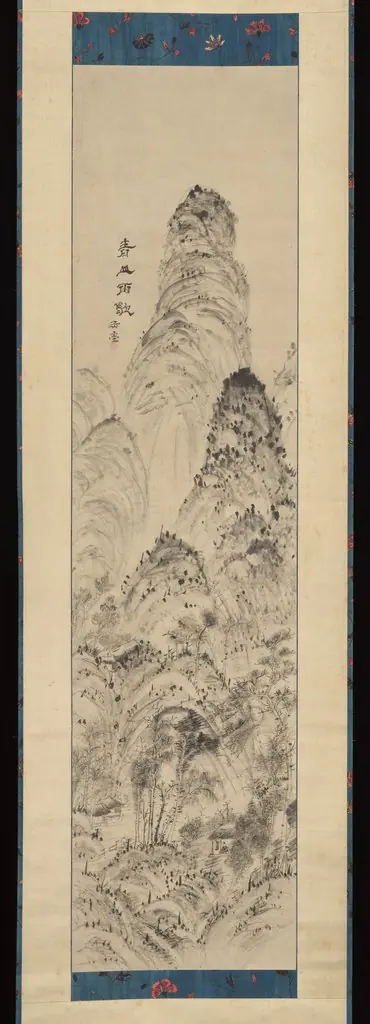 Green Mountains as the Rain Ceases
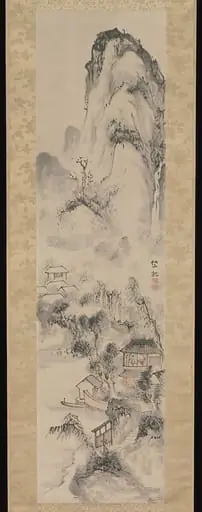 Untitled
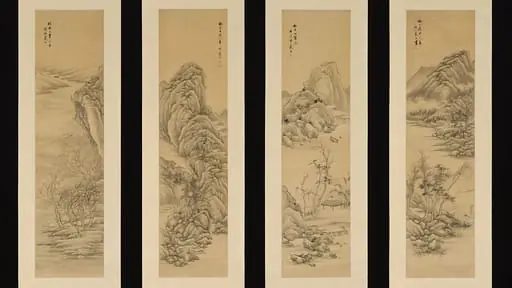 清 戴熙 仿古山水四屏 軸|Landscapes after old masters
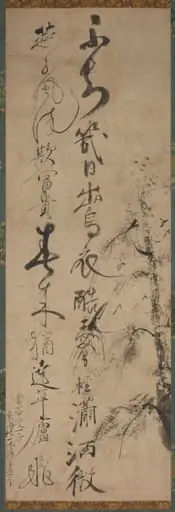 Calligraphy with Willow and Swallows
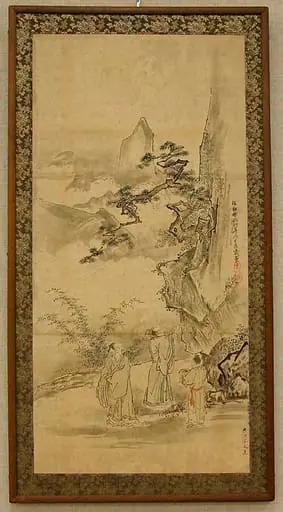 Untitled
 Autumn Landscape 秋景山水 図 (Shūkei sansui zu)
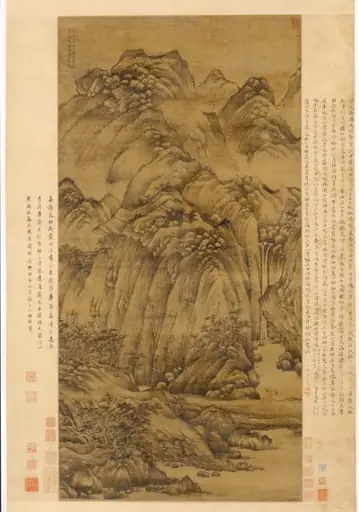 The Woodcutter of Luofu
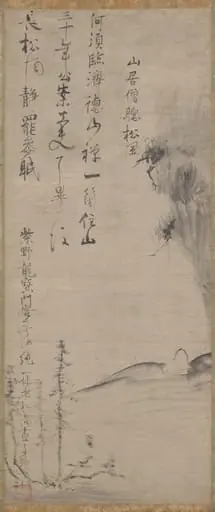 Listening to the Wind in the Pines
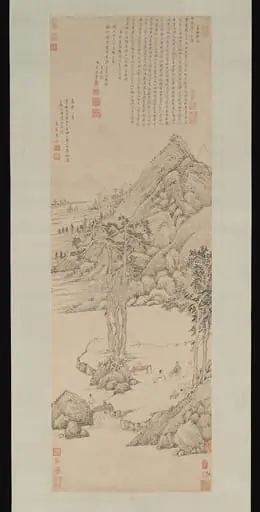 明 文嘉 為項元汴作山水圖 軸|Landscape dedicated to Xiang Yuanbian
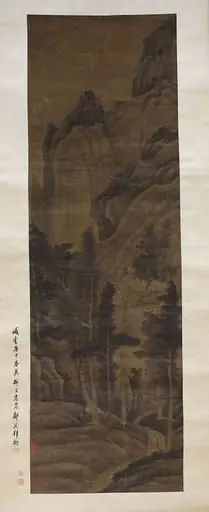 明/清 佚名 董源(僞款) 高樹叠嶂圖 軸|Mountain Landscape