Artwork
Rip Van Winkle Awakening from his Long Sleep
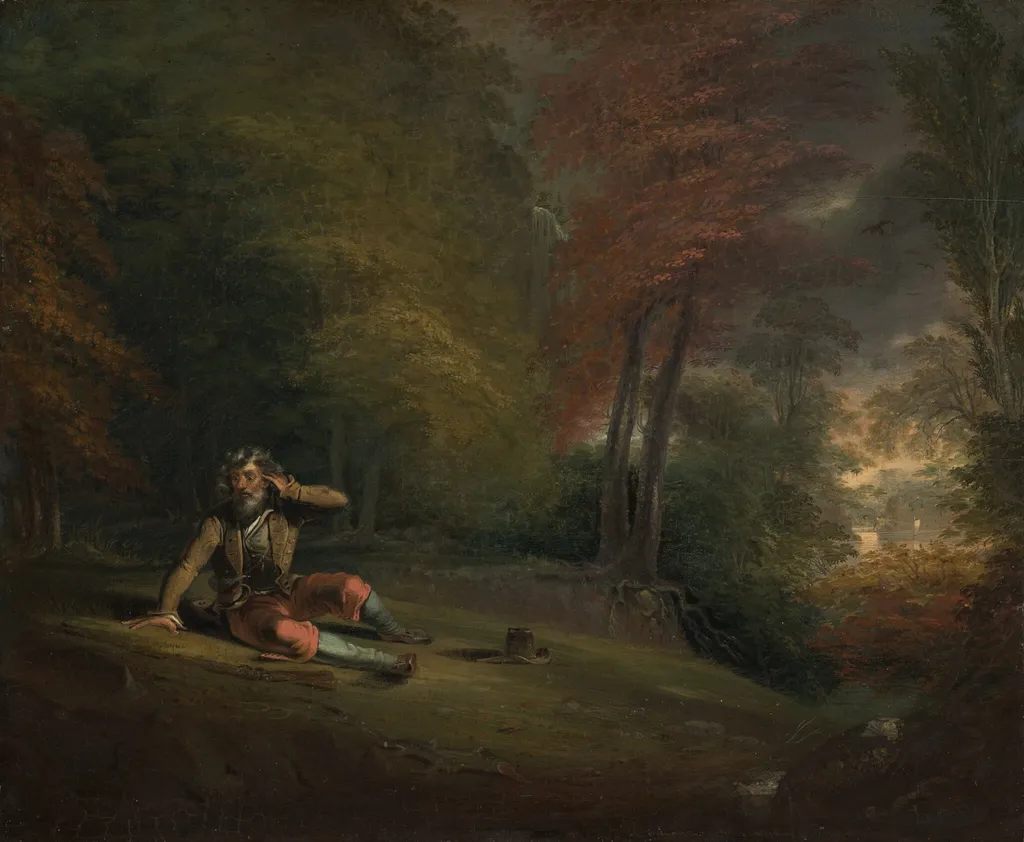
Rip Van Winkle Awakening from his Long Sleep is an oil painting by the American Folk Art artist Henry Inman. It dates from 1823 and is held in the collection of the National Gallery of Art.
- Inscription
- Inscribed:lower right: Inman
About this work
Subject & Meaning
By choosing this scene, Inman underscores the broader theme of transformation and the disorienting effects of historical change on the individual.
The painting illustrates the pivotal moment from Washington Irving’s 1819 tale in which Rip Van Winkle awakens after a twenty-year slumber to find his surroundings transformed from a colonial Dutch-American landscape into a Federal-era American setting. Inman’s composition centers on the dazed figure rising from a rocky outcrop, his rifle beside him and a dog at his feet, signaling the passage of time through altered surroundings rather than direct narrative detail.
Symbolically, the work captures the cultural shift from pre-Revolutionary Dutch heritage to an independent American identity, aligning with early-nineteenth-century American artists’ interest in national themes. By choosing this scene, Inman underscores the broader theme of transformation and the disorienting effects of historical change on the individual.
Technique & Style
Created in 1823, Henry Inman's Rip Van Winkle Awakening from his Long Sleep is executed in oil paint on a wood panel support. The work measures 38.1 cm in height and 45.72 cm in width. As a narrative history painting from the early nineteenth century, the piece depicts a specific literary moment from Washington Irving's 1819 story, capturing the protagonist's transition from the Colonial Period to the Federalist Era.
The painting was first exhibited at the American Academy of the Fine Arts in New York City later that same year.
History & Provenance
Henry Inman painted Rip Van Winkle Awakening from his Long Sleep in 1823 as an oil on wood panel, initially exhibited at the 1823 American Academy of the Fine Arts show in New York. The work remained in private hands until 2015, when Shannon's Fine Arts Auctioneers sold it in Milford, Connecticut; Godel & Co. of New York acquired it for William H. Gerdts and Abigail Booth Gerdts. The painting was subsequently gifted to the National Gallery of Art in Washington, D.C., in 2018, where it now resides.
The provenance chain is documented in NGA curatorial files, confirming the 2015 auction and subsequent gift. The work’s creation history includes Inman’s broader engagement with the Rip Van Winkle narrative, exemplified by a related 1832 portrait of actor James Henry Hackett in the role, held by the Smithsonian National Portrait Gallery.
Henry Inman's 1823 painting Rip Van Winkle Awakening from his Long Sleep is held by the National Gallery of Art in Washington, D.C. The work was first exhibited at the American Academy of the Fine Arts in New York City in 1823. Following a long period in private collections, it was acquired by William H. and Abigail Booth Gerdts of New York after being purchased from Godel & Co. in October 2015. The Gerdts family subsequently gifted the painting to the National Gallery of Art in 2018.
Context
Henry Inman's 1823 painting Rip Van Winkle Awakening from his Long Sleep serves as a significant early visual interpretation of Washington Irving's 1819 literary classic, The Sketch Book of Geoffrey Crayon. By depicting the protagonist's transition from the Colonial Period to the Federalist Era, the work engages with the American cultural identity forming in the post-Revolutionary period. The piece was first exhibited at the 1823 annual show of the American Academy of the Fine Arts in New York City, marking an early public presentation of Inman's narrative approach.
Scholarly attention to the artist and this specific work is documented in the 1987 monograph The Art of Henry Inman by Carrie Rebora Barratt and William H. Gerdts. The painting's inclusion in later surveys of American genre painting, such as the 2009 Metropolitan Museum of Art exhibition American Stories, underscores its enduring relevance in the study of 19th-century American art history.
Overview
Henry Inman’s 1823 oil on wood portrays the moment the fictional Rip Van Winkle awakens after a two‑decade slumber. Set against a rugged, forested mountainside, the composition captures the protagonist’s bewildered emergence from a long, solitary rest.
Legacy
While Inman is better known for portraiture, this genre piece demonstrates his engagement with popular literary subjects. The painting remains a visual record of how early American artists translated emerging national myths into fine‑art formats.
Own this work as a print
Artist & collection


- Landscape
 Italian landscape with resting herdsman
 Shepherdess and a Flock of Sheep
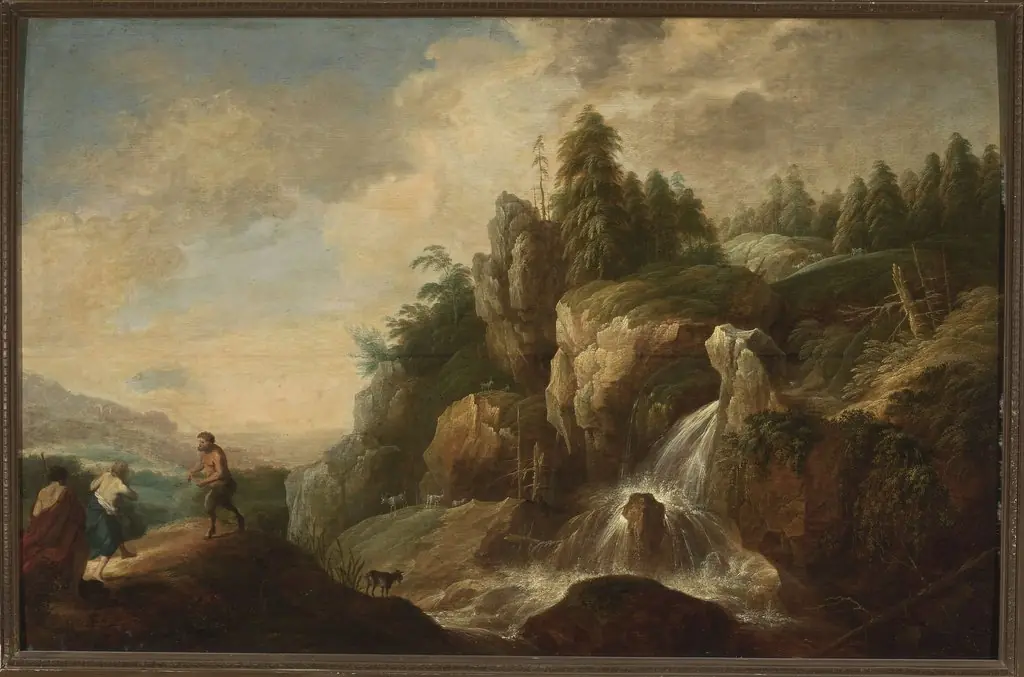 Landscape at a waterfall
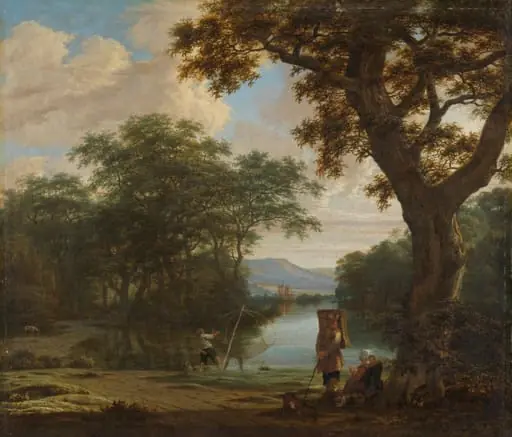 Landscape with Fisherman with a square Net
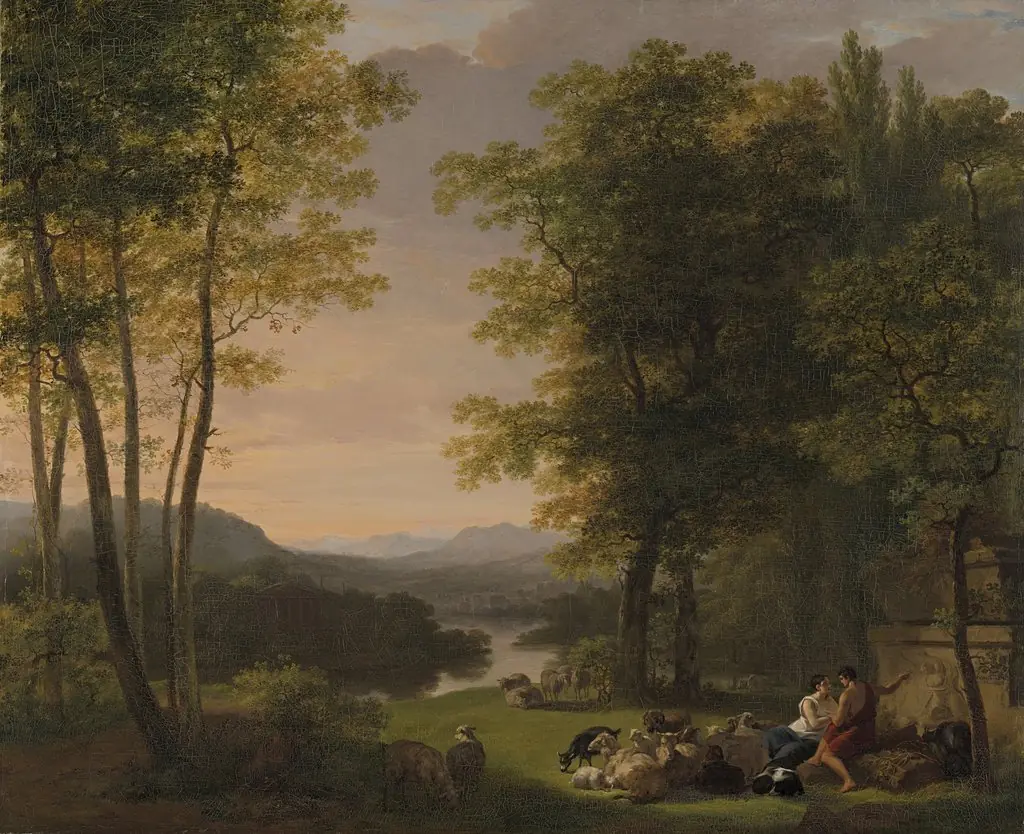 Arcadian Landscape
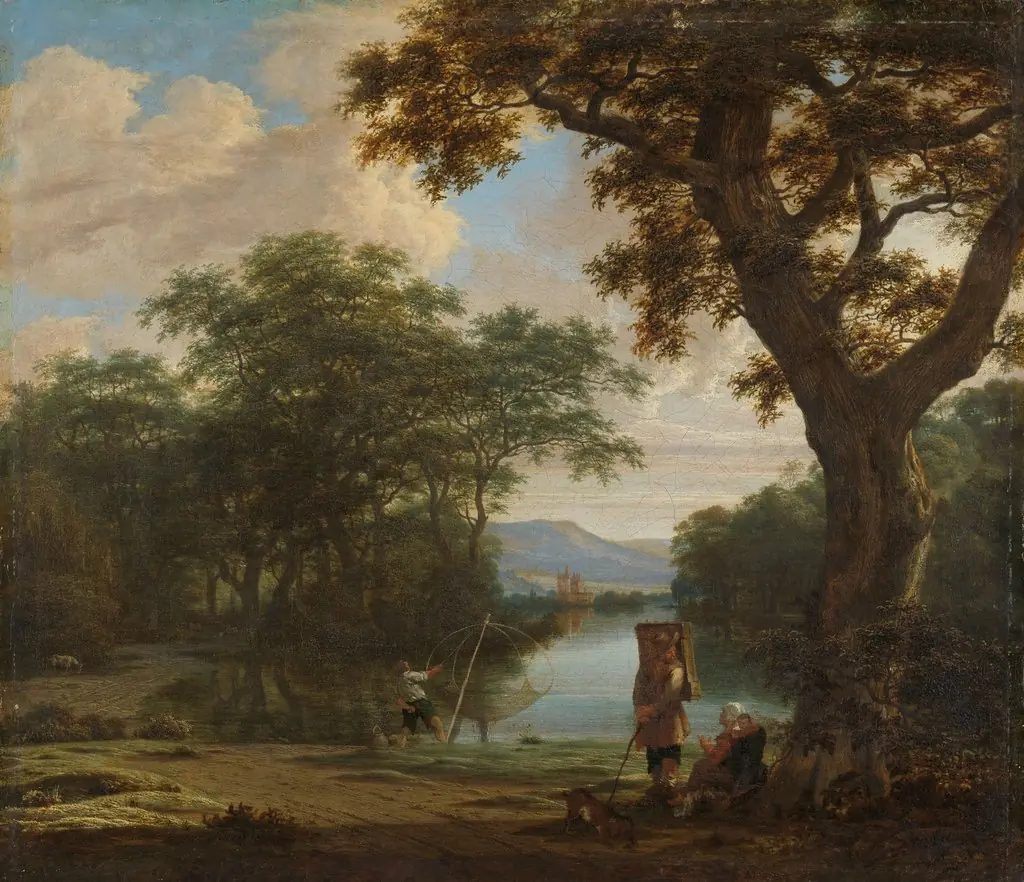 Landscape with fisherman with a square net
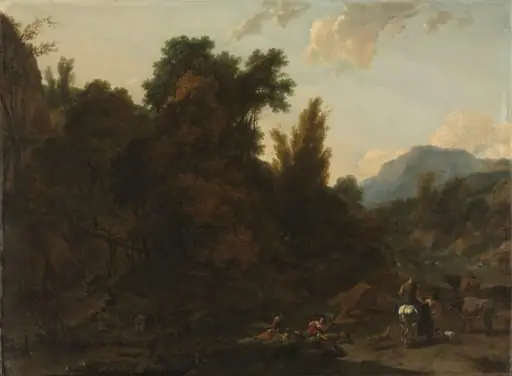 Rush Gatherers
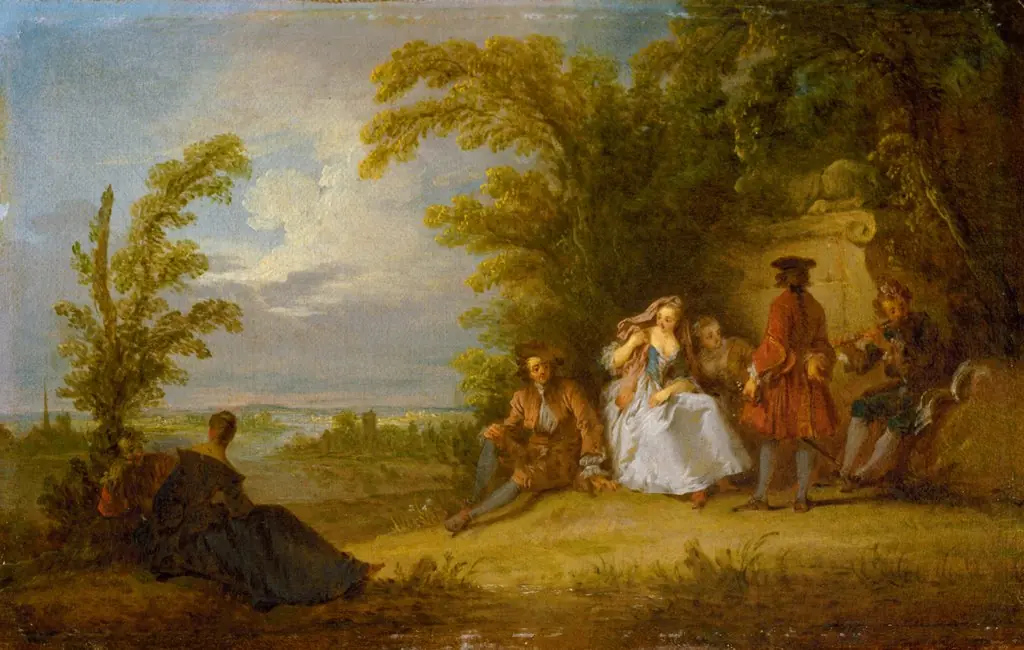 Fête Champêtre
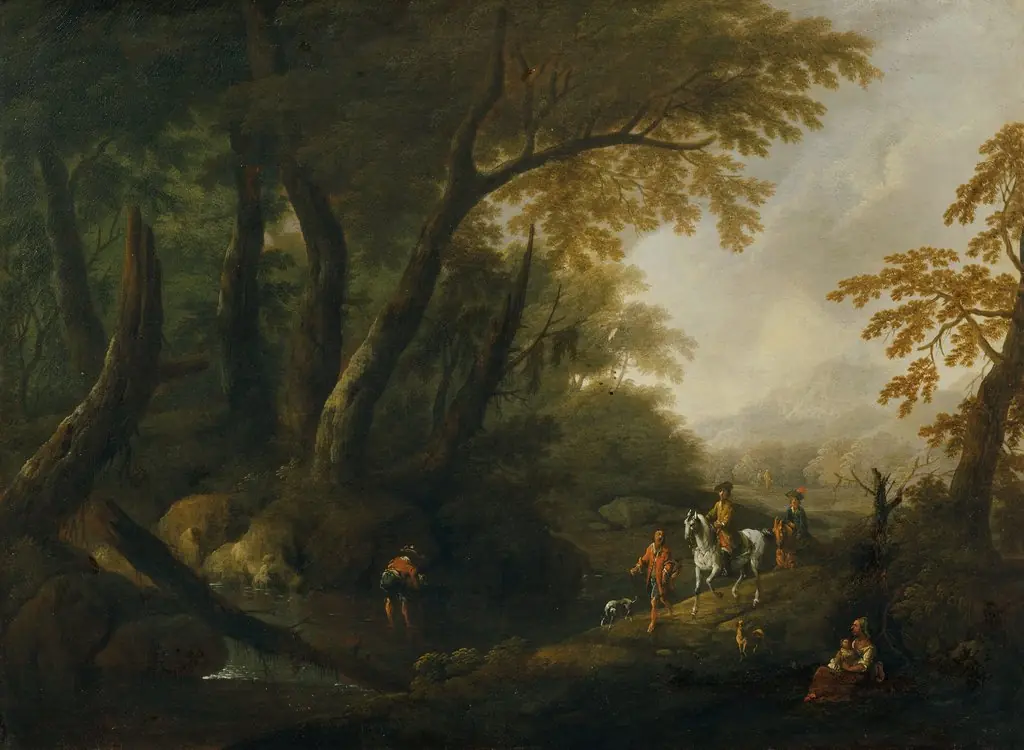 Waldlandschaft mit Gewässer links
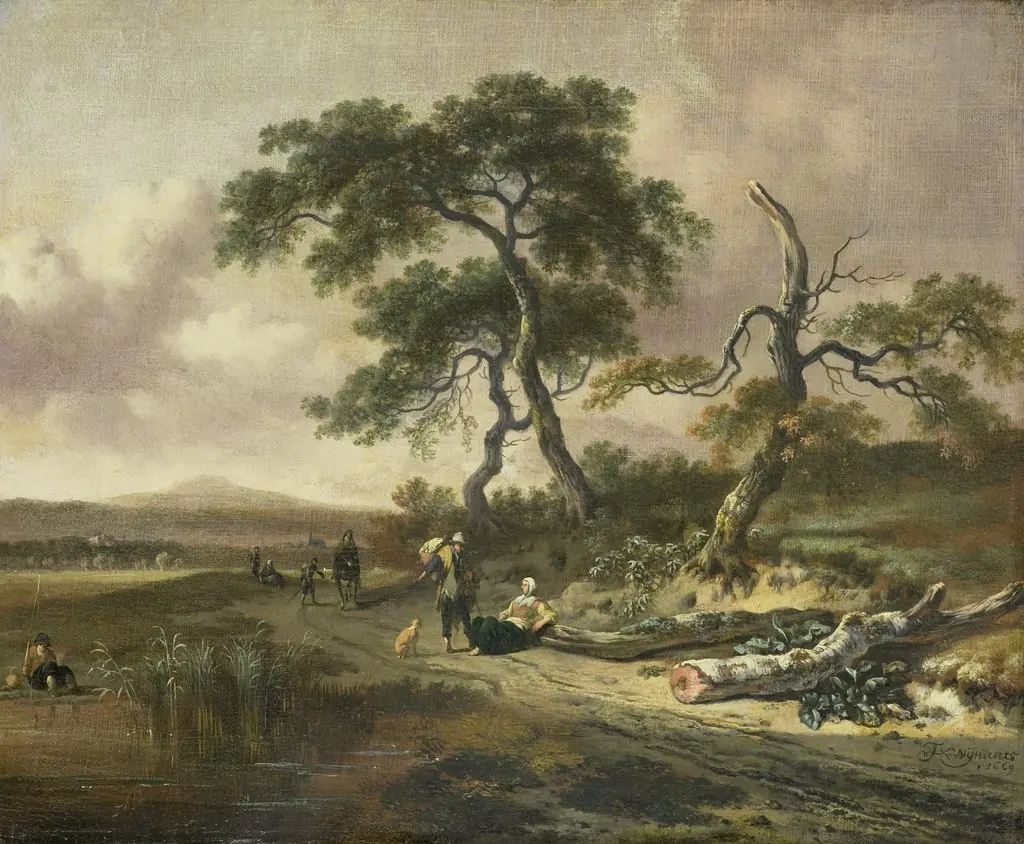 Landscape with a Peddler and Woman Resting
 River Landscape with Fisherman