Artwork
Orange Festival
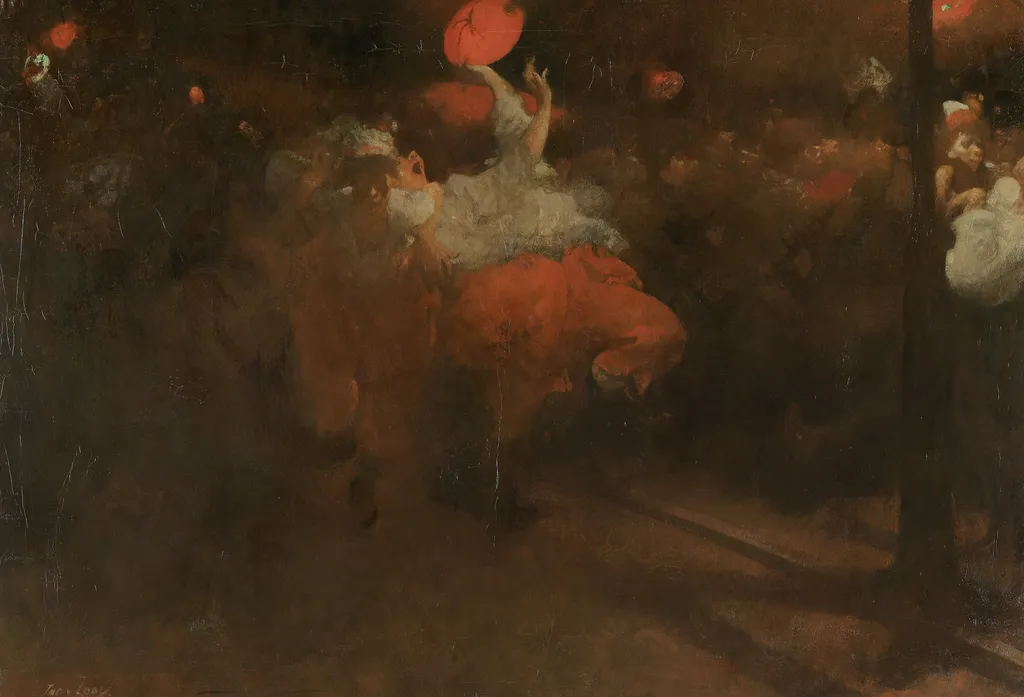
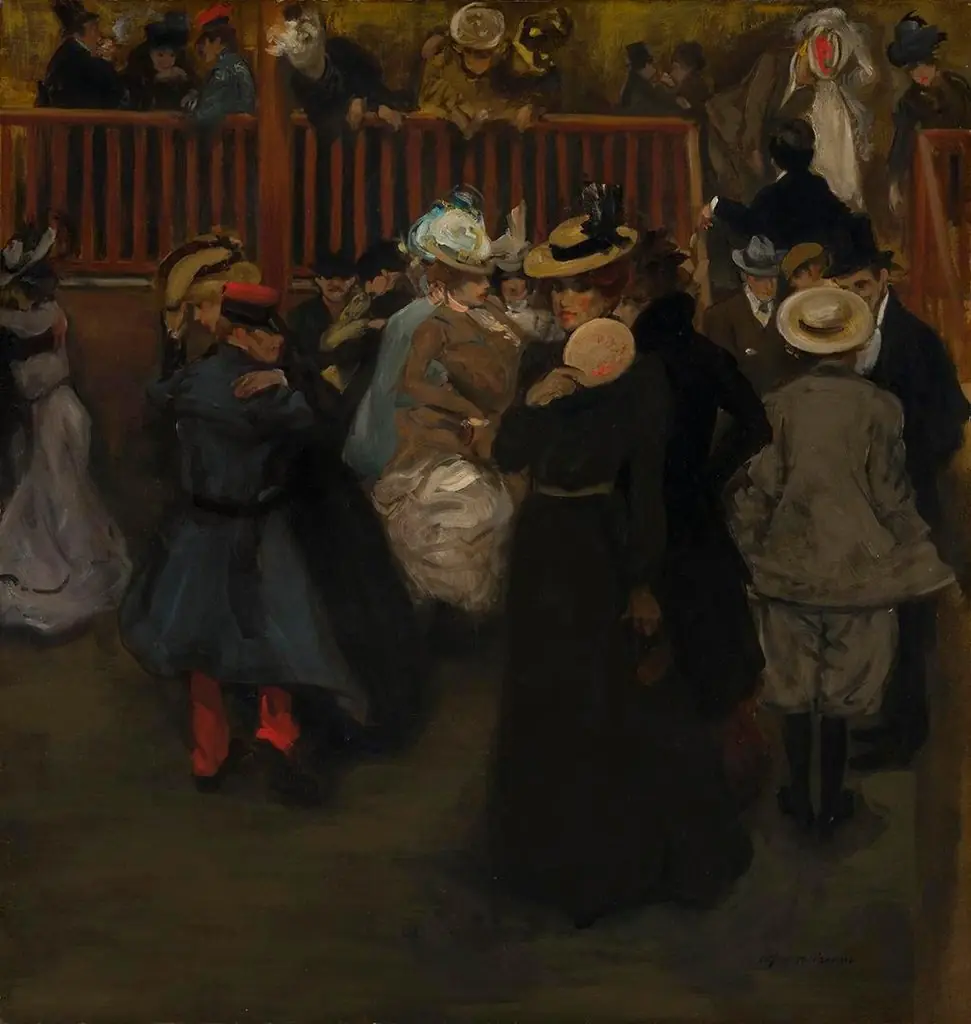
Orange Festival is an oil painting by the Post-Impressionist artist Jacobus van Looy. It dates from 1896 and is held in the collection of the Rijksmuseum.
About this work
Subject & Meaning
Orange Festival depicts a nighttime street celebration in Amsterdam inspired by the 1887 Oranjefeest honoring King Willem III, portraying a lively, emotionally charged crowd of costumed revelers under lanterns and fireworks. The painting captures a personal, ecstatic impression of the festival rather than a literal documentation, emphasizing sensory details like sound and color described in Van Looy's writings. Its loose brushwork and focus on transient emotion align with impressionist tendencies while foreshadowing modernist expression, marking it as a transitional work in Dutch art history.
The subject reflects Van Looy's subjective experience of communal festivity, blending personal impression with broader cultural symbolism of Dutch national celebration.
Technique & Style
The work depicts a nocturnal crowd celebrating an Amsterdam folk festival, rendered with loose brushwork that conveys movement and emotional intensity.
Jacobus van Looy painted Orange Festival in oil on canvas, measuring 112 cm by 160 cm. The work depicts a nocturnal crowd celebrating an Amsterdam folk festival, rendered with loose brushwork that conveys movement and emotional intensity. Contemporary descriptions note the painting’s impressionistic handling, loose application of paint, and focus on a fleeting, ecstatic moment rather than detailed observation. The composition centers on a gaping mouth and swirling bodies, creating a vivid, almost animalistic impression of revelry without moral judgment. Art historians classify the piece as impressionistic yet expressive, anticipating modernist tendencies in Dutch art.
History & Provenance
Orange Festival was painted by Jacobus van Looy between 1890 and 1892, with the inception year recorded as 1891. The work was inspired by the Amsterdam Orange Festival of 13 April 1887, held in honour of King Willem III's birthday, which Van Looy experienced first-hand while wandering the city at night. He had earlier produced a pastel on the same theme, which was rejected by Arti et Amicitiae at the end of 1887 as being "Trop commun."
Returning to the subject in 1890, Van Looy executed the large oil-on-canvas version, which was accepted by Arti. The painting subsequently entered the collection of the Rijksmuseum, where it remains held today.
The painting Orange Festival is held in the collection of the Rijksmuseum in Amsterdam. Created by Jacobus van Looy, the work measures 112 cm in height and 160 cm in width. While the artist produced a related pastel in 1887 that was rejected for exhibition by Arti et Amicitiae for being too common, he completed this large oil version between 1890 and 1892. Unlike its predecessor, this oil painting was accepted for display by Arti et Amicitiae upon its completion.
Context
Jacobus van Looy’s painting Orange Festival (1891) emerged from the Oranjefeest celebrations in Amsterdam on 13 April 1887, a civic event honoring King Willem III’s birthday. The work depicts a nighttime street scene of revelers in orange costumes, illuminated by lanterns and fireworks, capturing an ecstatic communal experience without moral judgment. Van Looy initially created a pastel on the same theme in late 1887, which was rejected by Arti et Amicitiae for being “too common,” prompting him to rework the subject in oil in 1890, a version ultimately accepted by the society.
Critics have noted its expressive intensity and loose brushwork, situating it at the intersection of Dutch Impressionism and early modernist experimentation, while its dynamic composition of moving figures reflects both personal ecstasy and broader cultural currents of the late 19th century.
Legacy
De invloed van Orange Festival op de latere kunsthistorische reputatie berust op zijn expressieve kracht en moderne stijl. Het werk wordt als uniek voor zijn tijd erkend door de losse penseelvoering en emotionele lading, wat het als overgangsstuk naar de 20e eeuw markeert. Het schilderij toont een nachts tafereel van een volksfestijn met dynamische, bijna dierlijke bewegingen en een centraal figuur met een gapende mond.
Deze combinatie van impressionistische losse uitvoering en expressieve intensiteit maakte het tot een voorloper van modernistische tendensen in de Nederlandse schilderkunst. Het werd in 1890 als olieverf gecreëerd en stond toen toe bij Arti, maar werd eerder afgewezen vanwege zijn als "Trop commun" omschreven thema. De persoonlijke impressie van het festival, beschreven in bronnen als een nachtelijk, dronken feest met gekleurde kleding en lichten, blijkt in het werk te vertalen naar een algemene emotionele lading zonder morele jugdement.
Het schilderij wordt gecategoriseerd als impressionistisch, maar vooral als een expressief werk dat de persoonlijke beleving van een individu centraal stelt. Het is bewaard in de collectie van het Rijksmuseum.
Overview
Orange Festival is an oil painting created by Jacobus van Looy in 1896. It is a genre scene depicting a lively gathering.
Own this work as a print
Artist & collection