Artwork
Esther and Ahasuerus
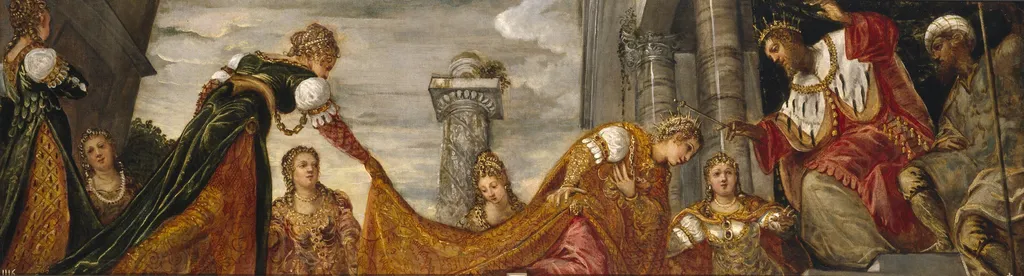
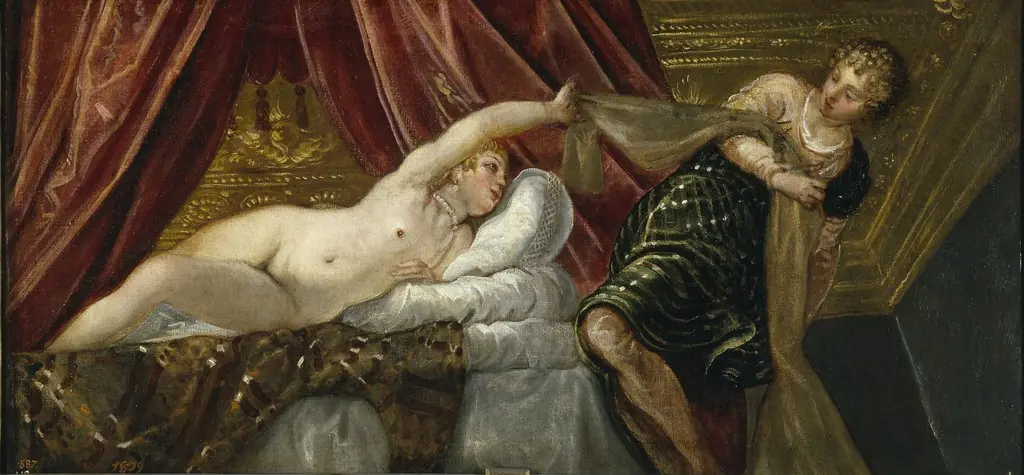
Esther and Ahasuerus is an oil painting by the Mannerist artist Jacopo Tintoretto. It dates from 1552 and is held in the collection of the Museo del Prado.
About this work
Subject & Meaning
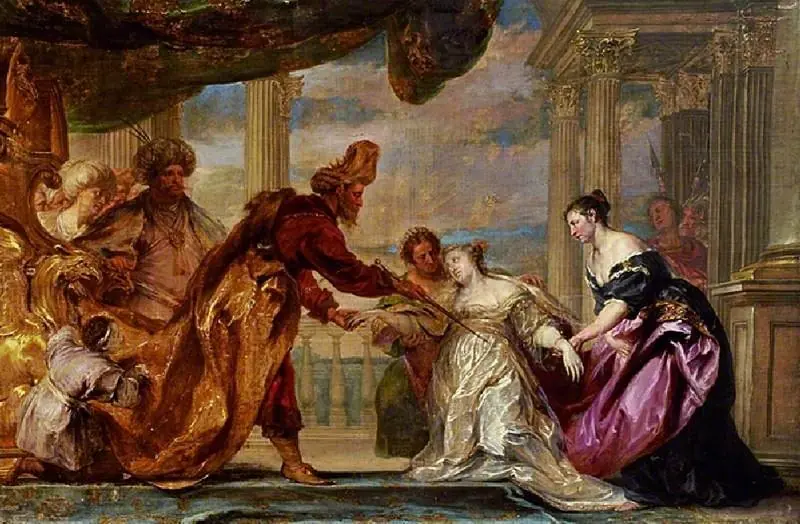
The painting portrays the biblical figures Esther, a Jewish queen, and Ahasuerus, the Persian king Xerxes I, illustrating the dramatic moment of Esther confronting the monarch to plead for her people. The scene embodies themes of courage, divine providence, and the reversal of fortune central to the Purim narrative, emphasizing the protective role of a righteous leader. Rendered in oil on canvas, the work measures 59 cm × 203 cm and is housed in the Museo del Prado, where it was once owned by the Spanish royal family through the collection of Elisabeth Farnese, Charles III, and Ferdinand VII.
Technique & Style
Executed in 1552, this religious painting by Jacopo Tintoretto utilizes oil paint applied to a canvas support. The work presents a wide horizontal format, measuring 59 cm in height and 203 cm in width. As a depiction of the biblical figures Esther and Ahasuerus, the piece exemplifies Tintoretto's engagement with dramatic religious narratives through the medium of oil on canvas.
History & Provenance
The painting Esther and Ahasuerus by Jacopo Tintoretto (1552) is housed in the Museo del Prado, where it is catalogued under inventory number P00968.
The painting Esther and Ahasuerus was created by Jacopo Tintoretto in 1552 as an oil on canvas work measuring 59 cm by 203 cm. It entered the collection of Elisabeth Farnese before passing to Charles III of Spain and later Ferdinand VII of Spain, who transferred it to the Museo del Prado, where it remains on display. The composition illustrates the biblical story of Queen Esther before King Ahasuerus, reflecting the artist's activity in Venice and later court patronage in Spain.
The painting Esther and Ahasuerus by Jacopo Tintoretto (1552) is housed in the Museo del Prado, where it is catalogued under inventory number P00968. Its provenance includes ownership by Elisabeth Farnese, Charles III of Spain, and Ferdinand VII of Spain. The work has been exhibited in major retrospectives of Tintoretto's oeuvre at the Prado and has featured in exhibitions on Venetian Renaissance art.
Overview
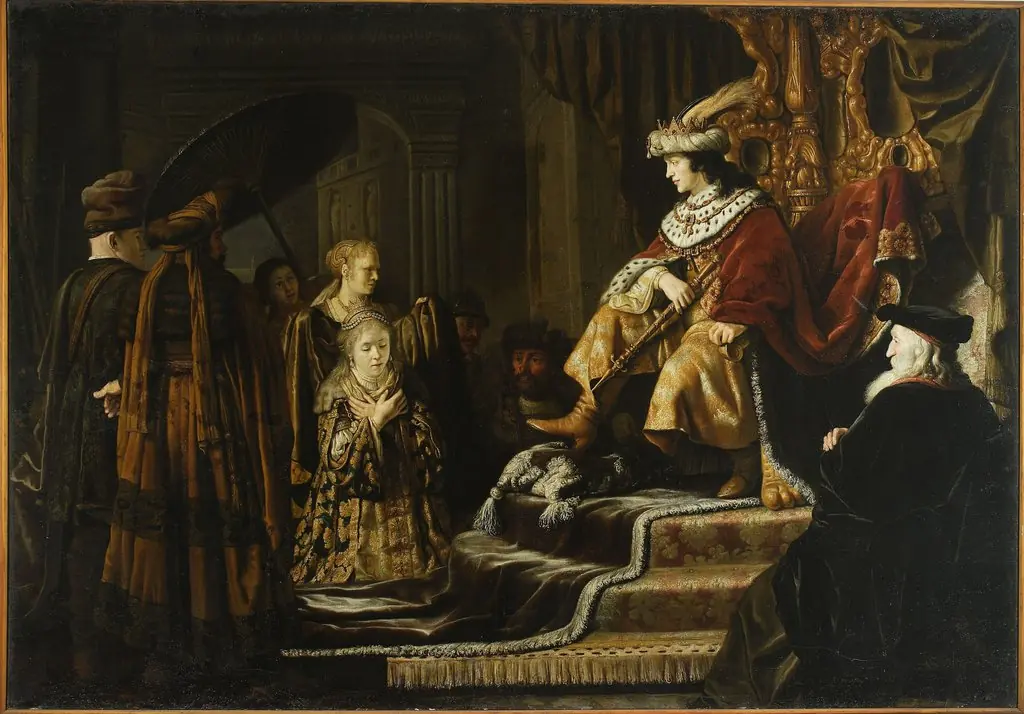
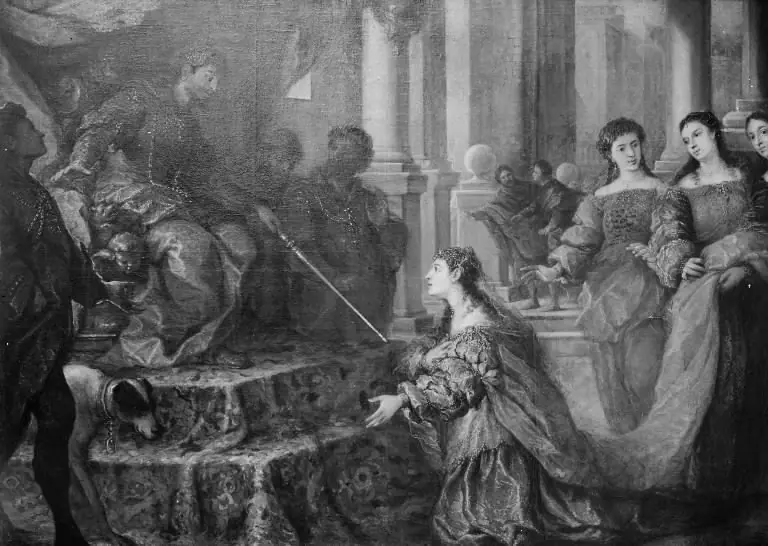
Tintoretto’s oil painting Esther and Ahasuerus, executed in 1552, portrays a biblical encounter between the queen and the Persian king. The composition centers on a kneeling woman in a richly patterned red‑gold dress before a crowned monarch, surrounded by attendants holding scrolls and regalia. A dramatic sky and an ornate column frame the scene, emphasizing its theatricality.
Context
Tintoretto, a leading figure of the Venetian school, integrated the city’s luminous palette with the dramatic flair of Mannerism. Esther and Ahasuerus reflects the era’s fascination with biblical subjects rendered in a theatrical, courtly atmosphere, merging religious narrative with the opulent visual language of Renaissance Venice.
Artist & collection
Artist
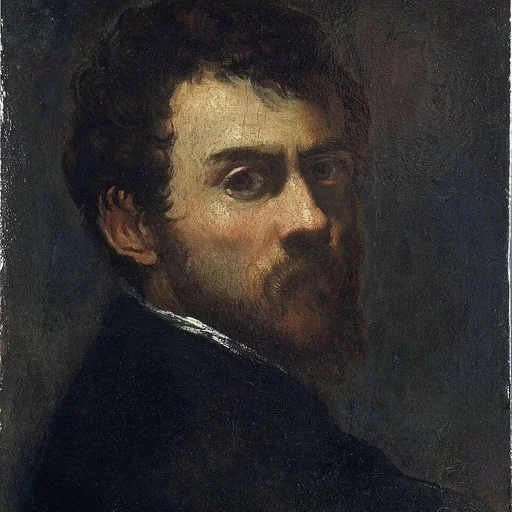
Jacopo Robusti (late September or early October 1518 – 31 May 1594), best known as Tintoretto ( TIN-tə-RET-oh; Italian:; Venetian: ), was an Italian Renaissance painter of the Venetian school.