Artwork
Miracle of Saint Simeon Stylites from the Polyptych of John the Merciful.
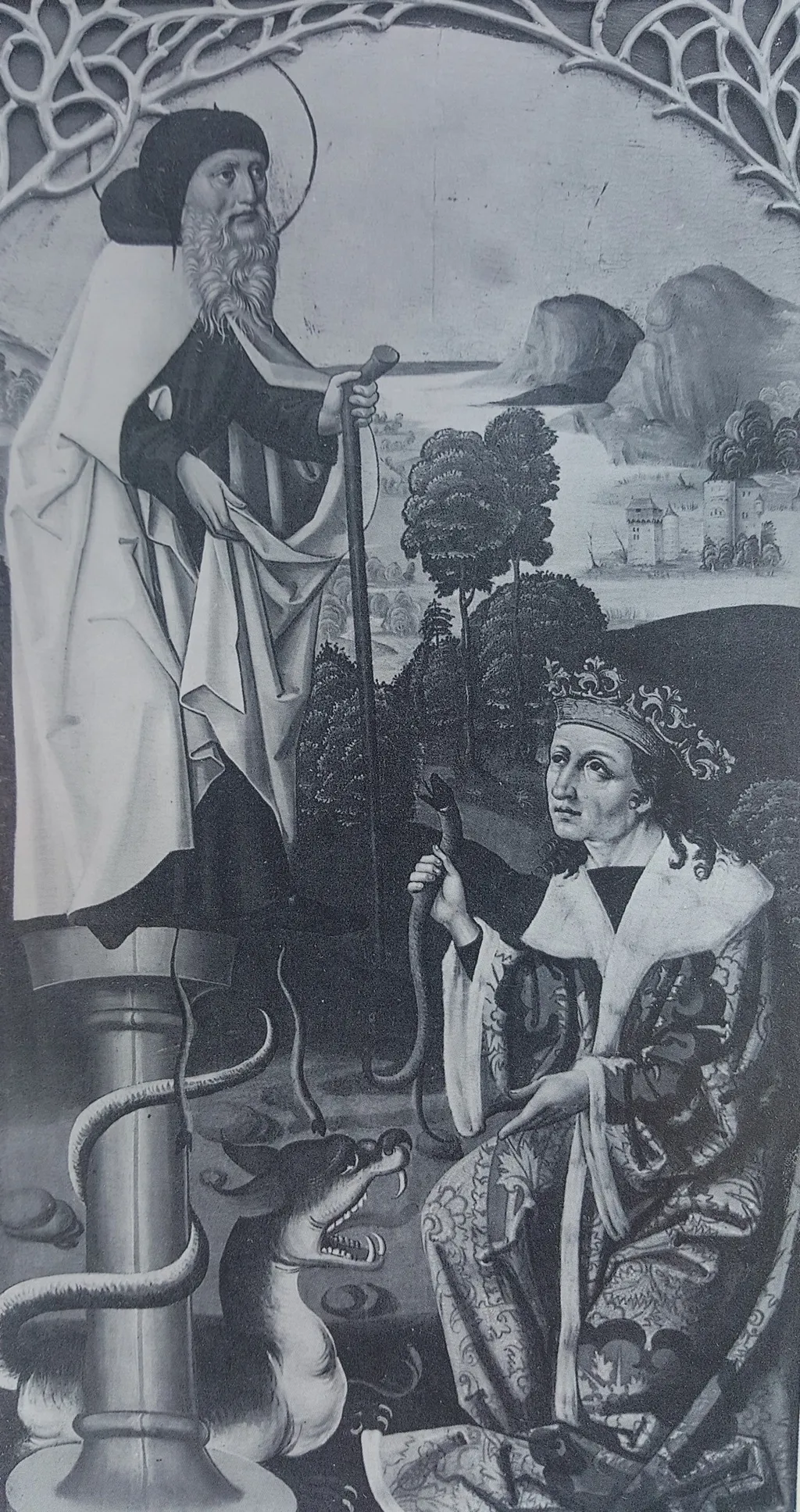
Miracle of Saint Simeon Stylites from the Polyptych of John the Merciful. is an unspecified painting by the Northern Renaissance artist Jan Goraj. It dates from 1504 and is held in the collection of the National Museum in Kraków.
About this work
Overview
Painted in 1504 by Jan Goraj, this work is one panel from a larger polyptych dedicated to John the Merciful. It portrays Saint Simeon Stylites, a Christian ascetic known for living atop a pillar for decades. The painting is part of the collection at the National Museum in Kraków, where it remains as a rare surviving example of early 16th-century Polish religious art.
Subject & Meaning
The scene illustrates the ascetic life of Saint Simeon, who endured isolation on a narrow column as an act of devotion. The snake coiled at the pillar’s base symbolizes temptation or evil, confronting the saint’s spiritual resilience. His upright posture and staff suggest steadfastness, reinforcing the theme of divine endurance against worldly corruption and physical suffering.
Technique & Style
Goraj employs chiaroscuro to model the saint’s form, giving volume to his draped robe and emphasizing his solitary presence. The landscape background, with distant trees and architecture, provides spatial depth without distracting from the central figure. The rendering is restrained, favoring clarity and symbolic weight over ornate detail, typical of regional devotional painting of the period.
History & Provenance
The painting originated as part of a multi-panel altarpiece commissioned for a church in Kraków. It remained in religious use until the late 18th century, after which it entered the National Museum’s collection. Its survival through secularization and wars reflects its cultural significance in Polish ecclesiastical art, though little documentation exists about its original placement or patron.
Context
Created during the late Gothic transition into early Renaissance, the work reflects lingering Northern European devotional traditions with emerging spatial awareness. While Italian influences were spreading in Poland, Goraj’s style retains a local character, focused on narrative clarity and spiritual gravity rather than classical harmony or idealized form.
Legacy
As one of the few attributed works by Jan Goraj, this panel offers insight into the religious art of early 16th-century Poland. It contributes to understanding how ascetic saints were visually represented outside major Italian centers, preserving regional interpretations of hagiography through modest yet evocative composition.
Artist & collection
Artist
Jan Goraj’s paintings glow because he kept a candlelit atelier long after sunset, staining his hands yellow with turpentine.

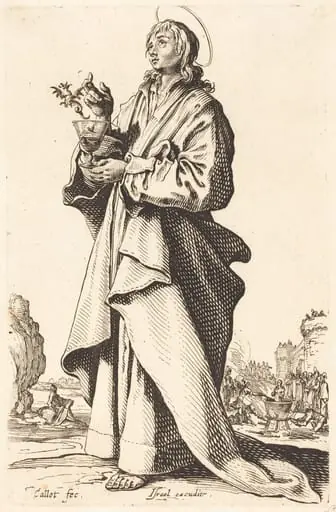
- Saint John the Evangelist
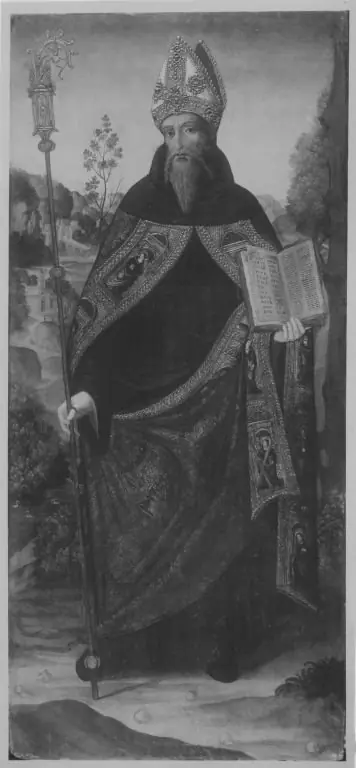 Hl. Augustinus, Bischof von Hippo (?)
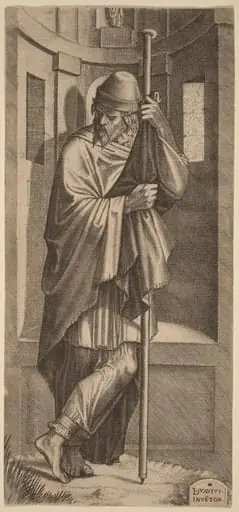 Saint James Major
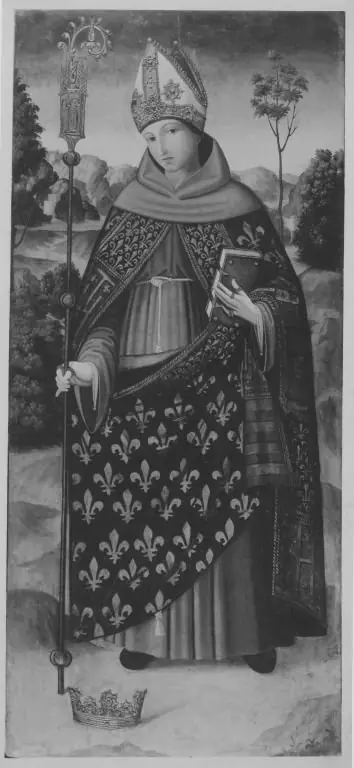 Hl. Ludwig von Anjou, Bischof von Toulouse (?)
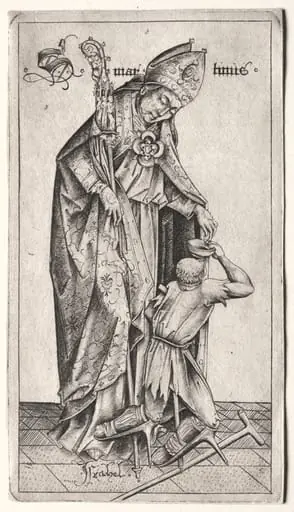 St. Martin
![Noli Me Tangere [verso], by German 16th Century](https://artifactworldgallery.com/img/german-16th-century--noli-me-tangere-verso--a8a7d37387dd2c01-w320.webp) Noli Me Tangere [verso]
Noli Me Tangere [verso]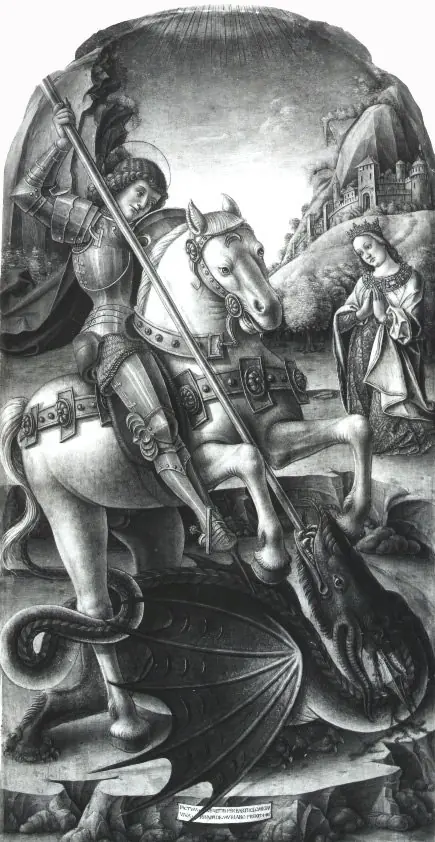 Saint George kills the dragon
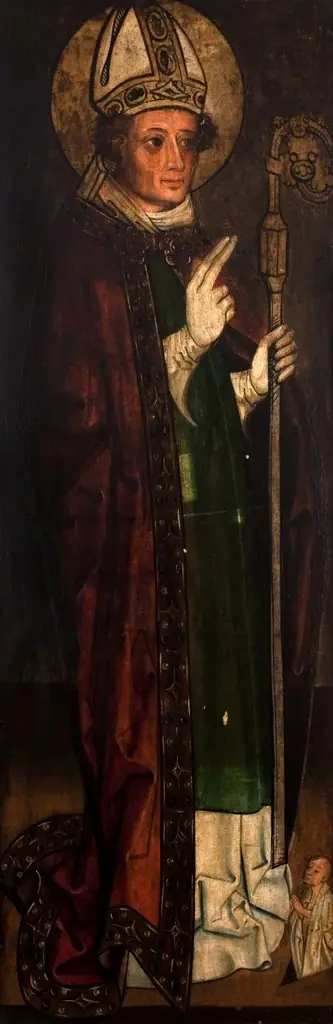 St Stanislaus (obverse); Archangel Gabriel from the Scene of the Annunciation (reverse). Wing of the altar retable from Snoza
 Saint Roche
 Saint John the Evangelist
 Saint Dominic
 Epitaphe of Blasius von Laimberg (?-?) and his wife Sophie von Röhlingen (?-?)