Artwork
Portrait of a Young Man in Flower Garland
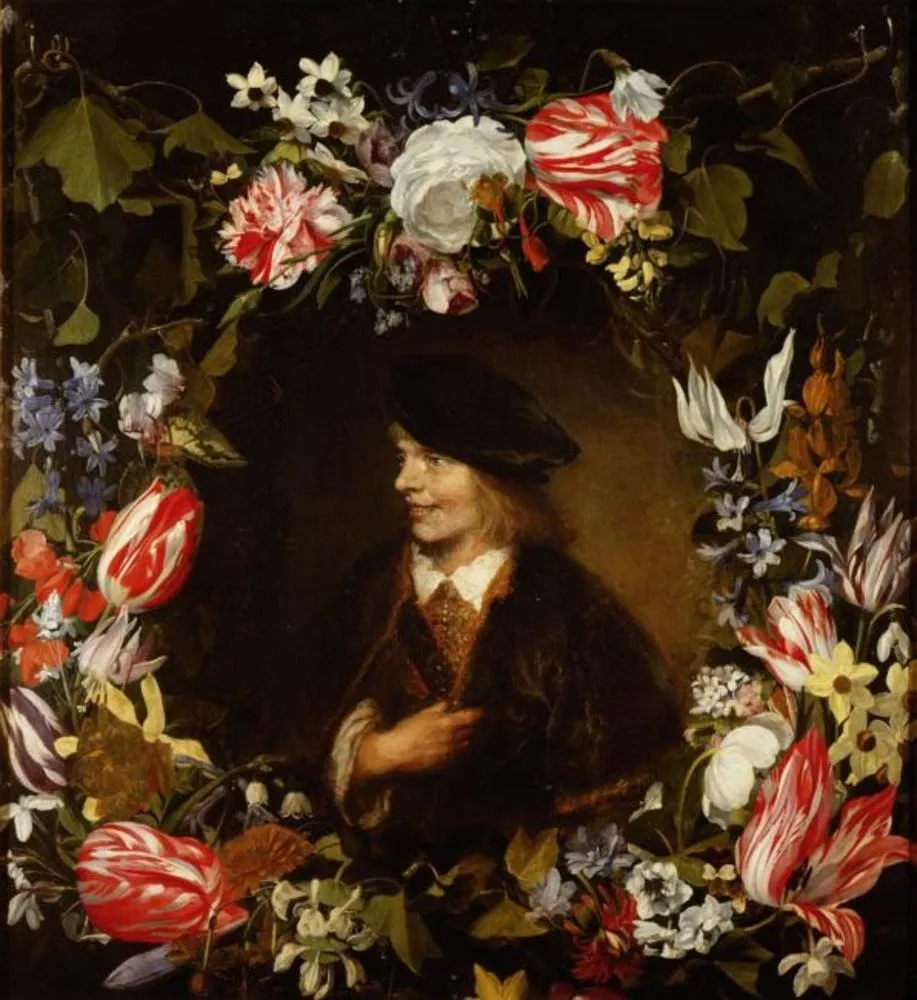
Portrait of a Young Man in Flower Garland is an oil painting by the Dutch Golden Age artist Jan Lievens. It dates from 1643 and is held in the collection of the Kunsthistorisches Museum.
About this work
Subject & Meaning
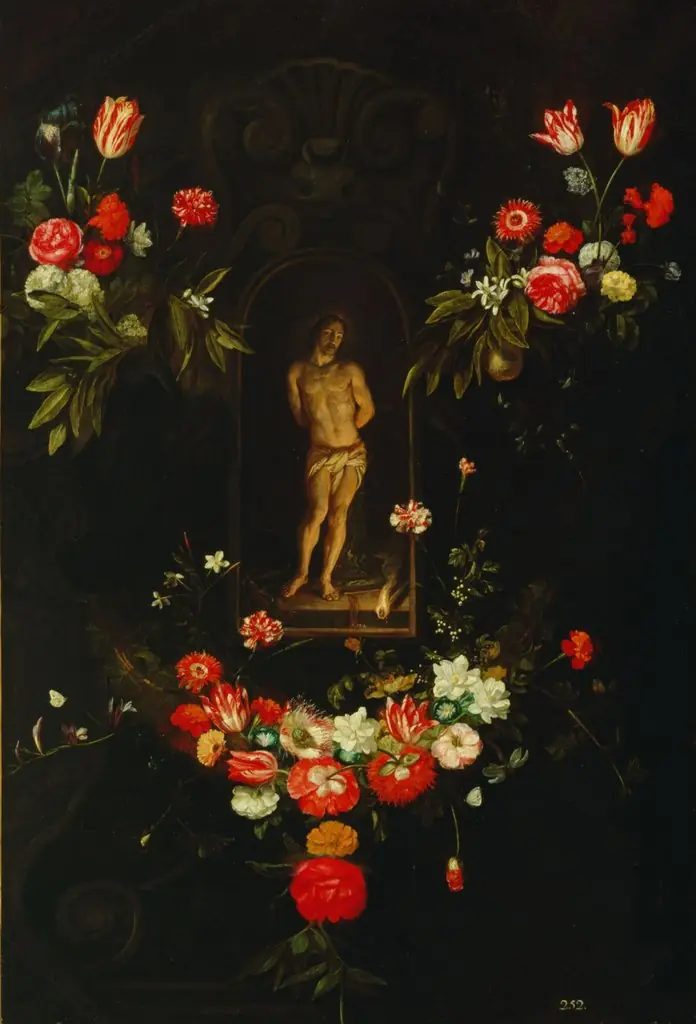
The painting shows a young man wearing a garland of assorted flowers, a motif that blends portraiture with a celebration of youth and the fleeting nature of beauty. The floral crown functions as a symbolic reference to virtues associated with masculinity and the transience of life, a common allegorical device in 17th‑century Dutch portraiture. Lievens’ rendering emphasizes the sitter’s refined status through delicate brushwork and the subtle interplay of light on the blossoms, suggesting both personal identity and a broader moral commentary on ephemerality.
Technique & Style
The composition reflects a collaborative effort between Jan Lievens and Jan van den Hecke, merging figural representation with botanical elements.
Executed in 1643, this work is an oil painting on panel measuring 50.5 cm in height and 46 cm in width. The piece combines the genres of portraiture and floral painting, featuring a young man framed by a flower garland. The composition reflects a collaborative effort between Jan Lievens and Jan van den Hecke, merging figural representation with botanical elements.
Currently held in the Kunsthistorisches Museum, the artwork demonstrates the integration of distinct artistic specialties within a single support.
History & Provenance
The painting was created in 1643 by Jan Lievens, as indicated by the artist’s inscription and the date on the work. It is catalogued as a portrait with floral elements, aligning with Lievens’s practice of integrating garlands into portraiture during the 1640s. The painting entered the holdings of the Kunsthistorisches Museum in Vienna, where it remains housed.
Its provenance within the museum’s collection is documented, though no earlier ownership chain or commission details are recorded in the available sources.
Context
Jan Lievens painted Portrait of a Young Man in Flower Garland in 1643, an oil on panel work now housed in the Kunsthistorisches Museum. The portrait combines a half-length pose with an intricate floral border, reflecting Lievens' skill in rendering both human expression and decorative detail. Its creation during the Dutch Golden Age situates it within the broader tradition of portraiture that emphasized individuality and symbolic ornamentation, linking it to contemporaries who explored similar themes of identity and status.
Art historians note its significance as a transitional piece bridging Lievens' early naturalistic style and his later fascination with allegorical subjects, underscoring its role in understanding his artistic evolution.
Scholarship on the work highlights its contribution to discussions of 17th-century portraiture's technical and compositional innovations, particularly in the integration of floral motifs as both aesthetic and symbolic elements. The painting's presence in a major institutional collection has facilitated ongoing analysis of Lievens' techniques, with recent studies emphasizing its influence on the development of decorative painting in Northern Europe. Its classification as both a portrait and floral work illustrates the fluid boundaries between genres in this period, challenging rigid categorizations of artistic production.
Legacy
The painting has been cited in later studies of Lievens' role in Dutch Golden Age portraiture, particularly in analyses of his brief collaboration with Jan van den Hecke. Its composition influenced 19th-century interpretations of floral symbolism in portraiture, though it remains overshadowed by Lievens' more widely documented works such as his self-portraits. The work is held in the collection of the Kunsthistorisches Museum and is part of scholarly discussions on Lievens' artistic legacy within the context of 17th-century Dutch painting.
Overview
Jan Lievens, a Dutch painter born in Leiden in 1607, executed the oil on canvas titled Portrait of a Young Man in Flower Garland in 1643. The work exemplifies the portrait tradition of the Dutch Golden Age and is presently part of the Kunsthistorisches Museum’s collection.
Artist & collection

Artist
Jan Lievens (24 October 1607 – 4 June 1674) was a Dutch Golden Age painter who was associated with his close contemporary Rembrandt, a year older, in the early parts of their careers.

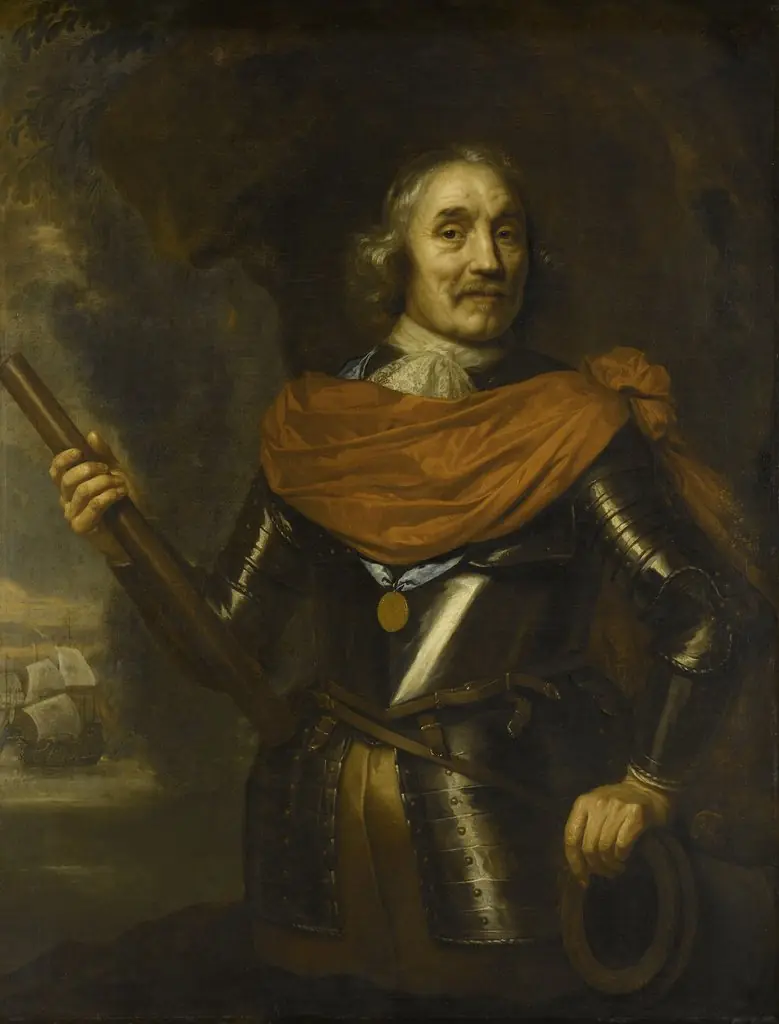
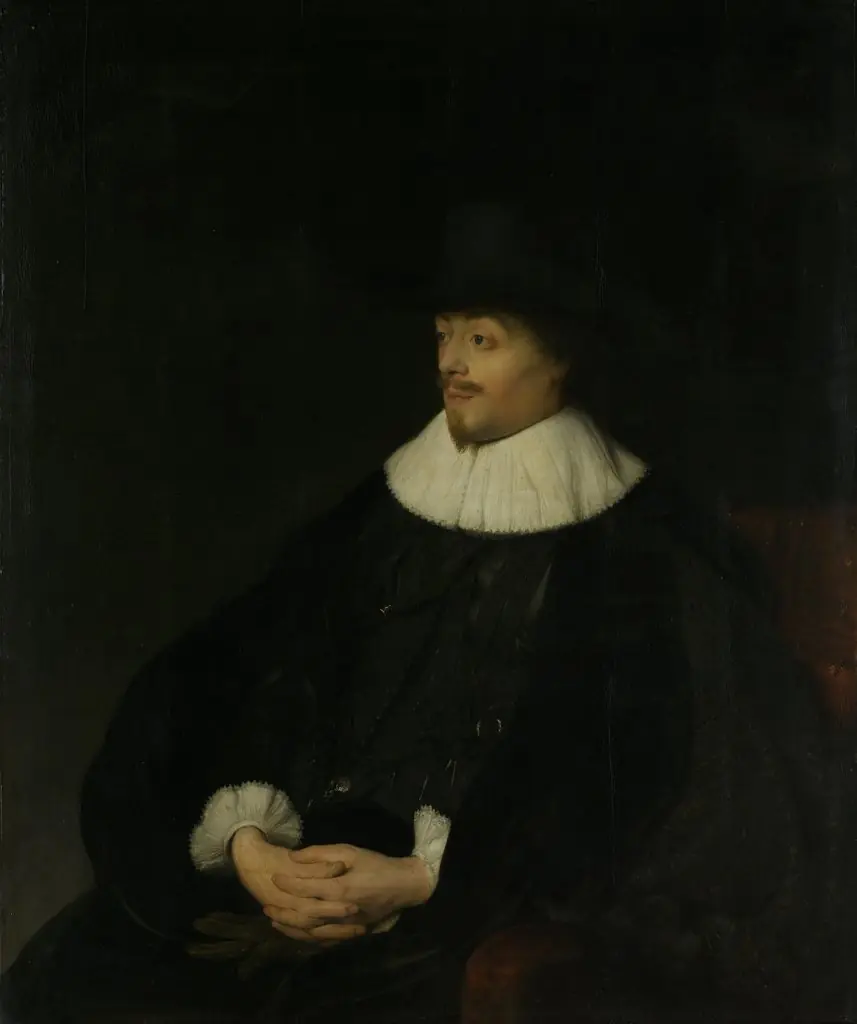
- Portrait of a Man in a Guirland
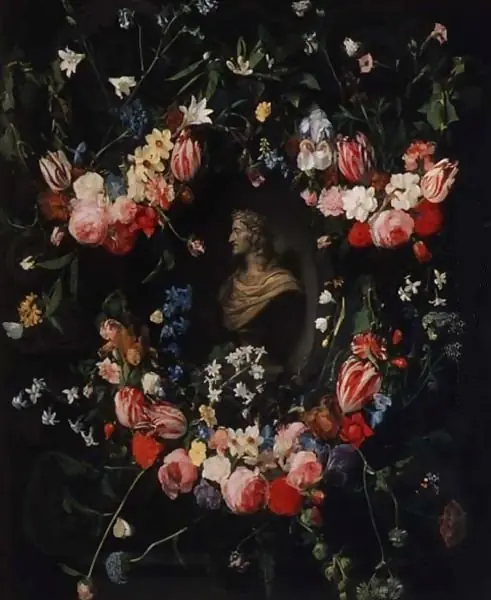 Portrait of Archduke Leopold Willem of Austria in a flower garland
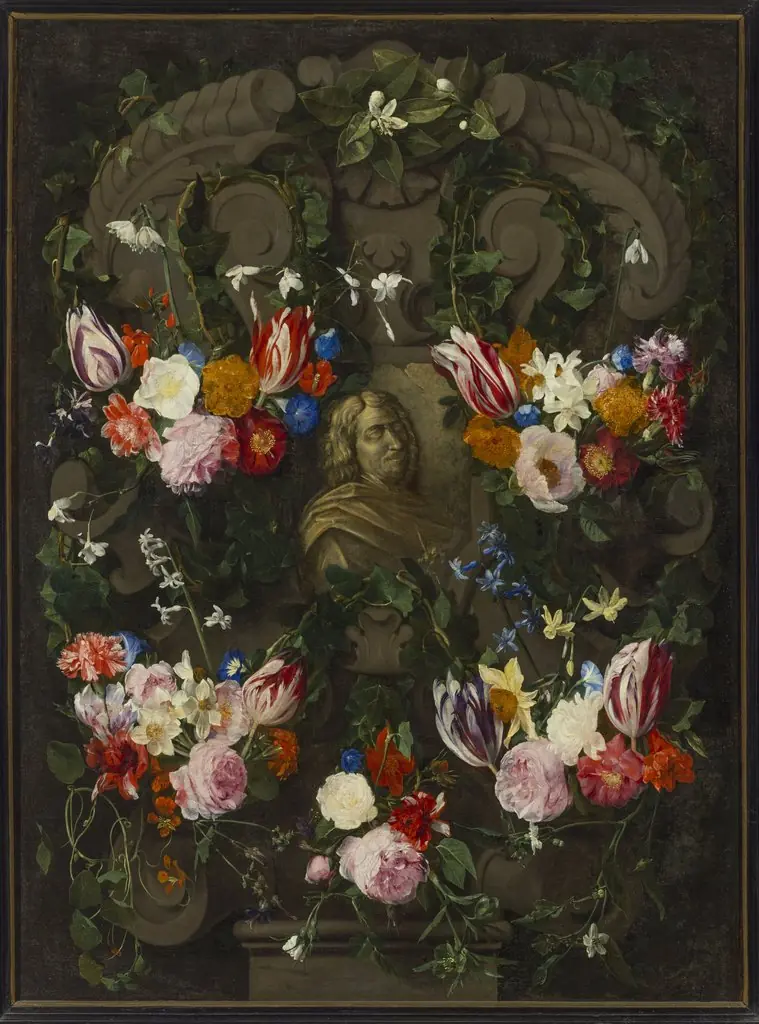 Portrait of Nicolas Poussin
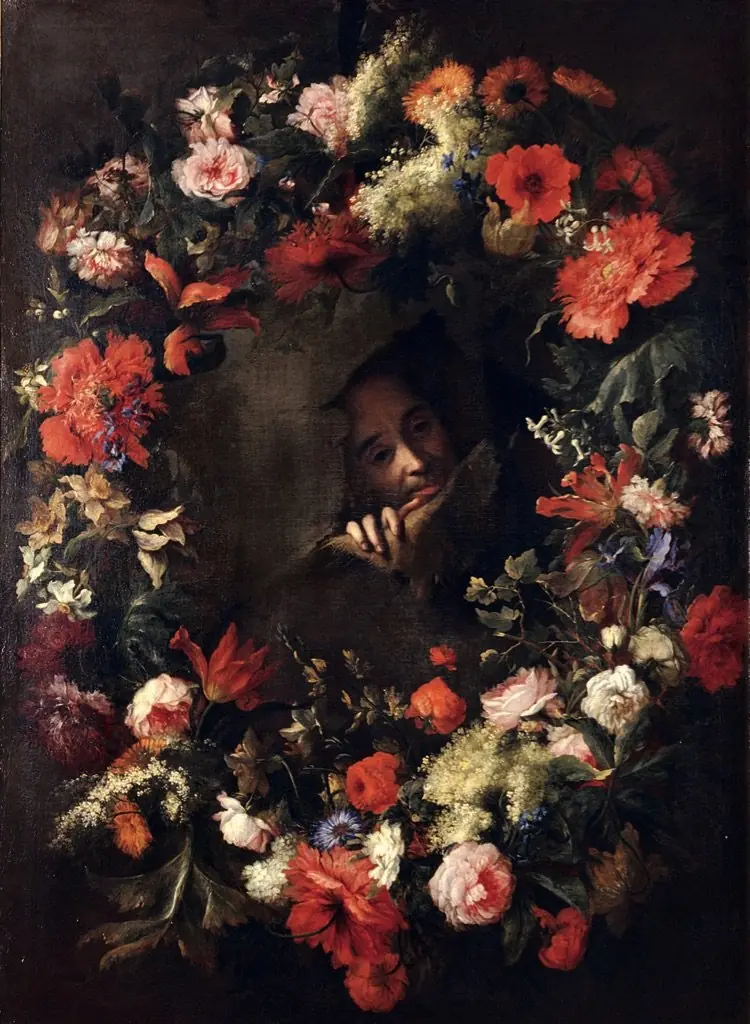 Self-portrait or a portrait of François Rivière
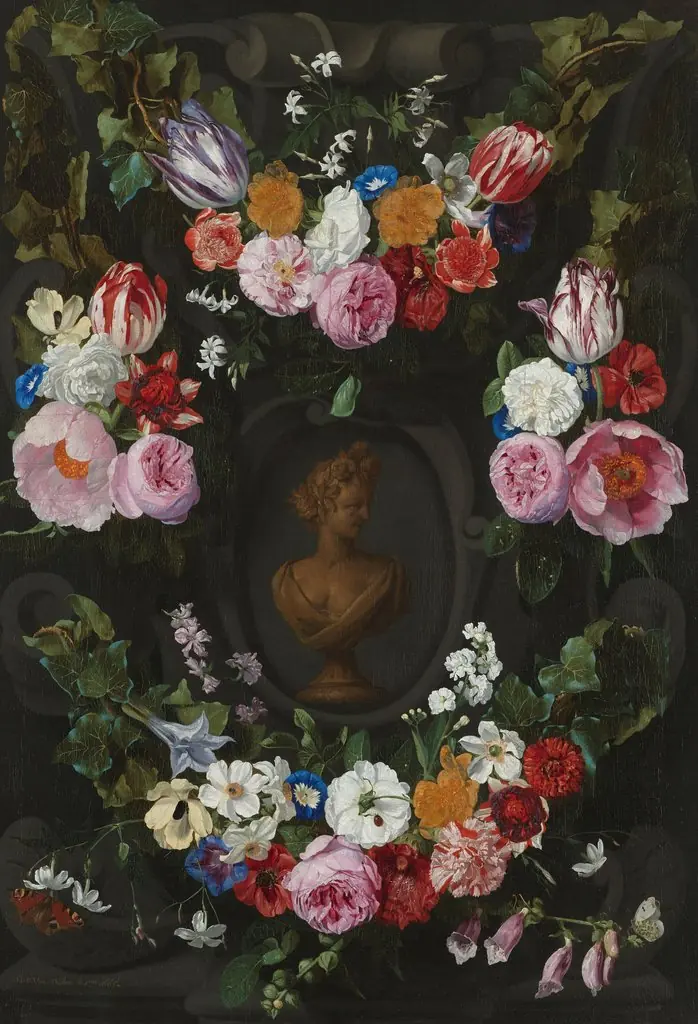 Festoon of flowers encircling a bust of Flora
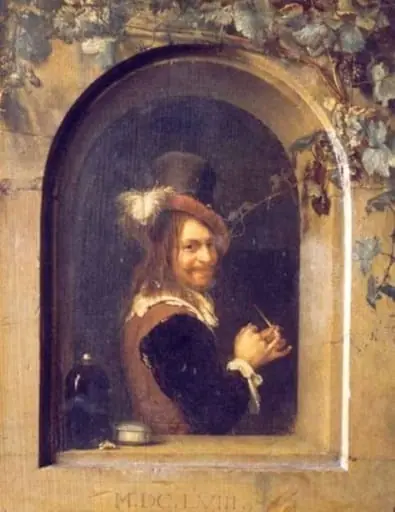 Bărbat cu pipă la fereastră
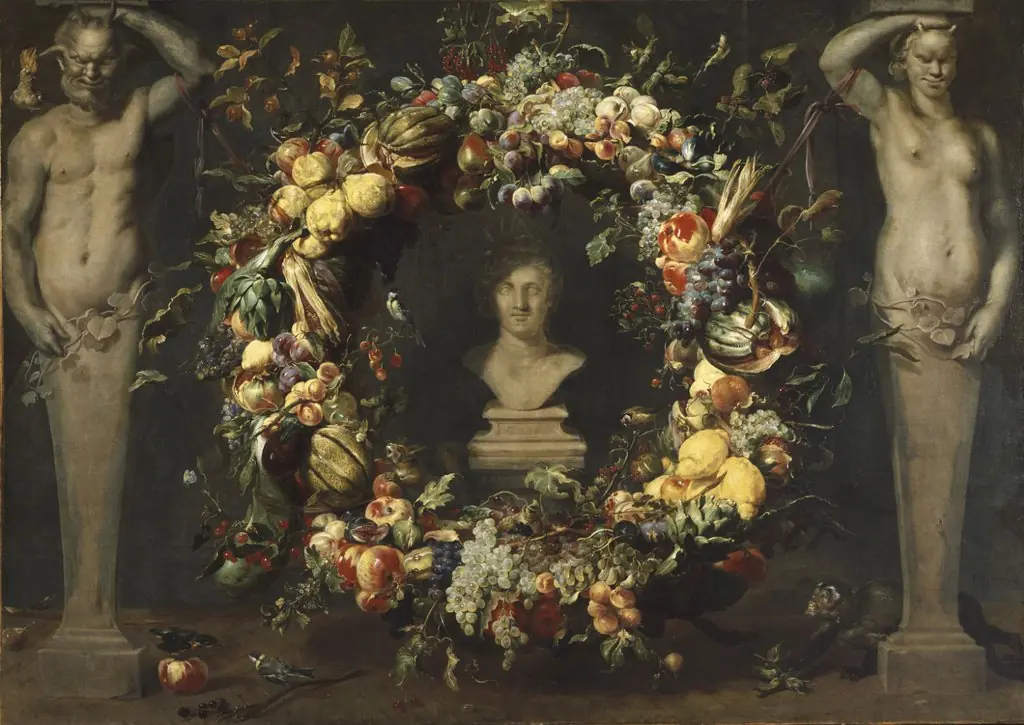 Still Life with Terms and a Bust of Ceres
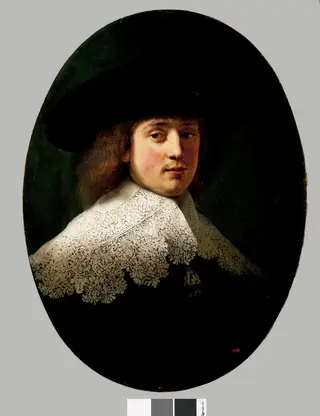 Portrait of Maerten Soolmans (1613–1641)
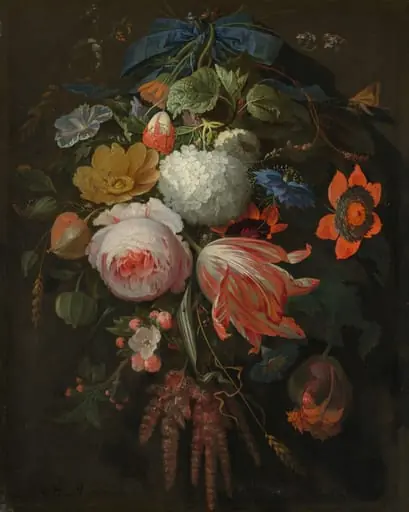 A Hanging Bouquet of Flowers
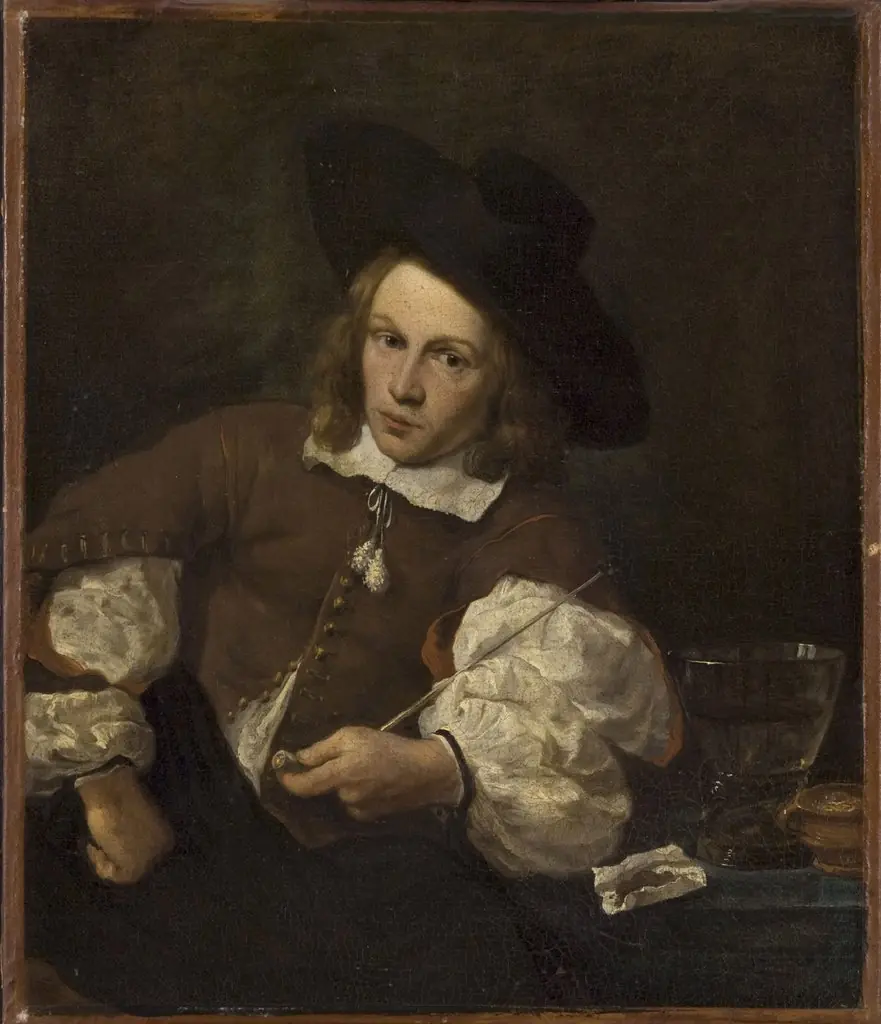 Portrait of a Young Man Seated Smoking
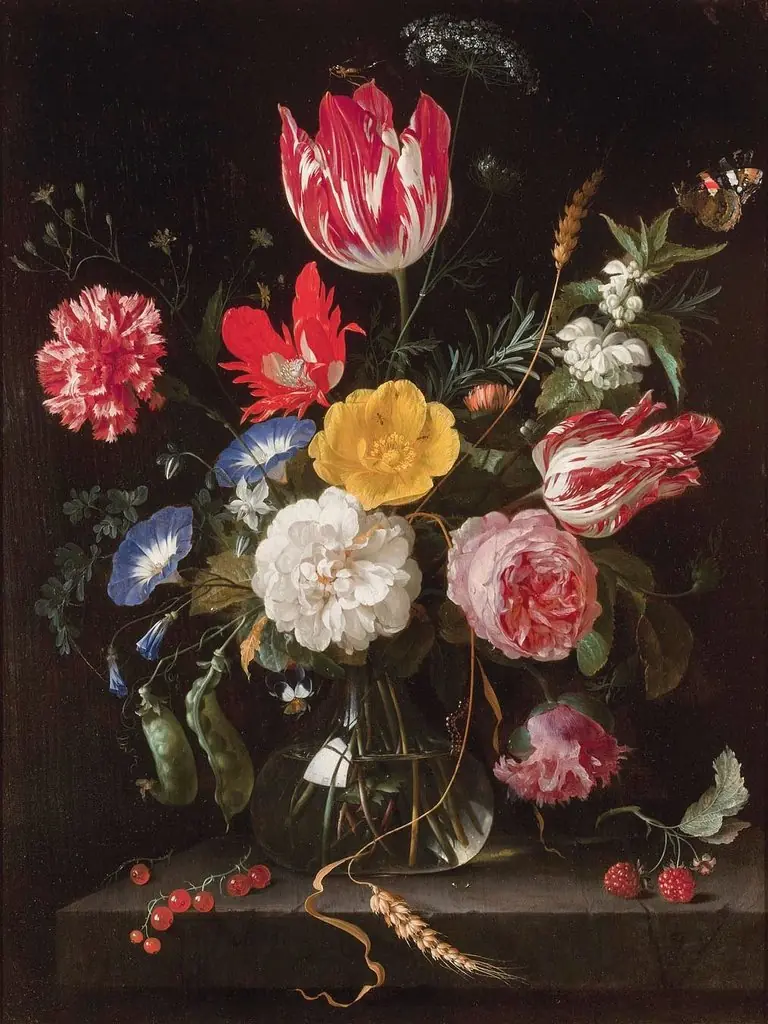 Glass Vase with Flowers on a Stone Ledge
 Christ at the column, in a garland of flowers