Artwork
Smiling Old Man (Abraham Grapheus ? )
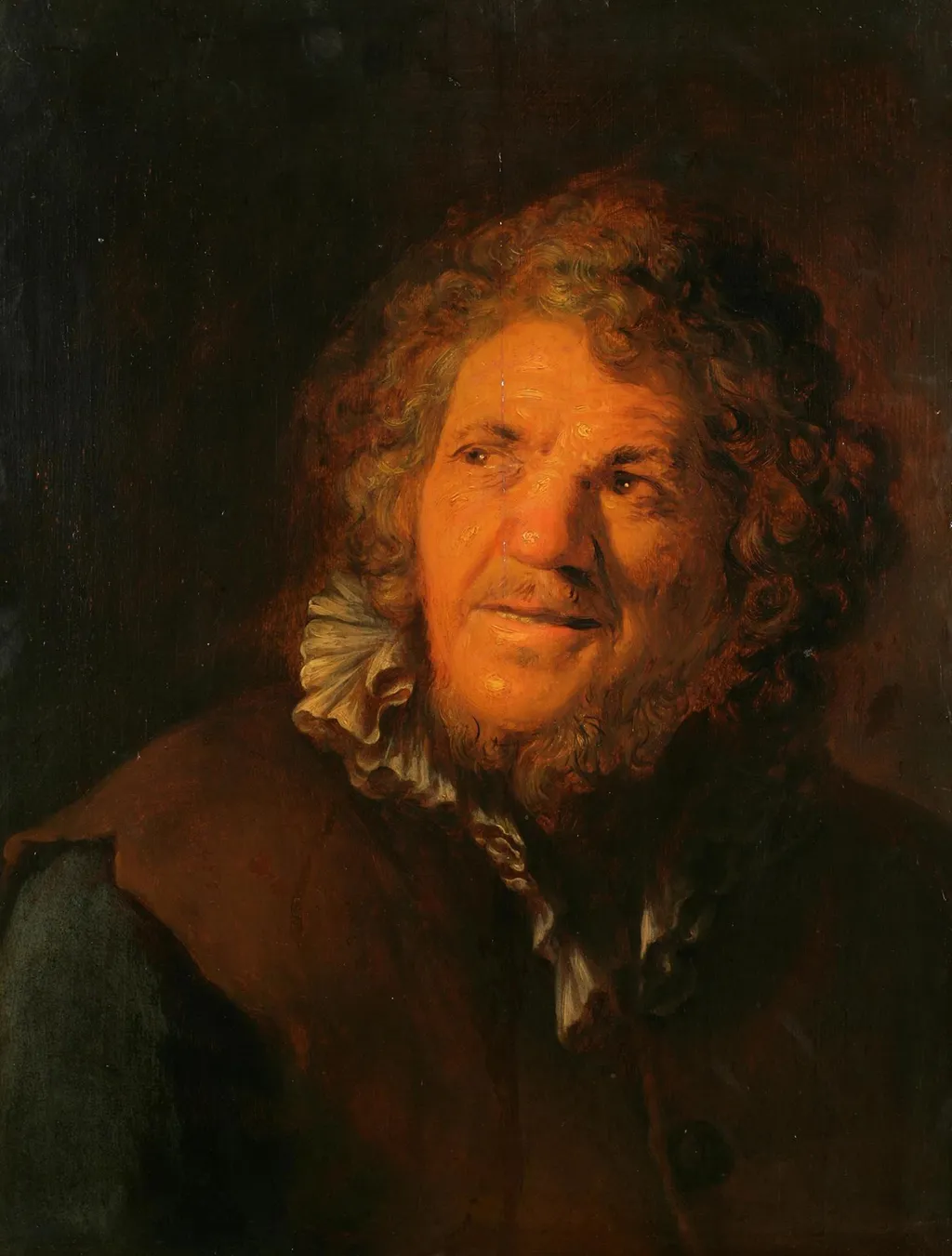
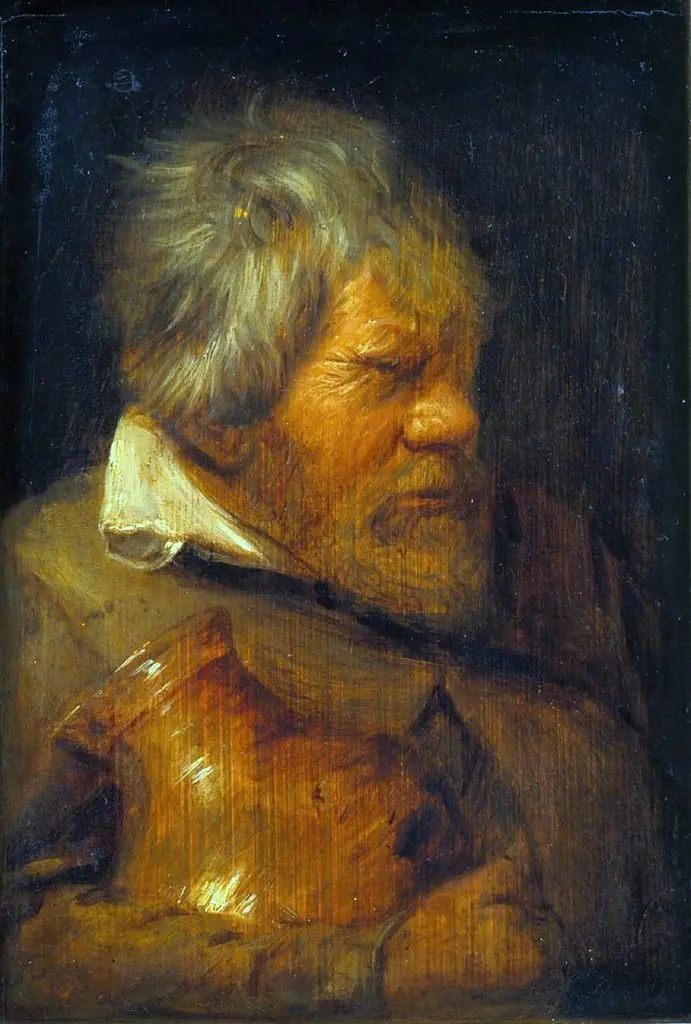
Smiling Old Man (Abraham Grapheus ? ) is an oil painting by the Dutch Golden Age artist Jan Lievens. It dates from 1637 and is held in the collection of the Hermitage Museum.
About this work
Subject & Meaning
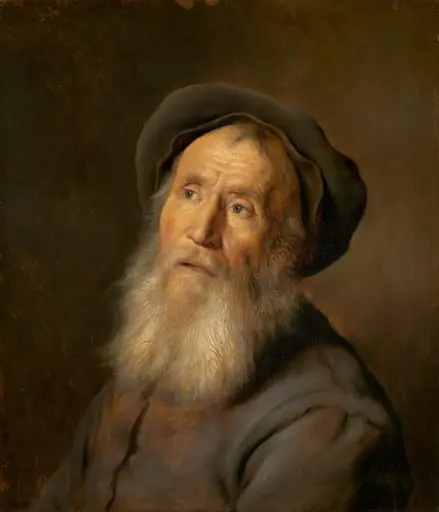
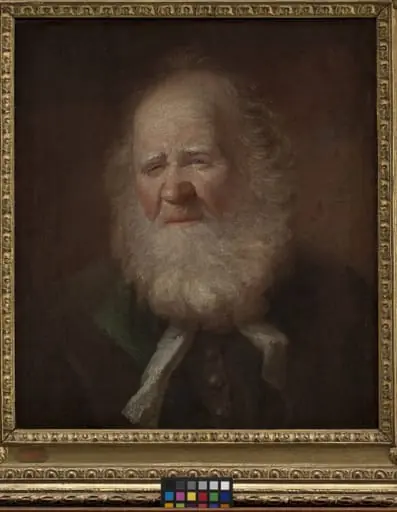
The painting depicts Abraham Grapheus, an elderly man shown with a smile, as indicated by the title and the work’s main subject.
The painting depicts Abraham Grapheus, an elderly man shown with a smile, as indicated by the title and the work’s main subject. Classified as both a portrait and a tronie, the piece focuses on the sitter’s expressive features rather than his social status, a characteristic of the tronies popular in Dutch Golden Age art. By emphasizing the old man’s jovial expression, the work invites contemplation of character, experience, and the human condition, reflecting the genre’s interest in capturing fleeting emotional states and individual personality.
Technique & Style
The Smiling Old Man is rendered in oil paint on a wooden panel. The panel support measures 60 cm in height and 48 cm in width.
The work is classified as a painting and is categorized within the portrait genre; it also functions as a tronie, a type of character study focused on expressive facial features.
Oil paint constitutes the medium, and the wooden panel serves as the support for the artwork.
History & Provenance
The painting was created by Jan Lievens in 1637 in the Netherlands, depicting Abraham Grapheus as an oil-on-panel work. It is currently held in the collection of the Hermitage Museum, where it is displayed as a portrait/tronie. While the sources confirm the artist, date, medium, and present location, they do not provide details of earlier owners, commissions, or subsequent transfers in the work’s provenance.
Legacy
The portrait was widely admired for its nuanced psychological realism, influencing later Dutch portraitists who sought to capture individual character through subtle facial expression. Contemporary accounts of the Hermitage Museum’s display highlighted its role in shaping ideas about tronie imagery, a genre that blends likeness with artistic experimentation. The work’s technical handling of light and texture informed subsequent generations of painters working in oil on panel.
Overview
Jan Lievens, a Dutch painter born in Leiden in 1607, executed the oil painting Smiling Old Man in 1637. The work is part of the collection of the State Hermitage Museum in St. Petersburg. It represents an elderly male sitter rendered in a restrained, three‑dimensional manner typical of Lievens’s early output.
Context
The portrait belongs to a period when Lievens, like many Leiden artists, was exploring portraiture alongside history painting and genre scenes. Working in the 1630s, he shared a studio with Rembrandt in Amsterdam, an association that informed his use of dramatic lighting and intimate character study.
Own this work as a print
Artist & collection

Artist
Jan Lievens (24 October 1607 – 4 June 1674) was a Dutch Golden Age painter who was associated with his close contemporary Rembrandt, a year older, in the early parts of their careers.