Artwork
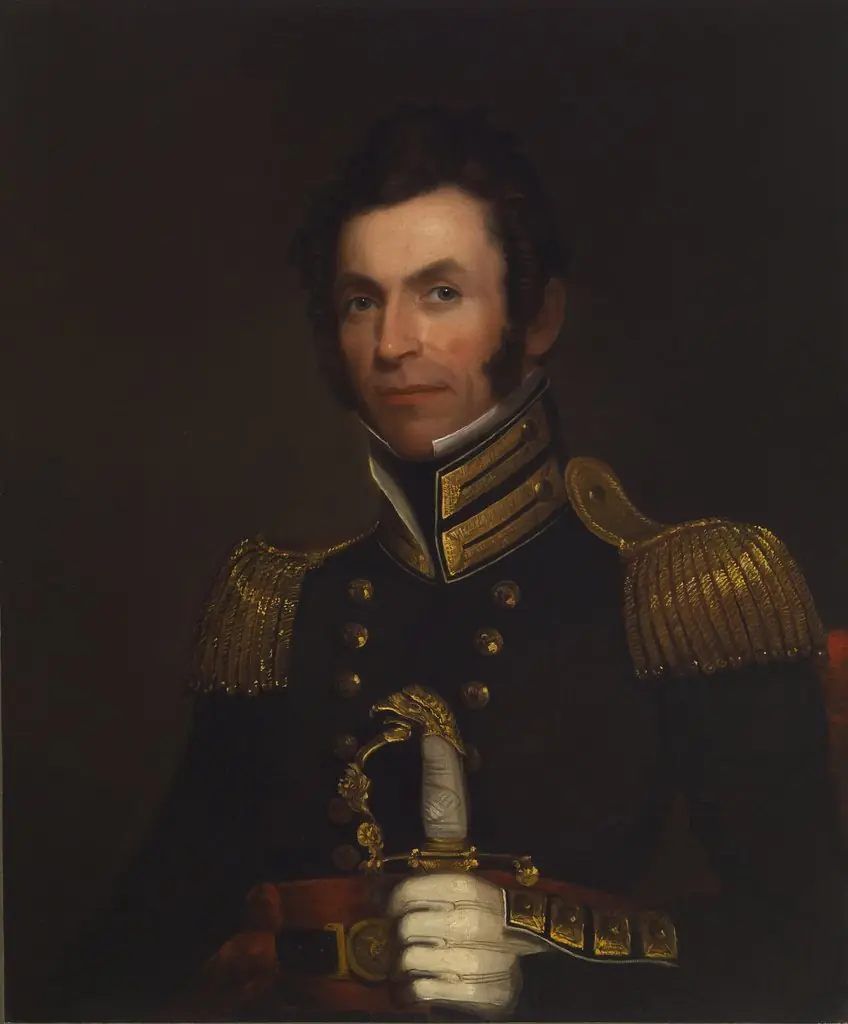
Commodore John Rodgers
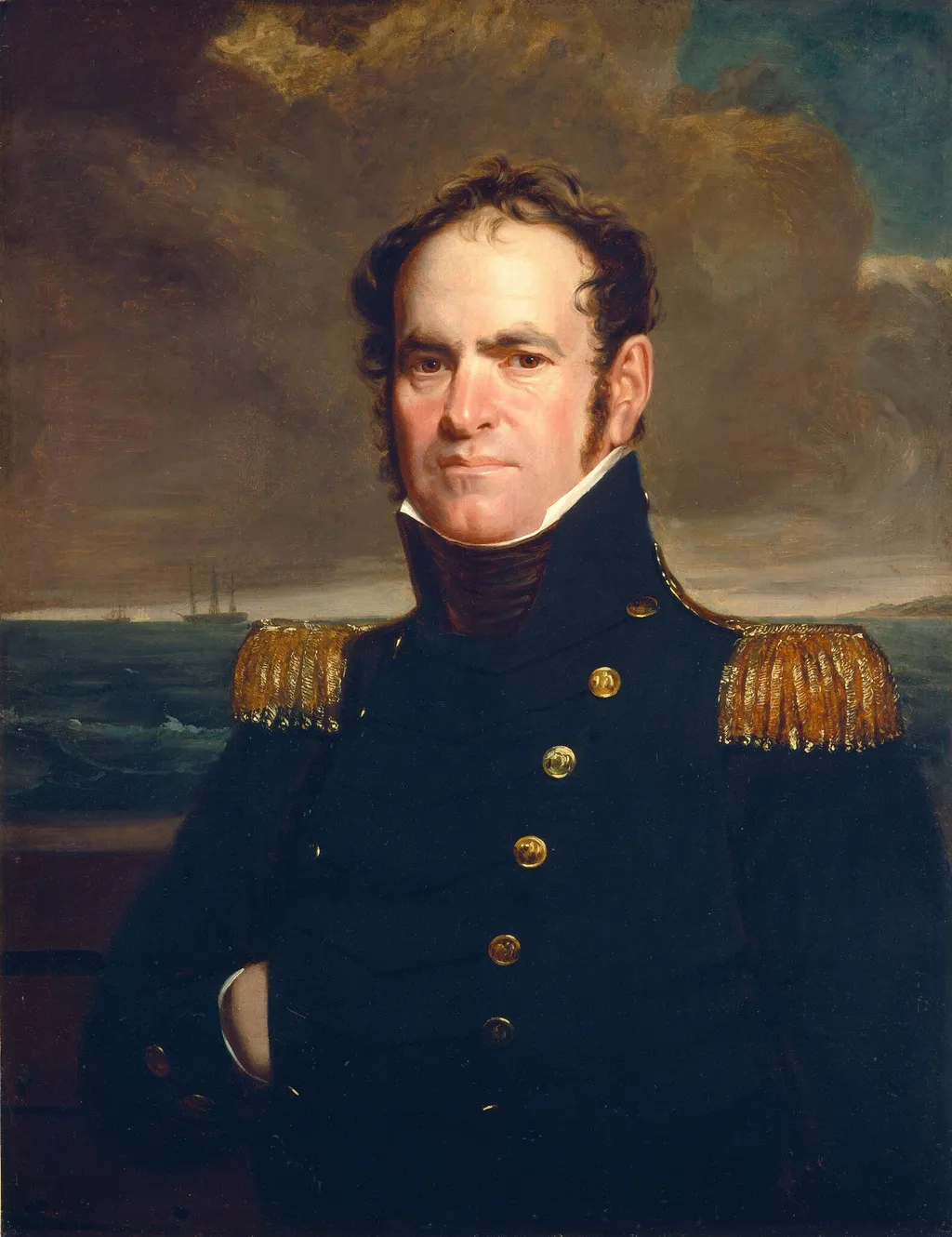
Commodore John Rodgers is an oil painting by the American Folk Art artist John Wesley Jarvis. It dates from 1814 and is held in the collection of the National Gallery of Art.
About this work
Subject & Meaning
Symbolic details such as the sitter's pose and uniform reflect contemporary ideals of duty and leadership associated with naval command.
The portrait of Commodore John Rodgers, painted by John Wesley Jarvis in 1814, depicts the naval officer in formal attire that signifies his rank and professional authority. The work uses conventional portraiture elements to convey the subject's status within early 19th-century American maritime society. Symbolic details such as the sitter's pose and uniform reflect contemporary ideals of duty and leadership associated with naval command. The painting descended through the sitter's family before entering the National Gallery of Art.
Technique & Style
The portrait was executed in oil on canvas, a medium consistent with early 19th-century American portraiture, and measures 91.2 cm in height by 71.1 cm in width. It depicts Commodore John Rodgers in a formal composition that emphasizes dignified posture and careful rendering of the face, reflecting the stylistic conventions of the period. The work has been part of the National Gallery of Art's collection in Washington, D.C., since 1943, following a series of inheritances and gifts within the Rodgers family.
History & Provenance
This portrait of Commodore John Rodgers was painted in 1814 by John Wesley Jarvis. In 1838 Charlotte I. Bullus of New York gave the work to Minerva Denison Rodgers, the sitter's wife, describing it as an original likeness preferred to a copy. It then descended to their daughter Ann Minerva Rodgers Macomb, and afterward to her daughters Nannie Rodgers Macomb and Christina Livingston Macomb, the granddaughters of the sitter, who jointly gifted it to the National Gallery of Art in 1943.
The painting remains in the museum's permanent collection. No accession number or exhibition history is recorded in the available sources.
Context
The painting was created by John Wesley Jarvis in 1814 and depicts Commodore John Rodgers. It passed through the Rodgers family for over a century, from Minerva Denison Rodgers, who received it in 1838, to her daughter and then granddaughters, before its donation to the National Gallery of Art in 1943. The work's significance lies in its representation of early American portraiture and its place within Jarvis's body of work, reflecting the artistic and cultural context of the early 19th century.
Legacy
The portrait Commodore John Rodgers by John Wesley Jarvis was painted in 1814 and entered the collection of the National Gallery of Art in Washington, D.C., in 1943. Its provenance runs from the sitter's widow, Minerva Denison Rodgers, to their daughter Ann Minerva Rodgers Macomb and then to Macomb's daughters Nannie and Christina, who gifted the work to the museum. It is recognized as a representative example of early American portraiture.
Overview
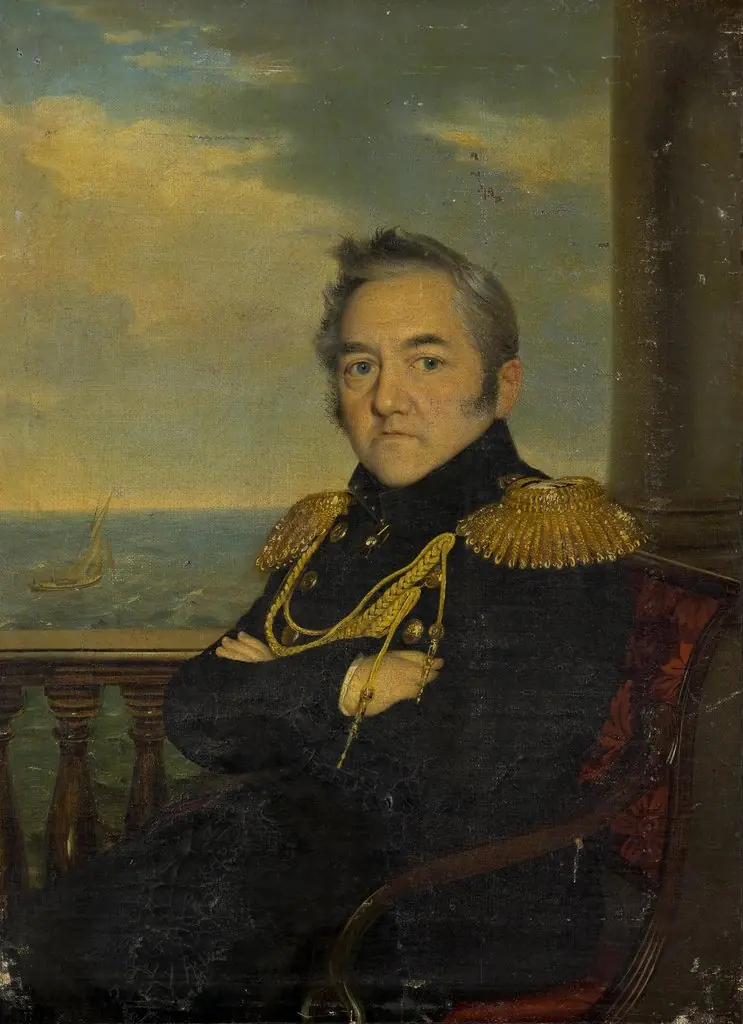
John Wesley Jarvis’s oil portrait of Commodore John Rodgers dates to around 1814. Executed in oil on canvas, the work presents the naval officer in a dark blue uniform trimmed with gold epaulets, set against a muted seascape that merges sky and water in cool blues and grays. The composition centers the figure, whose direct gaze engages the viewer.
Own this work as a print
Artist & collection

Artist
John Wesley Jarvis (1781–1839) was an American artist, born in South Shields.