Artwork
Actors of the Comedie-Francaise
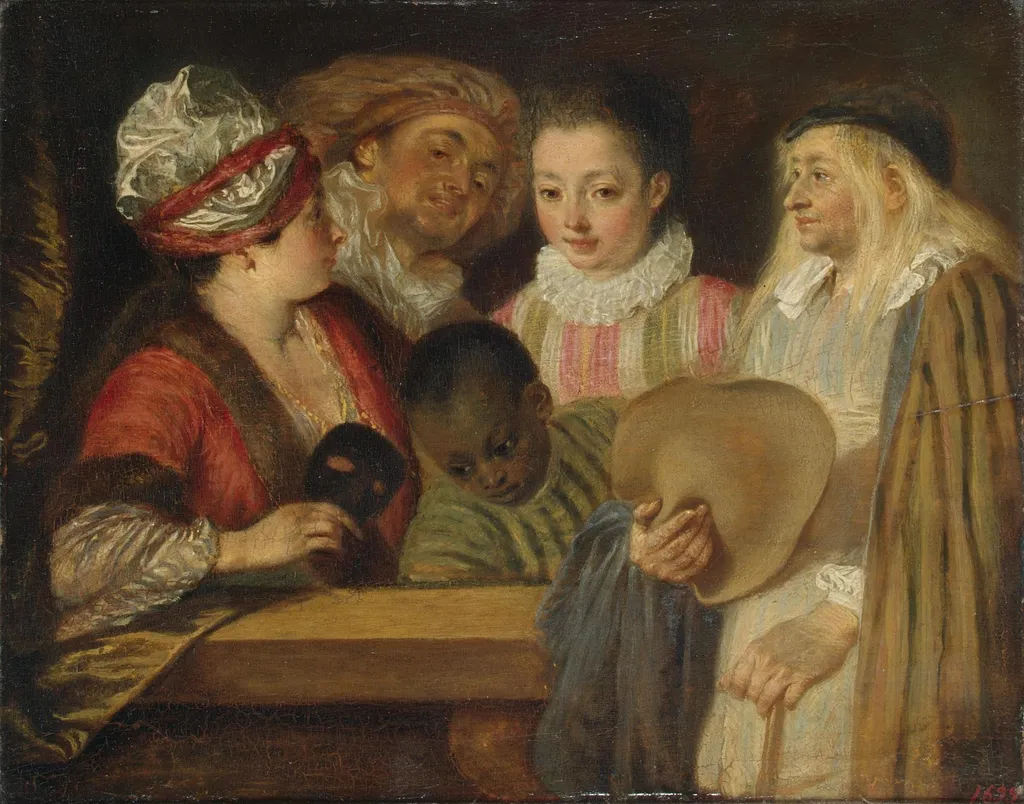
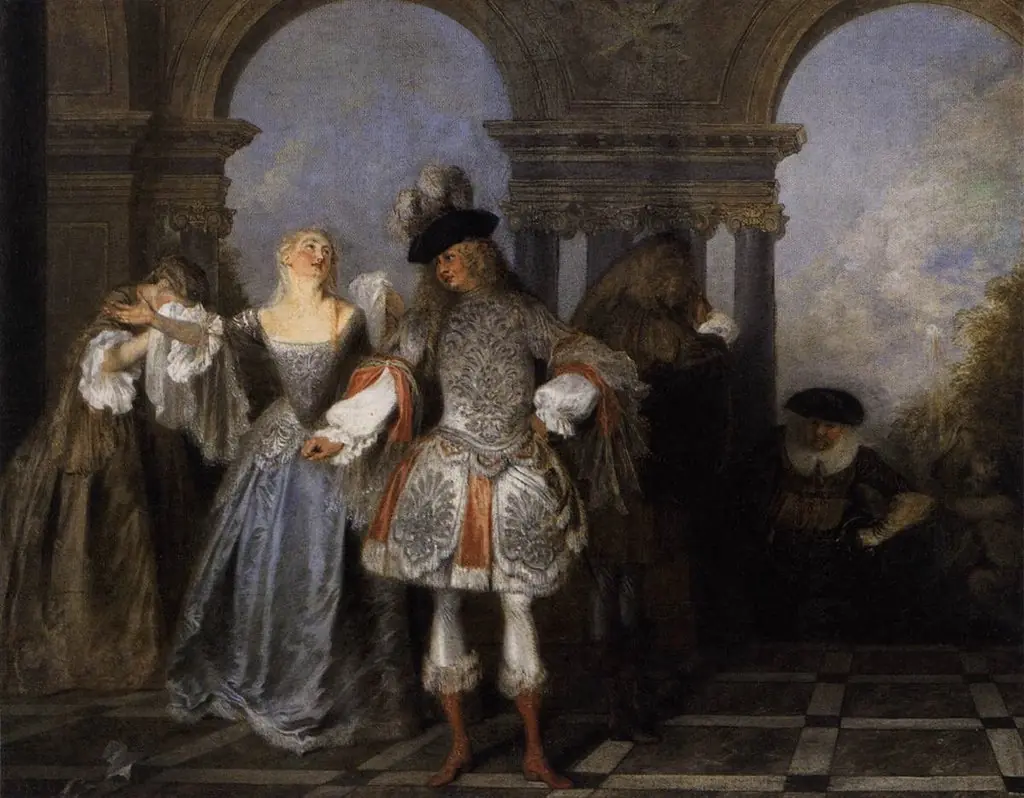
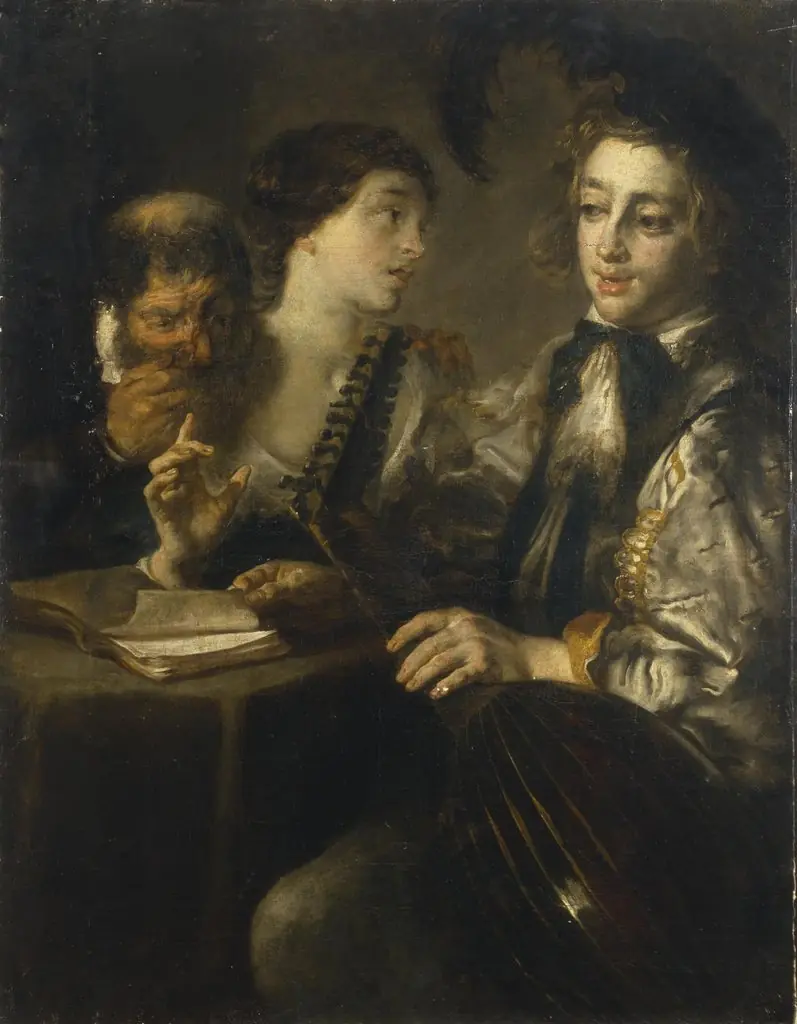
Actors of the Comedie-Francaise is an oil painting by the Rococo painting artist Jean Antoine Watteau. It dates from 1710 and is held in the collection of the Hermitage Museum. Antoine Watteau’s oil on panel, titled Actors of the Comédie‑Française, is held in the State Hermitage Museum in Saint Petersburg.
About this work
Actors of the Comédie-Française is an oil painting by French artist Jean Antoine Watteau, dated 1710.
Actors of the Comédie-Française is an oil painting by French artist Jean Antoine Watteau, dated 1710. The work measures half‑length and mixes portraiture with genre scenes.
Five figures appear – two women, two men and a black boy – set against a dark background. Scholars note the piece draws on the Venetian school, the Le Nain brothers, and Watteau’s teacher Claude Gillot, making it one of the few non‑landscape works in his career.
Find more about this piece at the State Hermitage Museum.
Overview
Antoine Watteau’s oil on panel, titled Actors of the Comédie‑Française, is held in the State Hermitage Museum in Saint Petersburg. Executed in the early 1710s, the work presents a compact half‑length grouping of five figures against a muted backdrop, diverging from the artist’s usual outdoor fêtes galantes.
Subject & Meaning
The composition depicts two women, two men and a young Black boy, all dressed in contemporary theatrical costume, suggesting a scene of actors from the Comédie‑Française. Their poised yet informal stance hints at a moment of rehearsal or backstage camaraderie rather than a staged performance.
Technique & Style
Watteau blends portraiture with genre painting, employing a soft, luminous palette reminiscent of Venetian colourism while retaining the earthy modeling characteristic of the Le Nain brothers. The brushwork shows the influence of his early master Claude Gillot, especially in the delicate rendering of fabrics and the subtle chiaroscuro that isolates the figures from the darkened space.
History & Provenance
The painting entered the Hermitage collection in the 19th century, though its exact acquisition path remains undocumented. Scholars have dated it to various points within the 1710s, based on stylistic parallels to Watteau’s other works and the evolution of his figure treatment during that decade.
Context
Unlike Watteau’s typical outdoor scenes of aristocratic leisure, this interior grouping reflects his occasional interest in theatrical subjects and the cultural prominence of the Comédie‑Française in early‑modern Paris. The inclusion of a Black child, rare in French art of the period, underscores the diverse social fabric of theatrical troupes.
Own this work as a print
Artist & collection
Artist
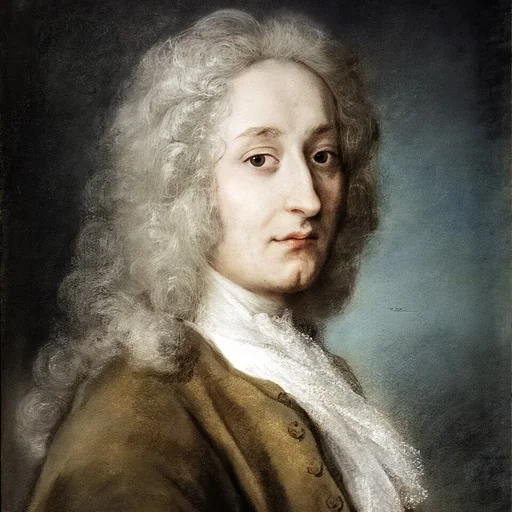
Jean-Antoine Watteau was a French painter and draughtsman whose brief career spurred the revival of interest in colour and movement, as seen in the tradition of Correggio and Rubens.