Artwork
Calvary: Saint Sebastian
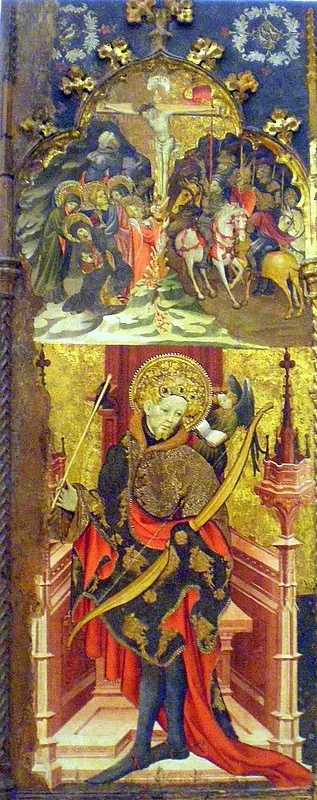
Calvary: Saint Sebastian is an unspecified painting by Joan Mates. It dates from 1417 and is held in the collection of the Museu Nacional d'Art de Catalunya.
About this work
Overview
The painting resides in the Museu Nacional d'Art de Catalunya, where it is preserved as part of the region’s religious artistic heritage.
Painted in 1417 by Joan Mates, this work combines two religious scenes: the crucifixion above and Saint Sebastian below. It is an example of late medieval Catalan panel painting, executed in tempera and gold leaf on wood. The composition is structured vertically, dividing sacred narratives into distinct registers.
The painting resides in the Museu Nacional d'Art de Catalunya, where it is preserved as part of the region’s religious artistic heritage.
Subject & Meaning
The painting juxtaposes the sacrifice of Christ with the martyrdom of Saint Sebastian, reinforcing themes of suffering and divine endurance. Sebastian, shown standing upright in rich garments, holds a spear, his instrument of execution, symbolizing his survival and spiritual triumph. The crucifixion above serves as a theological anchor, linking Sebastian’s fate to Christ’s redemptive death. This dual imagery was intended to inspire devotion and reflect the saint’s role as an intercessor.
Technique & Style
Mates employed tempera paint with extensive gold leaf detailing to highlight the saint’s ornate robe and the crucifixion’s halos. The deep blue background enhances the warmth of the figures’ garments, creating visual contrast without perspective depth. Figures are stylized, with elongated proportions and flat, patterned fabrics typical of Gothic Catalan painting. Facial expressions are restrained, emphasizing solemnity over naturalism, consistent with devotional conventions of the period.
History & Provenance
The painting originated in a Catalan ecclesiastical setting, likely commissioned for a chapel or altar. It entered the Museu Nacional d'Art de Catalunya in the early 20th century as part of a broader effort to consolidate regional religious art. Its survival is notable, as many similar panels were lost or damaged during the Napoleonic Wars and later secularization campaigns.
Documentation from the 15th century confirms its attribution to Mates and its original location in a Catalan parish.
Context
Created during a period of intense religious devotion in Catalonia, the painting reflects the popularity of martyr saints in local cults. Saint Sebastian, often invoked against plague, was a frequent subject in public and private devotion. Mates worked within a tradition of panel painting that emphasized symbolic clarity over realism, serving liturgical needs rather than individual expression.
This work aligns with other Catalan altarpieces of the early 15th century that fused narrative hierarchy with ornamental richness.
Legacy
Though not widely known outside Catalonia, the painting remains a key example of early 15th-century religious art in the region. It contributes to scholarly understanding of how local workshops adapted international Gothic styles to regional devotional practices. Its preservation allows study of materials, iconography, and workshop techniques unique to Catalan artists of the period. It continues to inform exhibitions on medieval Spanish art and the role of saints in communal identity.
Artist & collection

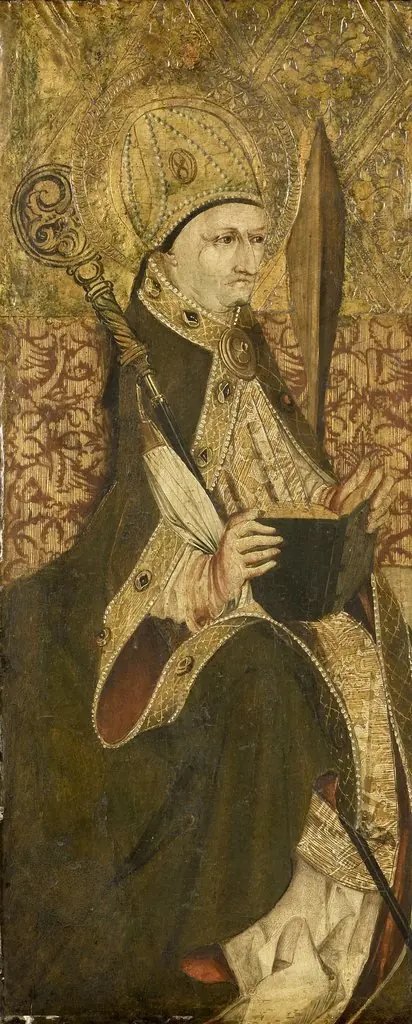
- A Holy Bishop
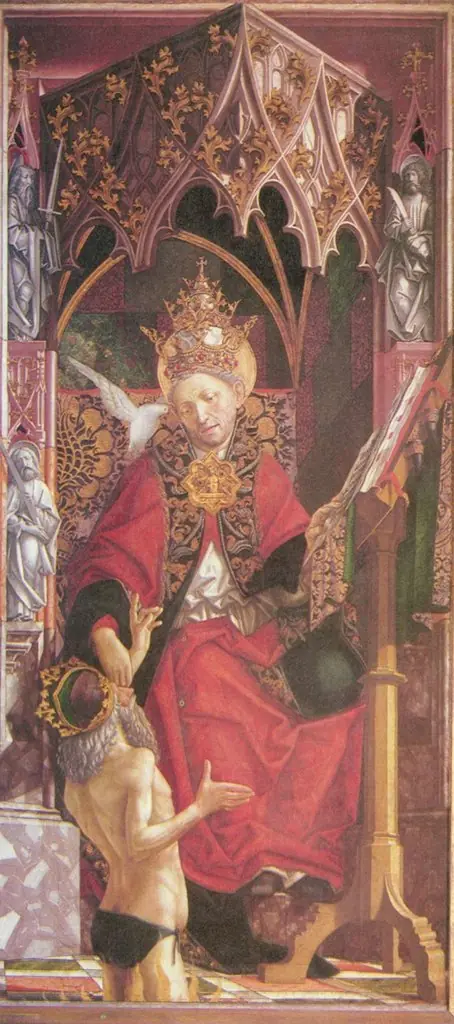 Kirchenväteraltar: Papst Gregor der Große
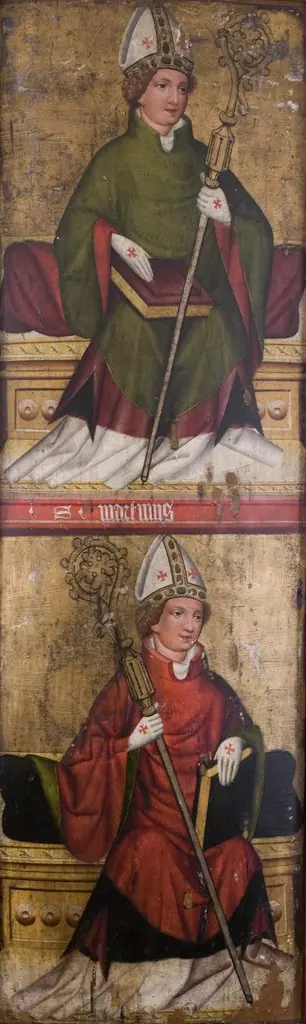 St Adalbert (?), St Martin, Our Lady of Sorrows. Left wing from the altar retable from the church of St Mark in Żywiec
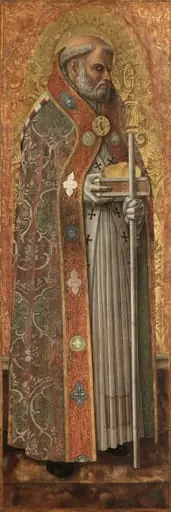 Saint Nicholas of Bari
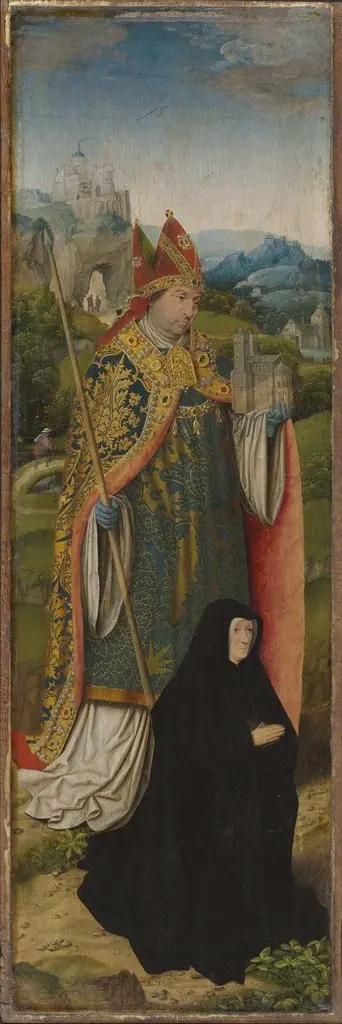 Kreuzigungsaltar: Hl. Bischof (Lambertus von Lüttich?) mit Stifterin
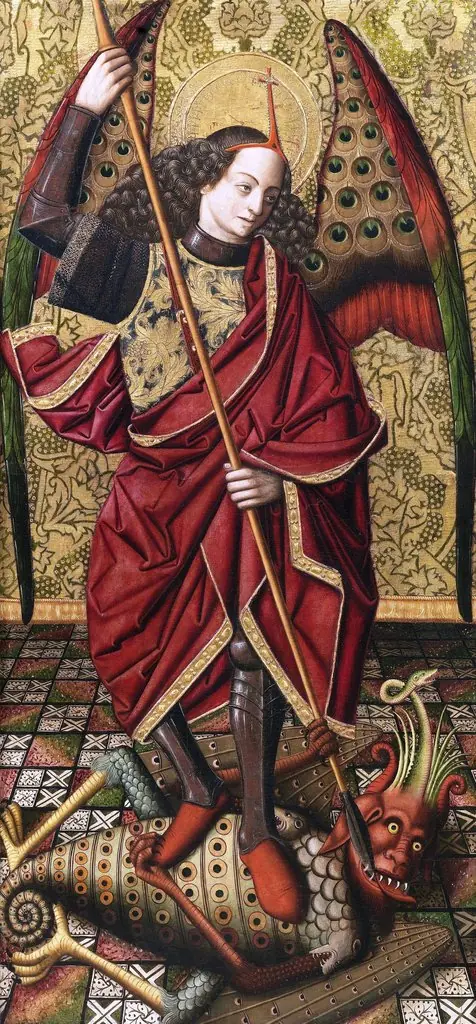 Saint Michael
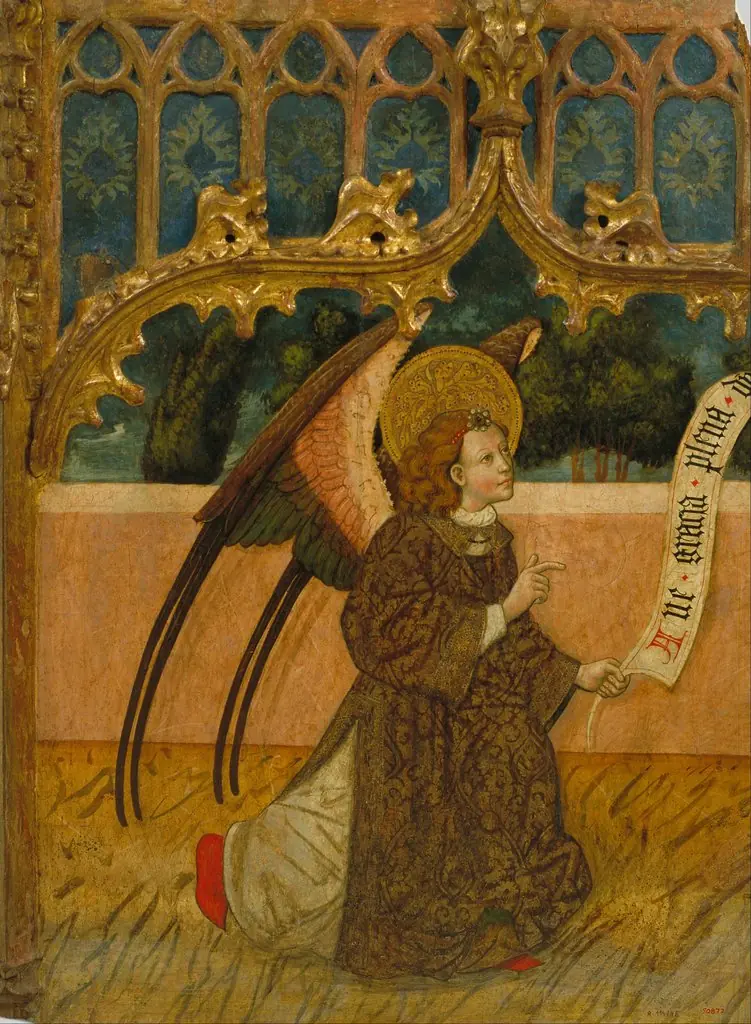 Archangel Gabriel from an Annunciation
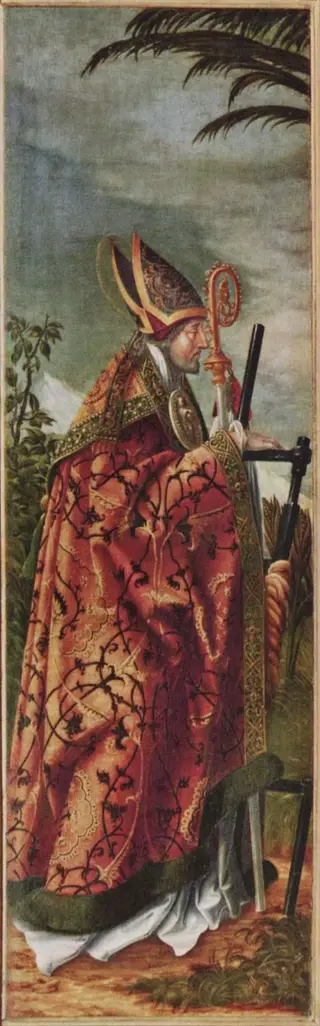 Saint Erasmus
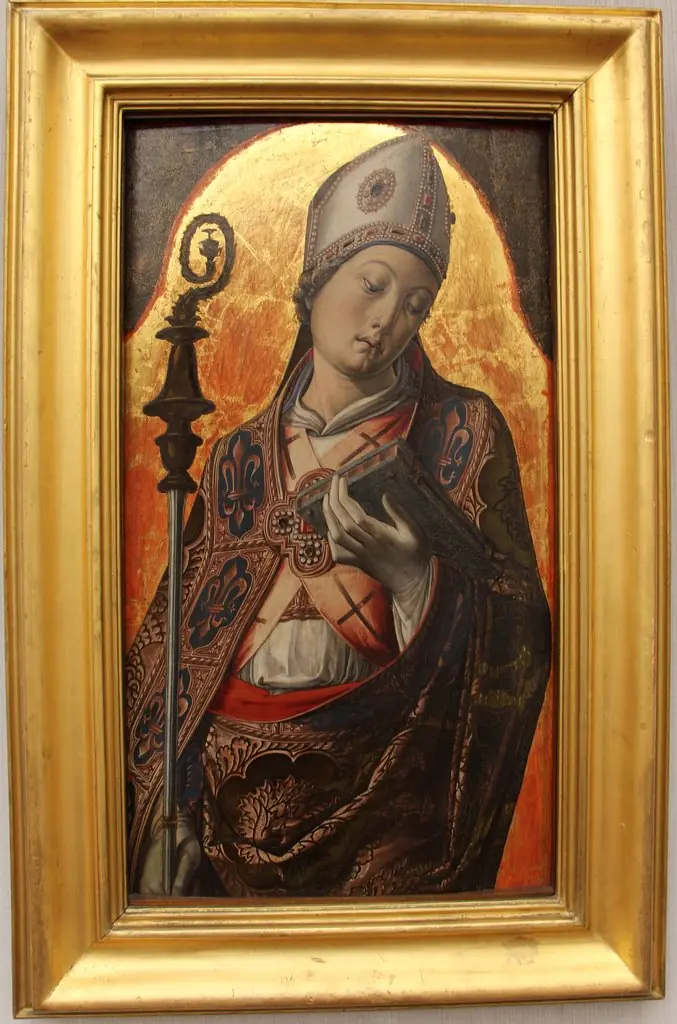 Saint Louis from Toulouse
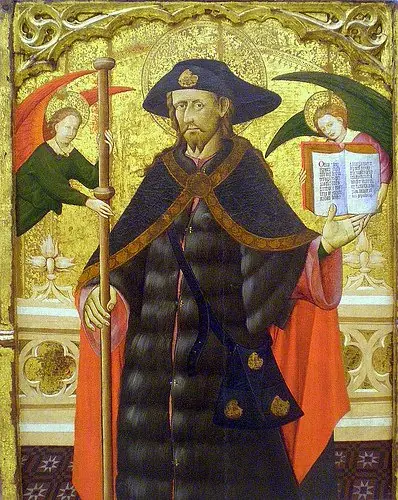 Saint James the Greater
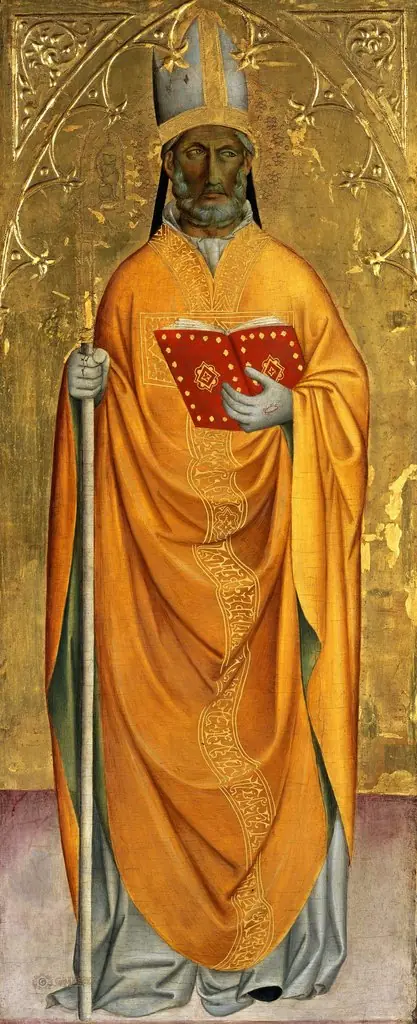 Holy Bishop
 Saint Michael