Artwork
The End of the Rain
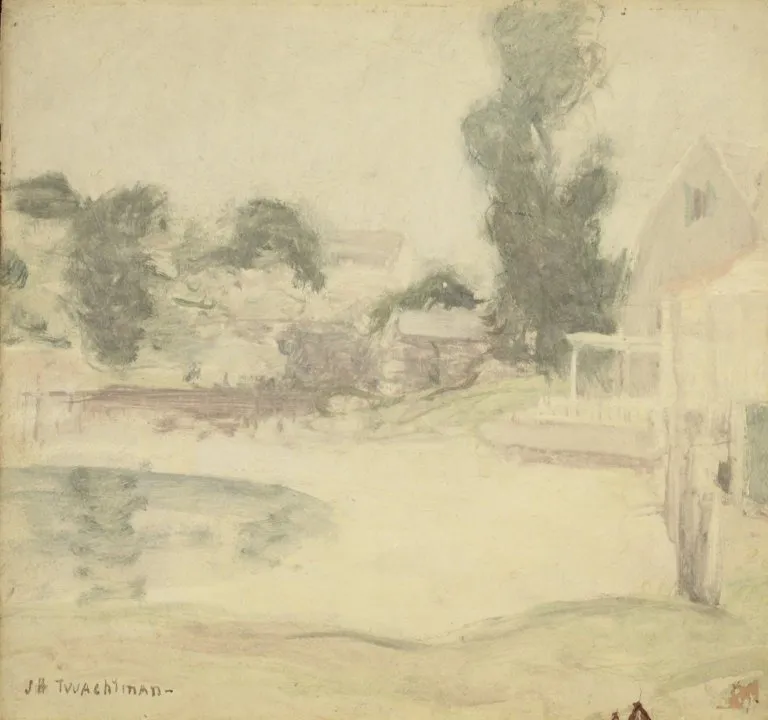
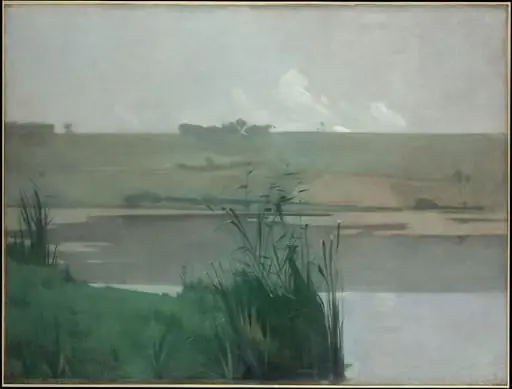
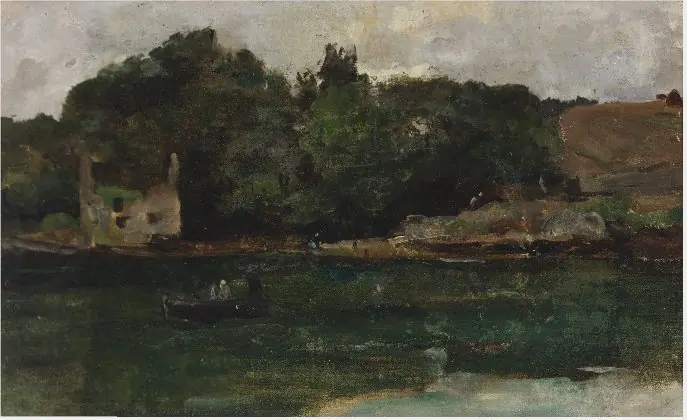
The End of the Rain is an oil painting by the American Impressionist artist John Henry Twachtman. It dates from 1900 and is held in the collection of the Brooklyn Museum.
About this work
Overview
It resides in the collection of the Brooklyn Museum and exemplifies his late-period approach to landscape.
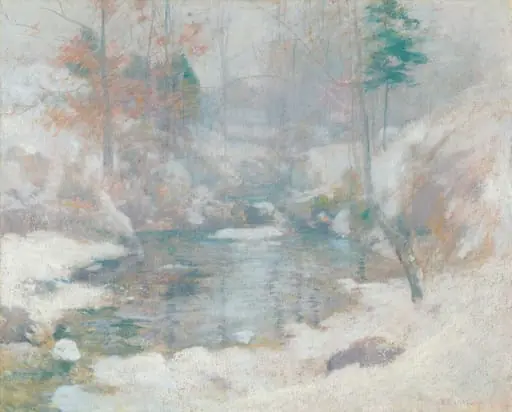
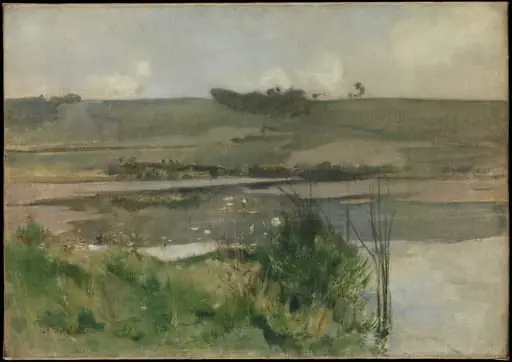
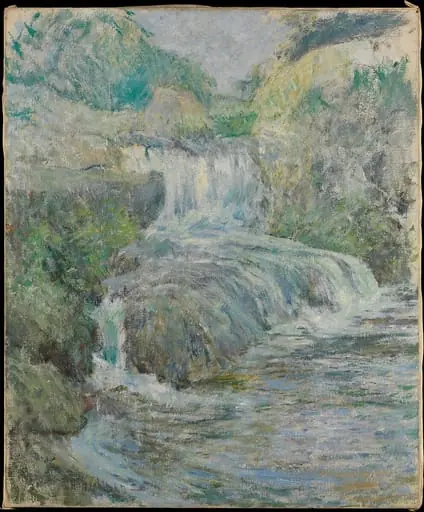
Painted in 1900, The End of the Rain is an oil on canvas work by American artist John Henry Twachtman. It resides in the collection of the Brooklyn Museum and exemplifies his late-period approach to landscape. The composition captures a quiet moment after rainfall, emphasizing atmosphere over narrative. Twachtman’s restrained palette and delicate brushwork convey a sense of stillness and temporal transition.
Subject & Meaning
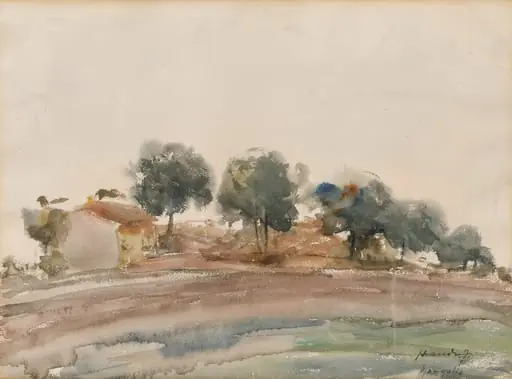
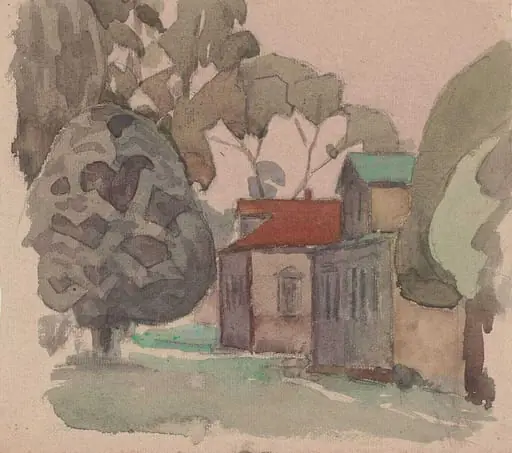
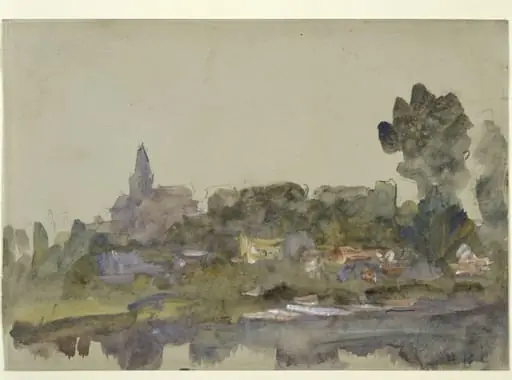
The scene shows a modest dwelling nestled among trees, partially obscured by lingering mist. No figures are present, and the absence of dramatic action invites contemplation. The painting suggests the quiet renewal following rain, not through vivid detail but through the soft diffusion of light and the hazy merging of forms. It reflects a meditative engagement with nature’s subtle rhythms.
Technique & Style
Twachtman employed thin, layered washes of oil to achieve a luminous, atmospheric effect. Colors are muted, grays, soft greens, and pale browns, creating harmony without contrast. Brushstrokes are loose yet deliberate, blurring boundaries between land, sky, and structure. This technique aligns with Tonalist principles, prioritizing mood over topographical accuracy.
History & Provenance
The painting was completed near the end of Twachtman’s life, during a period when he focused intensely on his Connecticut countryside surroundings. It entered the Brooklyn Museum’s collection shortly after his death in 1902, likely through acquisition from his estate or close associates. Its preservation reflects early institutional recognition of his contribution to American landscape painting.
Context
Created during the height of American Tonalism, the work responds to broader artistic trends favoring emotional resonance over realism. Twachtman, influenced by European Impressionism and Japanese prints, adapted these ideas into a uniquely American idiom. His focus on transient weather conditions and quiet rural scenes distinguished him from contemporaries who emphasized grandeur or detail.
Legacy
The End of the Rain remains a key example of Twachtman’s mature style and the Tonalist movement’s quiet aesthetic. While not widely exhibited, it continues to inform scholarly discussions on late 19th-century American landscape painting. Its understated power underscores his role in shifting focus from spectacle to introspection in American art.
Artist & collection
Artist
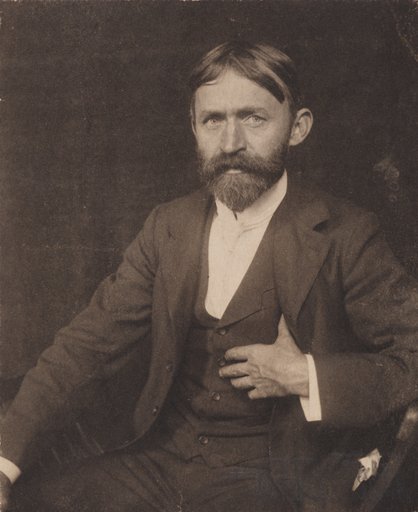
John Henry Twachtman was an American painter best known for his impressionist landscapes, though his painting style varied widely through his career.