Artwork
De Witt Clinton
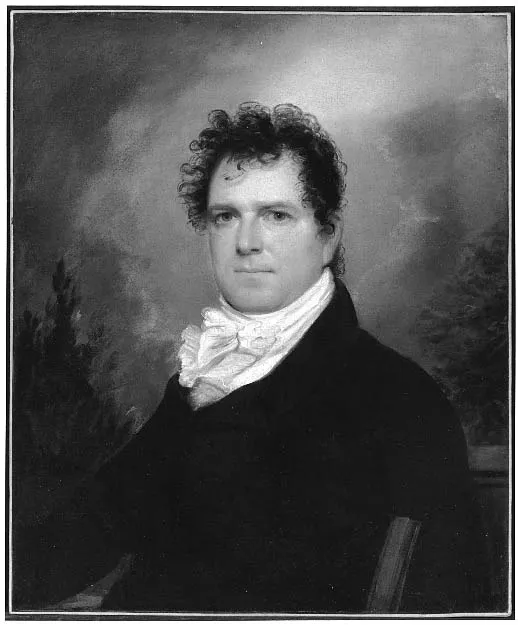
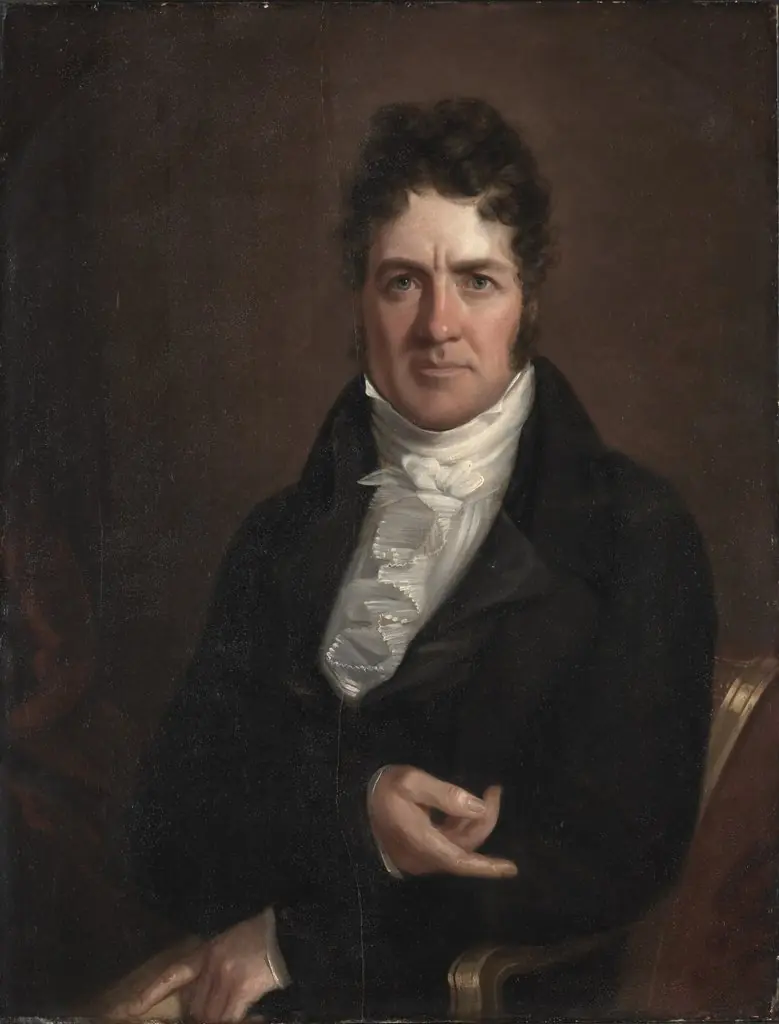
De Witt Clinton is an oil painting by John Wesley Jarvis. It dates from 1810 and is held in the collection of the Museum of Fine Arts Boston.
About this work
Overview
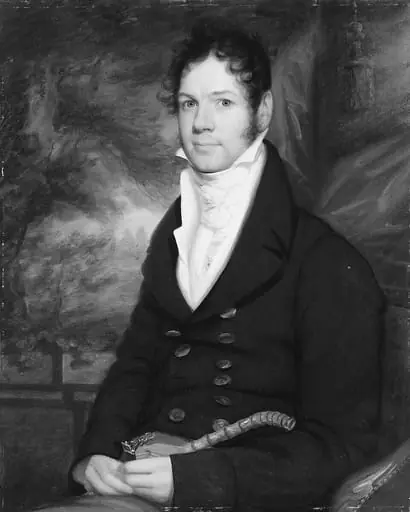
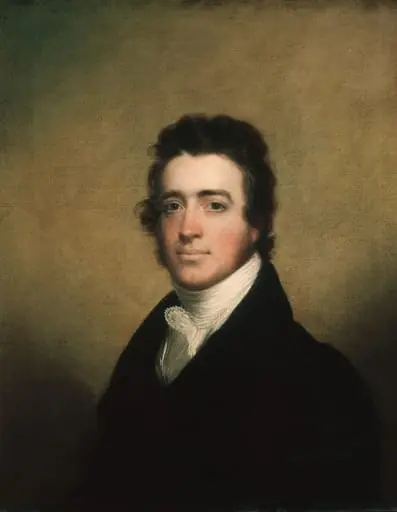
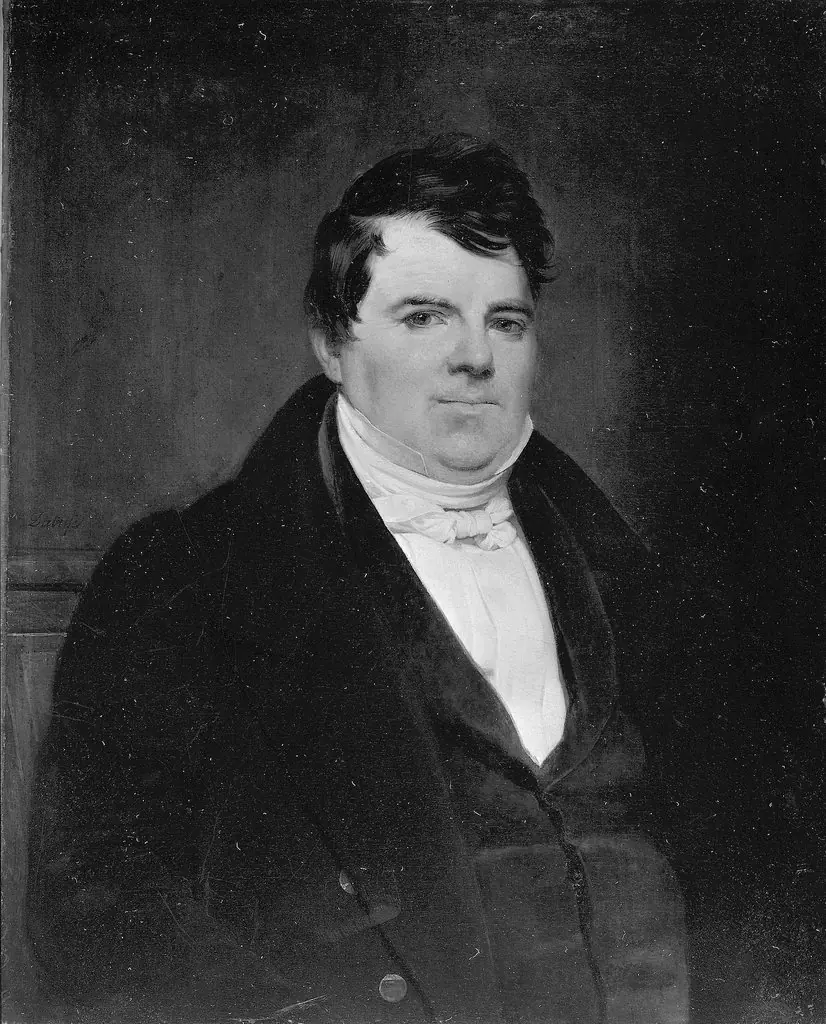
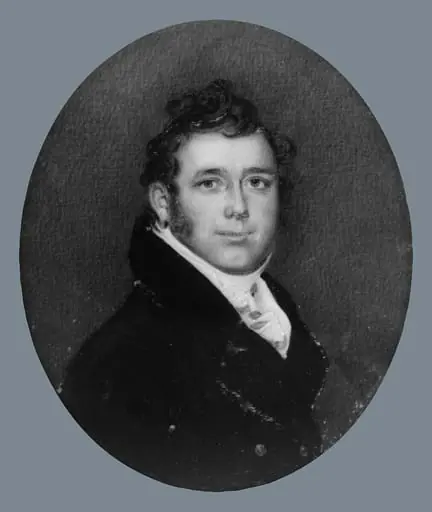
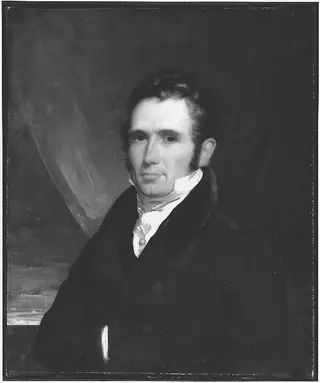
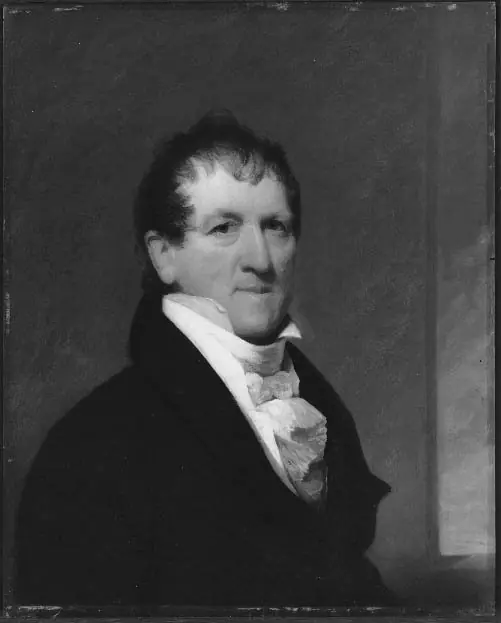
The sitter is dressed in a black coat with a high, white ruffled cravat, reflecting the formal fashion of the era.
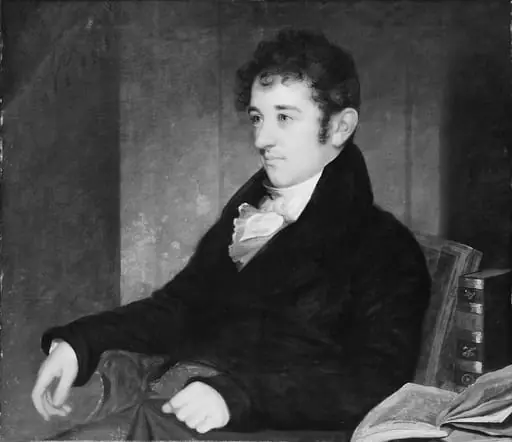
Painted in 1810 by John Wesley Jarvis, this oil portrait depicts DeWitt Clinton, the prominent American politician who later served as Governor of New York and championed the Erie Canal. Jarvis, a leading portraitist of the early republic, presents Clinton in a three-quarter view against a landscape background featuring a cloudy sky and trees flanking the figure. The sitter is dressed in a black coat with a high, white ruffled cravat, reflecting the formal fashion of the era.
His dark, curly hair frames a face characterized by a direct, steady gaze. The composition balances the solid, dark mass of the figure against the softer, atmospheric tones of the natural setting, a technique Jarvis employed to convey both the dignity of the subject and a sense of the American landscape. Created during the height of Jarvis's career in New York, this work exemplifies the transition from the stiff formalism of the late 18th century to a more dynamic, Romantic sensibility in American portraiture.
It stands as a significant document of the political elite of the early 19th century and highlights Jarvis's skill in capturing the character of influential figures.
Subject & Meaning
The sitter, De Witt Clinton, appears with dark, curly hair, a black coat and a white, ruffled collar, symbols of his public office and early‑19th‑century fashion. The cloudy backdrop and flanking trees lend a modest, naturalistic setting, underscoring his role as a prominent political figure within the young republic.
Technique & Style
Jarvis employed oil pigments to achieve a high level of detail, particularly in the texture of the fabric and the subtle modeling of the face. The brushwork balances smooth tonal transitions with fine, precise strokes, reflecting the American portrait tradition that favored realism and clear representation over idealization.
History & Provenance
Painted shortly after Clinton’s rise to national prominence, the portrait entered the Museum of Fine Arts, Boston, where it remains on view. Its acquisition history traces back to early 20th‑century American collectors who sought to preserve depictions of key political leaders from the nation’s formative years.

Artist & collection

Artist
John Wesley Jarvis (1781–1839) was an American artist, born in South Shields.