Artwork
Lady Sarah Bunbury Sacrificing to the Graces
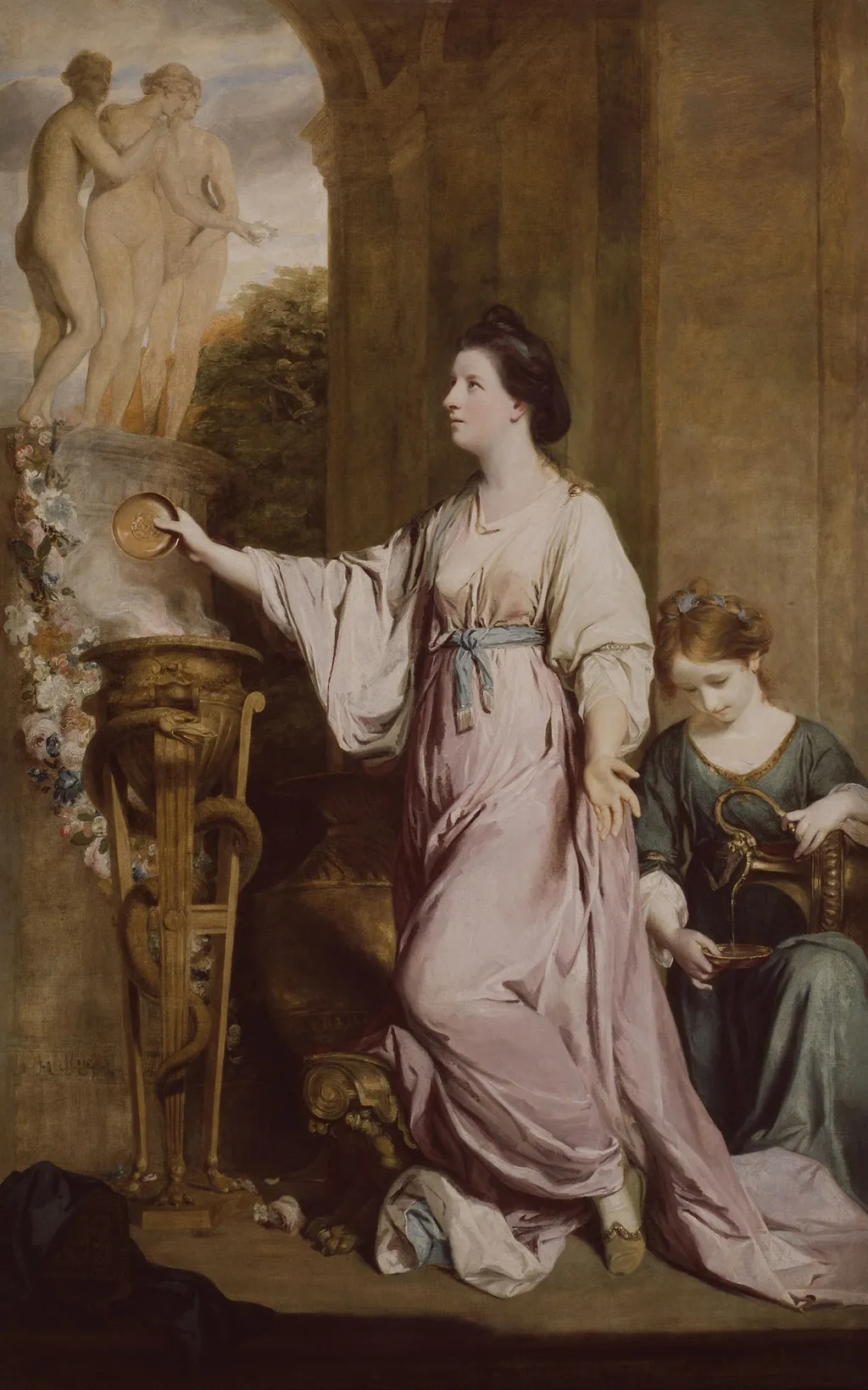
Lady Sarah Bunbury Sacrificing to the Graces is an oil painting by the Rococo painting artist Joshua Reynolds. It dates from 1763 and is held in the collection of the Art Institute of Chicago.
About this work
Overview
), the work is among the most intellectually ambitious portraits of Reynolds's career, fusing contemporary portraiture with the conventions of history painting.
Lady Sarah Bunbury Sacrificing to the Graces is an oil-on-canvas painting by Sir Joshua Reynolds, executed between 1763 and 1765. Measuring 242.6 by 151.5 cm (95 1/2 by 59 3/4 in.), the work is among the most intellectually ambitious portraits of Reynolds's career, fusing contemporary portraiture with the conventions of history painting. The sitter, Lady Sarah Lennox (1745-1826), was a prominent figure at the court of George III, romantically connected to the young king before his marriage, and subsequently known for her troubled marriage to Sir Charles Bunbury, which ended by Act of Parliament in 1766. The painting is now held by the Art Institute of Chicago, where it entered in 1922 as a bequest from Mrs. W. W. Kimball, having been acquired by her in 1915 from the Henry Reinhardt Gallery.
Subject & Meaning
The painting depicts Lady Sarah Bunbury in the act of pouring a libation to the Three Graces, the minor goddesses of classical antiquity known as the Charities, Aglaea, Euphrosyne, and Thalia, who personified splendor, good cheer, and festivity. Reynolds portrays her in classically inspired drapery rather than contemporary dress, standing beneath a stone archway with her right arm extended toward a stone pedestal draped with a floral garland and adorned with a coiled snake and decorative golden elements. To her right, a second woman in a blue-green dress assists by pouring liquid from an ornate vessel into a shallow bowl. Behind the standing figure, an arched opening reveals a landscape, and within that opening stands a sculptural group of two nude classical female figures embracing on a pedestal, representing the Graces themselves. The iconography carries multiple layers of meaning: the Graces were attendants to Venus, making the allegory particularly appropriate for a marriage portrait commissioned by Lady Sarah's husband; the sacrifice evokes fertility and the ideals of feminine virtue; and the classical setting elevates a contemporary aristocrat to the realm of mythological narrative. The snake, libation, and votive elements communicate learning and classical allusion, functioning as attributes that transform the sitter into a participant in ancient ritual rather than merely a passive subject of portraiture.
Technique & Style
Reynolds executed the work in oil on canvas, employing the smooth, blended brushwork characteristic of his grand manner. The palette consists of soft pinks, warm browns, muted blues, and creamy whites, with light falling evenly across the figures and subtle shadows modeling the drapery and architecture. The handling of paint is particularly refined in the skin and fabrics, producing a polished finish that contrasts with somewhat looser brushwork in the background landscape. The composition is carefully arranged to create a sense of depth through the layered spatial elements: the heavy brown drapery framing the scene, the arched architectural opening, and the Arcadian landscape beyond. The classical drapery that replaces contemporary costume demonstrates Reynolds's academic ambition to elevate portraiture through reference to antique models, a principle he articulated in his Discourses to the Royal Academy. The painting's large scale and full-length format further assert its aspirations toward the status of history painting, the genre that Reynolds consistently argued should be the highest aim of the artist.
History & Provenance
The portrait was commissioned by Sir Thomas Charles Bunbury, sixth Baronet, husband of the sitter, apparently for 250 guineas. The commission dates to the period of the couple's marriage, which lasted from 1762 until its dissolution by Act of Parliament in 1766. The painting remained in the Bunbury family by descent to Sir Henry Charles John Bunbury, tenth Baronet, at Barton Hall and Mildenhall, Suffolk, until at least 1905. By 1908 it had entered the collection of Charles J. Wert[sic] Wertheimer in London, and was sold at Christie's, London, on May 10, 1912, as lot 63, to Sulley. The Henry Reinhardt Gallery, operating in New York and Chicago, held the painting by 1915, and sold it that year to Mrs. W. W. Kimball of Chicago. Mrs. Kimball lent the work to the Art Institute of Chicago from 1920, and bequeathed it to the institution upon her death in 1922. It is now held under accession number 1922.4468 in the museum's Department of Painting and Sculpture of Europe, and is currently on view in Gallery 218.
Context
Reynolds's choice to depict Lady Sarah Bunbury in a scene of classical religious ritual reflects his broader campaign, as first president of the Royal Academy, to ennoble portraiture by infusing it with the grandeur of history painting. The work exemplifies what he termed the 'grand manner,' in which contemporary sitters are given classical attributes and poses derived from the art of antiquity and the Renaissance. The painting's creation coincided with a period of renewed interest in Graeco-Roman polytheism in Britain, part of a wider cultural movement of Neoclassicism. Lady Sarah's particular biography, her connection to George III and her subsequent notoriety, made her a figure of public sympathy and social interest, adding a layer of contemporary resonance to the classical allegory. The Art Institute of Chicago acquired the painting as a centerpiece of its British eighteenth-century collection, recognizing it as Reynolds's most successful fusion of portrait and history-painting ambitions. The work has been discussed in scholarly literature, including Malcolm Cormack's study of Reynolds's ledgers published in the Walpole Society in 1968-70.
Legacy
Lady Sarah Bunbury Sacrificing to the Graces has maintained its reputation as a defining example of Reynolds's ability to merge portraiture with allegorical narrative. The painting demonstrates the 'painting-within-a-painting' strategy that became influential in British art, where real named individuals perform classical roles while remaining recognizably themselves. This approach set a standard for subsequent generations of portraitists seeking to elevate their genre. The work's place in the Art Institute of Chicago's collection has ensured its visibility to American and international audiences, and it continues to serve as a key document for understanding the intersection of social history, gender, and classical learning in eighteenth-century British visual culture. The painting's subject, Lady Sarah Bunbury, remained a figure of fascination in British society, her early connection to the monarch and her marital history contributing to the enduring interest in her portrait. The work stands as a testament, in the scholarly sense, to Reynolds's theoretical ambitions for British art and his practical achievement in realizing them within the commercial world of aristocratic portraiture.
Own this work as a print
Artist & collection
Artist
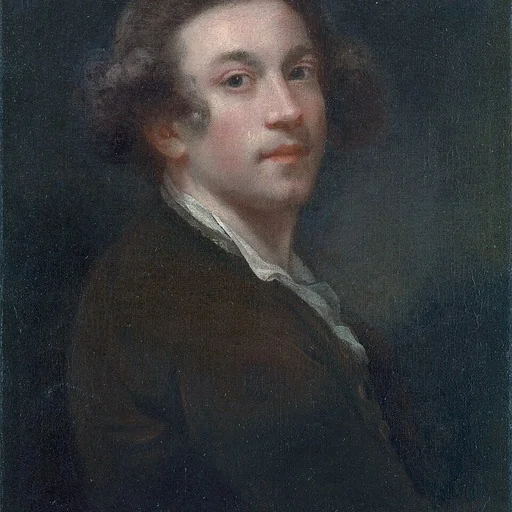
Sir Joshua Reynolds (16 July 1723 – 23 February 1792) was an English painter who specialised in portraits.

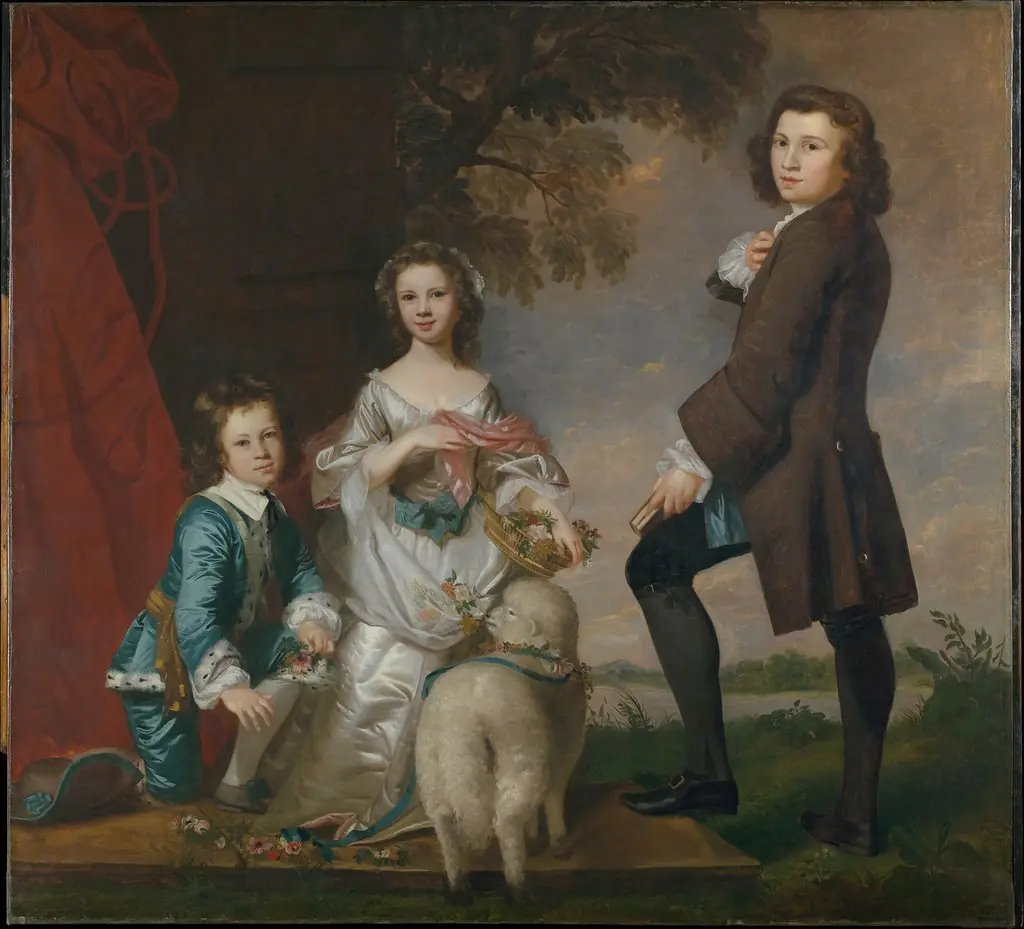
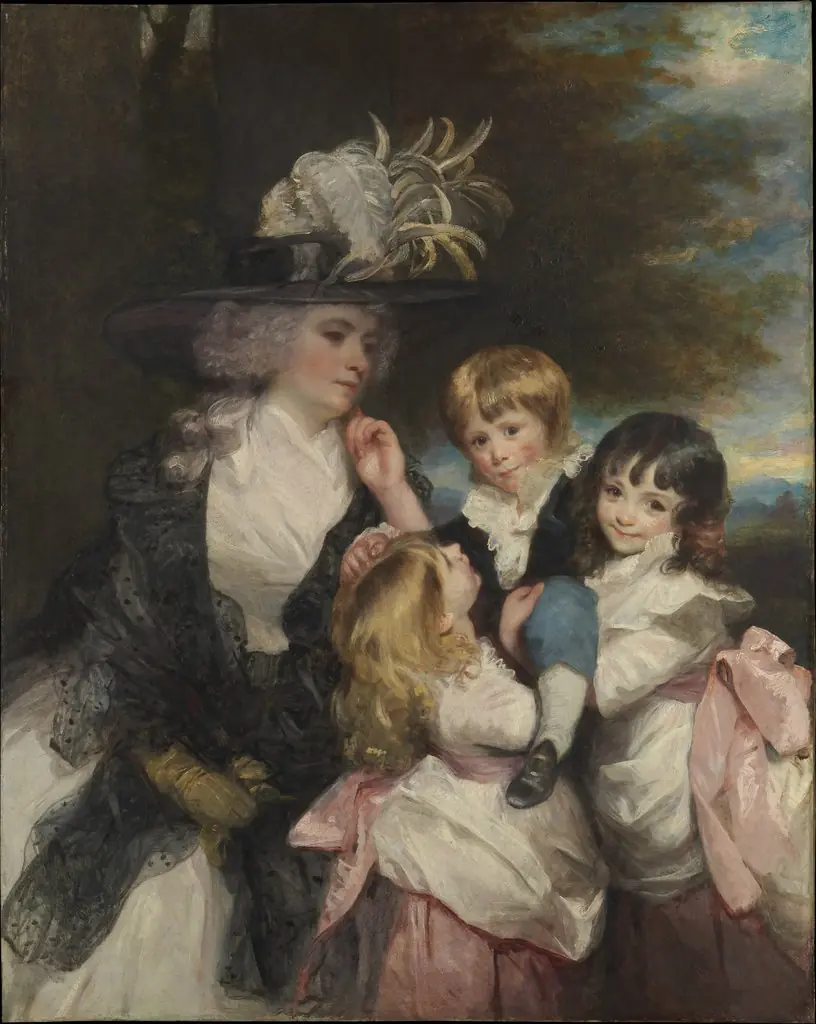
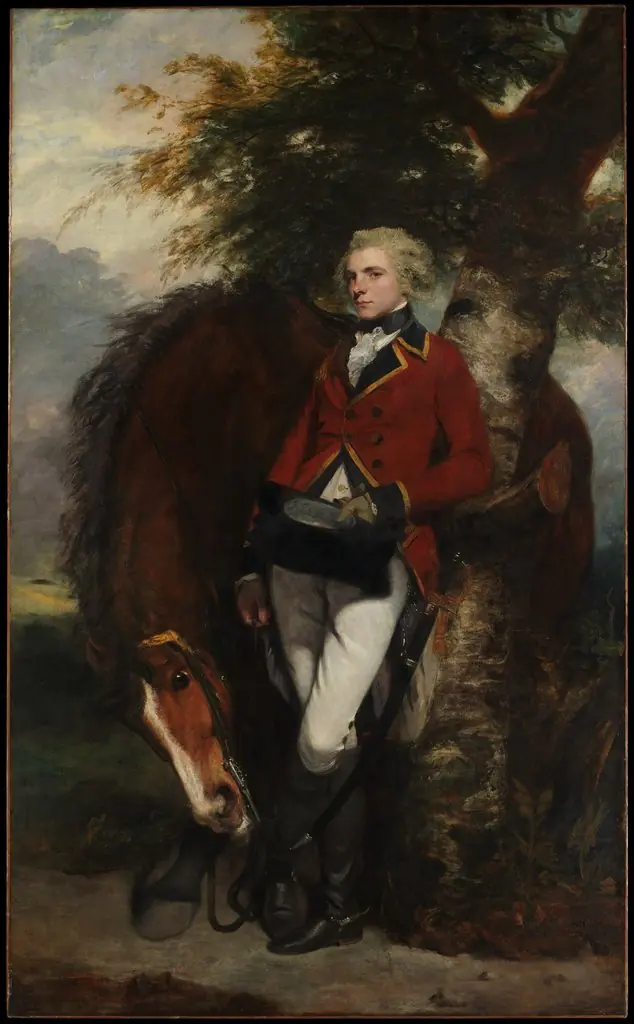
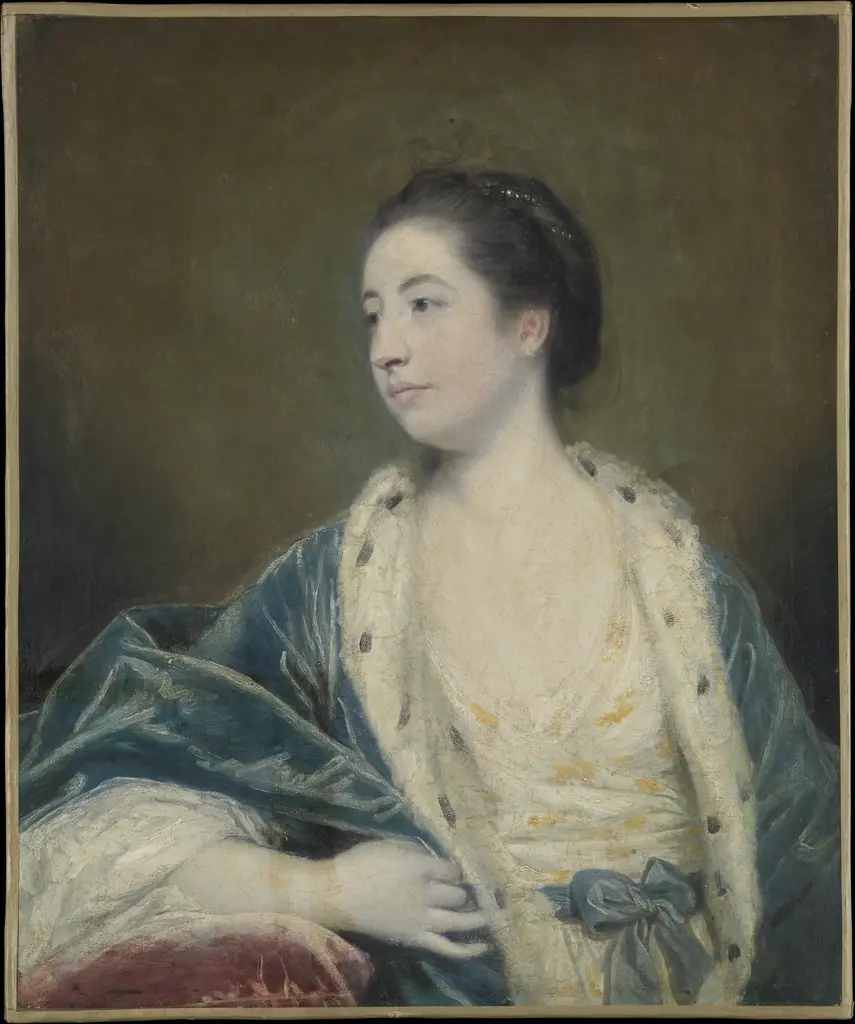
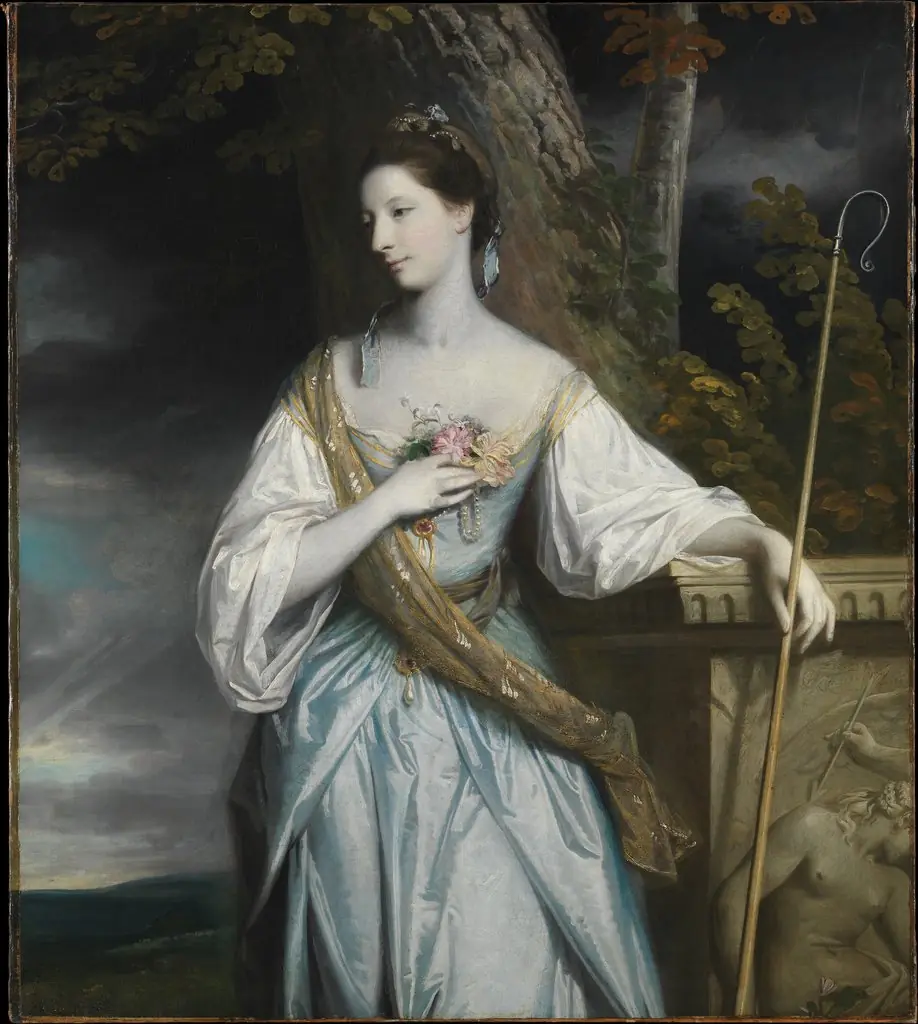 Anne Dashwood (1743–1830), Later Countess of Galloway
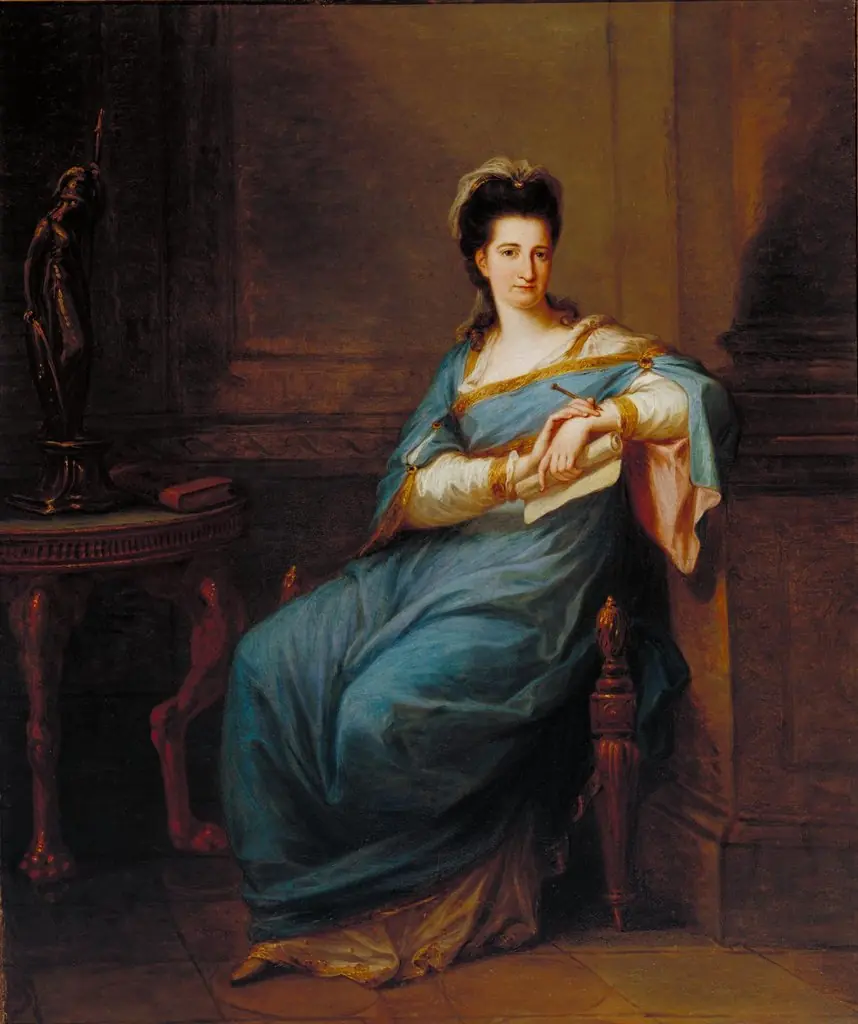 Portrait of a Lady
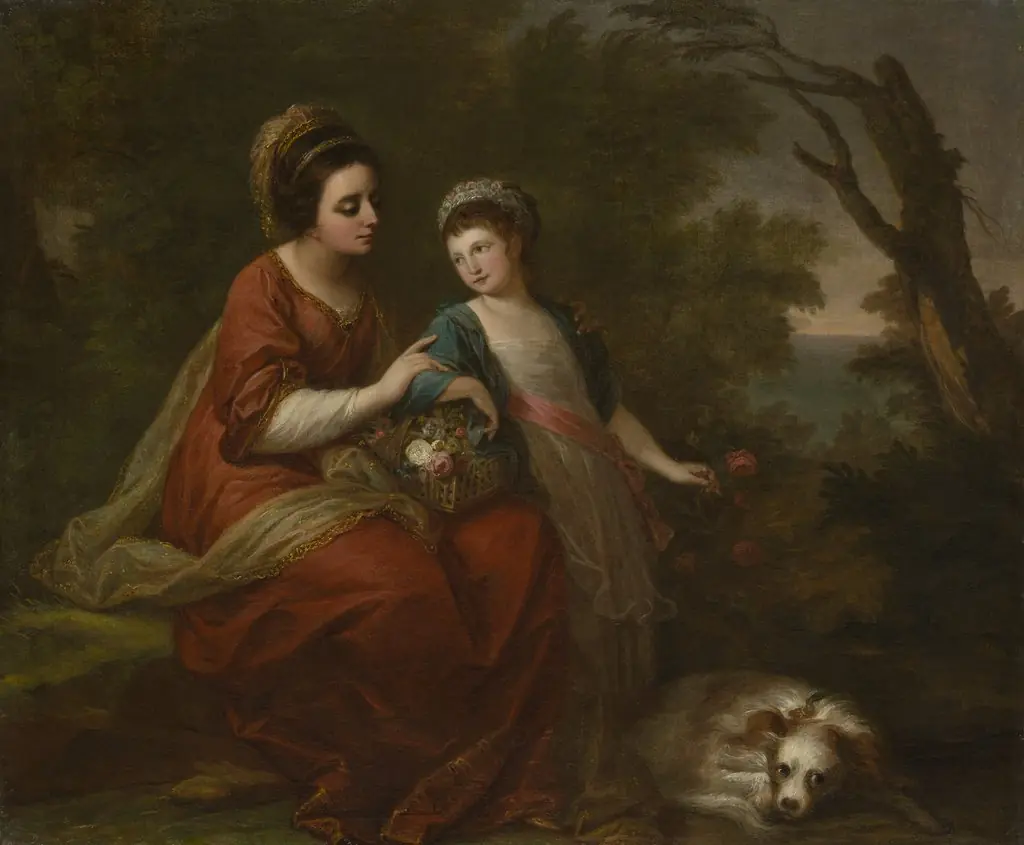 Mrs. Hugh Morgan and Her Daughter
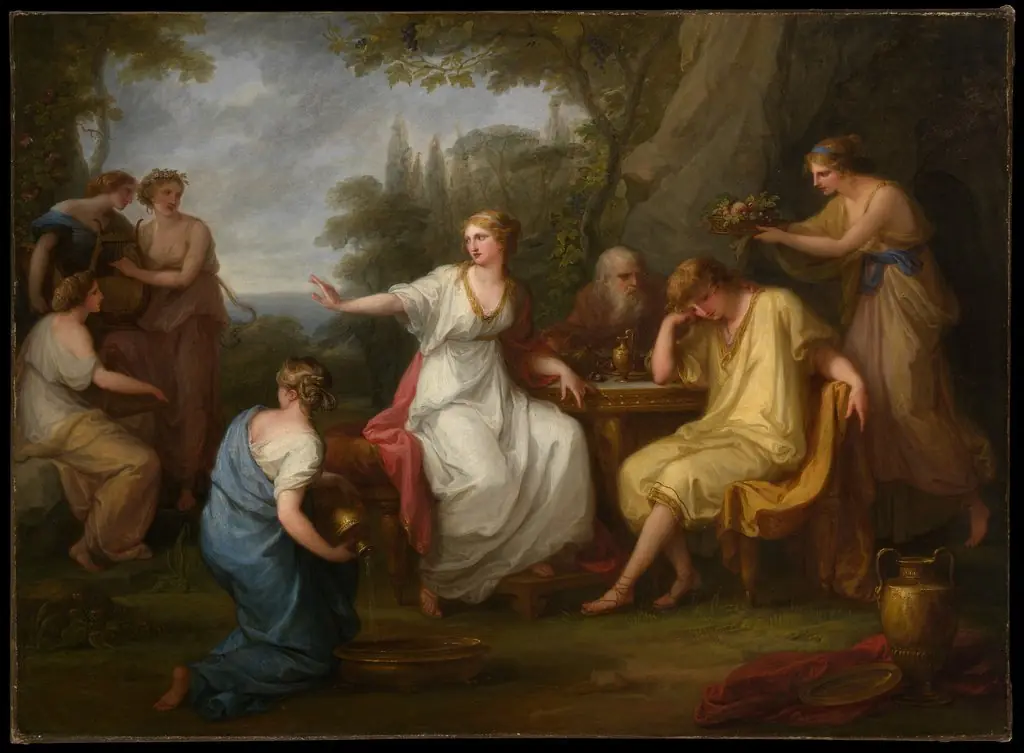 The Sorrow of Telemachus
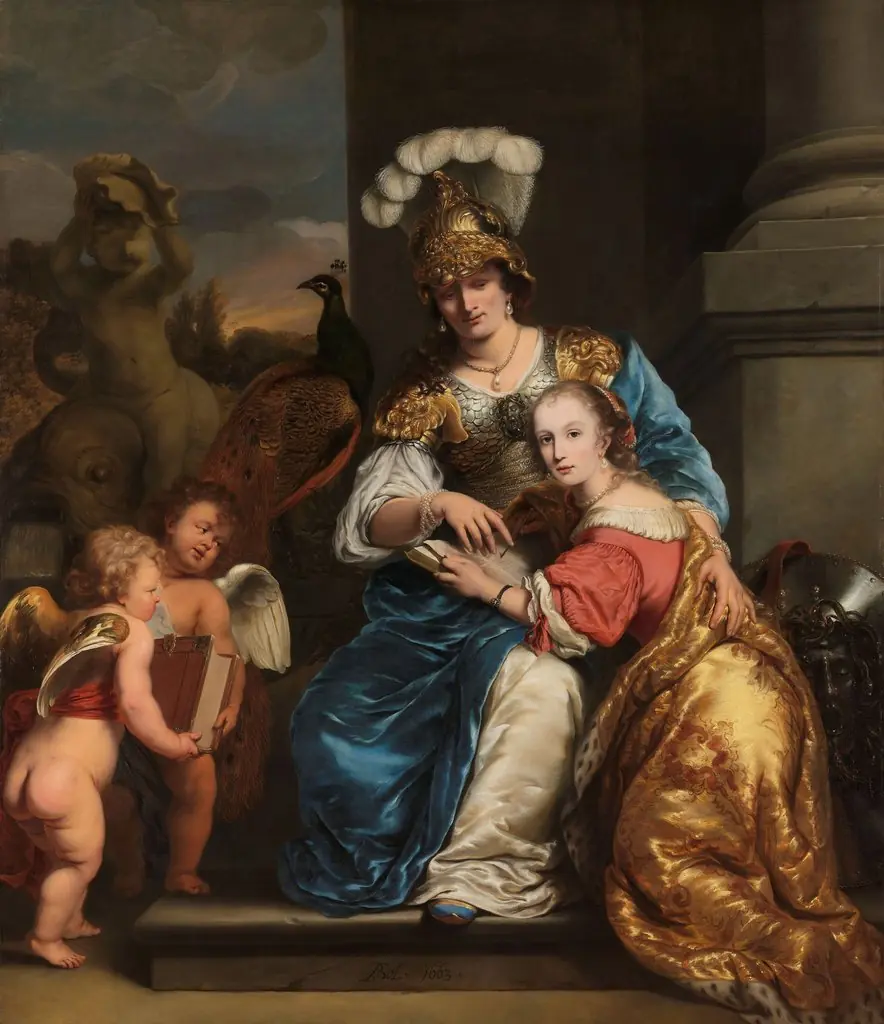 Margarita Trip as Minerva, Instructing her Sister Anna Maria Trip
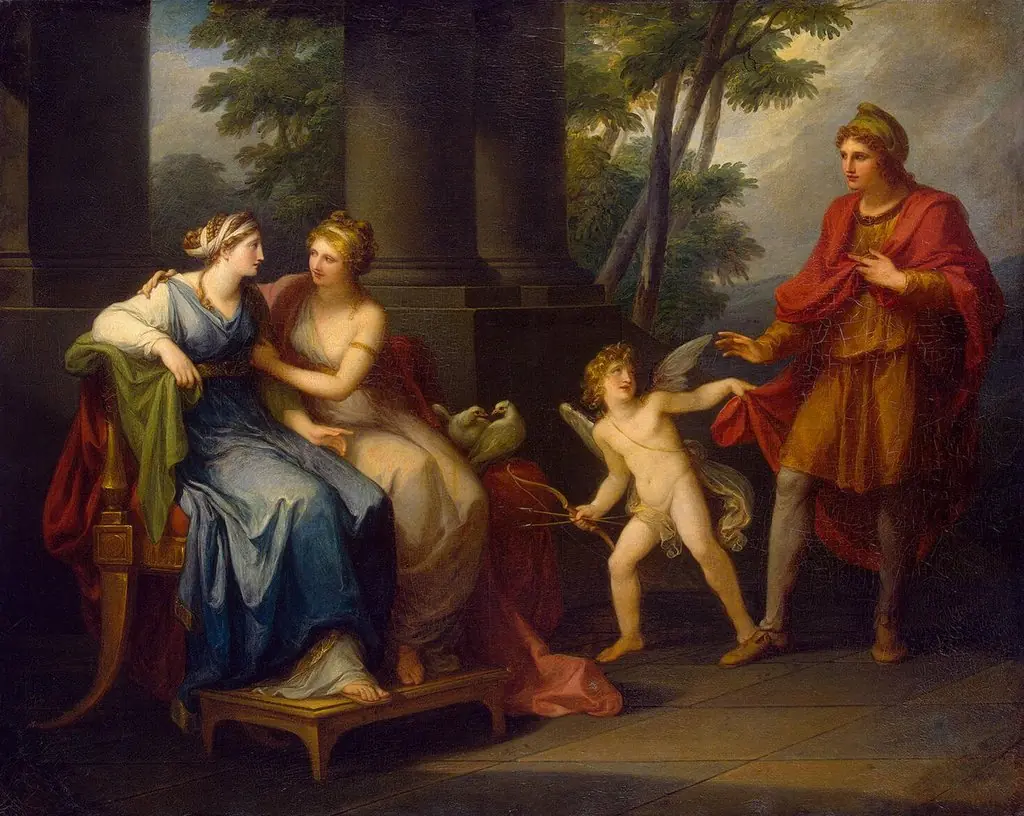 Venus Induces Helen to Fall in Love with Paris
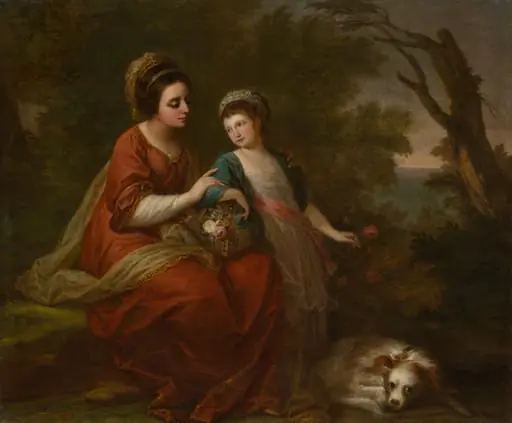 Mrs. Hugh Morgan and Her Daughter
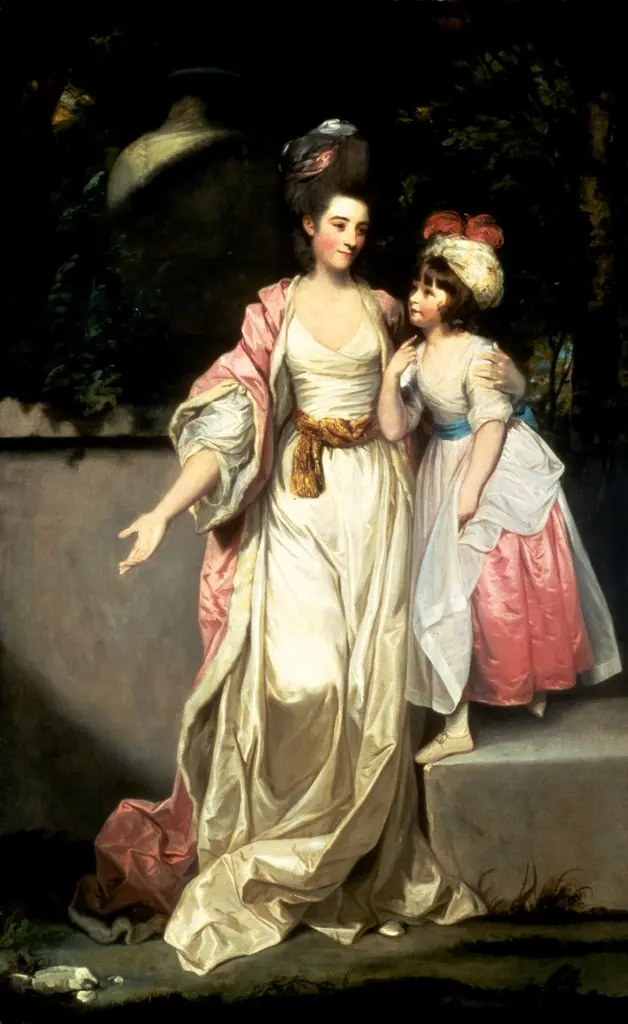 Portrait of Mrs. Jelf Powis and her Daughter
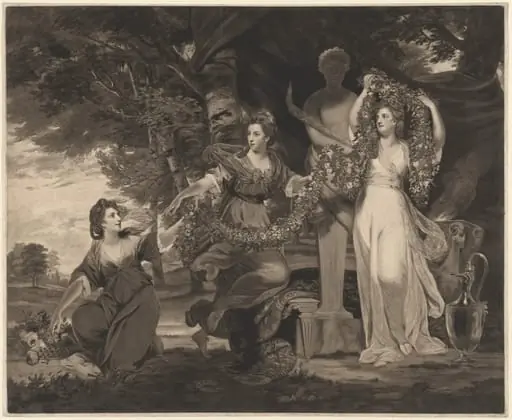 A Sacrifice to Hymen (Three Daughters of Sir William Montgomery)
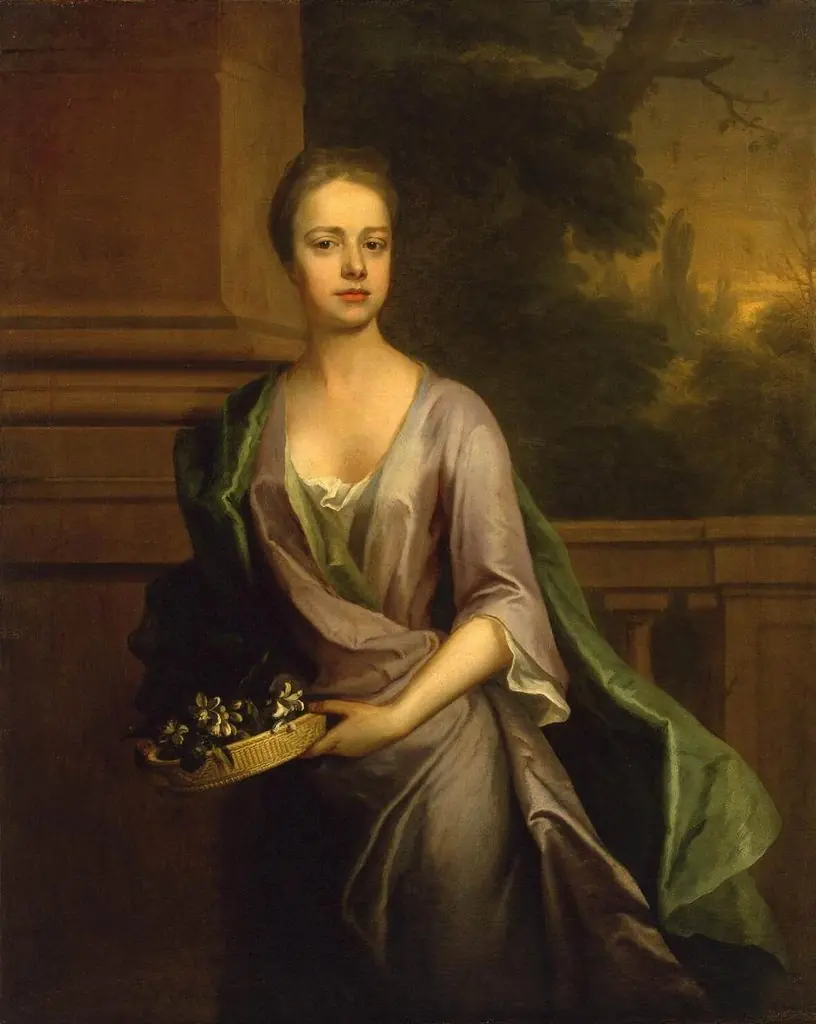 Portrait of a Woman
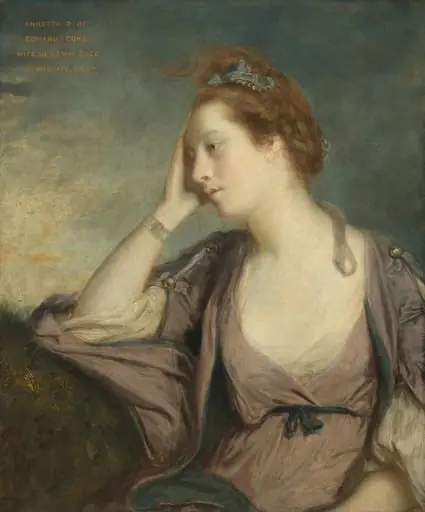 Annetta Coke
- Lady Sarah Bunbury Sacrificing to the Graces