Artwork
Equestrian Portrait of Prince Balthasar Charles
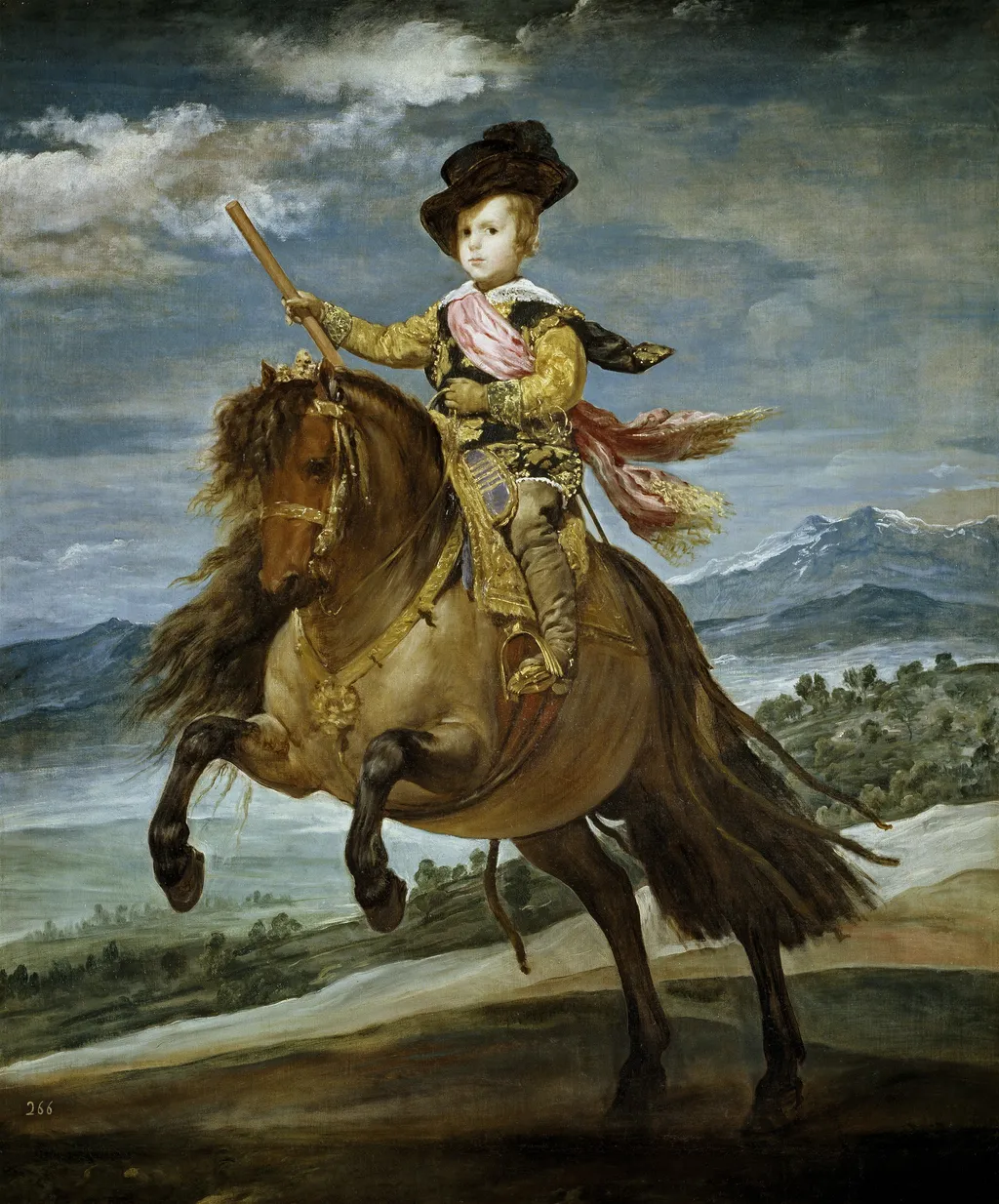
Equestrian Portrait of Prince Balthasar Charles is an oil painting by the Early Baroque Italian artist Diego Velázquez. It dates from 1634 and is held in the collection of the Museo del Prado.
About this work
Subject & Meaning
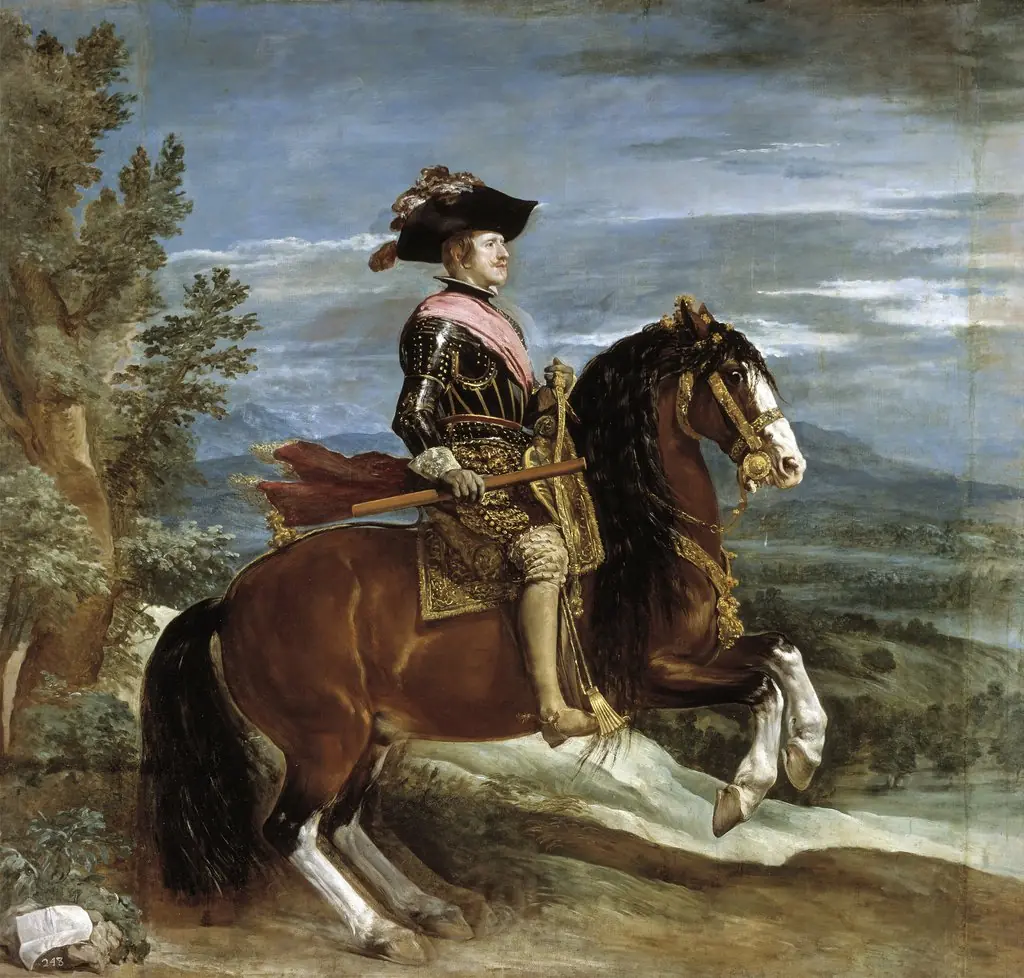
The painting depicts Balthasar Charles, Prince of Asturias, as a young boy of about five or six years old, mounted on a chestnut pony in a levade pose.
The painting depicts Balthasar Charles, Prince of Asturias, as a young boy of about five or six years old, mounted on a chestnut pony in a levade pose. His upright posture and calm demeanor project nobility and authority, presenting the child as a confident horseman and future leader despite his age. In his right hand he holds a field marshal's baton, a symbol of military command granted to him by virtue of his royal rank, reinforced by the sword and military sash across his chest.
He wears a gold-woven doublet, a buff coat, dark green breeches trimmed with gold embroidery, suede boots, a lace ruff, and a black hat with a feather. The pale tone of his face and blonde hair contrast sharply with the matte black of his hat and attire, while abundant golden highlights appear in his hair, the horse's tack, and the sash.
The background depicts the Sierra de Guadarrama, with the snow-capped peak of La Maliciosa and Cabeza de Hierro visible to the right and the Sierra de Hoyo to the left, situating the young prince within the landscape of the Spanish monarchy and reinforcing the dynastic imagery of the equestrian series.
Technique & Style
The work is an oil painting on canvas (approximately 211.5 cm high × 177 cm wide). Velázquez built the image with very little pigment, laying thin, almost transparent layers directly over a white ground so that the preparation remains visible, especially in the distant mountains. Flesh tones are rendered with light, delicate brushstrokes, while glazes deepen the space and golden highlights enliven the prince’s hair, clothing and the horse’s tack.
The sky is described as sweeping, liquid strokes of turquoise and white that convey a cold, crystalline air. To compensate for its high placement, the horse’s barrel is deliberately enlarged, appearing correct when viewed from below, and the figure is painted before the landscape to ensure a crisp silhouette.
History & Provenance
Diego Velazquez executed the Equestrian Portrait of Prince Balthasar Charles between 1634 and 1635 as part of a royal commission for the Hall of Realms at the Buen Retiro Palace in Madrid. The work was specifically designed to fill the space above a doorway, situated between larger equestrian portraits of the prince's parents, Philip IV and Elisabeth of France. To accommodate this elevated placement, Velazquez distorted the horse's proportions, particularly its barrel, ensuring correct perspective when viewed from below.
Radiographic studies indicate that certain elements, such as the prince's hat, were added after the initial composition, likely at the request of the Royal Household. Of the five equestrian portraits created for the series, this painting and the portrait of Philip IV are considered entirely autograph works by Velazquez. The canvas is held in the Museo del Prado, Madrid (accession number P00431).
Context
The Equestrian Portrait of Prince Balthasar Charles occupies a pivotal place in Velázquez’s oeuvre and in the visual rhetoric of Habsburg Spain. Commissioned for the Hall of Realms in the Buen Retiro Palace, the work was conceived as part of a dynastic ensemble that included equestrian portraits of the prince’s parents, Philip IV and Elisabeth of France, positioning the young heir between regal exemplars of authority and lineage.
Scholars consistently highlight the painting’s chromatic innovation, noting a luminous palette and refined handling that surpasses Velázquez’s earlier efforts. Radiographic studies reveal deliberate adjustments, such as the addition of the black hat, suggesting collaboration with court preferences, while the perspectival distortions in the horse’s form reflect the work’s original placement above a doorway, designed to be viewed from below.
Its reception has emphasized the prince’s poised authority, conveyed through regalia including a marshal’s baton, sword, and sash, set against the crystalline Guadarrama landscape. The portrait exemplifies the Baroque equestrian tradition, integrating portraiture, state symbolism, and landscape into a single composition that would influence later court portraiture in Spain.
Overview
Diego Velázquez completed the Equestrian Portrait of Prince Balthasar Charles between 1634 and 1635. This oil painting depicts Balthasar Charles, then Prince of Asturias, mounted on horseback. It is a significant work by the Spanish master, showcasing his skill in royal portraiture. The artwork is currently housed in the collection of the Prado Museum in Madrid.
Own this work as a print
Artist & collection
Artist
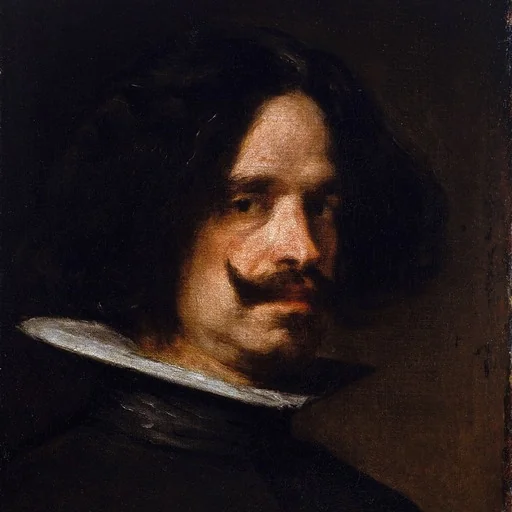
Diego Rodríguez de Silva y Velázquez was a Spanish Baroque painter, the leading artist in the court of King Philip IV of Spain and Portugal, and of the Spanish Golden Age.