Artwork
Equestrian Portrait of the Duke of Lerma
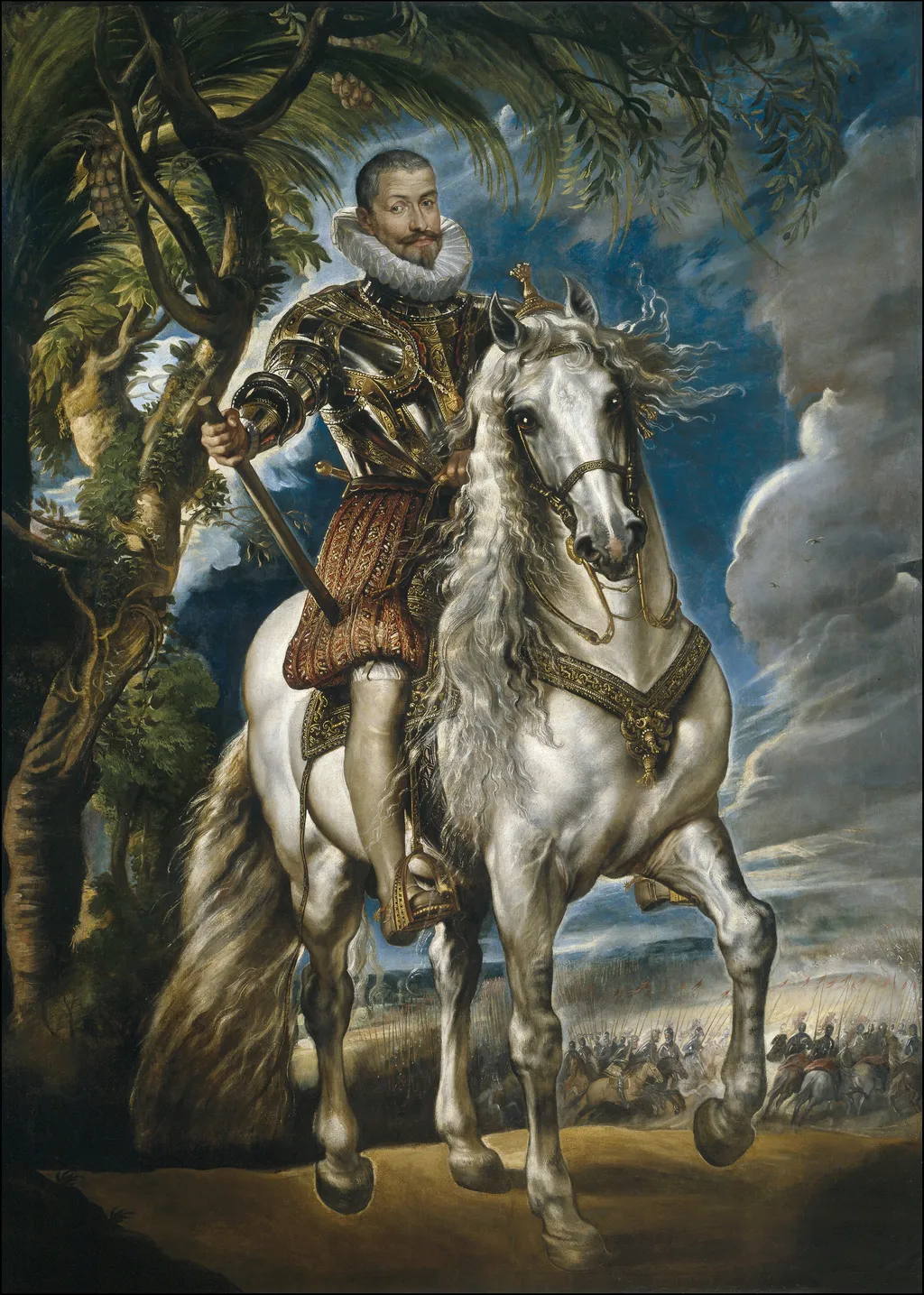
Equestrian Portrait of the Duke of Lerma is an oil painting by the Flemish Baroque painting artist Peter Paul Rubens. It dates from 1603 and is held in the collection of the Museo del Prado.
About this work
Subject & Meaning
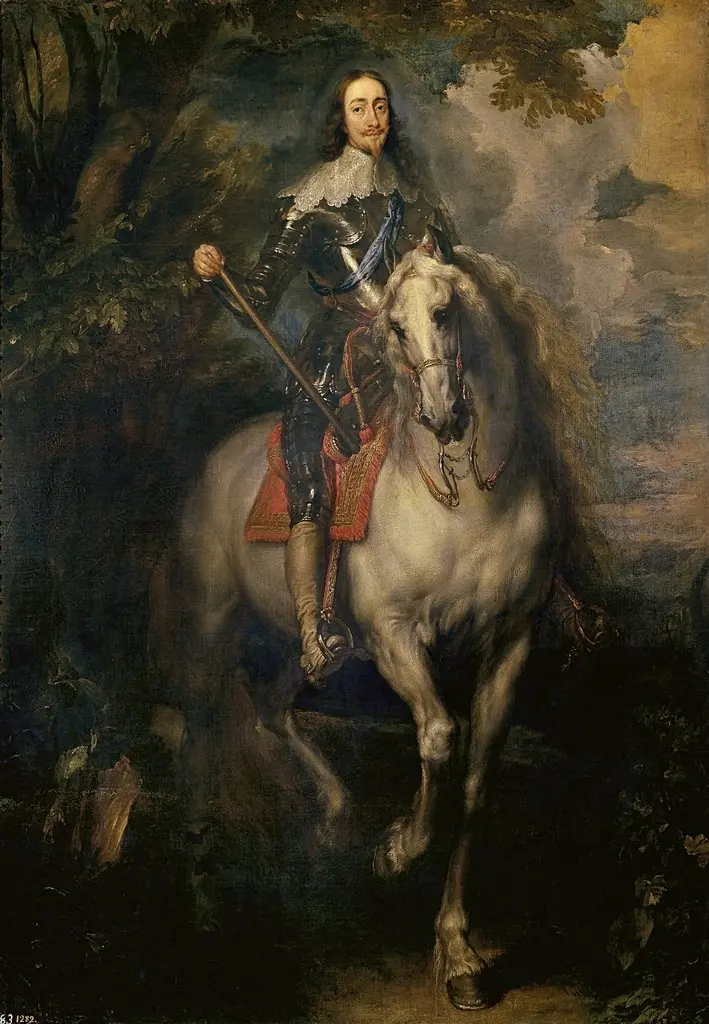
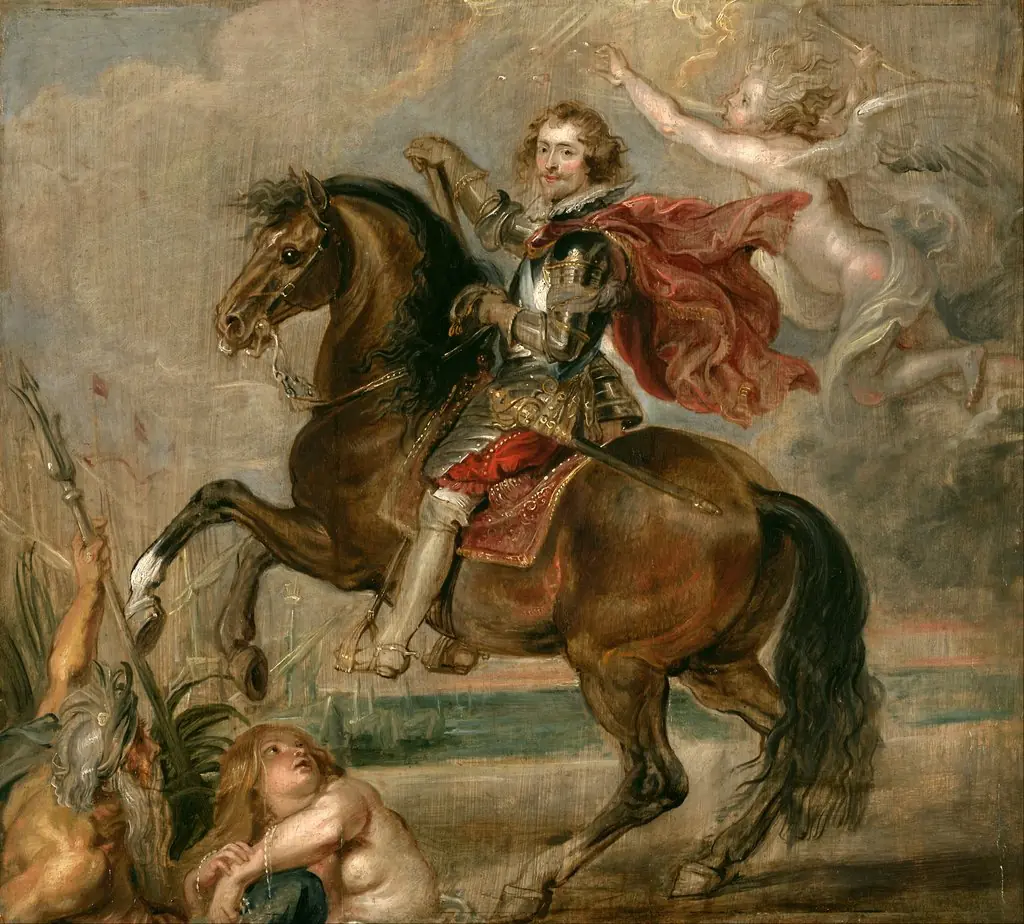
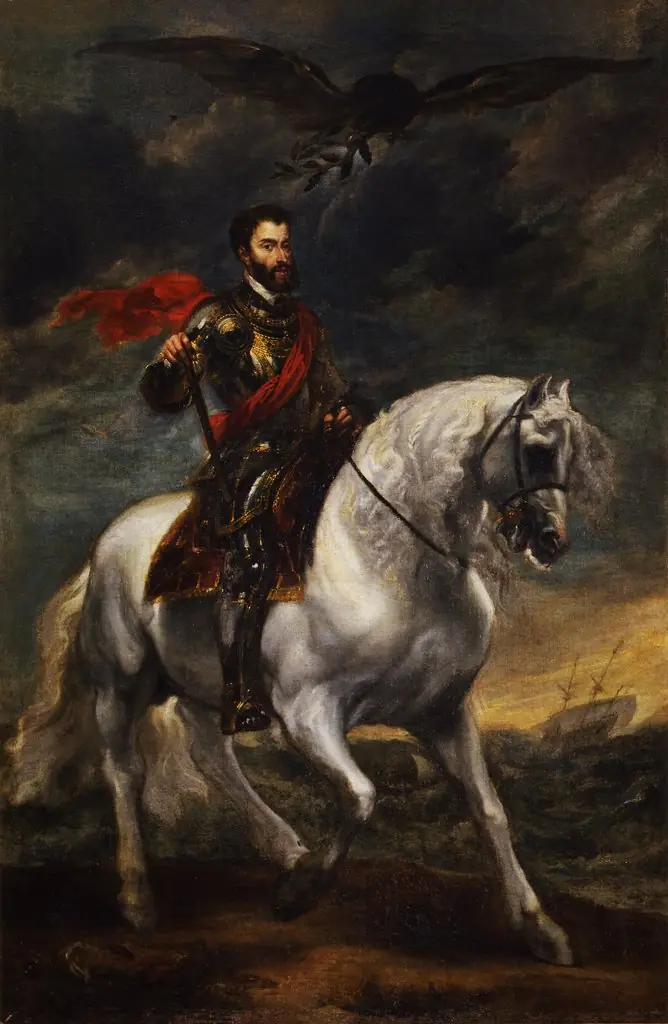
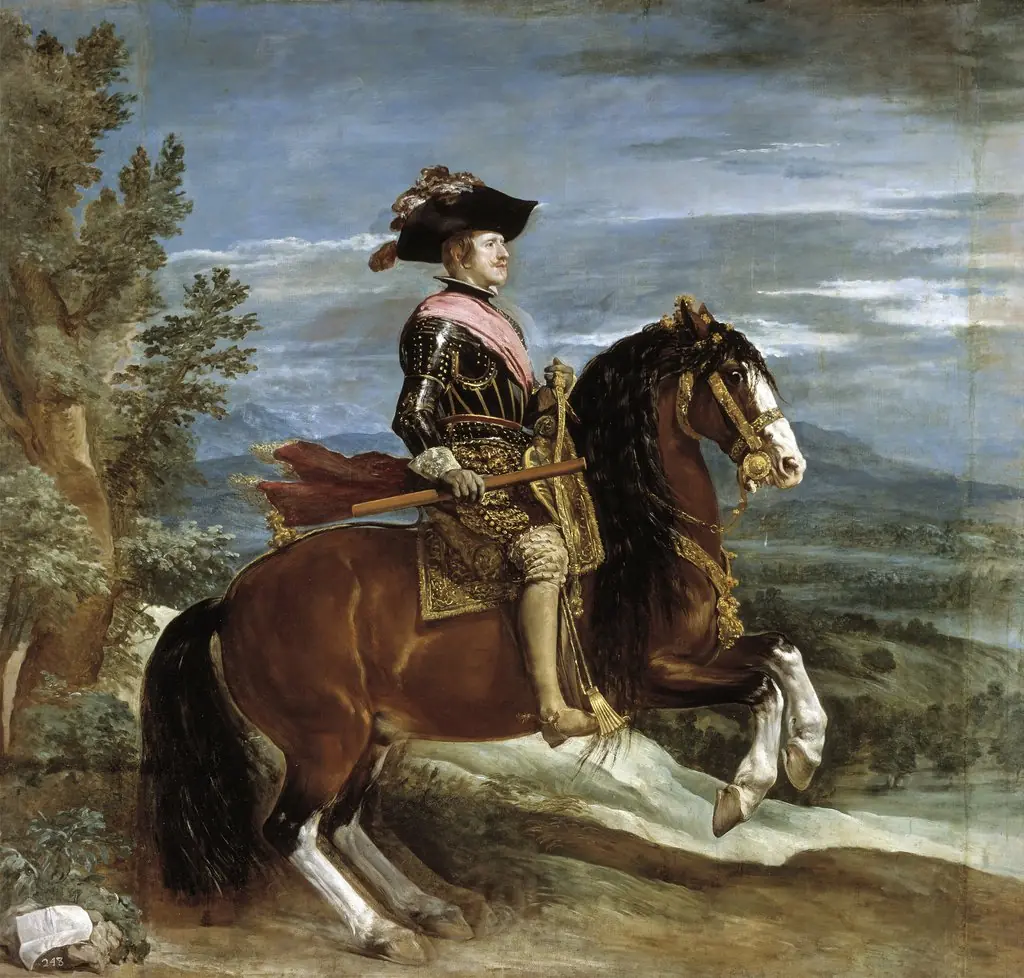
Rubens consciously modelled the composition on Titian's earlier equestrian portrait of Charles V at Mühlberg, adapting that royal precedent to glorify the Duke.
The painting depicts Francisco Gómez de Sandoval y Rojas, 1st Duke of Lerma, the influential favourite and chief minister of King Philip III of Spain, shown on horseback advancing toward the viewer in a foreshortened equestrian pose against a battle background. Equestrian portraits of this scale were reserved for kings and the highest-ranking authorities, so the choice of format itself signals the sitter's elevated political standing at the Spanish court.
Rubens consciously modelled the composition on Titian's earlier equestrian portrait of Charles V at Mühlberg, adapting that royal precedent to glorify the Duke. A palm tree frames the figure, reinforcing the sense of grandeur and dynamism characteristic of the emerging Baroque style. The work established a template for later equestrian portraiture, influencing painters such as Anthony van Dyck and Gaspar de Crayer.
Technique & Style
The portrait was executed in oil on canvas in 1603. Its dimensions measure 290.5 cm by 207.5 cm, and the work is signed by the artist, an unusual act for Rubens. Rubens rendered the duke on a rearing horse with a direct gaze, set against a landscape that includes a palm tree, employing the dynamic movement and dramatic lighting characteristic of Baroque composition.
The painting’s formal balance and the illusion of three‑dimensional space reflect Rubens’s mastery of portraiture, while its influence can be traced in the equestrian portraits of Van Dyck and Crayer. The work remains on display at the Museo del Prado, where it is studied as a seminal example of early‑seventeenth‑century equestrian portraiture.
History & Provenance
Peter Paul Rubens created the Equestrian Portrait of the Duke of Lerma in 1603 during his first stay in Spain. The work was executed while the artist was on a diplomatic mission from Mantua, sent by Vincenzo I Gonzaga to present gifts to King Philip III, during which he also portrayed the King's favorite minister, Francisco Gómez de Sandoval y Rojas. Unusually for his practice, Rubens signed the canvas to ensure his name was recognized by the Spanish court.
Following the Duke's fall from grace, the painting briefly entered the Royal Collection before Philip IV returned it to the Duke's descendants. Over the next three centuries, the portrait passed through various Spanish noble families via inheritance. In the 1940s, it was donated to a religious institution in Madrid to fund its maintenance.
Although an international auction was announced in 1962, export permissions were revoked due to public controversy, and the Museo del Prado ultimately acquired the work in 1969 for 20 million pesetas.
The painting is held at the Museo del Prado in Madrid, where it remains on display. After the Duke of Lerma's fall from favor, the portrait entered the Spanish Royal Collection, but Philip IV subsequently returned it to the sitter's descendants. Over the following three centuries it passed by inheritance through several Spanish noble families.
In the 1940s it was donated to a religious institution in Madrid to raise funds through its sale. An announced 1962 auction, accompanied by an export license, provoked international controversy; the export permit was revoked and the sale cancelled. The Museo del Prado finally acquired the painting in 1969 for 20 million pesetas.
No temporary loan exhibitions are documented in the sources.
Context
Executed in 1603 during a diplomatic mission to Spain, this work represents a strategic career move for Peter Paul Rubens. Uncharacteristically signing the canvas, the artist sought to introduce his capabilities to the Spanish court and secure future commissions from the highest echelons of power. The composition deliberately references Titian's portrait of Charles V, utilizing a dramatic foreshortened perspective and a framing palm tree to establish a Baroque dynamism that would influence subsequent equestrian portraits by Anthony van Dyck and Gaspar de Crayer.
The painting's historical trajectory reflects the political volatility of its subject; following the Duke's fall from grace, the work entered the royal collection before being returned to his heirs. It remained in private noble hands for three centuries until a controversial 1962 auction attempt prompted export restrictions, leading to its acquisition by the Museo del Prado in 1969.
Legacy
The 1603 equestrian portrait of the Duke of Lerma established a compositional model that later artists adopted, notably Anthony van Dyck and Gaspard de Crayer, who replicated its dynamic pose and regal symbolism. Its provenance further reinforced the work’s reputation: after the duke’s fall, the painting entered the royal collection, was briefly slated for export in the 1960s, and was ultimately purchased by the Museo del Prado in 1969 following a widely publicized controversy. Since its acquisition, the canvas has remained on public view, continually drawing attention and underscoring Rubens’s enduring influence on European portraiture.
Overview
Painted in 1603 during his first visit to Spain, the Equestrian Portrait of the Duke of Lerma depicts Francisco Gómez de Sandoval, the powerful valido of King Philip III, astride a rearing white horse. Executed in oil on canvas, the work presents the Duke in elaborate armor and a red sash, holding a commander's baton to signify his military authority. Rubens composed the figure dynamically against a dark, wooded background, contrasting the polished surface of the armor and the horse's musculature with a distant, atmospheric landscape featuring a battlefield and encampment.
This composition draws heavily on the tradition of imperial equestrian portraiture, particularly Titian's Portrait of Charles V at Mühlberg, adapting the format to celebrate the Duke's status as the de facto ruler of Spain. The painting marks a pivotal moment in Rubens's career, demonstrating his mastery of the Italian Renaissance style while establishing his reputation at the Spanish court. It remains a defining example of Flemish Baroque portraiture, currently held in the Museo del Prado in Madrid.
Own this work as a print
Artist & collection
Artist
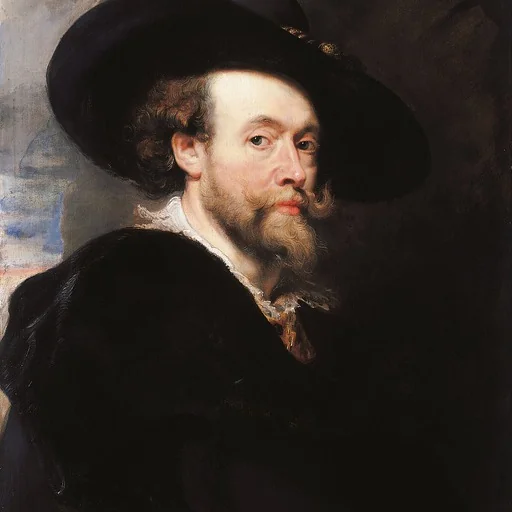
Sir Peter Paul Rubens ( ROO-bənz; Dutch:; 28 June 1577 – 30 May 1640) was a Flemish artist and diplomat.