Artwork
Gibbons Reaching for the Moon
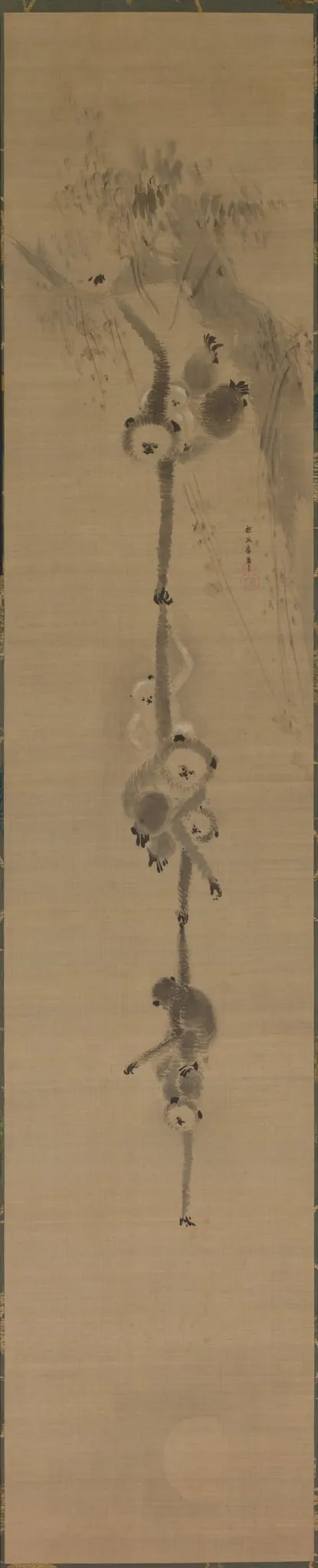
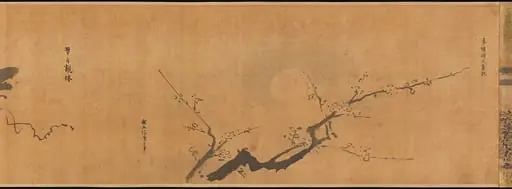
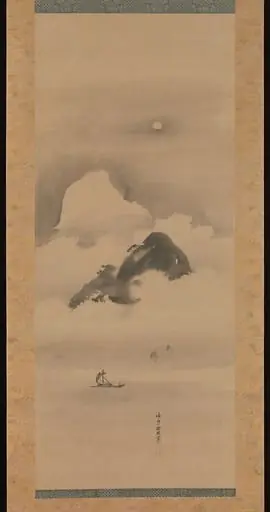
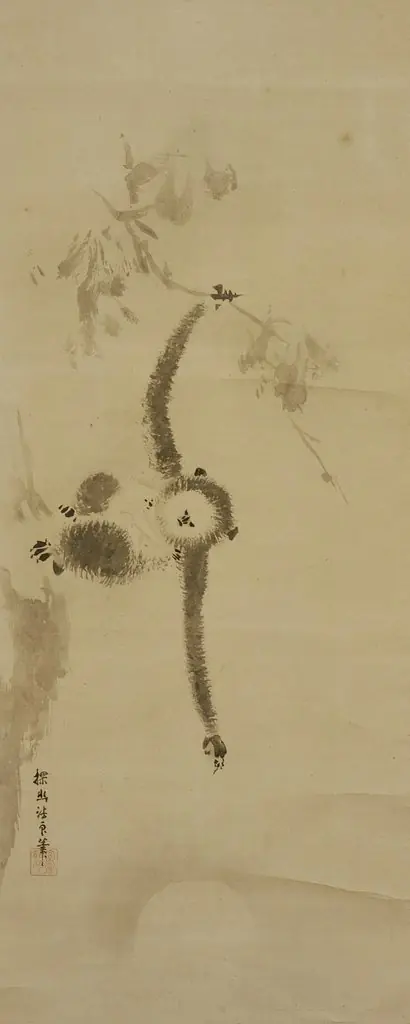
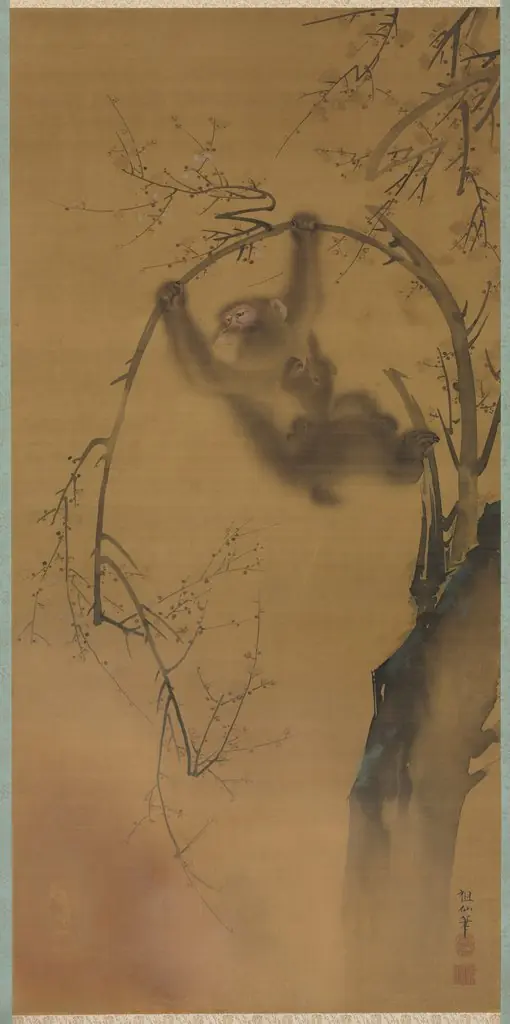
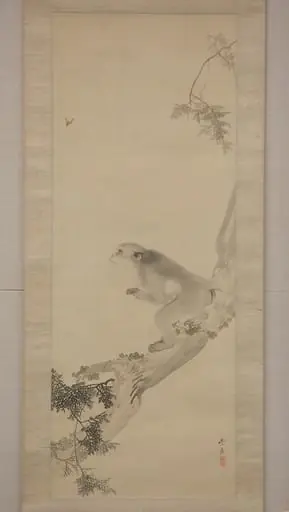
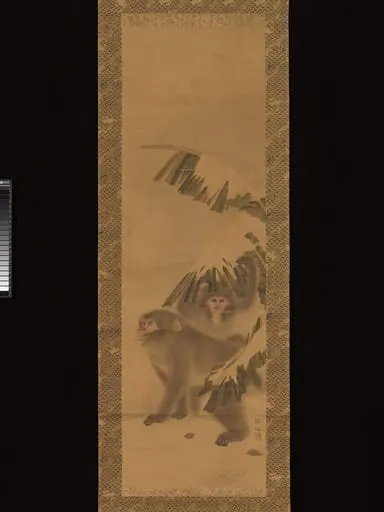
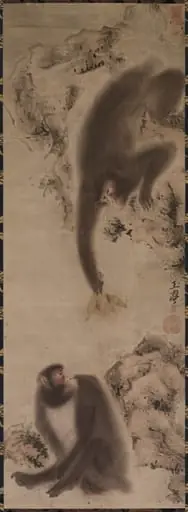
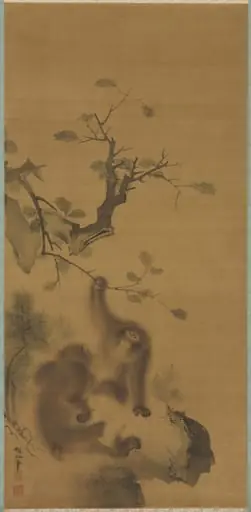
Gibbons Reaching for the Moon is an unspecified painting by the Baroque artist Kano Tan'yū. It dates from 1604 and is held in the collection of the Cleveland Museum of Art. This painting depicts a group of gibbons stretching in a chain from a tree branch, attempting to grasp the moon.
- Accession no.
- 2015.478
- Credit line
- Gift from the Collection of George Gund III
About this work
Overview
This painting depicts a group of gibbons stretching in a chain from a tree branch, attempting to grasp the moon. What appears to be the celestial body is, in fact, its reflection on the surface of a quiet pond. The scene conveys a quiet irony: the creatures’ earnest effort is futile, as the object of their desire is an illusion.
Subject & Meaning
The imagery draws from Buddhist allegory, symbolizing the deluded pursuit of illusions as if they were real. The gibbons’ futile reach mirrors human attachment to transient or unreal targets, desires, perceptions, or ego-driven goals. The reflection in water underscores the theme of appearances deceiving perception, a central concern in Zen and Mahayana teachings.
Technique & Style
The composition uses flowing lines to suggest the gibbons’ elongated limbs and the curve of the tree, creating a rhythmic verticality that leads the eye toward the water’s surface. Ink washes render the foliage and pond with subtle gradations, while the gibbons are rendered with precise, expressive brushwork, reflecting the influence of Chinese ink painting traditions adapted by Japanese artists.
History & Provenance
Though gibbons are not native to Japan, they were familiar to Japanese painters through imported Chinese artworks and illustrated texts. This subject, popular in Chinese Chan Buddhist art, was adopted by Japanese artists during the Edo period, particularly within the Kano school. The painting reflects cross-cultural transmission of iconography, filtered through local aesthetic sensibilities.
Context
In premodern Japan, Buddhist themes permeated visual culture, especially among elite patrons and monastic circles. Paintings like this served not merely as decoration but as aids for contemplation. The choice of gibbons, a non-native animal, highlights how symbolic meaning outweighed biological accuracy, prioritizing spiritual narrative over naturalism.
Legacy
The motif continued to appear in Japanese ink painting well into the Edo period, often associated with the Kano school and its lineage. Artists such as Kano Tan’yū refined its execution, embedding it within broader traditions of Zen-inspired visual poetry. The image endures as a quiet, enduring emblem of perceptual error and the futility of grasping what cannot be held.
Artist & collection