Artwork
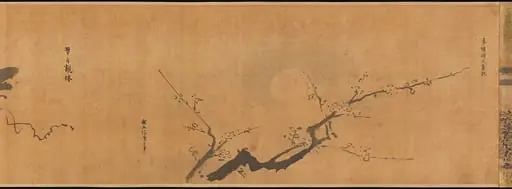
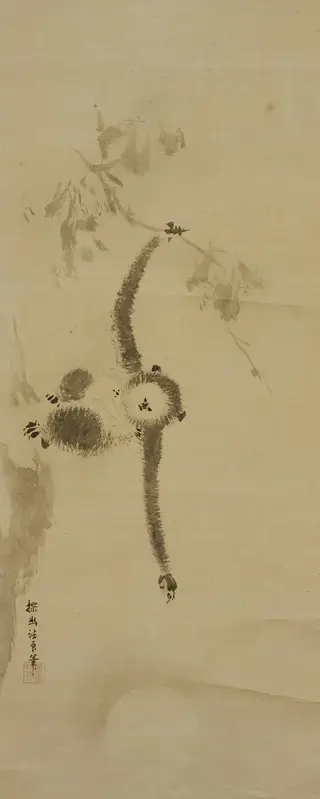
Gibbons Reaching for the Moon
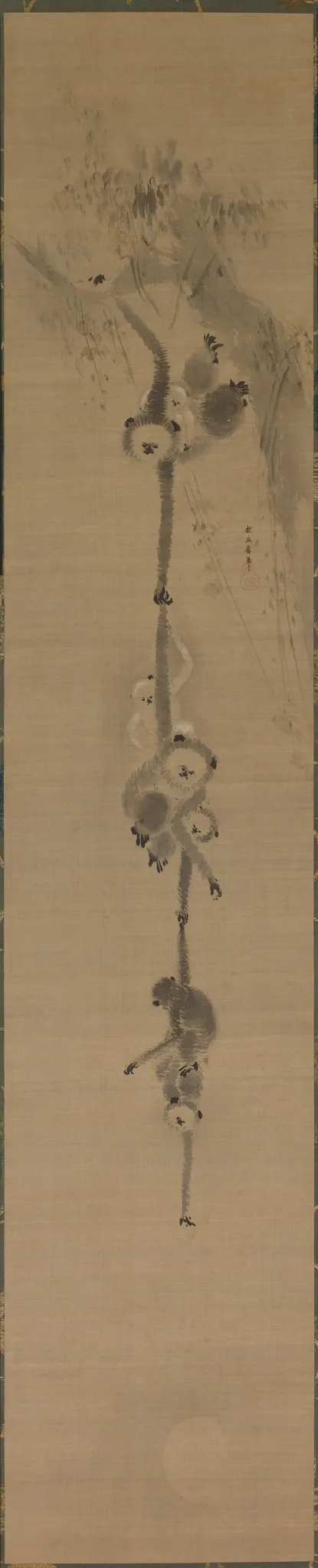
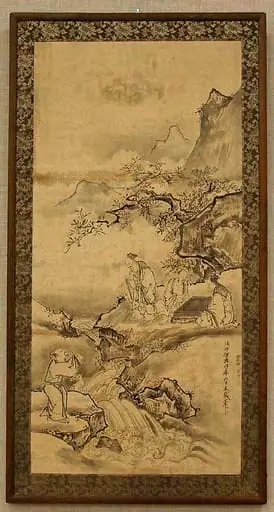
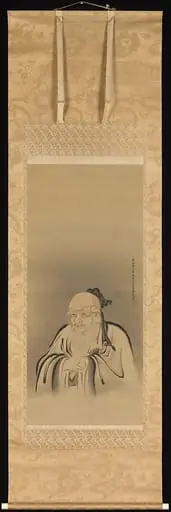
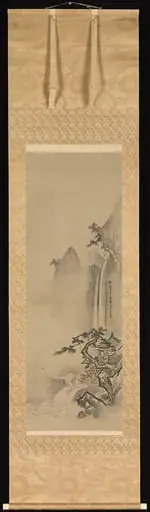
Gibbons Reaching for the Moon is an unspecified painting by the Kanō school artist Kano Tan'yū. It dates from 1638 and is held in the collection of the Cleveland Museum of Art.
About this work
Subject & Meaning
Created in the Edo period, the work reflects the cultural resonance of this lunar motif in seventeenth-century Japanese painting.
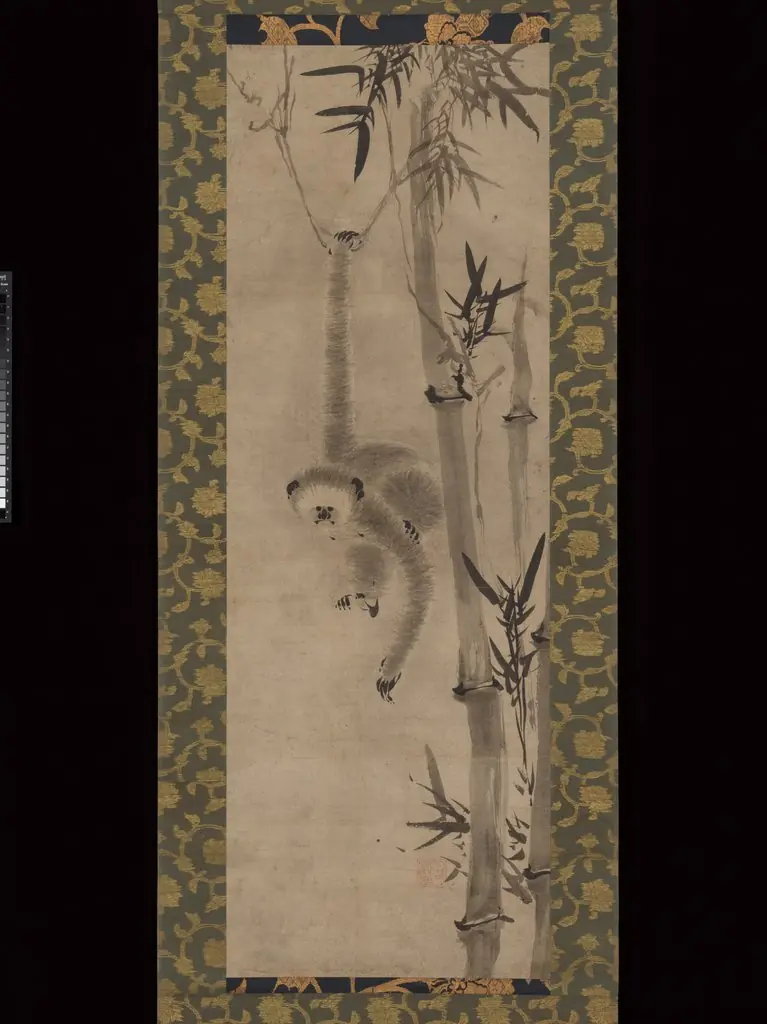
The painting shows the motif of gibbons reaching toward the moon, a subject drawn from East Asian tradition. Within Buddhist and East Asian symbolism the moon is associated with enlightenment, and the reaching gesture has long carried connotations of yearning and the pursuit of the unattainable. Created in the Edo period, the work reflects the cultural resonance of this lunar motif in seventeenth-century Japanese painting.
Technique & Style
The work is executed in ink and gold leaf on paper, a typical support for Edo-period Kano-school painting. Gold leaf defines the moon's luminous surface while ink describes the figures' gestures and forms, creating a shallow pictorial space that emphasizes calligraphic line and decorative patterning over naturalistic depth. The brushwork conveys fluidity in the figures' motion, and the stylized contours reflect the decorative emphasis characteristic of early seventeenth-century Japanese painting.
Formal balance is achieved through the restrained palette of black ink and metallic gold and the rhythmic interplay of negative space and ornamental detail.
History & Provenance
Gibbons Reaching for the Moon was created by Kano Tan'yu in 1638. It is held in the Cleveland Museum of Art, catalogued under accession number 2015.478. No details of its commission or ownership prior to the museum are documented in the available sources.
Overview
Gibbons Reaching for the Moon, created in 1638 by Kanō Tan'yū, is a notable work of the Kanō school during the Tokugawa period, now part of The Cleveland Museum of Art's collection.
Artist & collection