Artwork
狩野探幽筆 『画苑』|Famous Themes for Painting Study Known as “The Garden of Painting” (Gaen)
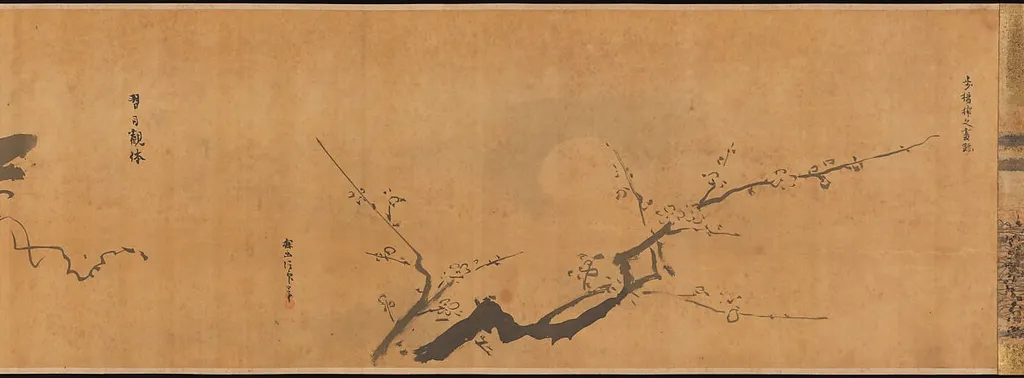
狩野探幽筆 『画苑』|Famous Themes for Painting Study Known as “The Garden of Painting” (Gaen) is an ink painting by the Baroque artist Kano Tan'yū. It dates from 1670 and is held in the collection of the Metropolitan Museum of Art.
About this work
Subject & Meaning
The piece serves as a visual record of these themes, utilizing ink on paper to render the forms of the man, animal, and flora within a continuous scroll format.
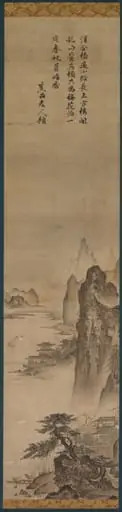
The work depicts a landscape scene featuring a man and a horse set against a backdrop of mountains, trees, and plants. Created in 1670 by Kano Tan'yū, this handscroll presents a naturalistic composition typical of the genre, focusing on the interaction between human figures and the environment. While the title "The Garden of Painting" suggests a didactic purpose for art study, the visual content centers on these specific elemental subjects rather than a complex allegorical narrative.
The imagery of the traveler and horse within a mountainous setting reflects traditional landscape conventions. The piece serves as a visual record of these themes, utilizing ink on paper to render the forms of the man, animal, and flora within a continuous scroll format.
Technique & Style
The painting is a handscroll executed in ink on paper by Kano Tan’yū in 1670, measuring approximately 27.6 cm in height and 354.2 cm in width. It portrays a landscape that includes a horse, a man, a mountain, plant, and tree, a motif typical of the Kanō school’s landscape genre. The work was created in Japan and is now part of the Metropolitan Museum of Art collection. Its formal qualities reflect disciplined brushwork and a balanced composition.
Context
Kano Tan’yū’s handscroll Famous Themes for Painting Study, known as “The Garden of Painting” (Gaen), dates to 1670 and exemplifies the landscape genre within the Kano school. Executed in ink on paper, the scroll depicts a horse, a man, a mountain, a plant and a tree, motifs that recur in Edo‑period nature imagery. Held in the Metropolitan Museum of Art, the piece functioned as a study model for subsequent artists and reflects the thematic focus of early modern Japanese painting.
Its creation in Japan and inclusion in a major museum collection illustrate its significance as a representative work of 17th‑century Japanese artistic practice.
Overview
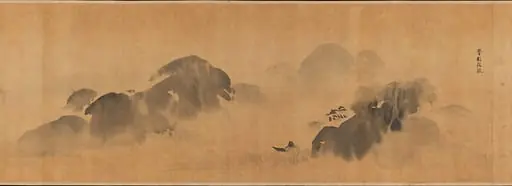
Created in 1670 by Kano Tan'yū, the leading painter of the Edo period, the handscroll 'Gaen' (The Garden of Painting) serves as a comprehensive instructional manual for aspiring artists. Executed in ink on paper, the work unrolls horizontally to present a series of distinct landscape vignettes, including horses, scholars beneath pine trees, waterfalls, and bamboo groves. Unlike a traditional narrative painting, this scroll functions as a visual catalog of established motifs and compositional formulas.
Each scene is accompanied by inscriptions referencing specific poems or literary allusions, providing students with a direct link between visual representation and cultural context. Tan'yū compiled these examples to standardize the teaching methods of the Kano school, ensuring that apprentices could accurately replicate the correct mood and style associated with famous themes. The work reflects Tan'yū's mature style, characterized by confident, economical brushwork that prioritizes clarity and didactic utility over decorative flourish.
As a pedagogical tool from the late 17th century, 'Gaen' offers critical insight into the transmission of artistic knowledge within the dominant Kano workshop system, preserving the canonical imagery that defined Japanese painting for generations.
Artist & collection

 Landscape with Motifs from the Eight Views of Xiao-Xiang
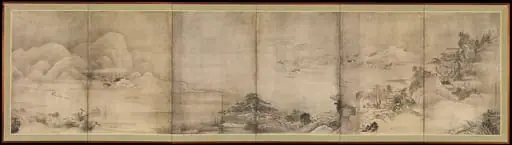 近江八景|Eight Views of Ōmi (Ōmi hakkei)
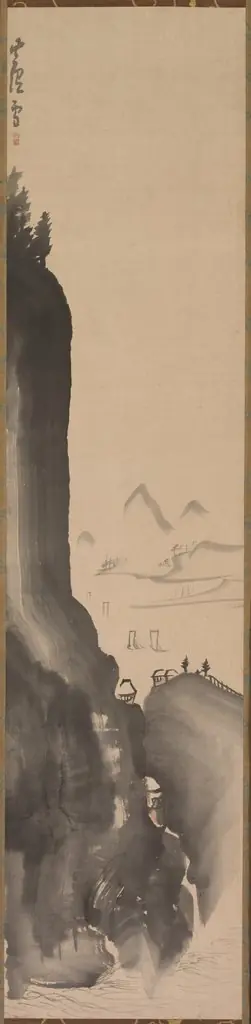 Mountains and Distant Boats
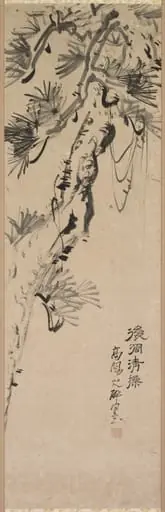 Aged Pine
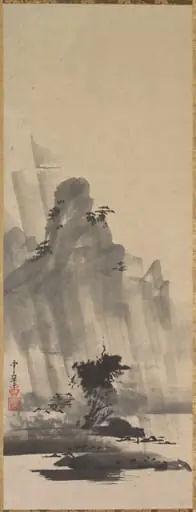 Mountain and River in Storm
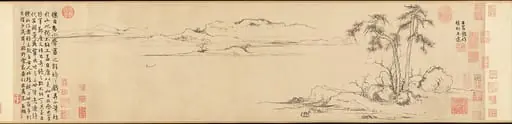 元 趙孟頫 雙松平遠圖 卷|Twin Pines, Level Distance
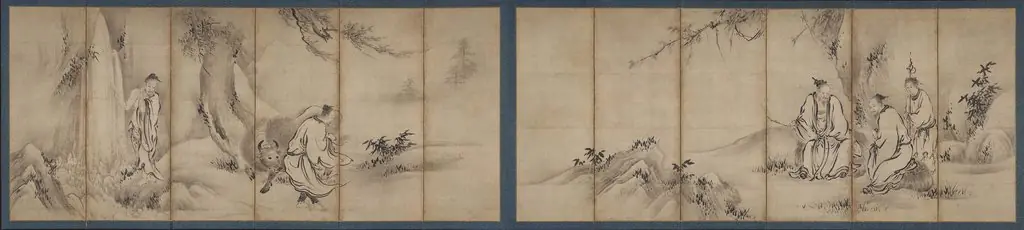 Chinese Sages
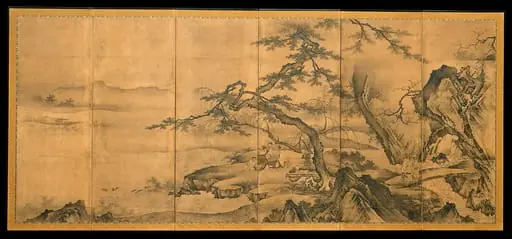 琴棋書画図屏風|The Four Accomplishments
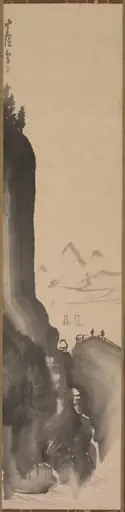 Mountains and Distant Boats
 Landscape
- 狩野探幽筆 『画苑』|Famous Themes for Painting Study Known as “The Garden of Painting” (Gaen)