Artwork
狩野探幽筆 月夜山水図|Landscape in Moonlight
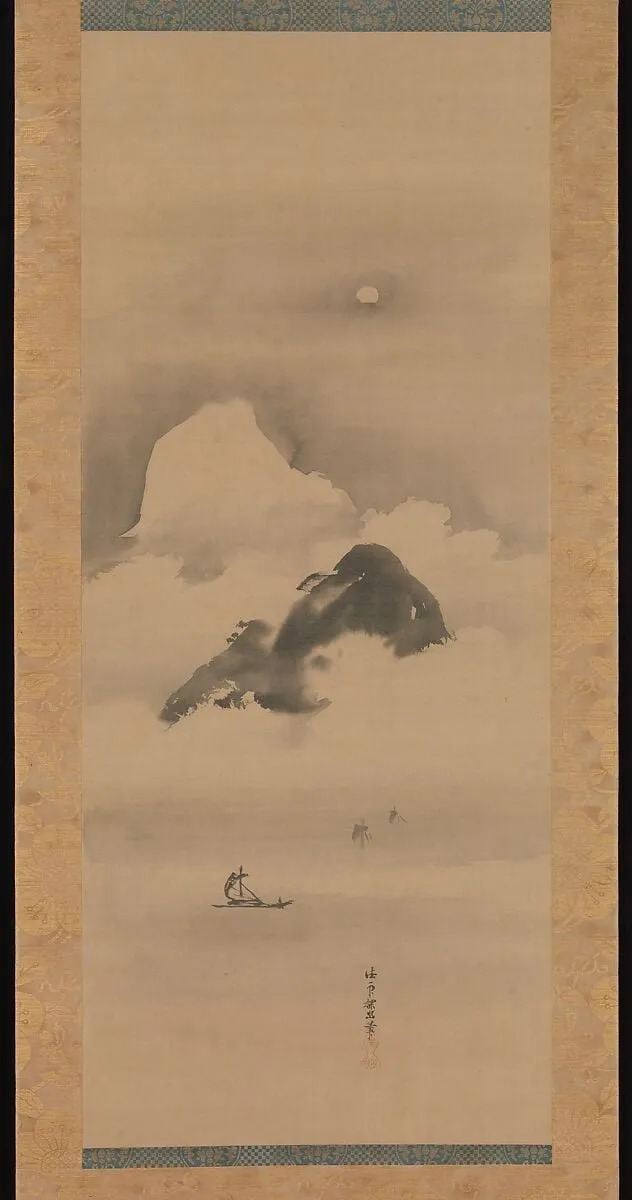
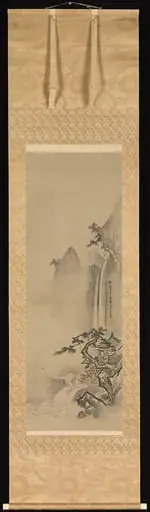
狩野探幽筆 月夜山水図|Landscape in Moonlight is an ink painting by the Baroque artist Kano Tan'yū. It dates from 1662 and is held in the collection of the Metropolitan Museum of Art.
About this work
Technique & Style
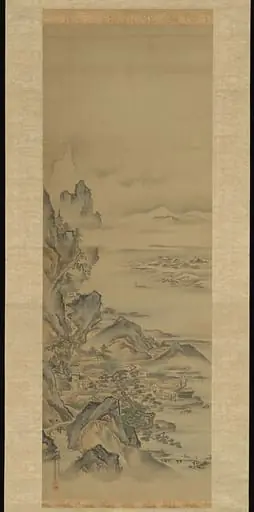
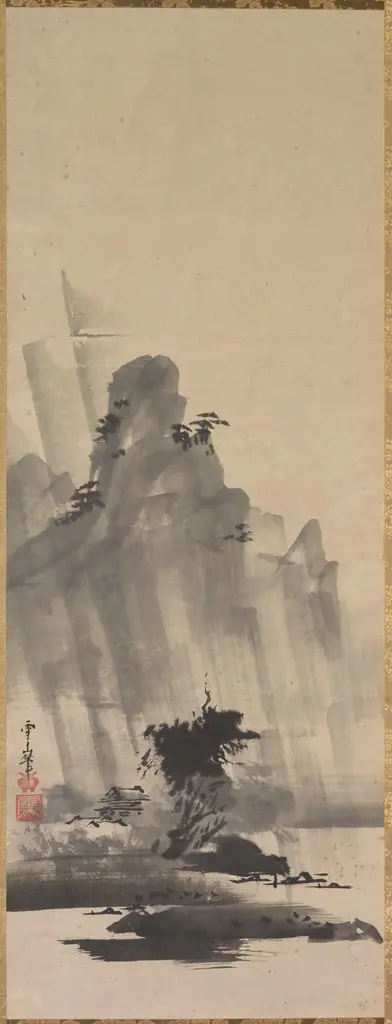
The composition favors attenuated, angular rock forms and softly modulated ink tones, with fine linework defining distant boats and foliage.
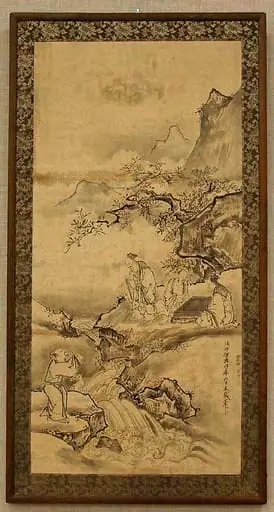
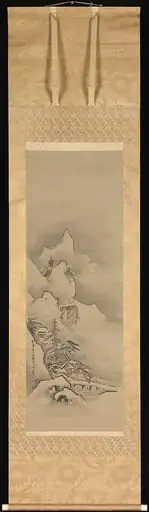
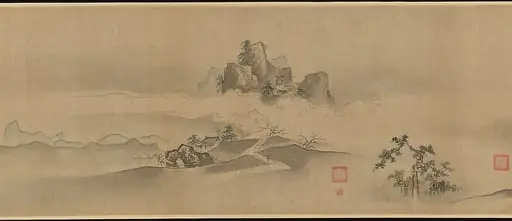
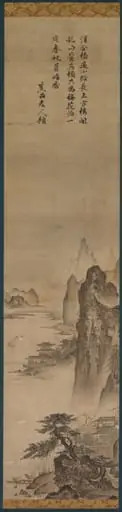
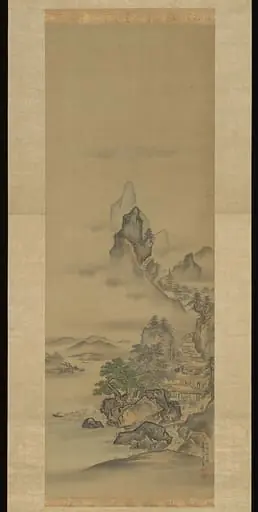
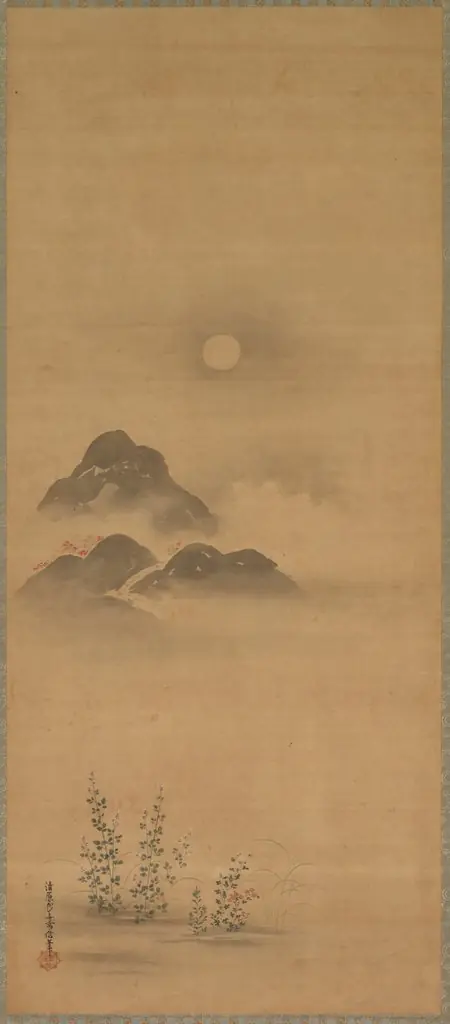
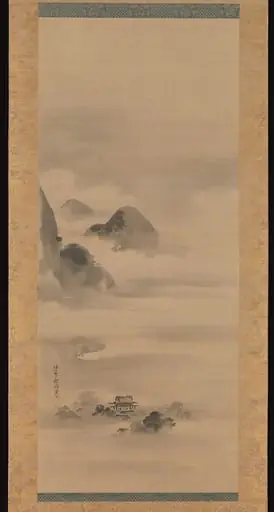
Executed in 1662 as one of a triptych of hanging scrolls, the work is rendered in ink on silk, employing the characteristic Kano atelier technique of controlled brushwork and layered ink washes to articulate recession in the moonlit landscape. The composition favors attenuated, angular rock forms and softly modulated ink tones, with fine linework defining distant boats and foliage. The silk support exhibits stable planar tension, and the overall handling reflects the mature professional style developed under the Kano school's institutional practice, combining decorative clarity with atmospheric recession.
History & Provenance
The work titled 狩野探幽筆 月夜山水図 (Landscape in Moonlight) was produced in 1662 in Japan as a hanging scroll painted in ink on silk, forming part of a triptych. It is attributed to the Kanō school artist Kanō Tan'yū. The painting entered the collection of the Metropolitan Museum of Art, where it is catalogued as accession 1975.268.50. No documented changes in ownership and no specific exhibition history are noted in the available sources.
Context
The work is recognized as a representative example of Kanō Tan'yū's ink landscapes, situating it within the broader trajectory of Japanese landscape painting of the seventeenth century. As a hanging scroll created in 1662, it exemplifies the compositional balance and atmospheric treatment characteristic of the Kano school, with a boat motif integrated into an expansive nocturnal scene. Its inclusion in the Metropolitan Museum of Art's collection makes it a useful reference for studying landscape painting in Edo-period Japan.
Legacy
The work’s enduring reputation stems from its representation in major institutions, most notably the Metropolitan Museum of Art, where it is catalogued as a Kano Tan’yū landscape painting created in 1668. Its status as a representative example of Edo‑period nocturnal scenery has made it a frequent reference in studies of Japanese ink‑on‑silk landscape traditions. Scholars cite the painting when examining the evolution of moonlit compositions in East Asian art, underscoring its role in shaping later artistic interpretations of night scenes.
The triptych’s technical mastery and historical context continue to inform both academic discourse and public exhibitions, reinforcing its lasting legacy within the canon of Japanese painting.
Overview
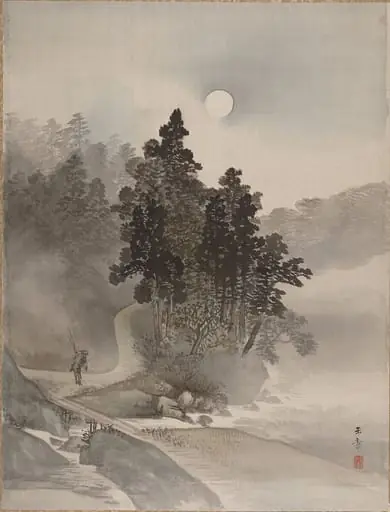
Landscape in Moonlight is a hanging scroll painted in 1662 by Kano Tan'yū, the leading master of the Kano school during the Edo period. Executed in ink on silk, this work constitutes one panel of a triptych designed to be displayed side by side. The composition depicts a nocturnal scene where a dark river winds through mist-shrouded mountains under the glow of a pale moon.
A small boat carrying a solitary, barely visible passenger drifts near the shore, emphasizing the vastness of the natural setting. Tan'yū employs swift, confident brushstrokes to render the trees and rocks, utilizing the monochromatic medium to create atmospheric depth and texture without the use of color. Created late in the artist's career, this piece exemplifies his mature style, which favored expressive ink washes and simplified forms over the rigid, decorative patterns of his earlier official commissions.
The work reflects the Zen-influenced aesthetic prevalent in Japanese ink painting, focusing on the spiritual resonance of the landscape rather than strict topographical accuracy. As part of a triptych, it was intended to offer a continuous, immersive view of a moonlit journey, showcasing Tan'yū's mastery in balancing dynamic movement with serene stillness.
Subject & Meaning
The composition features a dark river meandering through a mountainous terrain shrouded in mist. A solitary boat, with its barely discernible passenger, drifts gently near the shore under the soft glow of a pale moon. This quiet nocturnal setting evokes a sense of tranquility and contemplation, characteristic of traditional East Asian landscape painting, inviting viewers to immerse themselves in the expansive, hushed environment.
Artist & collection