Artwork
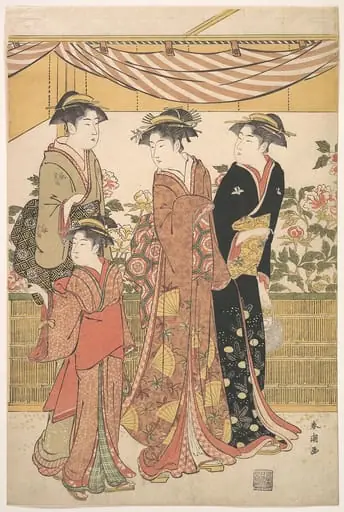
Three Beauties Chatting by a Veranda
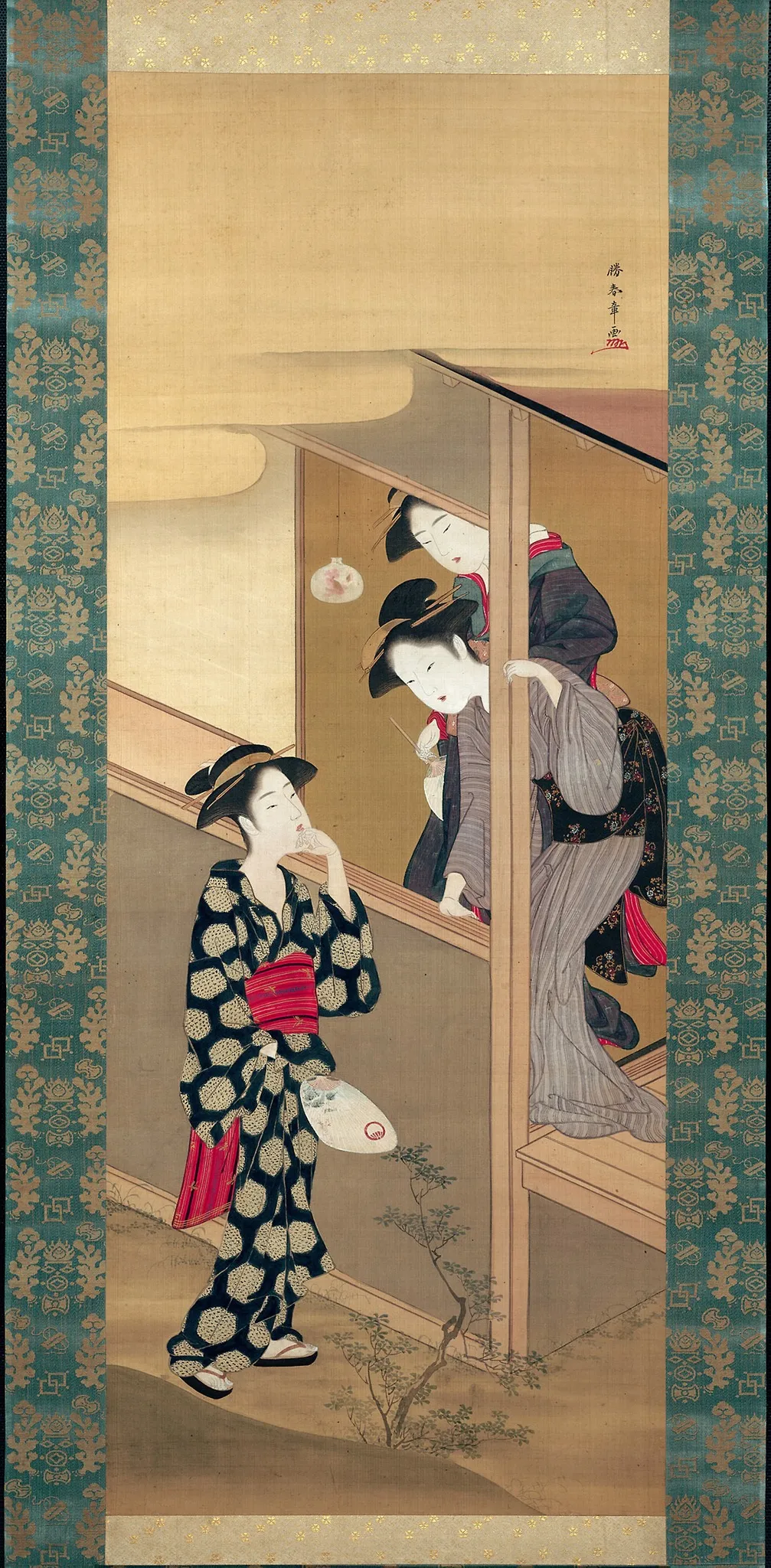
Three Beauties Chatting by a Veranda is an unspecified painting by the Ukiyo-e artist Katsukawa Shunshō. It is held in the collection of the Art Institute of Chicago.
About this work
Overview
Created in 1798 by Katsukawa Shunshō, this ink and color painting depicts three women engaged in quiet conversation beside a wooden veranda. It is part of the collection at the Art Institute of Chicago and exemplifies the ukiyo-e tradition of depicting everyday scenes of urban life. The composition centers on the figures’ subtle interactions, framed by a calm domestic setting.
Subject & Meaning
Their gestures and proximity imply familiarity, while the fan held by one figure adds a touch of refined etiquette.
The three women, dressed in formal kimonos with elaborate updos, are portrayed in a moment of informal exchange, suggesting the private social lives of women in late Edo-period Japan. Their gestures and proximity imply familiarity, while the fan held by one figure adds a touch of refined etiquette. The scene avoids theatricality, instead emphasizing quiet companionship and the dignity of daily ritual.
Technique & Style
Shunshō employs soft, muted earth tones to create a harmonious atmosphere, with delicate lines defining the figures’ robes and the veranda’s wooden structure. The background features sparse vegetation rendered in light washes, drawing focus to the women. The brushwork is precise yet fluid, characteristic of Shunshō’s refined approach to portraiture within the ukiyo-e genre.
History & Provenance
The painting entered the Art Institute of Chicago’s collection through documented acquisitions in the 20th century, though its earlier ownership history remains largely unrecorded. As a work from the late 18th century, it reflects the popularity of bijin-ga, images of beautiful women, during Shunshō’s time, produced for a growing urban audience interested in cultural refinement.
Context
In late 18th-century Edo, bijin-ga paintings like this one catered to a literate, middle-class public fascinated by the aesthetics of urban femininity. Shunshō, a leading figure in the Katsukawa school, shifted focus from actor prints to more intimate portrayals of women, aligning with broader cultural interests in domestic tranquility and personal expression.
Legacy
Shunshō’s work influenced later ukiyo-e artists who expanded the portrayal of women beyond idealized beauty to include nuanced emotional states. While not widely known outside specialist circles, this painting contributes to the understanding of how everyday moments were elevated through art in Edo-period Japan, preserving a quiet record of female social life.
Artist & collection

Artist
Katsukawa Shunshō spent his life in Edo (now Tokyo), where the city’s teahouses and theaters buzzed with energy.

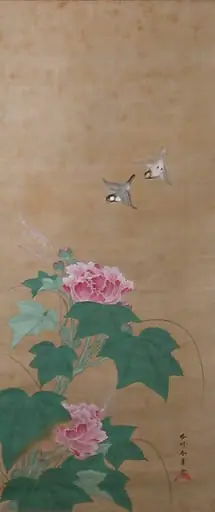
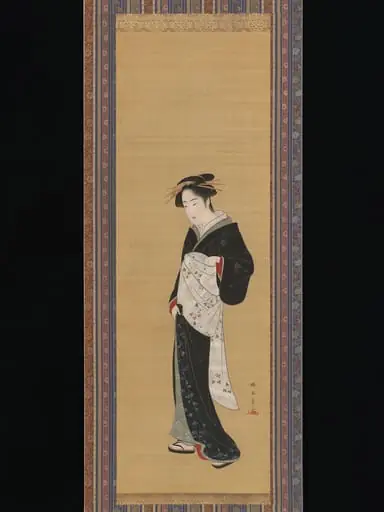
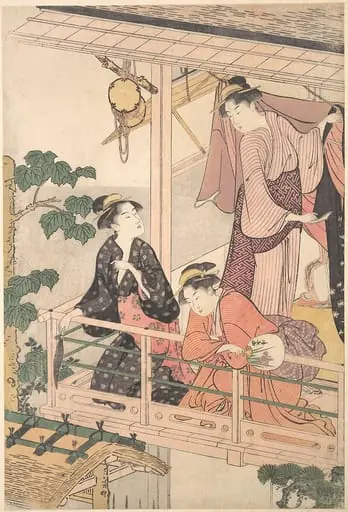
- 二階座敷に三人の女|Three Women on a Balcony
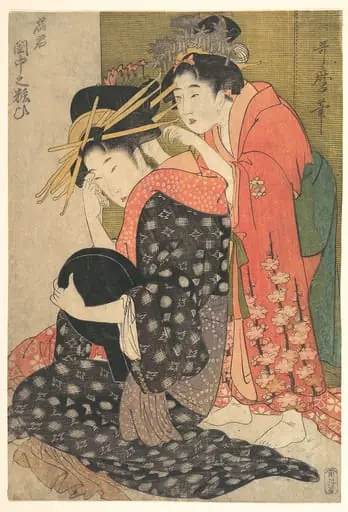 名君 閨中の粧ひ|The Oiran Yoso-oi Seated at Her Toilet
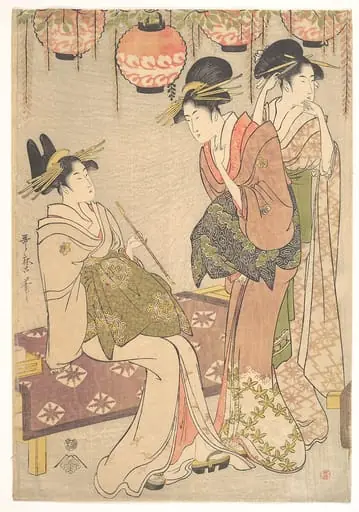 Untitled
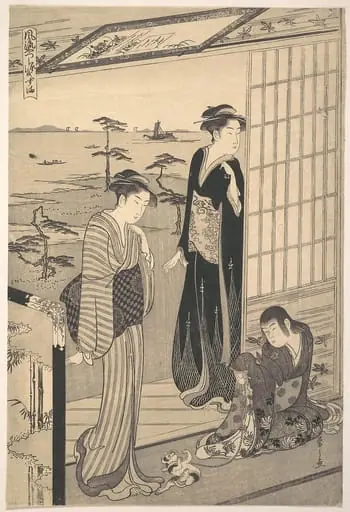 鳥文斎栄之画 「風流やつし源氏 須磨」|Genji in Exile at Suma, from the series Genji in Fashionable Modern Guise (Fūryū yatsushi Genji: Suma)
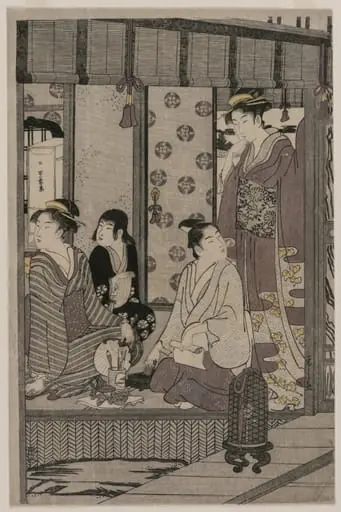 Morning Glory (from the series The Tale of Genji in Elegant Modern Dress)
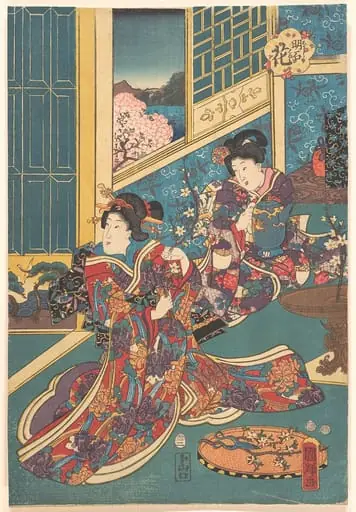 Untitled
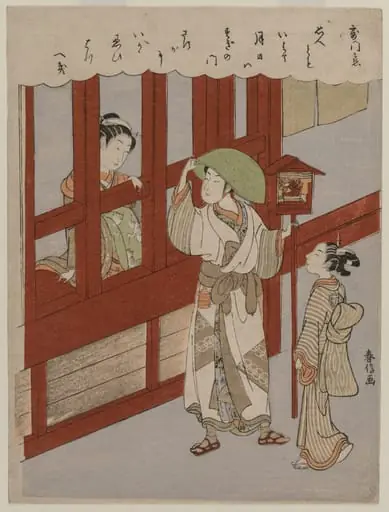 Love at the Brothel Gate
 Untitled
 Untitled
 Untitled
 The Hour of the Snake (from the series A Clock for Young Women)
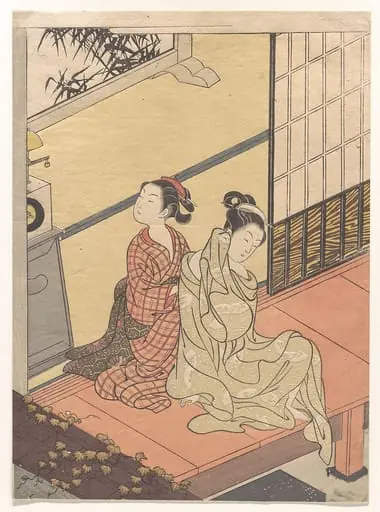 鈴木春信画 坐鋪八景 とけひの晩鐘|Evening Chime of the Clock (Tokei no banshō), from the series “Eight Parlor Views” (Zashiki hakkei)