Artwork
Boy’s Day Carp Streamer and Shōki Banner
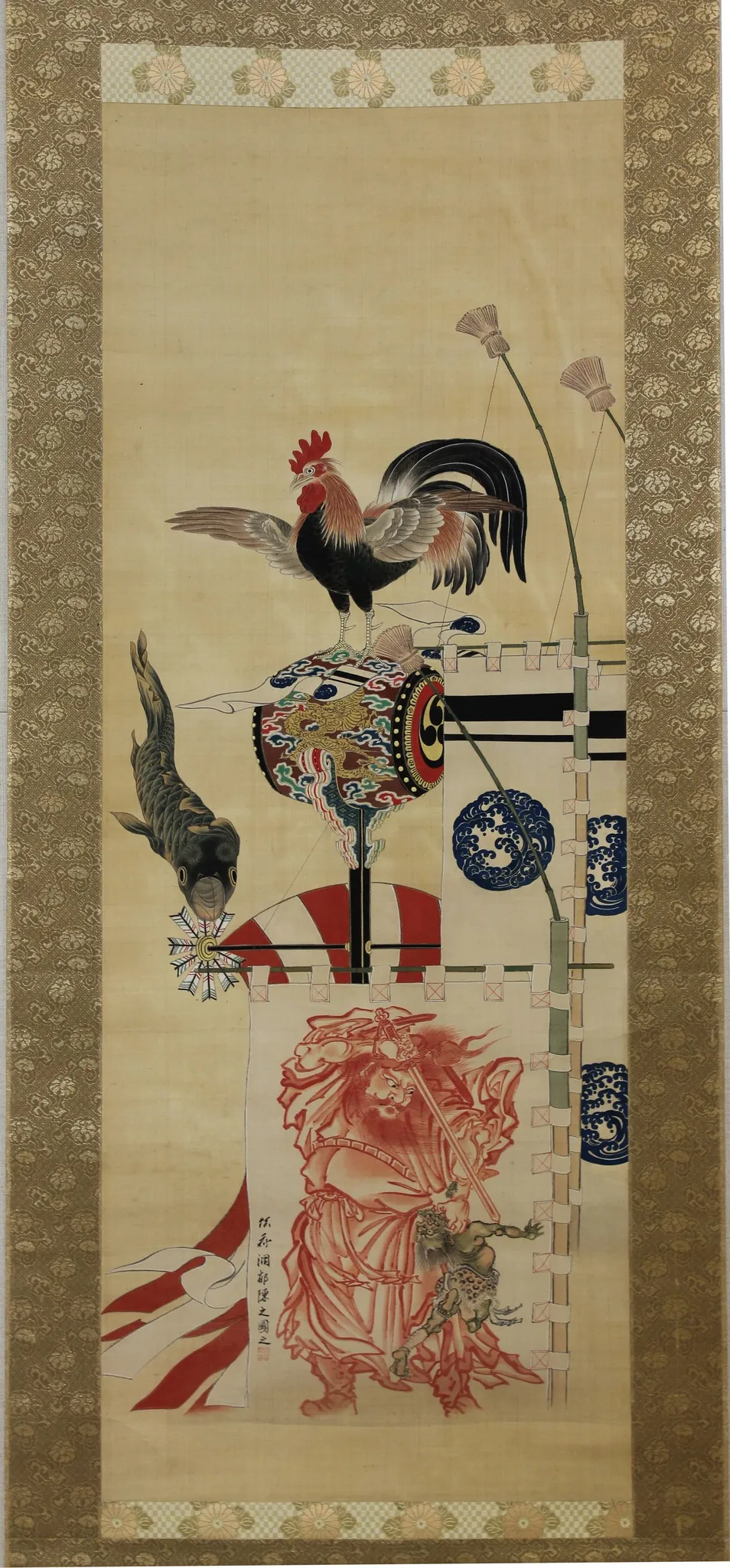
Boy’s Day Carp Streamer and Shōki Banner is an unspecified painting by the Ukiyo-e artist Kawanabe Kyōsai 河鍋暁斎. It dates from 1850 and is held in the collection of the Metropolitan Museum of Art.
About this work
Subject & Meaning
To the right stands Shōki, a blue-skinned figure in a dark robe, identified as the Demon Queller by his fierce expression and the halberd he carries.
The work depicts two motifs associated with the Japanese Boys’ Day (Tango no Sekku) festival. On the left floats a large carp-shaped streamer (koinobori), its body rendered in bold blue and white patterns against a plain ground, evoking the fish’s scales and the energy of the festival. To the right stands Shōki, a blue-skinned figure in a dark robe, identified as the Demon Queller by his fierce expression and the halberd he carries.
Shōki personifies protection and the warding off of evil, while the carp streamer symbolizes perseverance and success, both being emblematic of aspirations for boys’ health and advancement. Together they convey the festival’s themes of strength, resilience, and the passage into maturity.
Technique & Style
Created in 1850 by Kawanabe Kyōsai, this work is classified as a painting originating from Japan. The piece functions as a Boy’s Day Carp Streamer and Shōki Banner, utilizing the painting medium to depict traditional festival imagery. While specific details regarding the exact support material, brush handling techniques, or current physical condition are not detailed in the available records, the work is recognized as a painted object within the collection of the Metropolitan Museum of Art.
The formal qualities align with its classification as a painting intended for ceremonial display during the Boy's Day celebration.
History & Provenance
Created in 1850 in Japan, this painting is the work of the artist Kawanabe Kyōsai. The piece, titled Boy's Day Carp Streamer and Shōki Banner, dates specifically to that year according to institutional records. Following its creation, the artwork eventually entered the collection of the Metropolitan Museum of Art, where it is currently held.
No further details regarding specific commissioners, previous owners, or the exact circumstances of its production are provided in the available documentation.
Context
Kawanabe Kyōsai's 'Boy’s Day Carp Streamer and Shōki Banner' (1850) exemplifies ukiyo-e sensibilities while depicting Japanese Boys' Day traditions through layered symbolic motifs. The work juxtaposes carp streamers representing perseverance with Shōki guardian figures, reflecting Edo-period cultural practices. As part of the Metropolitan Museum of Art's collection since its inception in 1850, the painting occupies a pivotal position bridging folk ritual and fine art production in Japanese visual culture.
Scholarship emphasizes Kyōsai's synthesis of traditional ukiyo-e techniques with narrative depth, situating this piece within his broader exploration of Japanese identity during the late Edo period. Its dual iconography of carp and Shōki has been analyzed as both seasonal celebration and spiritual protection, reinforcing its significance within the artist's thematic preoccupations and the evolution of narrative painting in Meiji-era Japan.
Legacy
The work's legacy rests on its embodiment of Japanese Boys' Day traditions and its role in showcasing Kyōsai's mastery of narrative painting. Depicting a carp streamer alongside the demon-queller Shōki, it reflects cultural motifs that have influenced later ukiyo-e and modern interpretations of Japanese folk symbolism. Its inclusion in the Metropolitan Museum of Art's collection has reinforced scholarly attention to Kyōsai's contribution to Meiji-era art, cementing its reputation as a representative example of the period's synthesis of traditional themes and contemporary technique.
Overview
Created circa 1850 by Kawanabe Kyōsai, this multicolored painting belongs to the ukiyo‑e tradition and illustrates a festive scene linked to Japan’s Boys’ Day celebration. The composition combines a carp‑shaped windsock, a banner bearing the figure of Shōki, and assorted decorative motifs that together evoke the holiday’s protective and auspicious symbolism.
Artist & collection
Artist
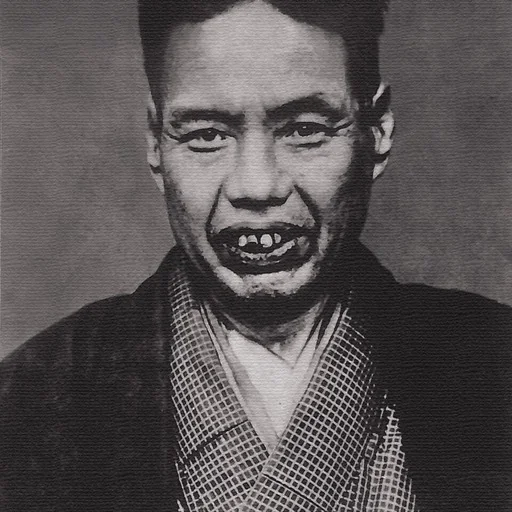
Kawanabe Kyōsai (河鍋 暁斎; May 18, 1831 – April 26, 1889) was a Japanese painter and caricaturist. In the words of art historian Timothy Clark, "an individualist and an independent, perhaps the last virtuoso in traditional Japanese painting".

 Woman with a Veil
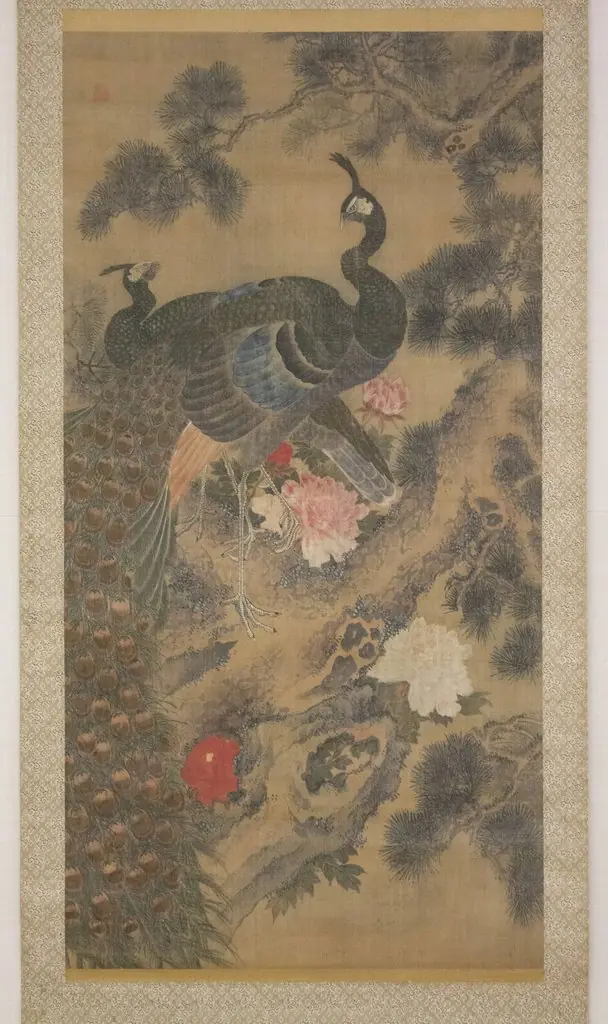 Peacocks, Pine Tree, and Peonies
 Untitled
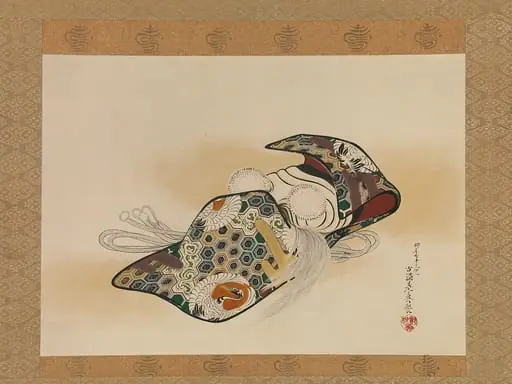 柴田是真作 翁面図|Mask for the Noh Play Okina
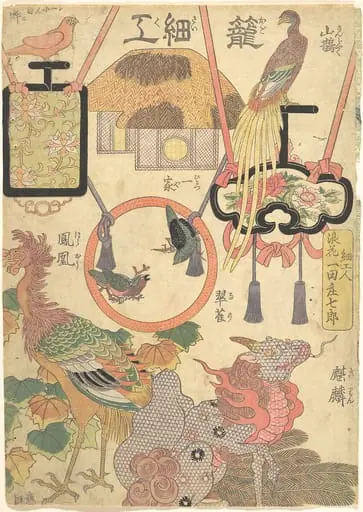 「籠細工 浪花細工人一田庄七郎」|Basketry Work: By the Craftsman Ichida Shōshichirō of Naniwa (Kagosaiku Naniwa saikujin Ichida Shōshichirō)
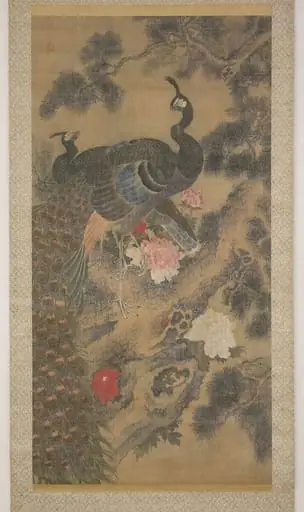 松牡丹孔雀図|Peacocks, Pine Tree, and Peonies
 Żuraw
Żuraw Bird and Lilies
 Swift Bull from the Ten Swift Bulls
 Untitled
 Untitled
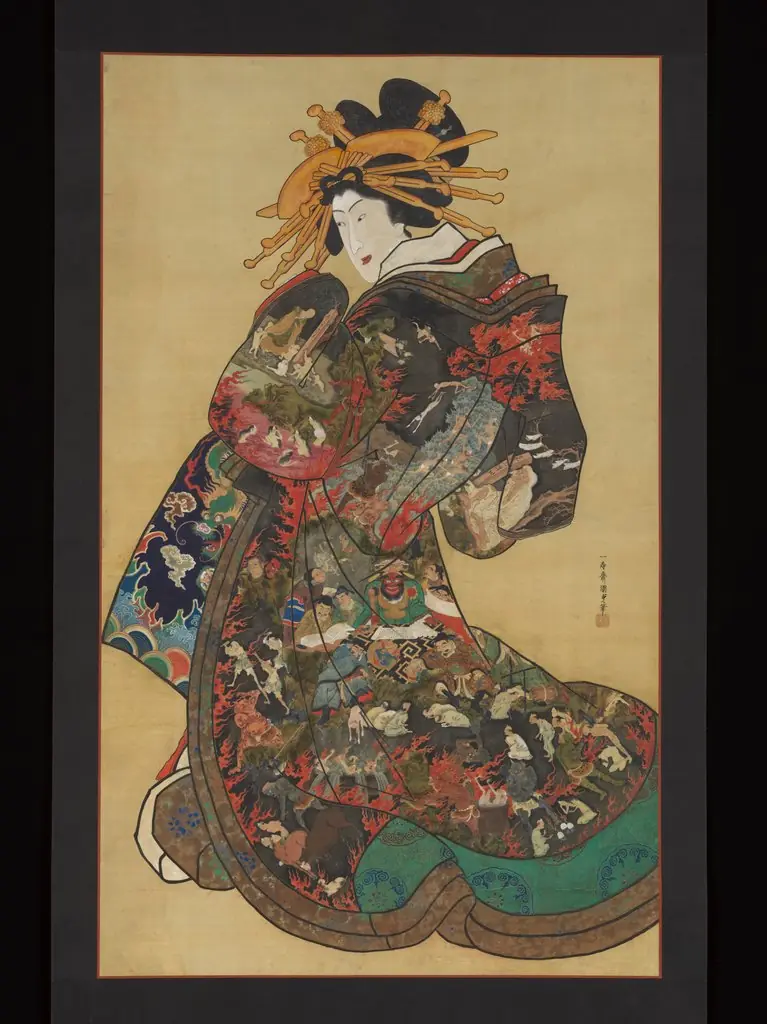
- The Hell Courtesan