Artwork
Painting Party
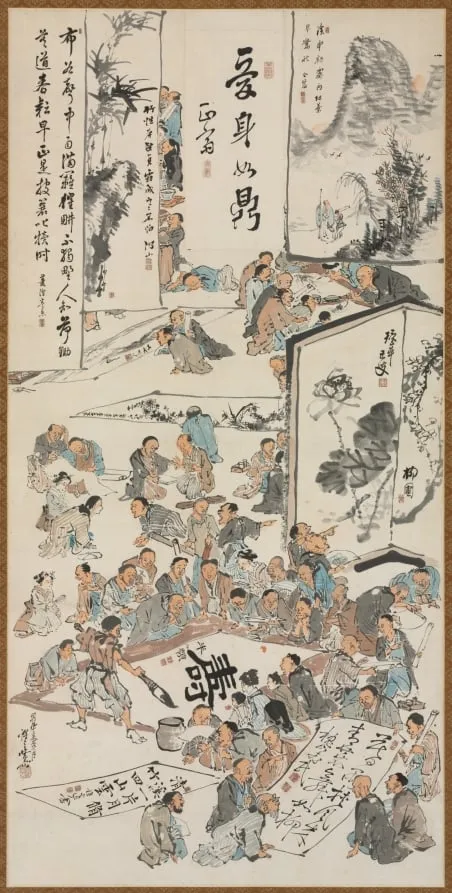
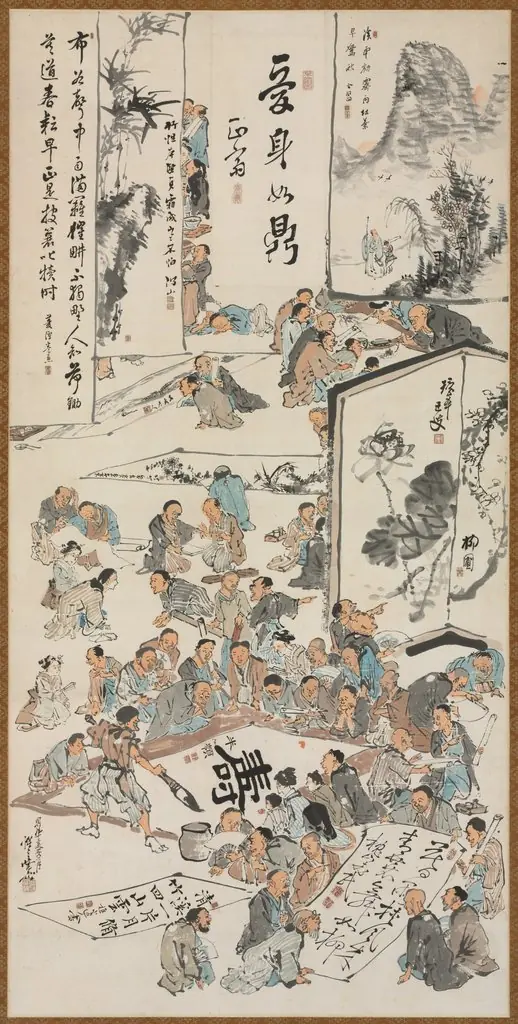
Painting Party is an unspecified painting by the Impressionist artist Kawanabe Kyōsai 河鍋暁斎. It dates from 1880 and is held in the collection of the Cleveland Museum of Art.
- Accession no.
- 1983.88
- Credit line
- Purchase from the J. H. Wade Fund
About this work
You see a room full of artists painting together, scrolls, screens, and calligraphy spread across the floor.
You see a room full of artists painting together, scrolls, screens, and calligraphy spread across the floor.
This wasn’t just art; it was a live event. Patrons asked for specific pieces, and different artists filled in parts of the same work. One wrote the word for "longevity" in giant brushstrokes, while others added plums or lotuses. Everyone signed their section.
If you like this kind of teamwork, look up japan, meiji period (1868–1912).
Overview
This collaborative work, titled “Painting Party,” brings together several Meiji‑era artists who each contributed a portion of a larger composition at the request of patrons. The piece combines painted screens, folding screens and calligraphic scrolls, each segment bearing the individual creator’s signature, illustrating a coordinated yet multi‑handed artistic process.
Subject & Meaning
The central visual motif includes a large, boldly rendered character for “longevity” (壽) executed with an oversized ink brush, flanked by natural elements such as plum blossoms and lotus flowers. These symbols convey wishes for long life and purity, aligning with the patrons’ wishes for auspicious themes.
Technique & Style
Kawanabe Kyōsai supplied the underlying outlines and figures that structure the screens and scrolls, while ten literati painters (bunjin) filled in the decorative details. The calligraphic stroke of Nakane Hanrei is distinguished by its monumental scale, whereas Fukushima Ryūho’s plum and Matsuoka Kansui’s lotus demonstrate delicate brushwork typical of their respective specialties.
History & Provenance
Created during the Meiji period (1868–1912), the work reflects a cultural moment when collaborative art events were organized for patrons seeking personalized pieces. The involvement of noted figures such as Kyōsai, Hanrei, Ryūho and Kansui situates the painting within a network of prominent artists active in late‑19th‑century Japan.
Context
The piece exemplifies the Meiji fascination with blending traditional Japanese aesthetics and communal creation. By inviting multiple artists to respond to specific patron requests, the work mirrors broader trends of artistic experimentation and the commercialization of art in a rapidly modernizing society.
Artist & collection
Artist
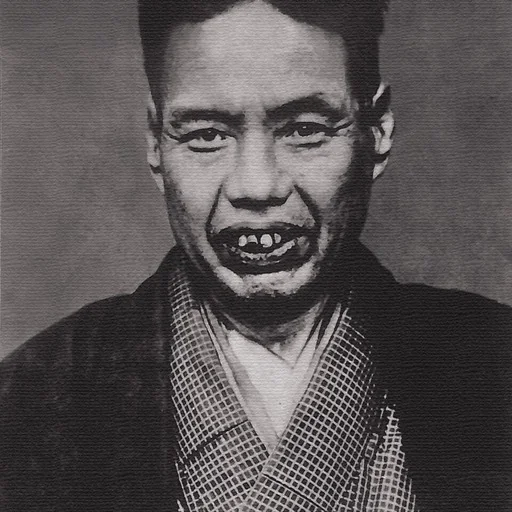
Kawanabe Kyōsai (河鍋 暁斎; May 18, 1831 – April 26, 1889) was a Japanese painter and caricaturist. In the words of art historian Timothy Clark, "an individualist and an independent, perhaps the last virtuoso in traditional Japanese painting".

 Painting Party
 明 錢榖 蘭亭修禊圖 卷|Gathering at the Orchid Pavilion
 Untitled
 永樂保全筆 「陶造」|Making Ceramics
 『浅草観音奉掛額之 図』 「扇屋内滝川 富川、粂川、玉川、津川、歌川、清川 め浪、お浪」|A Votive Picture to Be Donated to the Kannon of Asakusa (Asakusa Kannon hō kakegaku no zu), by Takigawa of the Ōgiya, Kamuro Menami and Onami, with Tomikawa, Kumegawa, Tamagawa, Tsugawa, Utagawa, and Kiyokawa
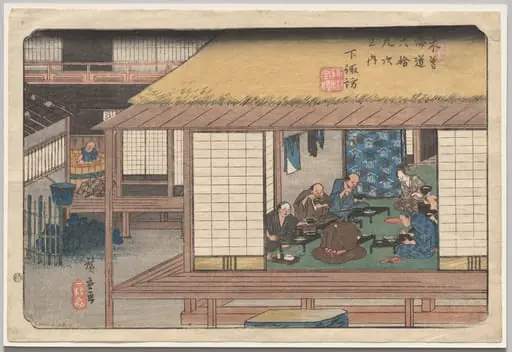 Shimosuwa, from Sixty-Nine Stations of the Kisokaidō
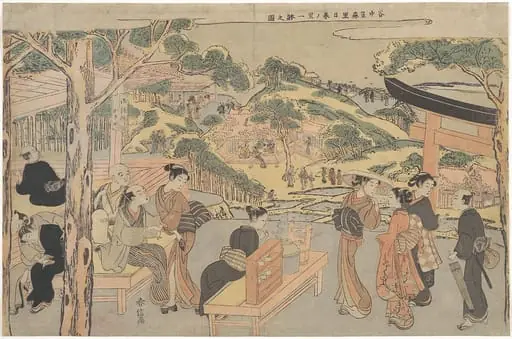 Untitled
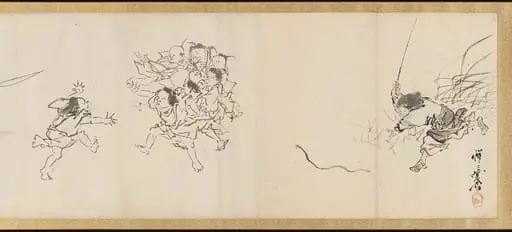
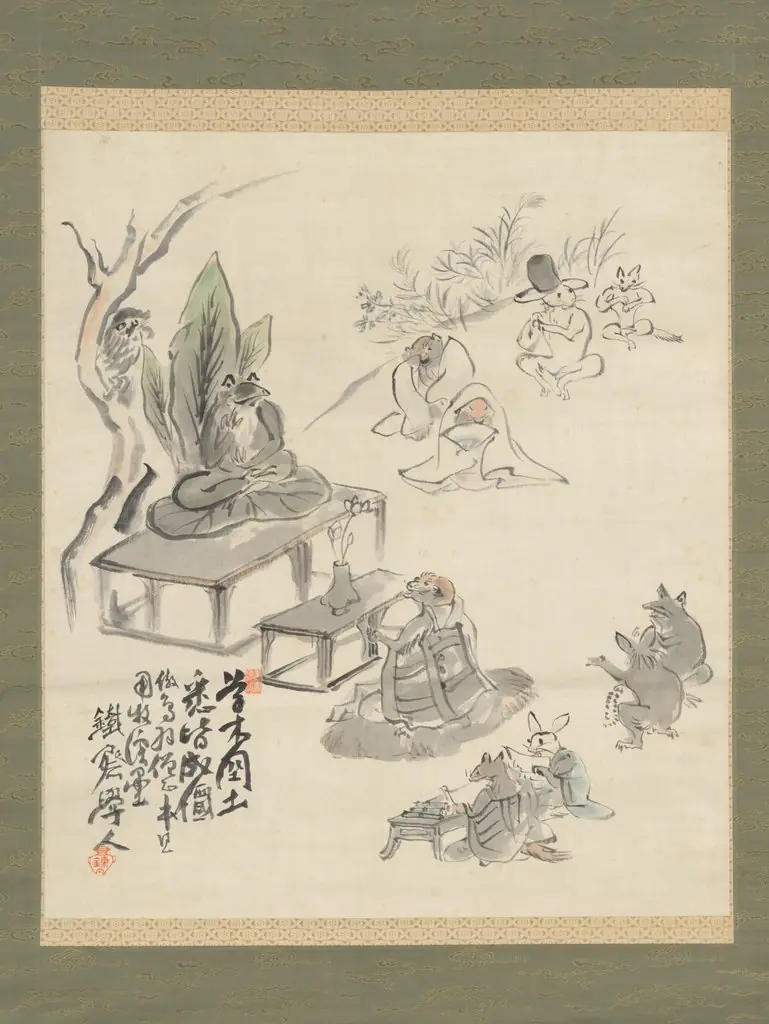 Scene Inspired by the Scrolls of Frolicking Animals and Humans
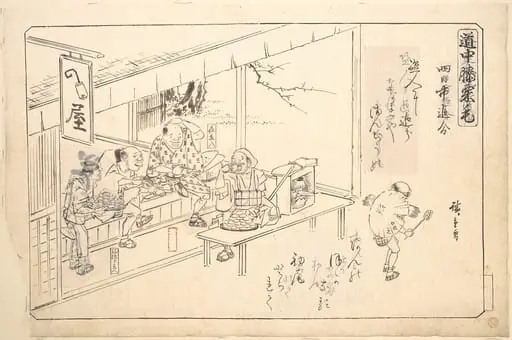 道中膝栗毛 四日市追分|The Branch Road at Yokkaichi
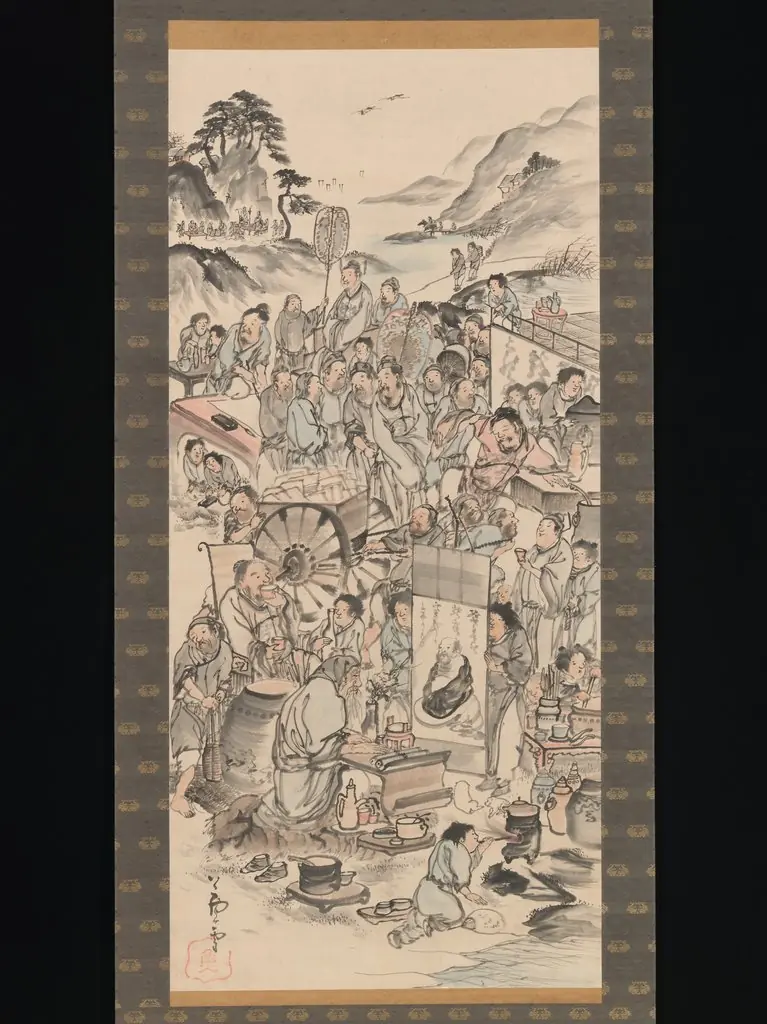 Drinking Festival of the Eight Immortals of the Wine Cup
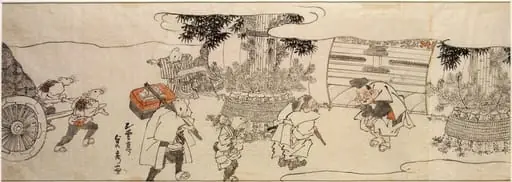 Daikoku and rats bringing rice bales to Ebisu
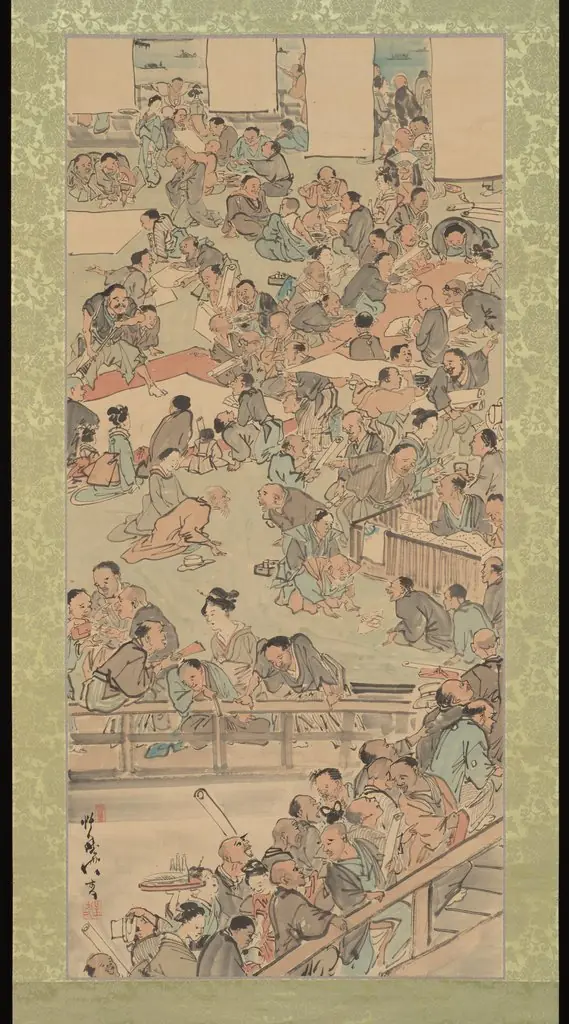
- Painting and Calligraphy Gathering at the Nakamurarō in Ryōgoku 両国中村楼書画会之図 (Ryōgoku Nakamurarō shogakai no zu)