Artwork
The Epps Family (folding screen)
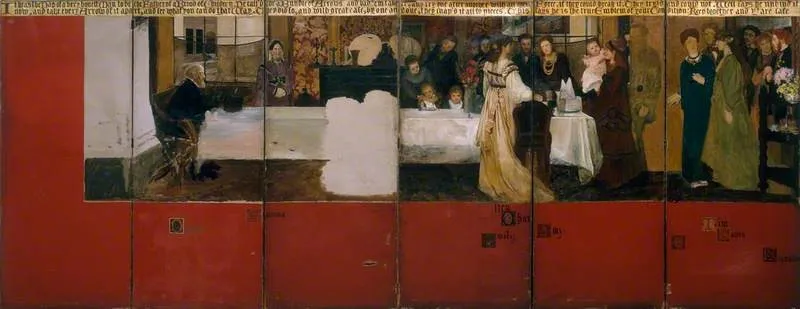
The Epps Family (folding screen) is an unspecified painting by Lawrence Alma-Tadema. It dates from 1870 and is held in the collection of the Victoria and Albert Museum.
About this work
Overview
Though best known for classical antiquity scenes, this work departs from his usual themes by portraying a contemporary domestic setting.
Created in 1870, The Epps Family is a six-panel folding screen painted by Sir Lawrence Alma-Tadema shortly after his move to London. Though best known for classical antiquity scenes, this work departs from his usual themes by portraying a contemporary domestic setting. The piece combines decorative function with narrative detail, reflecting Alma-Tadema’s interest in structured composition and material texture even outside historical subjects.
Subject & Meaning
The screen depicts a family gathering centered on a woman in white, seated at a table with others arranged around her, including an infant being held nearby. The scene suggests a private moment of domestic life, possibly a meal or social ritual. Unlike Alma-Tadema’s mythological works, this painting emphasizes familial intimacy rather than grandeur, offering a quiet observation of middle-class Victorian domesticity through carefully observed gestures and spatial arrangement.
Technique & Style
Alma-Tadema rendered the scene with meticulous attention to surface textures, marble floors, woven textiles, and fabric folds, hallmarks of his training in Antwerp and his fascination with material realism. The palette is subdued, dominated by dark tones with selective highlights on the central figure’s dress and tablecloth to guide the viewer’s focus. Each panel is composed with geometric precision, enhancing the screen’s architectural presence while maintaining narrative continuity across its six sections.
History & Provenance
Commissioned by the Epps family, the screen was completed in the same year Alma-Tadema settled in England. It remained in private hands for much of its history, rarely exhibited publicly. Its survival as a functional object rather than a framed canvas is unusual for his oeuvre.
The work was later acquired by a public collection, where its dual role as art and furniture has prompted scholarly interest in domestic art practices of the period.
Context
In late 19th-century Britain, decorative screens were popular in affluent homes, blending art with interior design. Alma-Tadema’s choice to apply his academic technique to a domestic subject reflects broader cultural trends favoring realism and private life in art. While his classical works drew from ancient Rome, this screen reveals his adaptability to contemporary tastes, aligning with the Victorian fascination with domestic virtue and familial representation.
Legacy
Though less studied than his Roman scenes, The Epps Family illustrates Alma-Tadema’s versatility and his engagement with the decorative arts. It stands as a rare example of his work in a functional format, bridging fine painting and interior design. The screen contributes to understanding how academic artists responded to domestic patronage and the evolving role of art in everyday life during the Victorian era.
Artist & collection
Artist
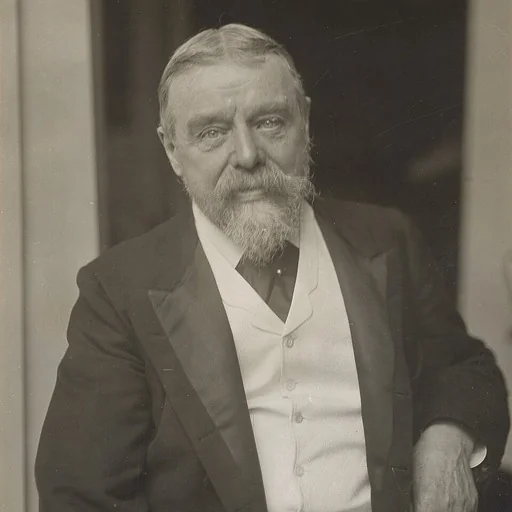
Sir Lawrence Alma-Tadema ( AL-mə TAD-ay-mə; born Lourens Alma Tadema, Dutch:; 8 January 1836 – 25 June 1912) was a Dutch painter who later settled in the United Kingdom, becoming the last officially recognised denizen in 1873.

- The Table
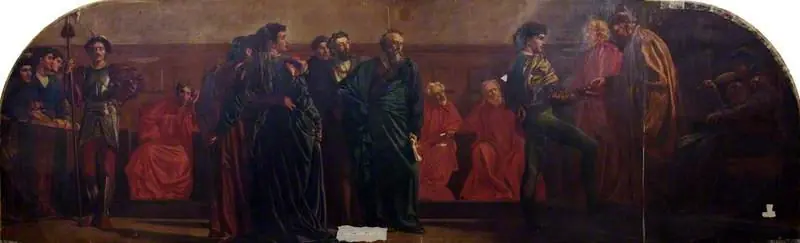 The Distribution of Art Prizes
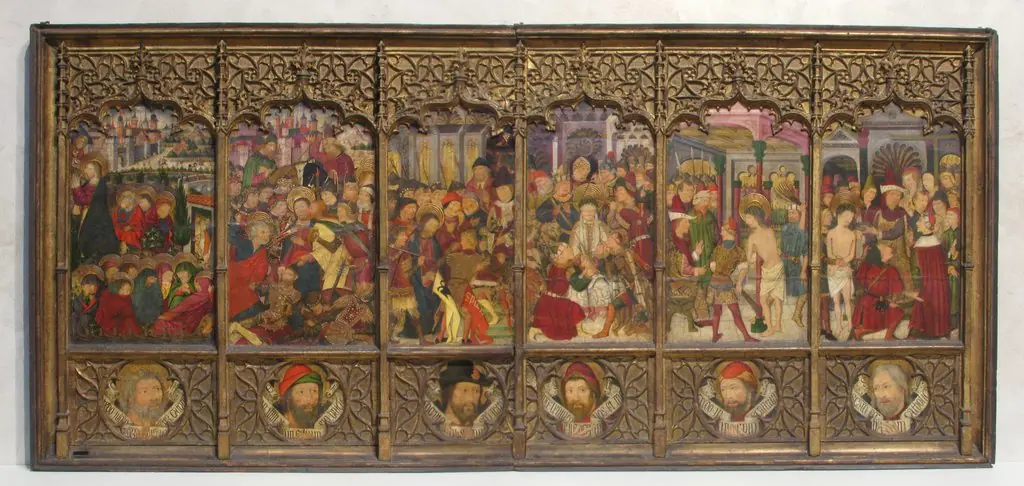 Altarpiece (retablo) with Scenes from the Passion
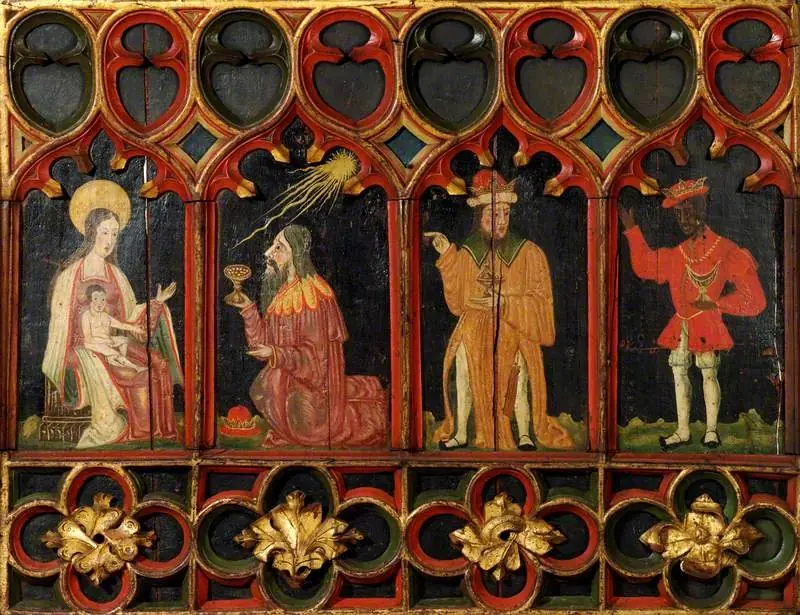 The Adoration of the Magi (lower part of a rood screen)
 St Jerome and St Francis; reverse, Mary Magdalene embracing The Cross
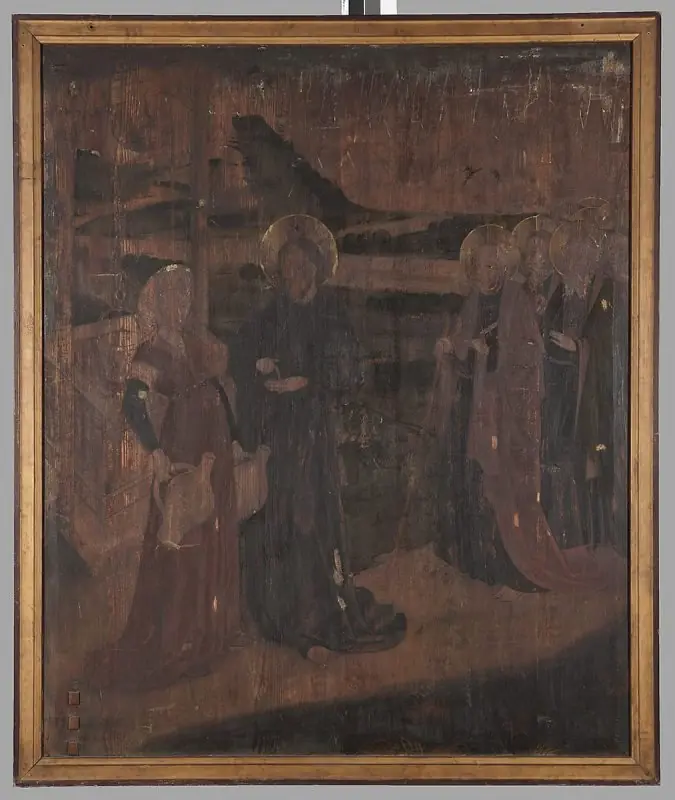 Legnica polyptych - right wing external - upper panel - obverse: St Barbara, St Catherine, St Dorothy; reverse: Christ and the Samaritan
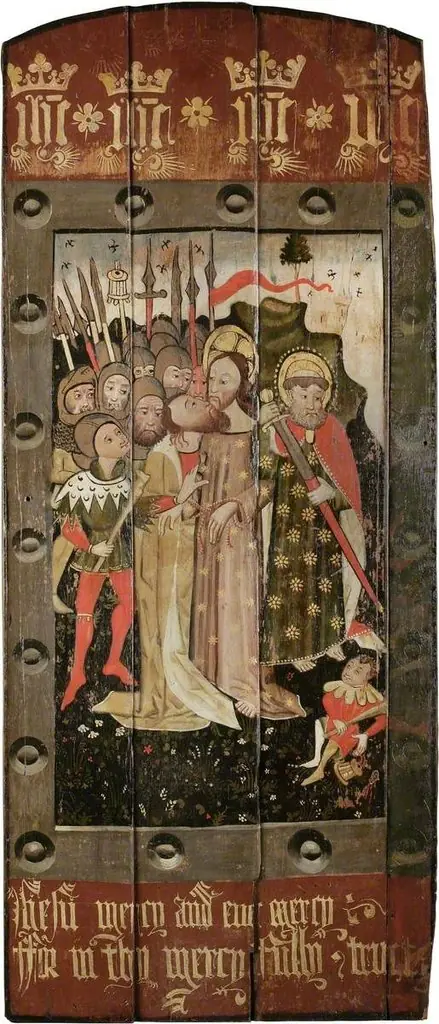 The Kiss of Judas
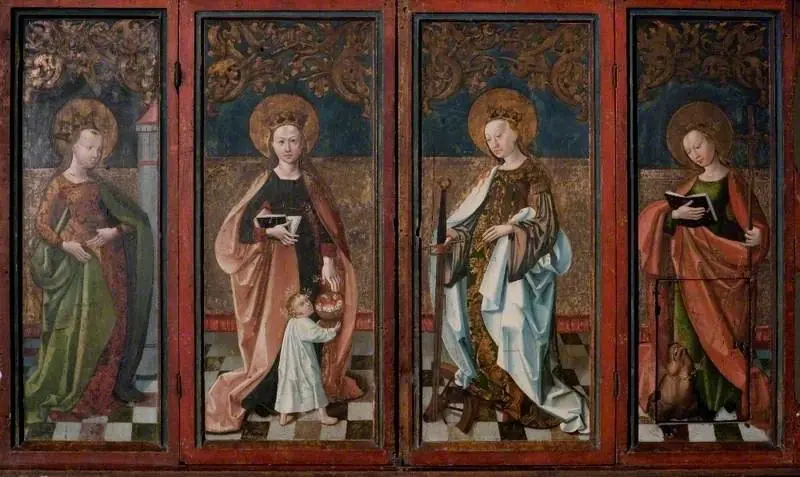 Saint Barbara (panel one), Saint Dorothy (panel two), Saint Catherine (panel three), and Saint Margaret (panel four) (predella of an altarpiece)
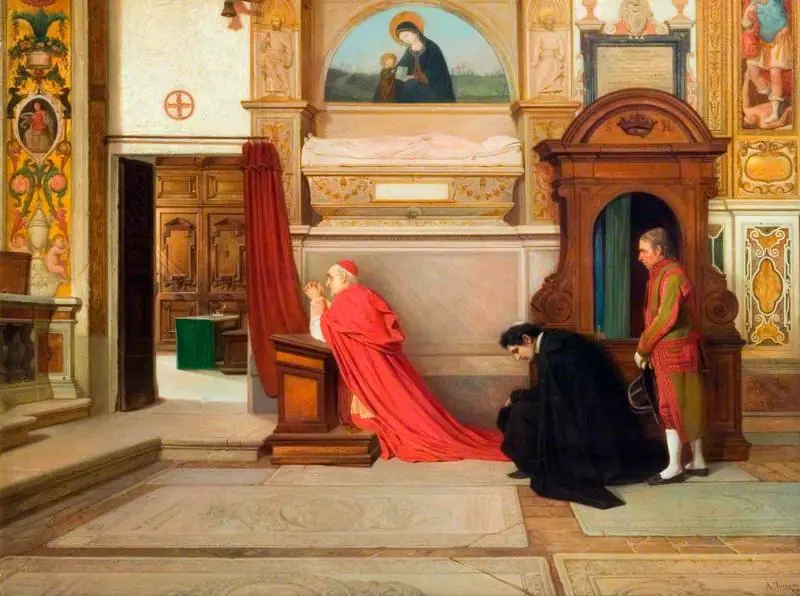 Church of Sant'Onofrio, Rome: The Interior with a Cardinal
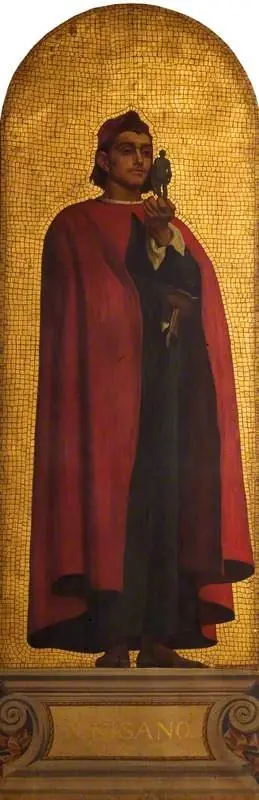 Nicola Pisano (c.1220/1225–c.1284) (design for a mosaic in the Victoria and Albert Museum)
 John Knox Dispensing the Sacrament at Calder House (unfinished)
 Mary and child, Saint Julita and Saint Guerito.