Artwork
Judgment of Solomon
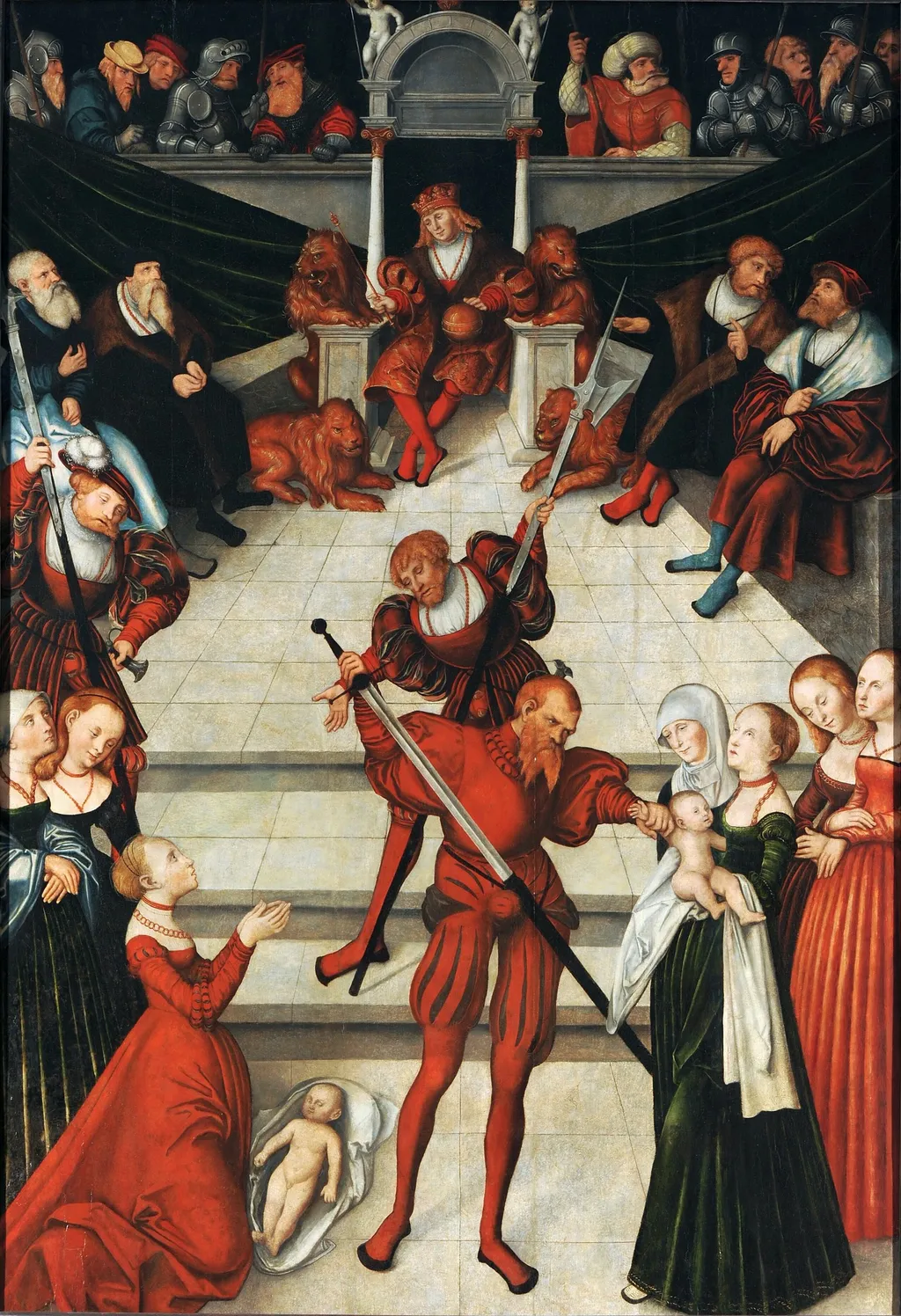
Judgment of Solomon is a paint painting by the Northern Renaissance artist Lucas Cranach the Elder. It dates from 1537 and is held in the collection of the Gemäldegalerie Berlin.
About this work
Overview
Painted in 1537 by Lucas Cranach the Elder, The Judgment of Solomon illustrates the biblical narrative from 1 Kings 3:16–28.
Painted in 1537 by Lucas Cranach the Elder, The Judgment of Solomon illustrates the biblical narrative from 1 Kings 3:16–28. The composition centers on King Solomon, who stands elevated on a dais, gesturing toward a sword-wielding soldier while addressing two women disputing the custody of an infant. Cranach arranges the figures within a shallow, stage-like space characteristic of his late style, utilizing a vibrant palette and distinct linear contours to define the forms.
The scene captures the moment of judgment, with the true mother kneeling in distress and the false claimant standing defiantly, surrounded by a court of soldiers and nobles observing the proceedings. Executed during the height of the German Renaissance, this work reflects Cranach's role as a leading artist in Wittenberg and his close association with the Protestant Reformation, though the subject remains a traditional Old Testament moral exemplum. The painting demonstrates the artist's mature ability to blend narrative clarity with the expressive, slightly mannered figures typical of his workshop's output in the late 1530s.
Subject & Meaning
The composition centers on Solomon, sword in hand, as he evaluates the claim of two mothers, one kneeling, the other standing, over a child placed on the floor. The narrative illustrates the king’s famed wisdom, emphasizing themes of justice and discernment that were resonant in Reformation-era religious art.
Technique & Style
Cranach employs a pronounced chiaroscuro, using contrasts of light and shadow to model the figures and give depth to the interior space. Bold reds and blues dominate the palette, highlighting the royal attire and drawing attention to the central drama, while intricate details in clothing and accessories convey status and opulence.
History & Provenance
The painting has remained in German collections since its creation, eventually entering the holdings of Berlin’s Gemäldegalerie. Its attribution to Cranach the Elder is supported by stylistic analysis and documentation linking the work to his workshop during the early 16th century.
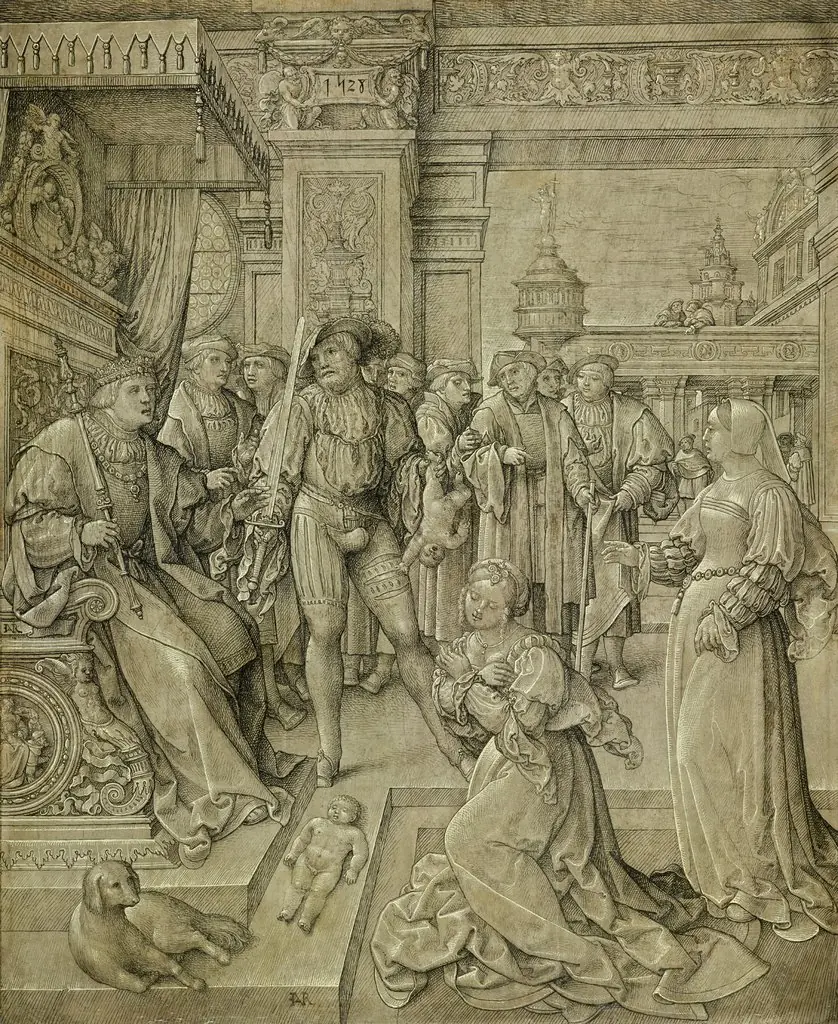
Own this work as a print
Artist & collection
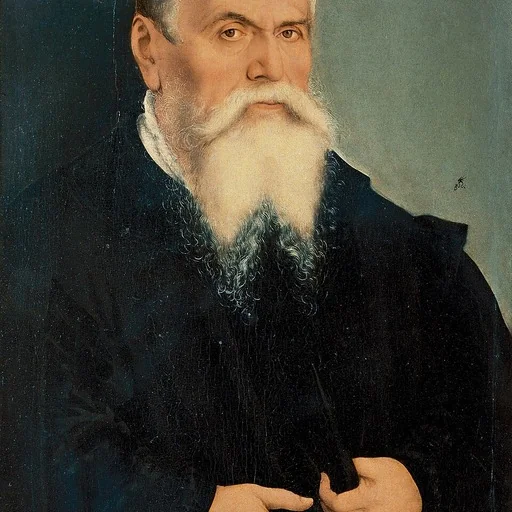
Artist
Lucas Cranach the Elder was a German Renaissance painter and printmaker in woodcut and engraving.

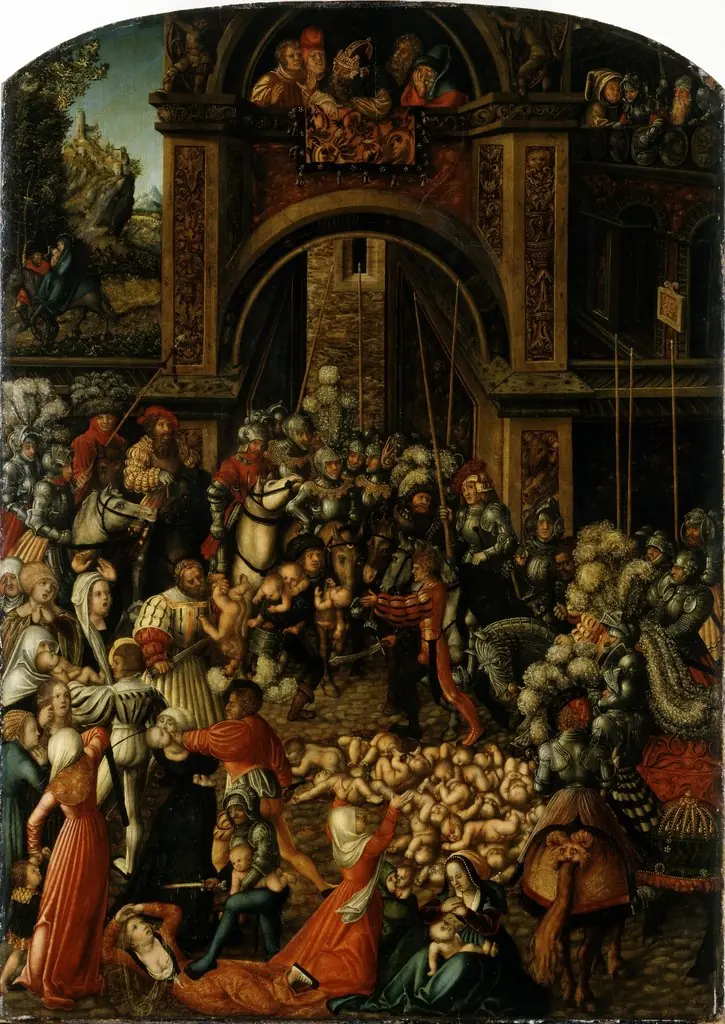 The Massacre of the Innocents
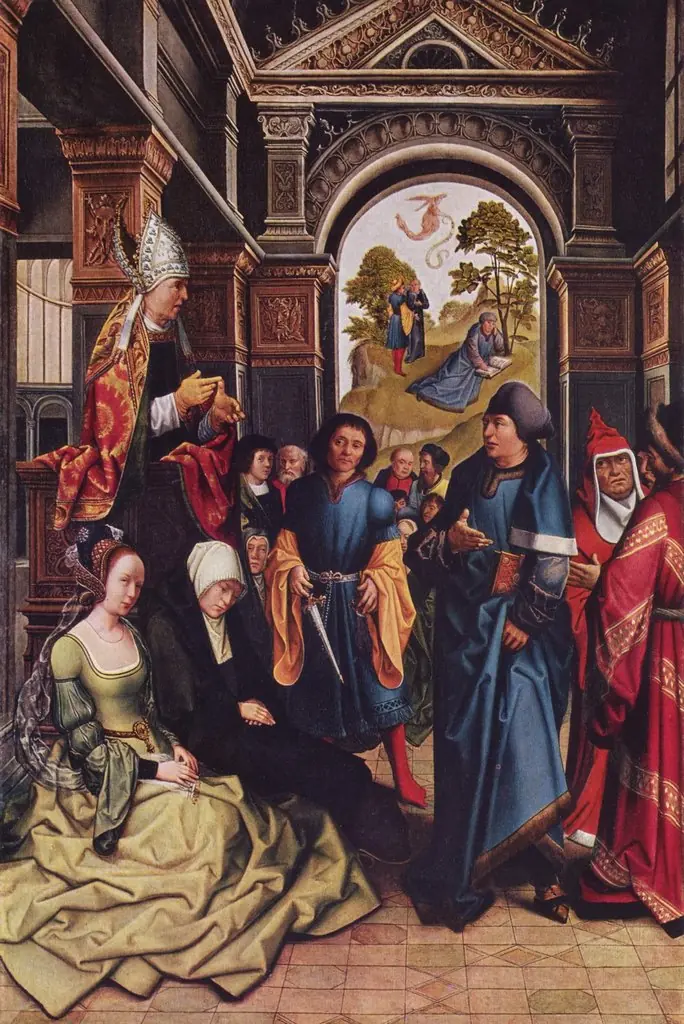 Sermon of St. Ambrose Outside: Two standing holy bishops
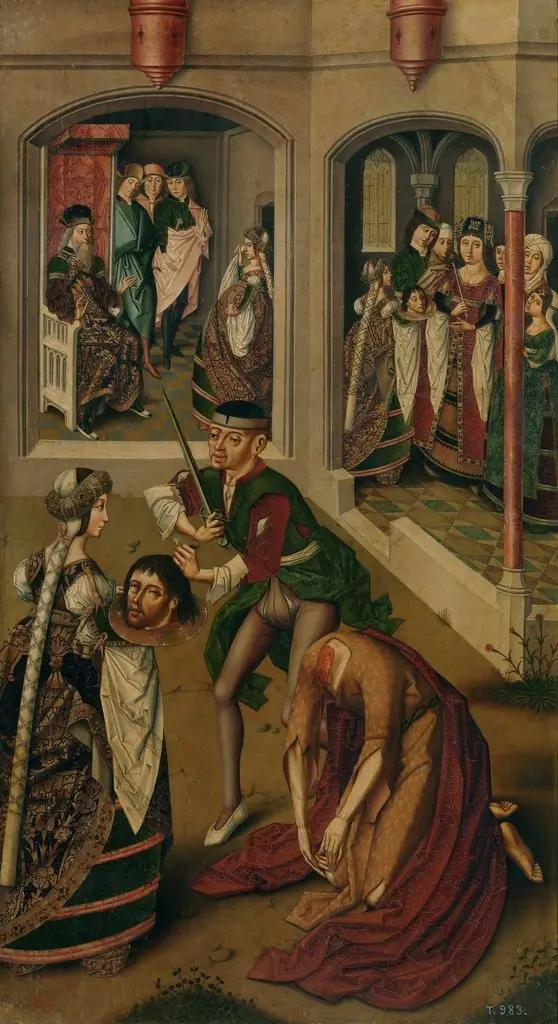 The Beheading of Saint John the Baptist
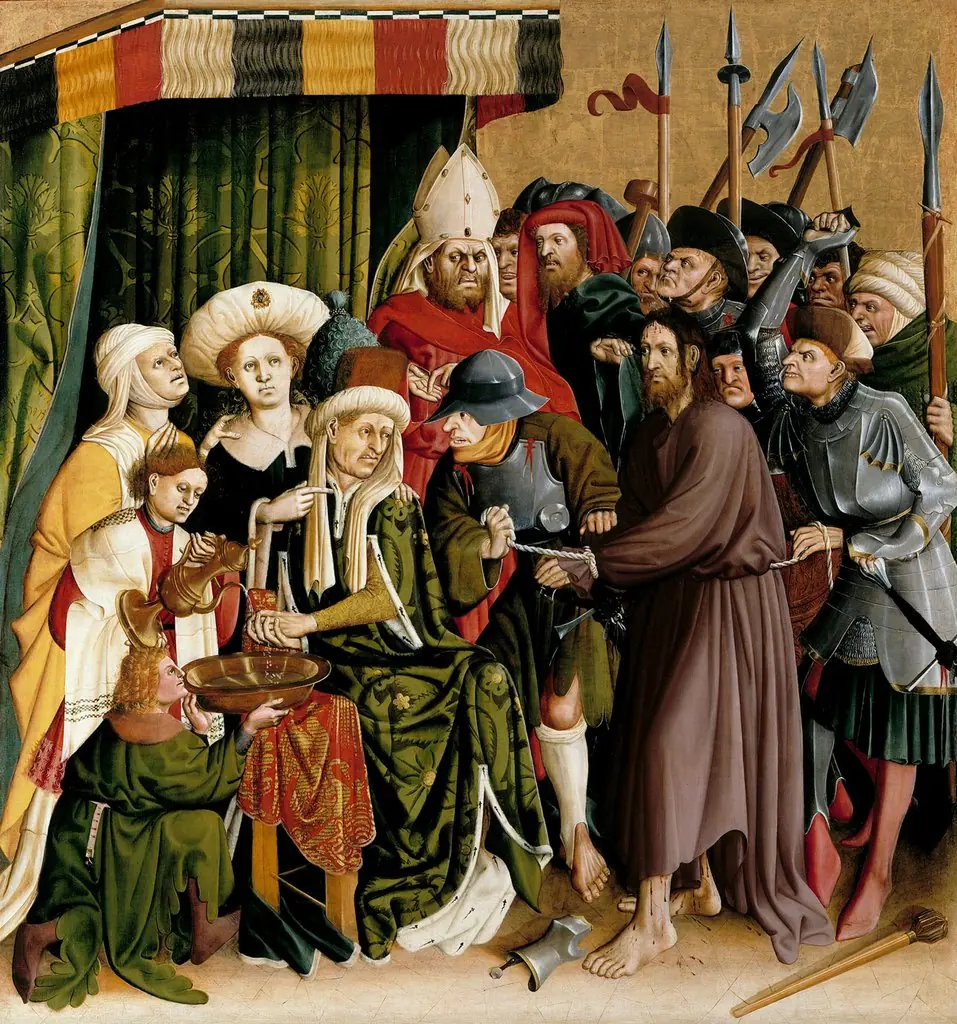 Christ before Pilate
 Christ Presented to the People
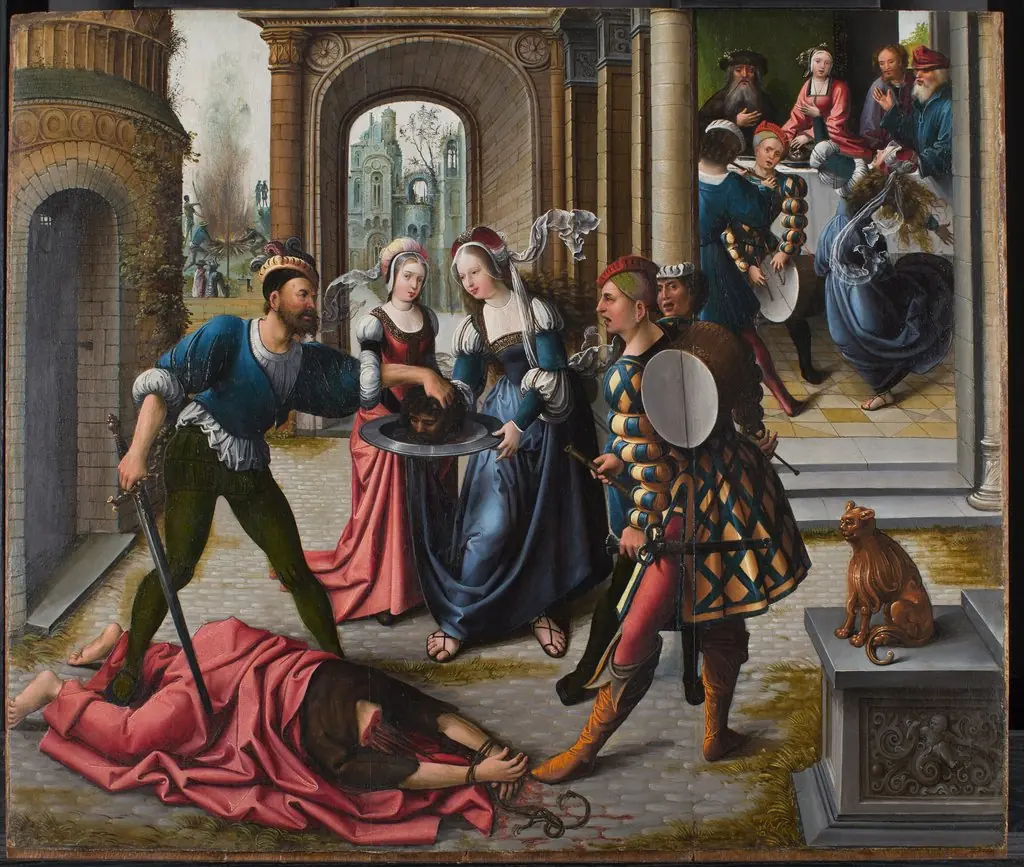 The Martyrdom of Saint John the Baptist
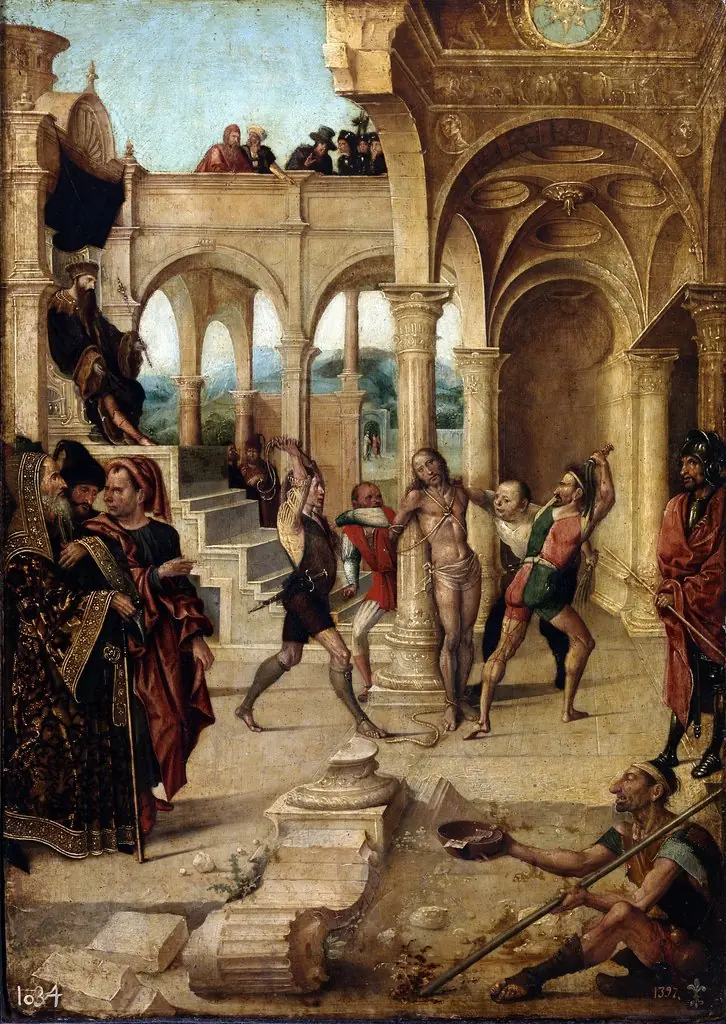 The Flagellation
 Ecce Homo
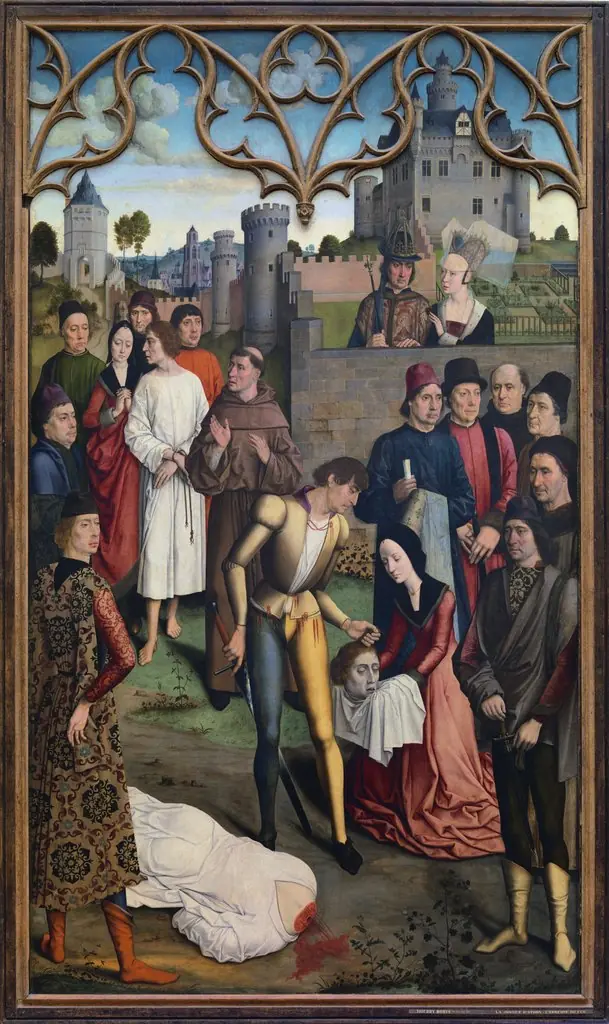 Justice of Emperor Otto III: The Beheading of the Innocent
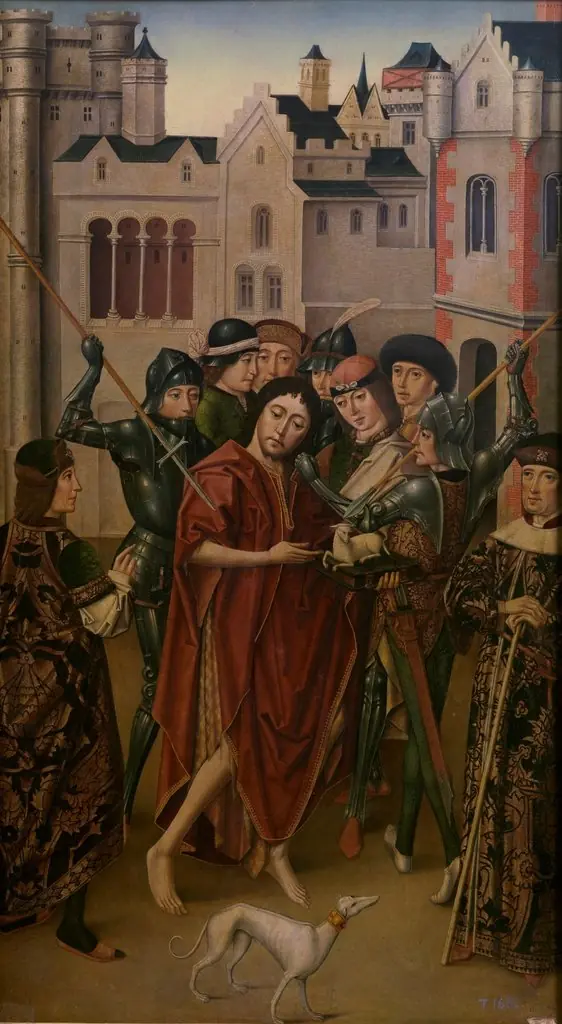 The Arrest of Saint John the Baptist
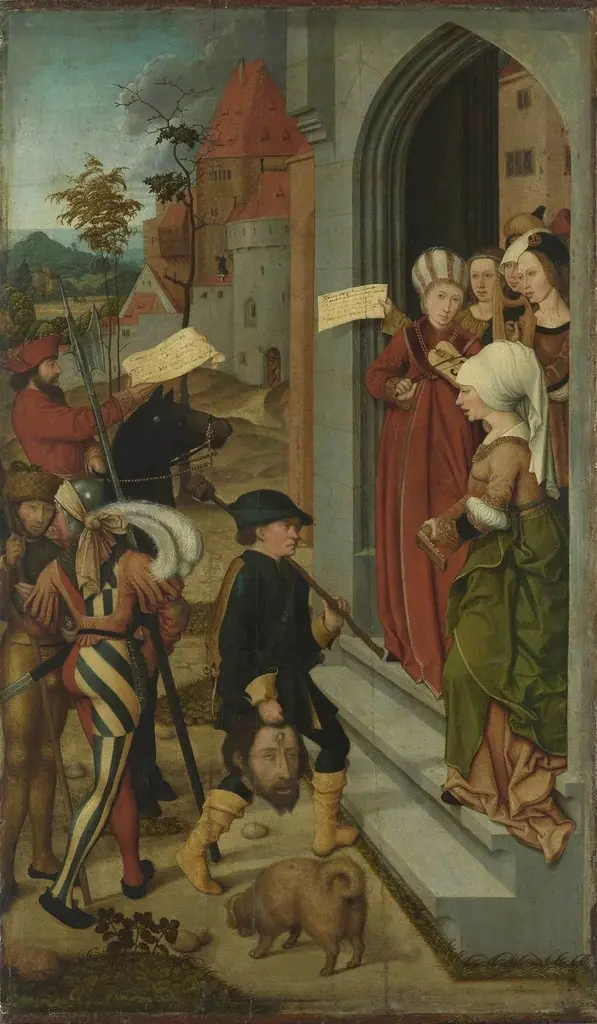 The returning of David with the head Goliath
- The Judgment of Solomon