Artwork
The Despair of Cephalus
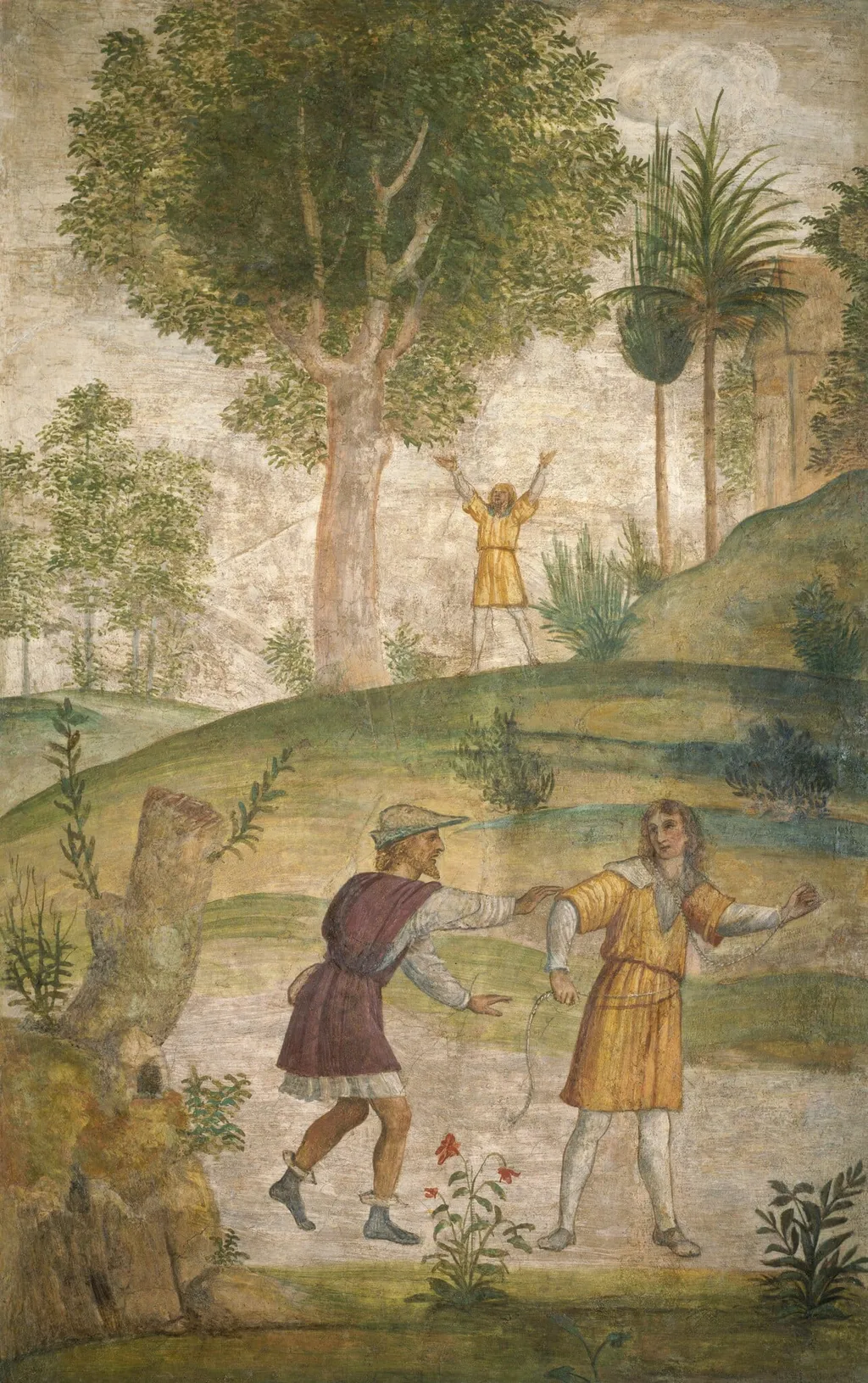
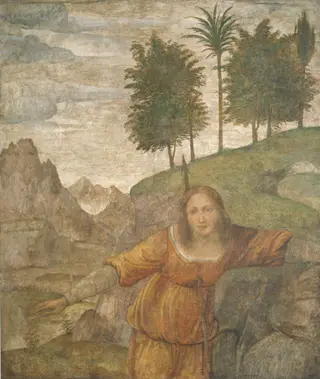
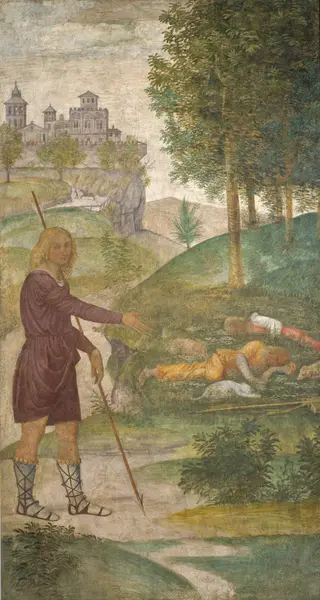
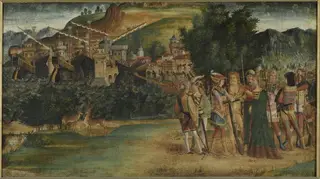
The Despair of Cephalus is a fresco painting by the Mannerist artist Luini Bernardino. It dates from 1521 and is held in the collection of the National Gallery of Art.
About this work
Technique & Style
Originally part of a decorative cycle commissioned for a Milanese residence or its country estate, the work was later detached from its architectural support.
The Despair of Cephalus is executed as a fresco, a technique involving the application of pigment to wet plaster, which was the standard medium for the wall paintings created by Bernardino Luini around 1521. Originally part of a decorative cycle commissioned for a Milanese residence or its country estate, the work was later detached from its architectural support. The painting currently measures 181.9 cm in height and 118.4 cm in width.
As a fresco, the artwork relies on the chemical bond between the pigment and the lime plaster as it dries, a method that dictates both its handling during creation and its long-term preservation requirements.
History & Provenance
Created around 1521, this fresco was commissioned by Gerolamo Rabia for either his Milanese residence, the Casa Rabia, or his country estate, La Pelucca, near Monza. Although the Casa Rabia changed hands around 1530, the artwork remained in situ until its removal circa 1800. By the mid-19th century, the piece belonged to the Milanese lawyer Michele Cavaleri, who sold his entire collection to Enrico Cernuschi on 13 April 1873.
The work subsequently passed through the Parisian dealer Charles Sedelmeyer by 1897 and entered the collection of Rodolphe Kann by 1900. After Kann's death, his estate sold the fresco to the Duveen Brothers in 1907, who in turn sold it to the Samuel H. Kress Foundation in 1942; the Foundation gifted the work to the National Gallery of Art in Washington, D.C., the following year.
The Despair of Cephalus is held at the National Gallery of Art as part of the Samuel H. Kress Collection, where its accession number is 1943.0.1.2.
Overview
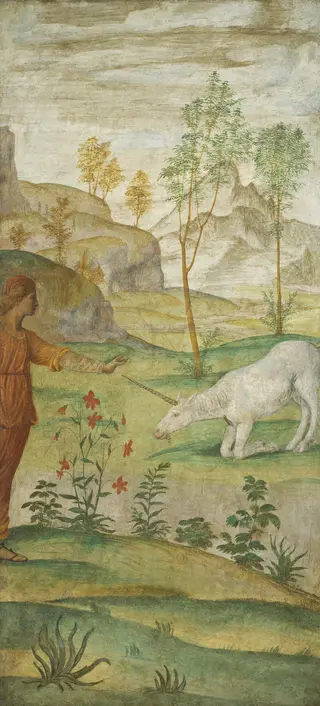
Bernardino Luini’s fresco entitled The Despair of Cephalus, executed around 1521, depicts a small group of figures set within a verdant countryside. The work is composed of three male figures arranged on a gently sloping terrain, rendered in vivid hues that contrast with the surrounding foliage. The composition balances a calm natural setting with a subtle sense of narrative tension.
Subject & Meaning
The central scene presents a man in a yellow robe with his arms lifted, as if vocalizing or pleading, while a second figure in a red tunic reaches toward a third figure, also dressed in yellow, who holds a leash. The gestures imply a moment of emotional distress or conflict, though the precise story remains ambiguous, inviting viewers to contemplate themes of loss, yearning, or restraint.
Own this work as a print
Artist & collection

Artist
Bernardino Luini (c. 1480/82 – June 1532) was a north Italian painter from Leonardo's circle during the High Renaissance. Both Luini and Giovanni Antonio Boltraffio were said to have worked with Leonardo directly; he…