Artwork
Cephalus and Pan at the Temple of Diana
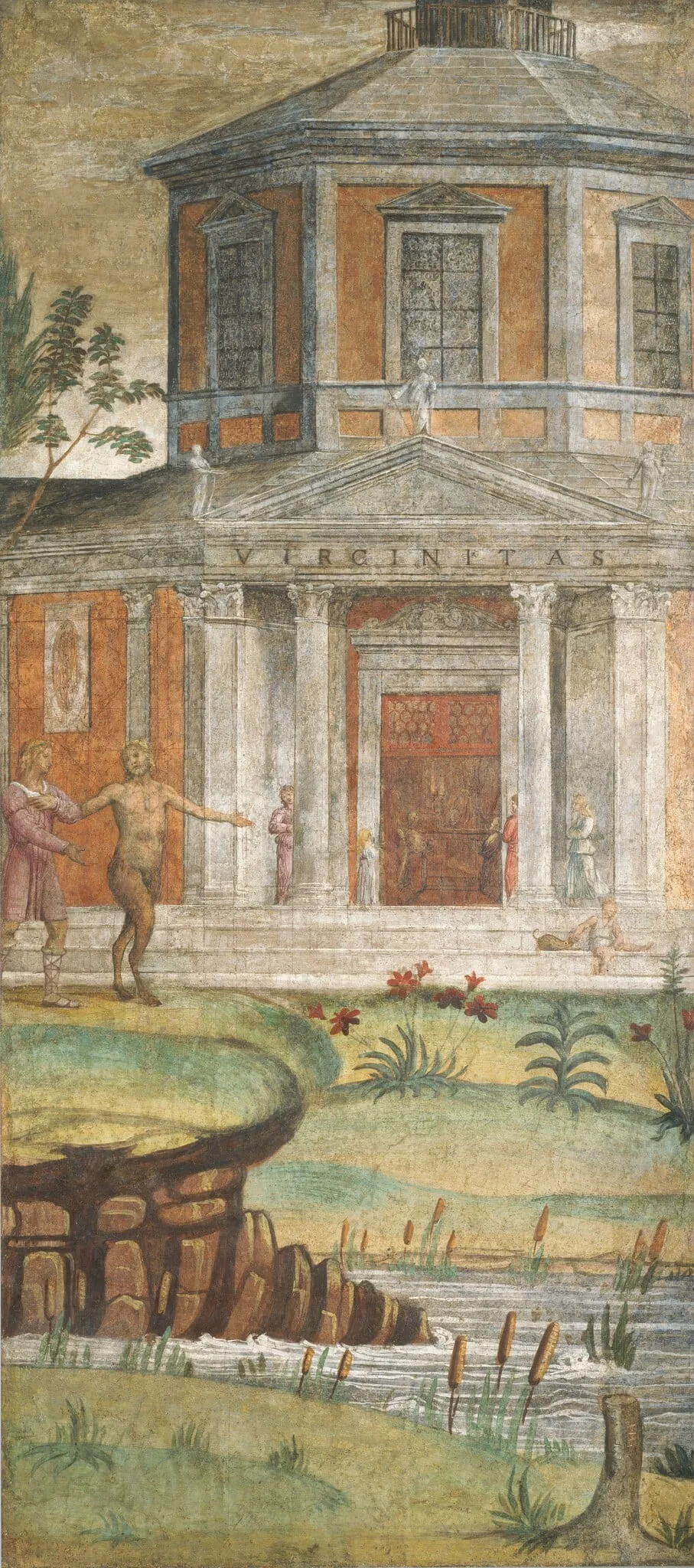
Cephalus and Pan at the Temple of Diana is a fresco painting by the Mannerist artist Luini Bernardino. It dates from 1521 and is held in the collection of the National Gallery of Art.
- Inscription
- Inscribed:center on entablature of temple: VIRGINITAS
About this work
Subject & Meaning
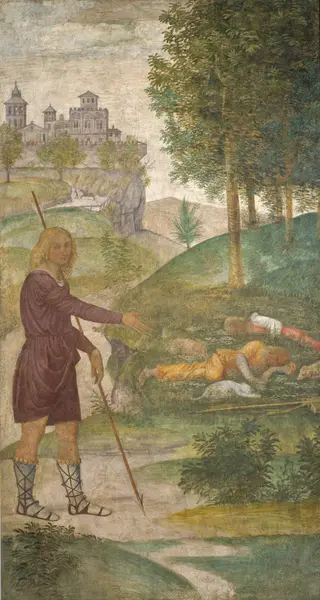
The fresco illustrates a mythological episode that places the hunter Cephalus alongside the god Pan within a sanctuary dedicated to the Roman goddess Diana.
The fresco illustrates a mythological episode that places the hunter Cephalus alongside the god Pan within a sanctuary dedicated to the Roman goddess Diana. As a mythological painting, the work reflects Renaissance interest in classical narratives and the practice of embedding such stories in sacred architectural settings to convey themes of nature, pursuit, and divine favor. The composition’s setting in a temple underscores the intertwining of mythic storytelling with contemporary patronage, using the familiar attributes of Diana to celebrate the patron’s cultural aspirations.
The piece thus serves both as a visual episode from antiquity and as a symbolic statement within the decorative program of its original domestic context.
Technique & Style
Cephalus and Pan at the Temple of Diana is executed in fresco, a technique in which pigments are applied to freshly laid wet plaster, allowing the colors to bond chemically with the wall as it cures. The work is a mural painting rather than a work on panel or canvas, and its large vertical format, measuring approximately 226 cm in height by 103.5 cm in width, reflects its architectural origins, having been produced in situ as part of a domestic decorative scheme. Luini's handling is characteristic of Lombard fresco practice of the early sixteenth century, employing the buon fresco method suited to the domestic interiors for which the commission was intended.
The painting's stylistic qualities reflect the Leonardesque tradition absorbed by Luini, with soft modeling and graceful figural types rendered directly into the plaster surface.
The condition of the fresco reflects its history of detachment from its original wall setting prior to about 1800, after which it was transferred to a portable support. Despite this relocation, the work has retained its structural coherence and was deemed suitable for acquisition by major collections, ultimately entering the Samuel H. Kress Foundation and being gifted to the National Gallery of Art in 1943.
History & Provenance
The fresco was commissioned around 1522 by Gerolamo Rabia, a Milanese patron, for display in either the Casa Rabia on Piazza San Sepolcro or his country house, La Pelucca near Monza. It was executed by Bernardino Luini in 1520 as a fresco, depicting the mythological scene of Cephalus and Pan at the Temple of Diana.
After Rabia’s estate, the work entered the collection of lawyer Michele Cavaleri, who opened his holdings to the public in the 1870s, and was later sold to Enrico Cernuschi in 1873. The fresco passed through the dealer Charles Sedelmeyer, the collector Rodolphe Kann, the firm Duveen Brothers, and finally the Samuel H. Kress Foundation, which gifted it to the National Gallery of Art in 1943.
Overview
Bernardino Luini's fresco painting, "Cephalus and Pan at the Temple of Diana," was created around 1521. This work depicts a scene drawn from classical mythology, rendered directly onto a wall surface. It exemplifies the artistic trends prevalent during the early 16th century, showcasing an engagement with ancient narratives and architectural settings.
Artist & collection
Artist
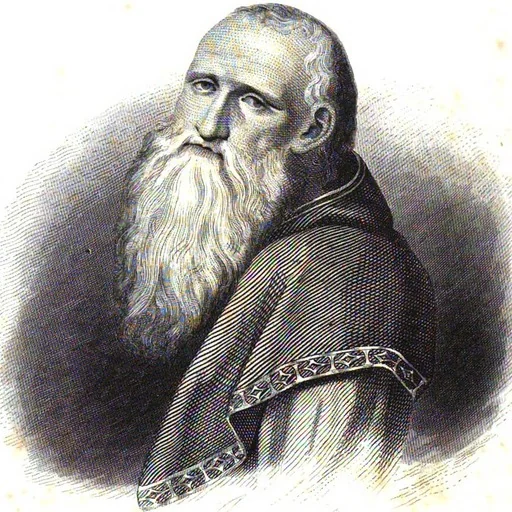
Bernardino Luini (c. 1480/82 – June 1532) was a north Italian painter from Leonardo's circle during the High Renaissance. Both Luini and Giovanni Antonio Boltraffio were said to have worked with Leonardo directly; he…

 The Adventures of Ulysses
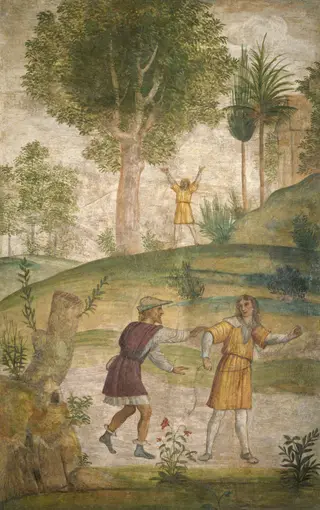 The Despair of Cephalus
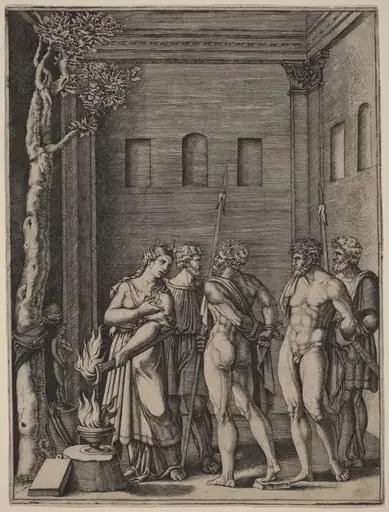 Iphigenia Recognizing Her Brother
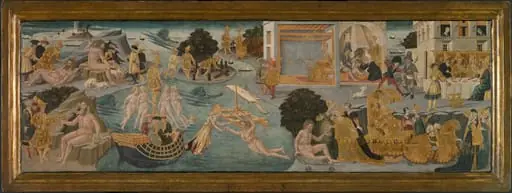 The Adventures of Ulysses
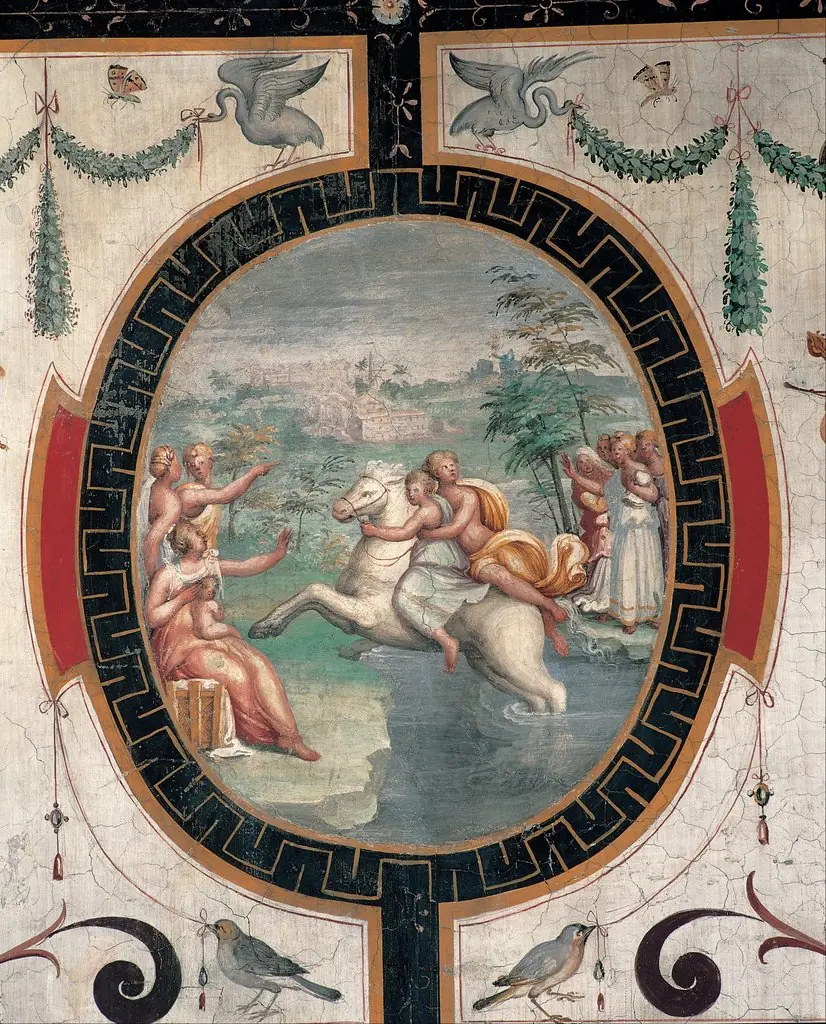 Clelia crossing the Tiber on a horse
 Presentation in the Temple
 Crowning with Thorns
 Narcissus at the Fountain
 Allegory of the Fall of Ignorant Humanity
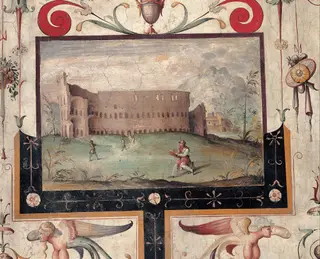 View of the Colosseum
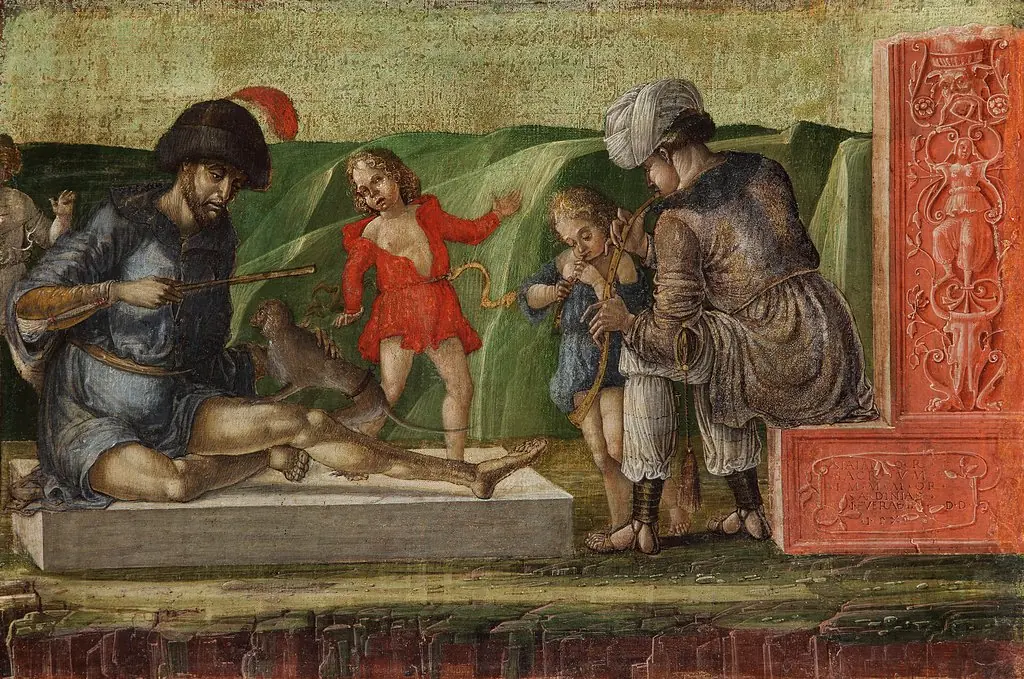 Musicians
- Cephalus Hiding the Jewels