Artwork
Ecce Homo
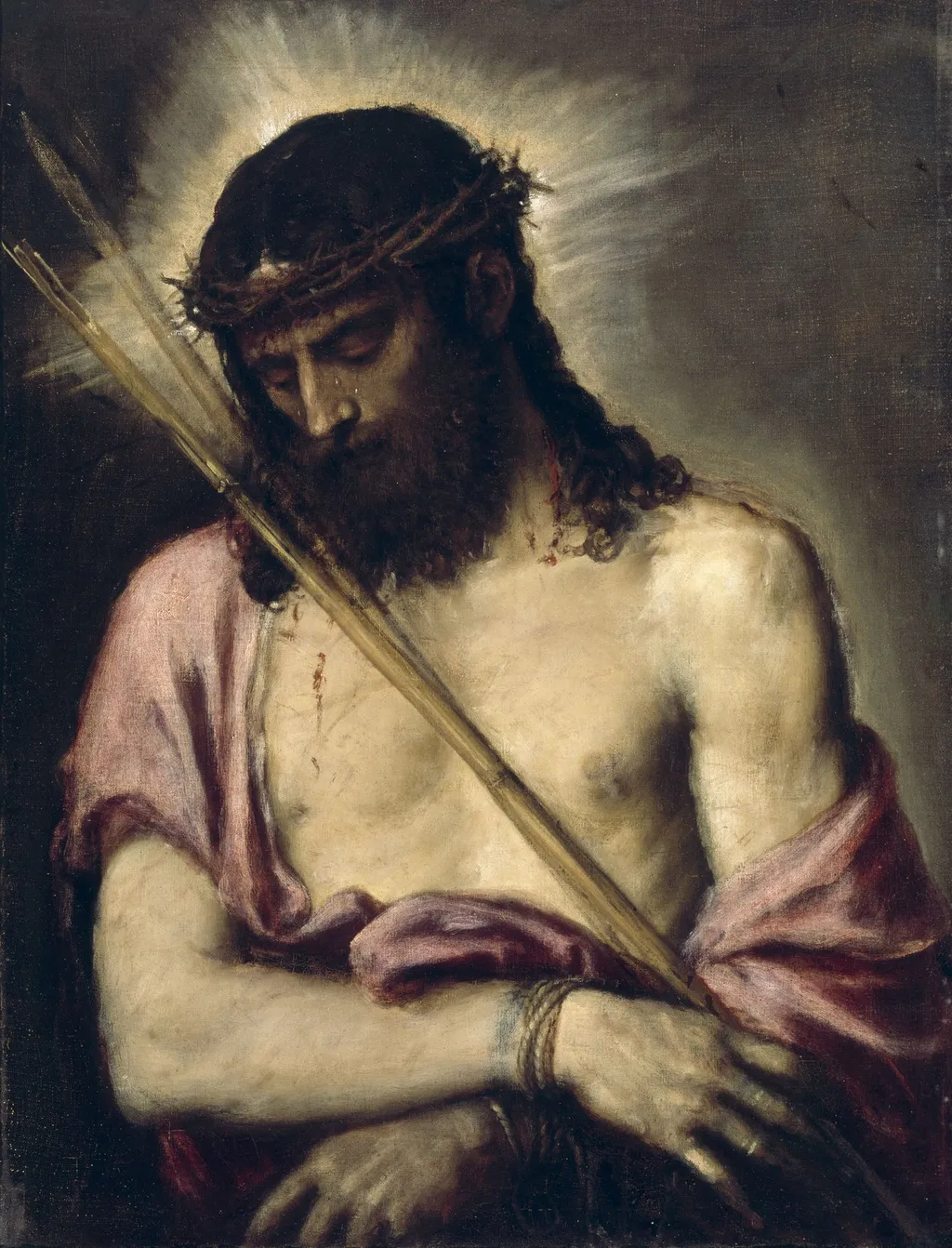
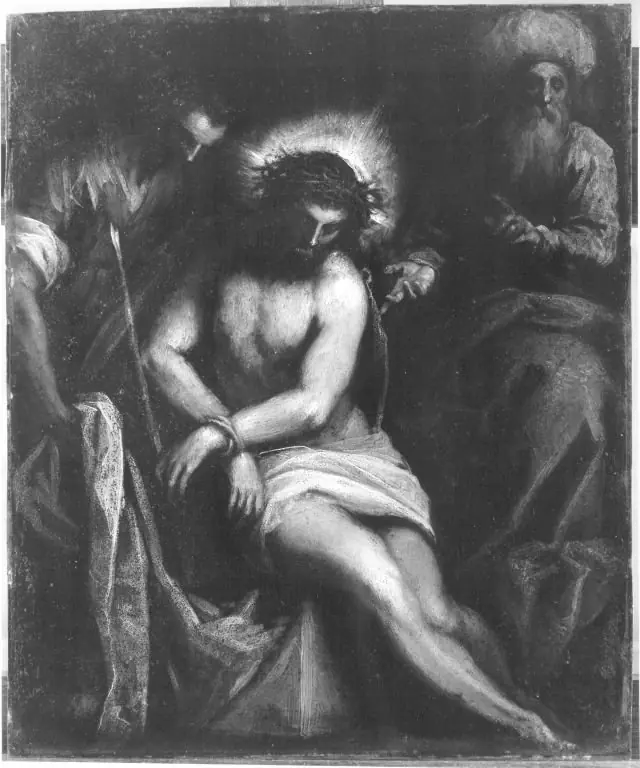
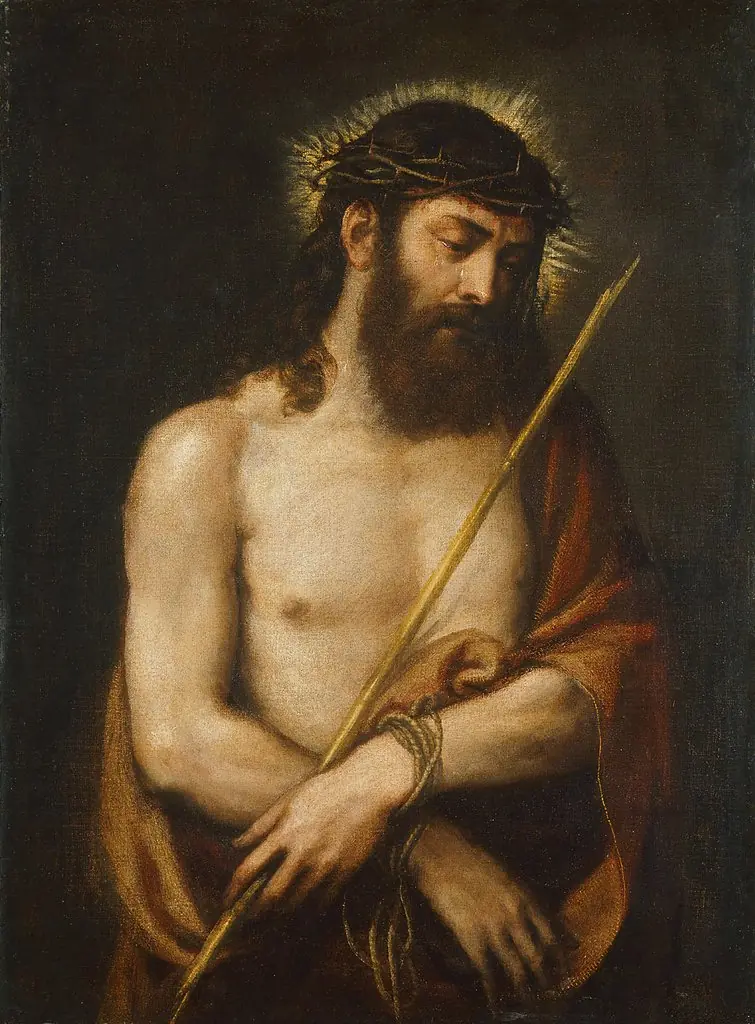
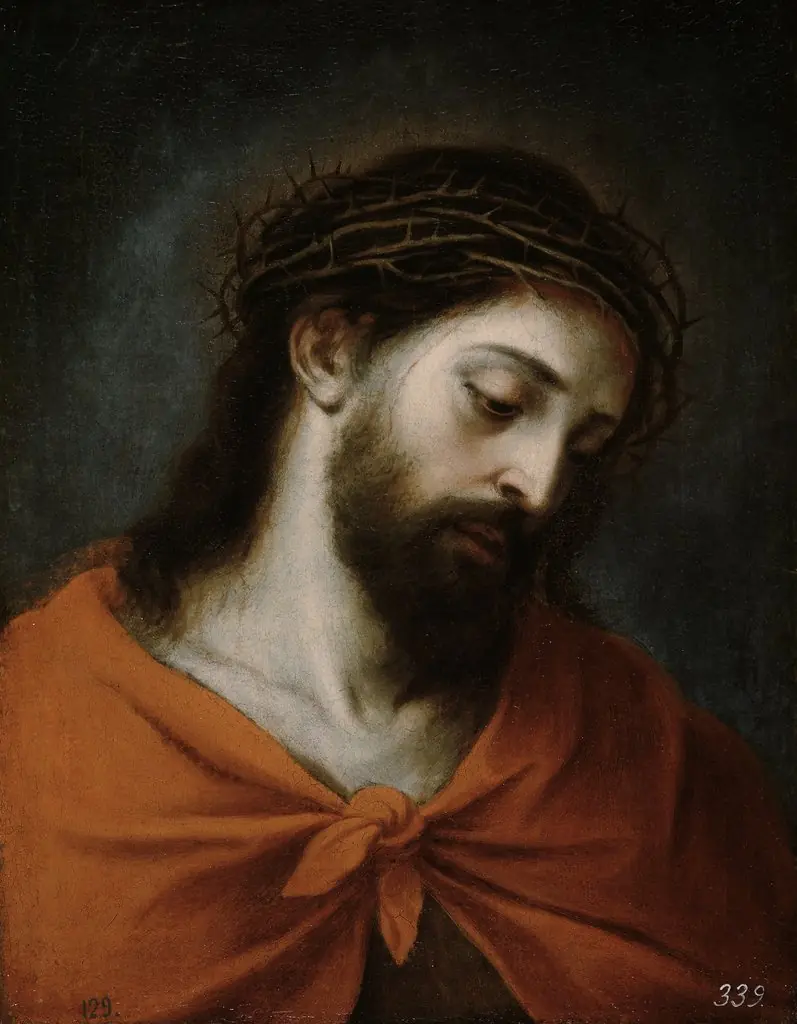
Ecce Homo is an oil painting by the Mannerist artist Titian. It dates from 1559 and is held in the collection of the National Gallery of Ireland.
About this work
Subject & Meaning
Titian’s composition centers on the half-length figure of Christ, whose bowed posture and bloodied crown convey suffering and humility.
The painting depicts the biblical scene of Pontius Pilate presenting Jesus to the crowd with the words “Ecce Homo” (“Behold the Man”), after his scourging and crowning with thorns. Titian’s composition centers on the half-length figure of Christ, whose bowed posture and bloodied crown convey suffering and humility. The placement of the crown of thorns above Christ’s head and the restrained palette amplify the moment’s solemnity and theological weight, underscoring themes of sacrifice and human frailty.
Technique & Style
Executed in 1559, this religious painting by Titian utilizes oil paint applied to a canvas support. The work measures 73.4 cm in height and 56 cm in width. Stylistically, it is identified with the Venetian school of art. The composition depicts Jesus Christ wearing a crown of thorns, illustrating the Ecce Homo theme.
History & Provenance
Titian's Ecce Homo was created in 1559, executed in oil paint on canvas, and depicts the Presentation of Christ to the crowd, with Jesus shown wearing the Crown of thorns. The painting entered the collection of the National Gallery of Ireland, where it remains held as a religious work of the Venetian school. No details of a commissioning patron, intermediate ownership, or acquisition history are recorded in the available sources.
The sources establish only the inception date, medium, and current institutional holding, leaving the prior provenance chain undocumented.
Overview
Created in 1559, Titian’s Ecce Homo is an oil painting that belongs to the later phase of the Venetian Mannerist style. The work portrays the biblical episode in which Christ, crowned with thorns, is presented before the Roman governor. Executed by the renowned Venetian painter Tiziano Vecellio, the piece now resides in the National Gallery of Ireland.
Context
The work reflects the Counter‑Reformation’s demand for emotionally resonant religious imagery, while also illustrating the Mannerist tendency toward elongated figures and heightened drama. Titian’s treatment of the subject aligns with contemporary depictions of Christ’s passion, yet his use of color and atmospheric depth marks a departure from earlier High Renaissance conventions.
Own this work as a print
Artist & collection
Artist
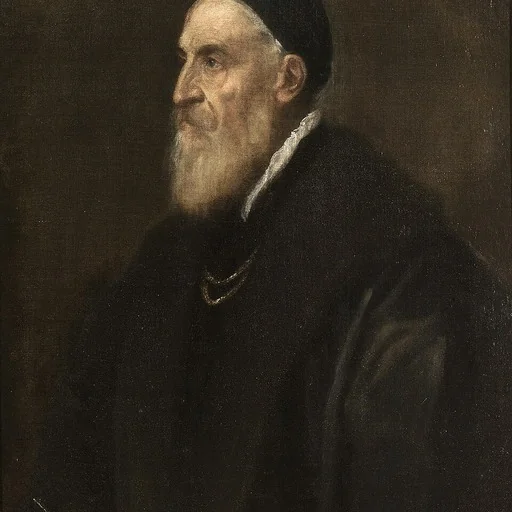
Tiziano Vecellio (Italian:; c. 1488/1490 – 27 August 1576), Latinized as Titianus, hence known in English as Titian ( TISH-ən), was an Italian Renaissance painter. The most important artist of Renaissance Venetian…