Artwork
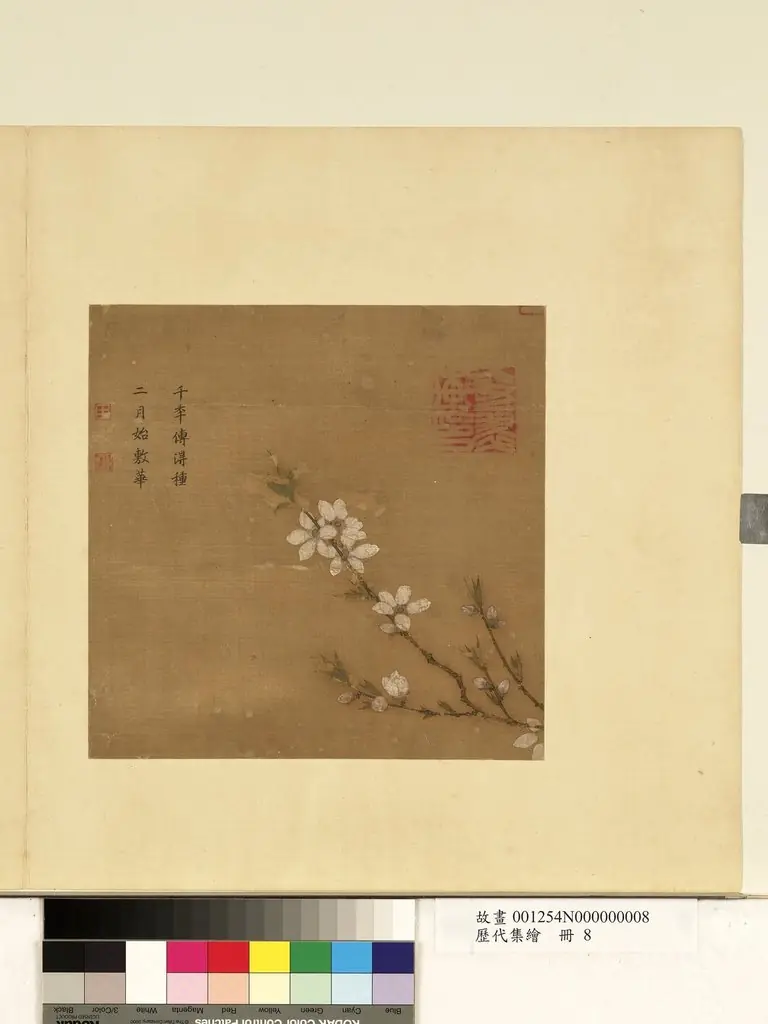
名賢妙蹟 冊 宋馬遠倚雲仙杏
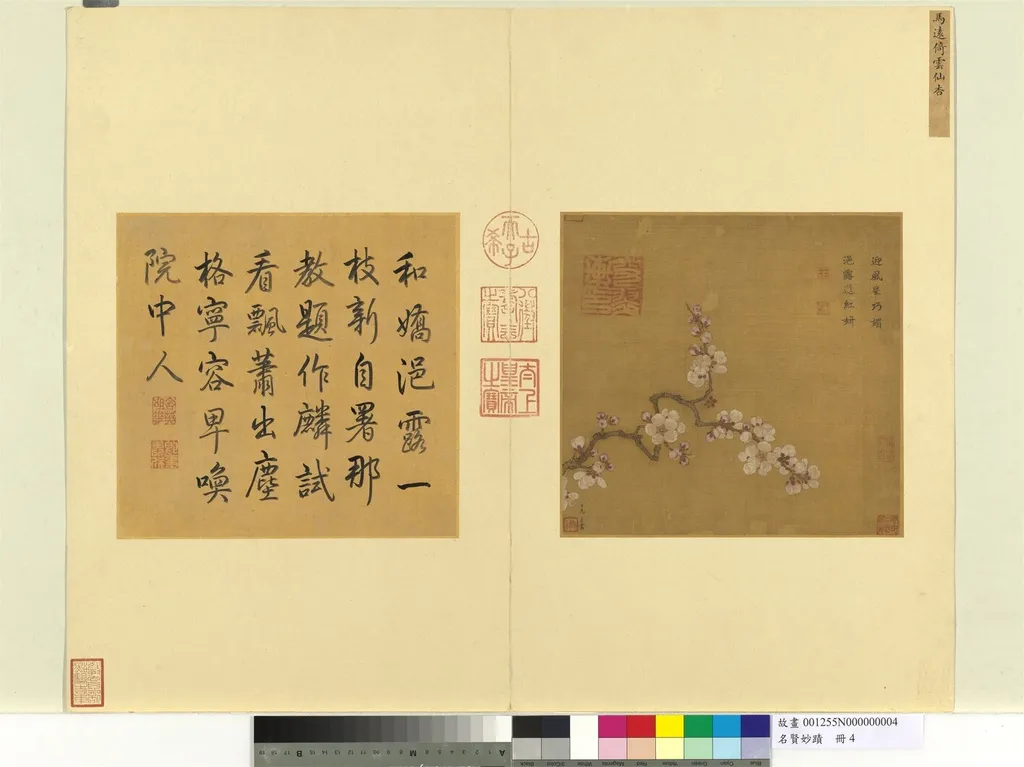
名賢妙蹟 冊 宋馬遠倚雲仙杏 is an unspecified painting by the Song dynasty painting artist Ma Yuan. It dates from 1196 and is held in the collection of the National Palace Museum.
About this work
Overview
This album leaf, created by Ma Yuan during the Southern Song dynasty, is one of a series of court-commissioned works on silk.
This album leaf, created by Ma Yuan during the Southern Song dynasty, is one of a series of court-commissioned works on silk. It pairs calligraphy with a painted floral motif, reflecting the scholarly aesthetic favored in the imperial academy. The piece belongs to a tradition where poetry and painting were combined to evoke contemplative moods, rather than to narrate stories or display technical virtuosity alone.
Subject & Meaning
The right panel portrays a single branch of flowering apricot, its delicate pink blossoms emerging from slender, gnarled twigs. The left panel contains a poetic inscription in ink, likely composed by a court scholar. Together, they suggest the quiet resilience of nature and the refined sensibility of the literati. The apricot, blooming in early spring, symbolizes renewal and moral integrity, themes central to Song-era Confucian ideals.
Technique & Style
Ma Yuan employed fine, controlled brushwork to render the branch with subtle gradations of brown ink, while the flowers are hinted at with minimal strokes of pale pink. The background remains unadorned in warm ochre, enhancing the isolation of the motif. This restrained palette and sparse composition reflect the Ma-Xia school’s preference for atmospheric suggestion over detailed realism, emphasizing mood over description.
History & Provenance
Created around 1196, the work was likely produced for the imperial court in Lin’an, where Ma Yuan served as a painter. It was preserved within the imperial collection and later transferred to the National Palace Museum in Taipei following the relocation of artifacts during the mid-20th century. Its survival as a single leaf suggests it was once part of a larger album, now dispersed.
Context
During the Southern Song, court painters increasingly favored intimate, lyrical subjects over grand historical or religious themes. The integration of poetry and painting on silk album leaves became a hallmark of elite culture, blending literary refinement with visual subtlety. Ma Yuan’s approach, with its emphasis on negative space and emotional restraint, aligned with broader shifts toward introspective aesthetics in the period.
Legacy
Ma Yuan’s influence extended beyond his lifetime, shaping later Chinese and Japanese ink painting traditions. His use of asymmetry, minimalism, and poetic suggestion became foundational to the development of ink-wash aesthetics. This album leaf exemplifies how Song court painting elevated everyday natural forms into vehicles for philosophical reflection, a model followed for centuries.
Artist & collection

Artist
Ma Yuan (Chinese: 馬遠; pinyin: Mǎ Yuǎn; Wade–Giles: Ma Yüan; c. 1160–65 – 1225) was a Chinese painter of the Song dynasty. His works, together with that of Xia Gui, formed the basis of the so-called Ma-Xia (馬夏) school of…

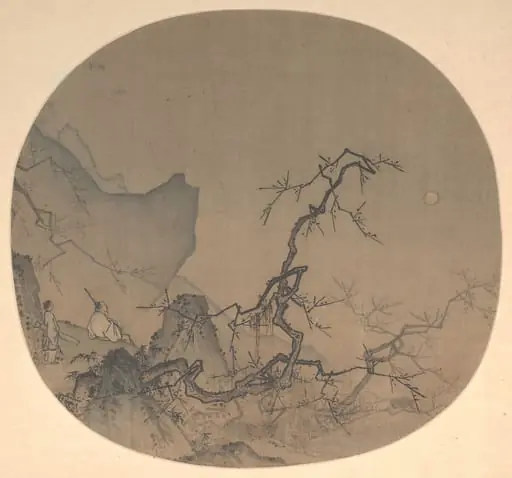 南宋 馬遠 月下賞梅圖 團扇|Viewing plum blossoms by moonlight
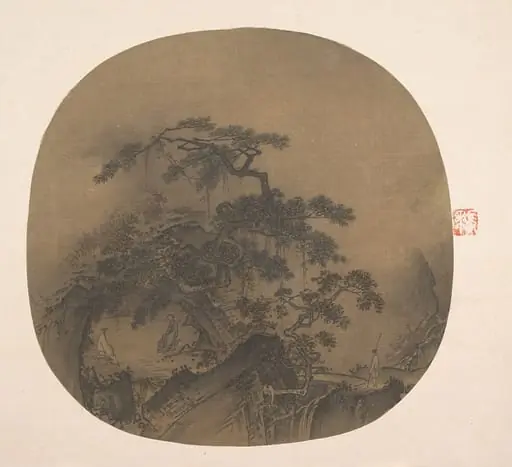 南宋 佚名 洞天論道圖 團扇|Conversation in a cave
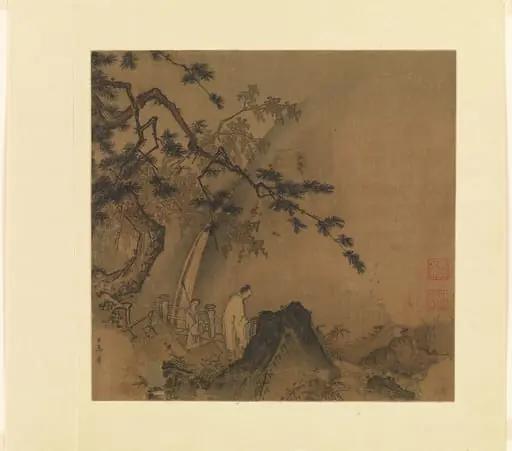 南宋 馬遠 高士觀瀑圖 冊頁 絹本|Scholar viewing a waterfall
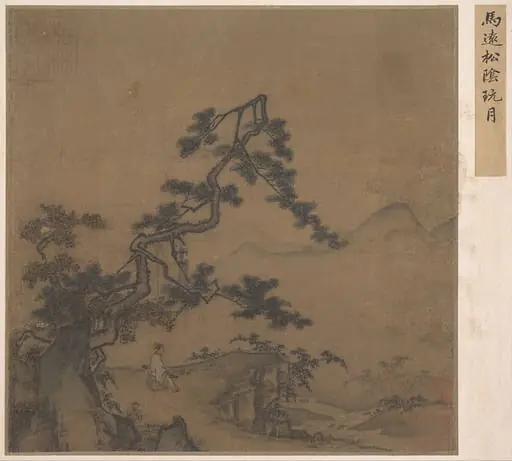 南宋 佚名 倣馬遠 松陰玩月圖 冊頁|Viewing the Moon under a Pine Tree
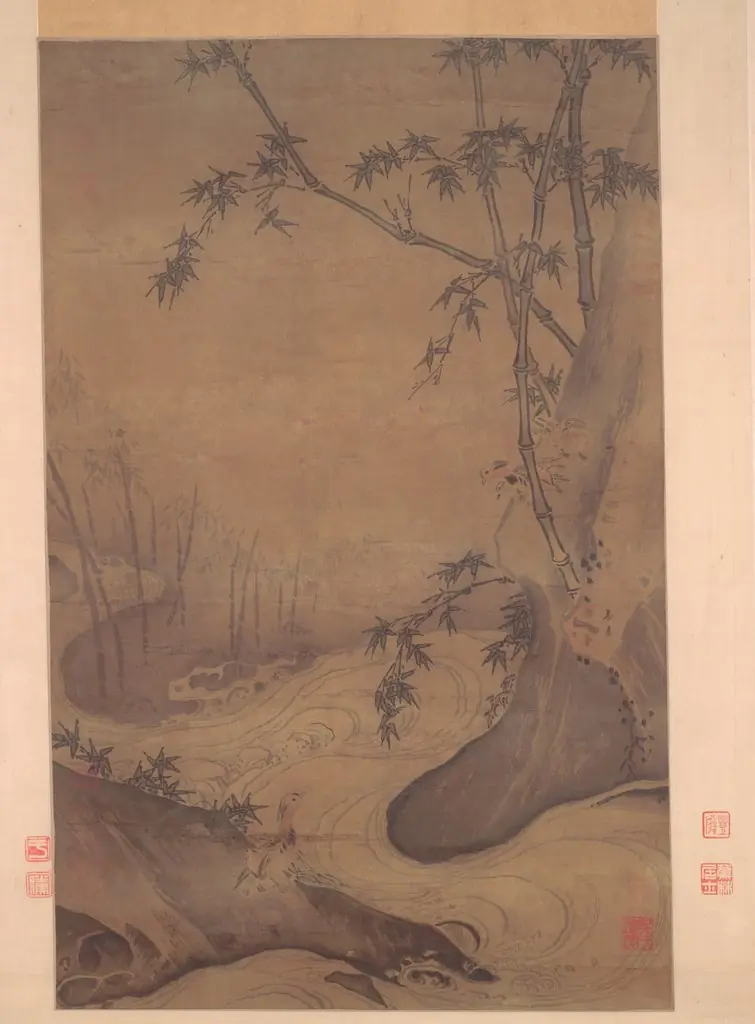 Bamboo and Ducks by a Rushing Stream
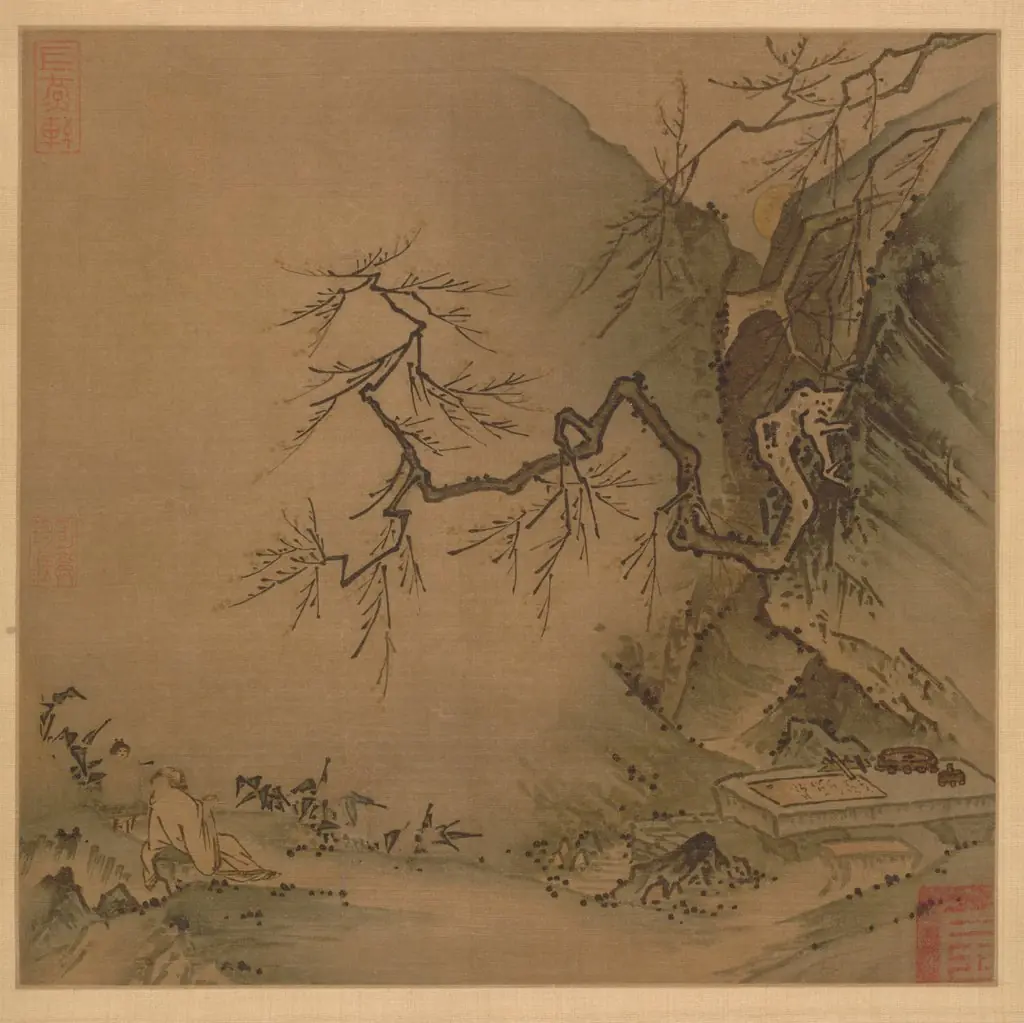 Drinking in the Moonlight
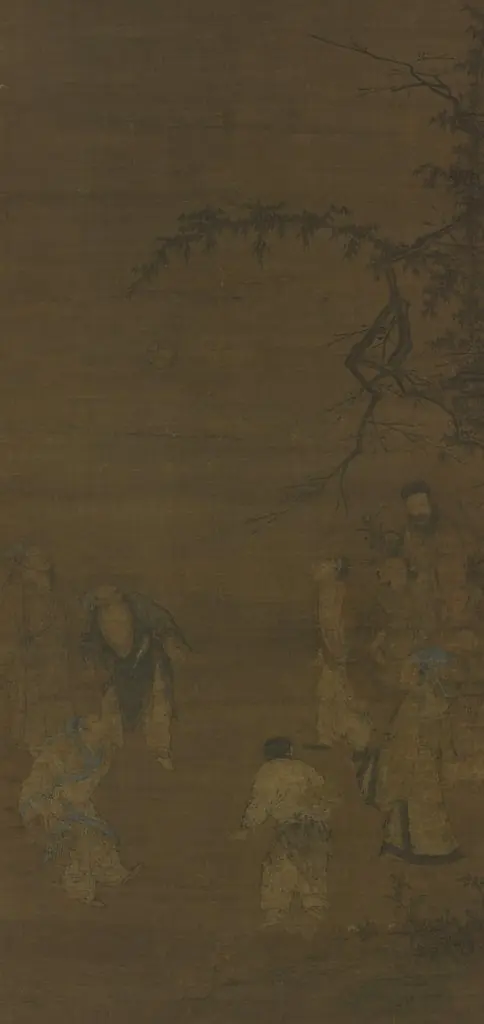 The Football Players
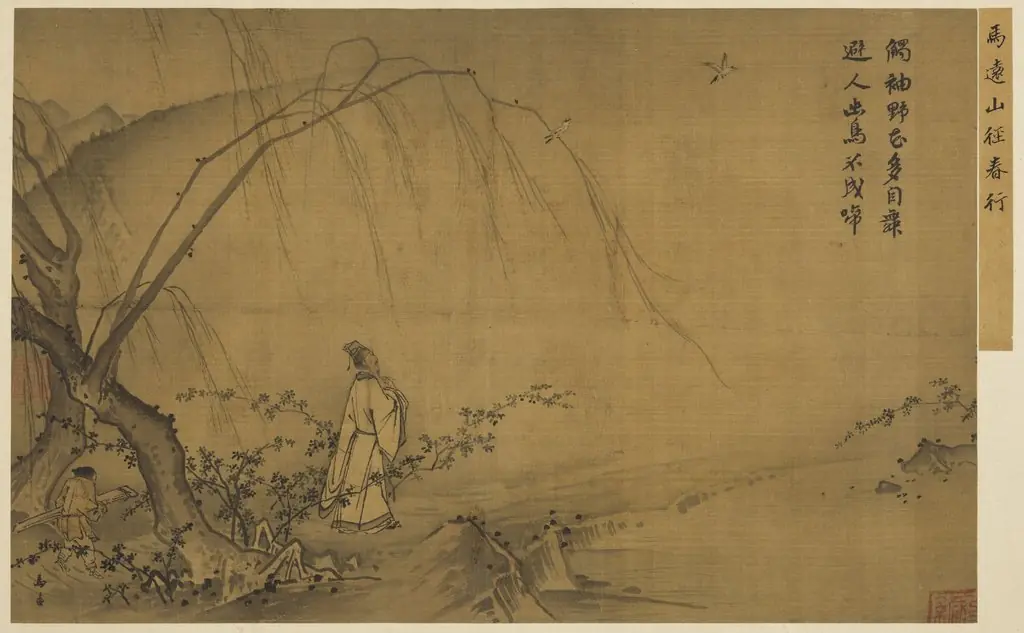 Walking on a Mountain Path in Spring