Artwork
Untitled
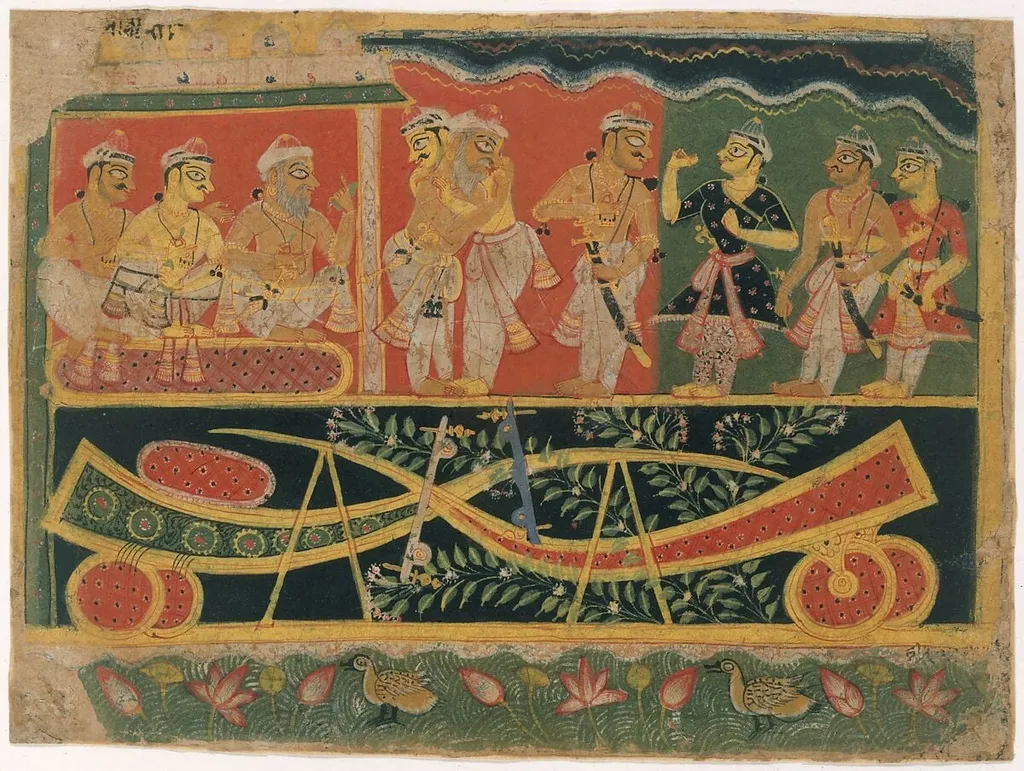
Untitled is a watercolor painting by the Mughal Painting artist Master of the Dispersed Bhagavata Purana. It dates from 1525 and is held in the collection of the Metropolitan Museum of Art.
About this work
Subject & Meaning
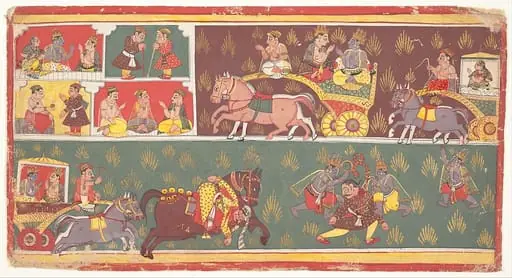
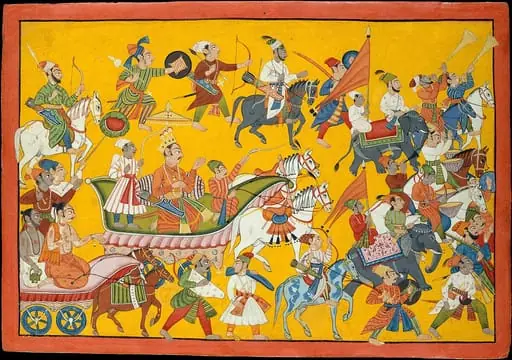
According to cataloguing data, the work depicts a man, a duck, and a wagon.
The painting, attributed to the Master of the Dispersed Bhagavata Purana and dated 1525, is classified as a genre scene executed in ink and opaque watercolor on paper. According to cataloguing data, the work depicts a man, a duck, and a wagon. These three elements together suggest a narrative of everyday rural or itinerant life, a hallmark of the dispersed Bhagavata Purana master's output, which frequently combined human figures with animals and conveyances to evoke storytelling vignettes.
The juxtaposition of a human figure with a domestic animal and a vehicle implies themes of travel, labor, or trade, situating the scene within the broader South Asian tradition of genre painting that flourished in the early sixteenth century.
Technique & Style
The work is executed in ink with opaque watercolor on paper, a support typical of Indian manuscript production in the early sixteenth century. The composition belongs to the genre‑scene category and portrays a duck, a man, and a wagon, illustrating a narrative episode from the Bhagavata Purana. Executed circa 1525 in India, the painting was later acquired by the Metropolitan Museum of Art, where it remains on view. Its formal qualities reflect the linear precision and muted palette characteristic of manuscript illumination of the period.
History & Provenance
The work titled Untitled, painted by the Master of the Dispersed Bhagavata Purana in 1525, is housed in the Metropolitan Museum of Art in New York. The painting entered the museum’s collection as part of the institution’s Indian miniature holdings, though a specific accession or inventory number is not provided in the available records. Its only documented provenance points to its creation in India and subsequent inclusion in the museum’s permanent collection.
No exhibition history or loan records are mentioned in the sources consulted, indicating that the work has not been publicly displayed in exhibitions up to the present.
Context
The painting Untitled, executed circa 1525 by the Master of the Dispersed Bhagavata Purana, exemplifies the narrative style of early Indian manuscript illumination. Its depiction of a duck, a man, and a wagon has been cited in scholarship as illustrative of the episodic storytelling found in the Bhagavata Purana tradition. As a work held by the Metropolitan Museum of Art, it contributes to contemporary understanding of 16th‑century Indian painterly practice and the transmission of religious iconography across regional workshops.
Overview
This untitled painting, created around 1525, is attributed to the artist known as the Master of the Dispersed Bhagavata Purana. Executed with ink and opaque watercolor on paper, it presents a lively genre scene. The work offers a glimpse into daily life, featuring human figures engaged in labor alongside animals, capturing a moment of everyday activity.
Artist & collection
Artist
Master of the Dispersed Bhagavata Purana
Master of the Dispersed Bhagavata Purana is the notname given to the anonymous artist or workshop responsible for an early illustrated series of the Bhagavata Purana, the Hindu text recounting the life of Krishna.

- Vasudeva and Devaki
 Tantric Manuscript "Sangrahani Sutra"
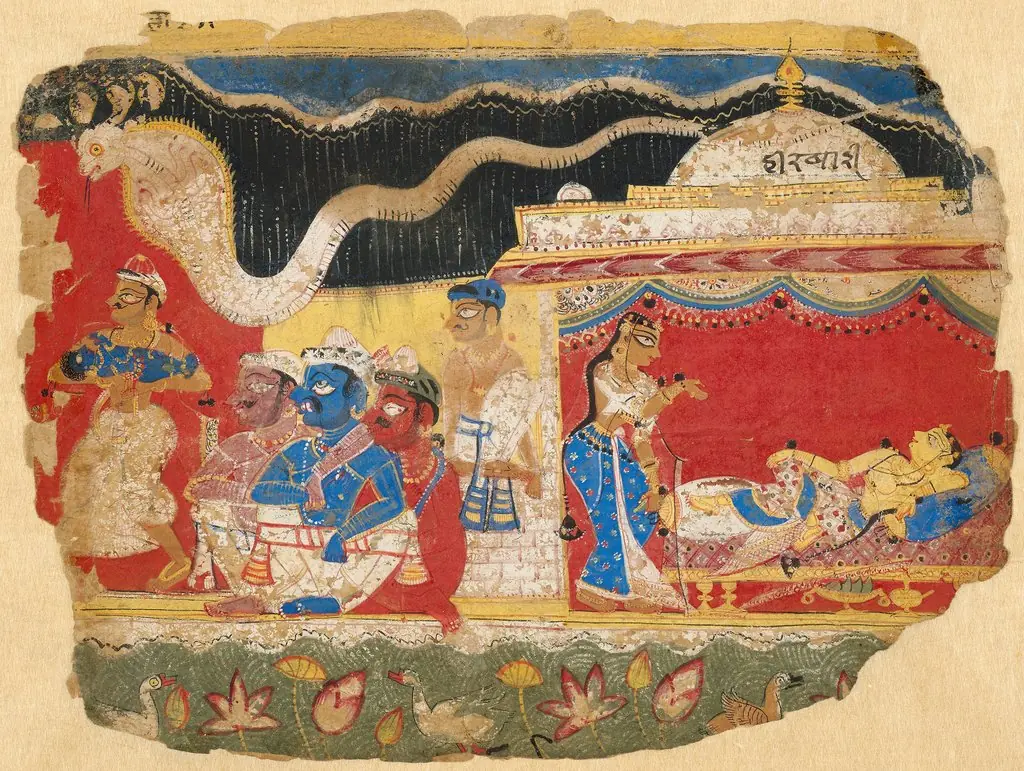 The Infant Krishna Spirited Away by Vasudev, page from the Dispersed Bhagavatapurana manuscript
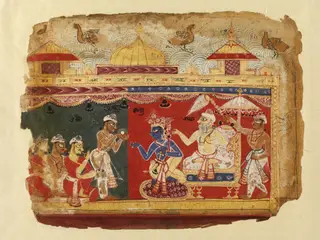 Akrura and Krishna
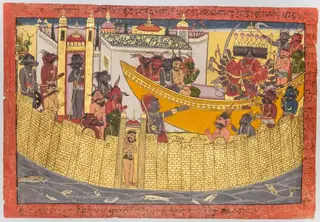 Shurpanakha demands vengeance, from the "Shangri" Ramayana
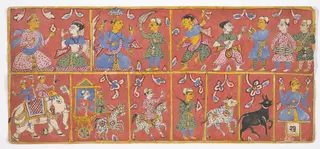 Tantric Manuscript "Sangrahani Sutra"
 Untitled
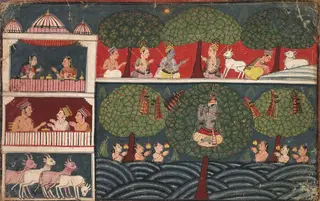 Krishna Steals the Clothes of the Milkmaids and Expounds on the Virtue of Trees, from a Braj Bhagavata Purana
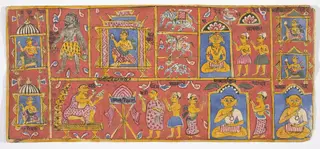 Tantric Manuscript "Sangrahani Sutra"
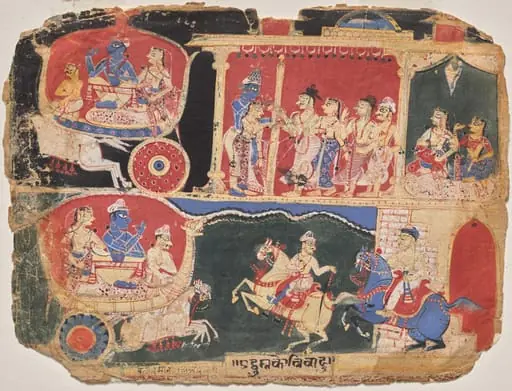 The Marriage of Pradyumna and Rukmavati, page from a Bhagavata Purana
 Untitled
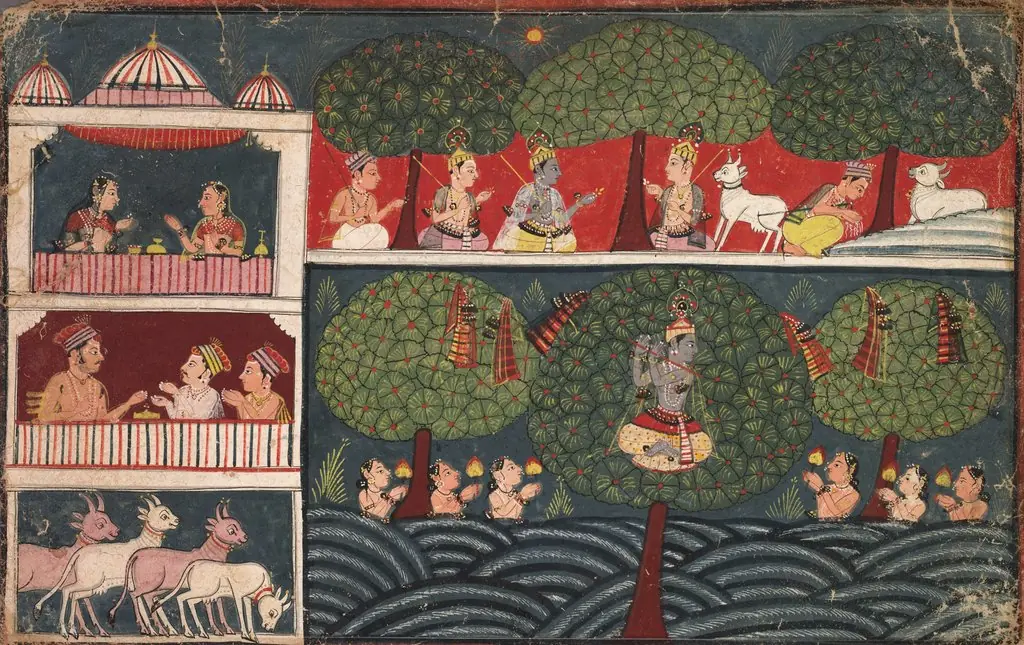 Krishna Steals the Clothes of the Milkmaids and Expounds on the Virtue of Trees, from a Braj Bhagavata Purana